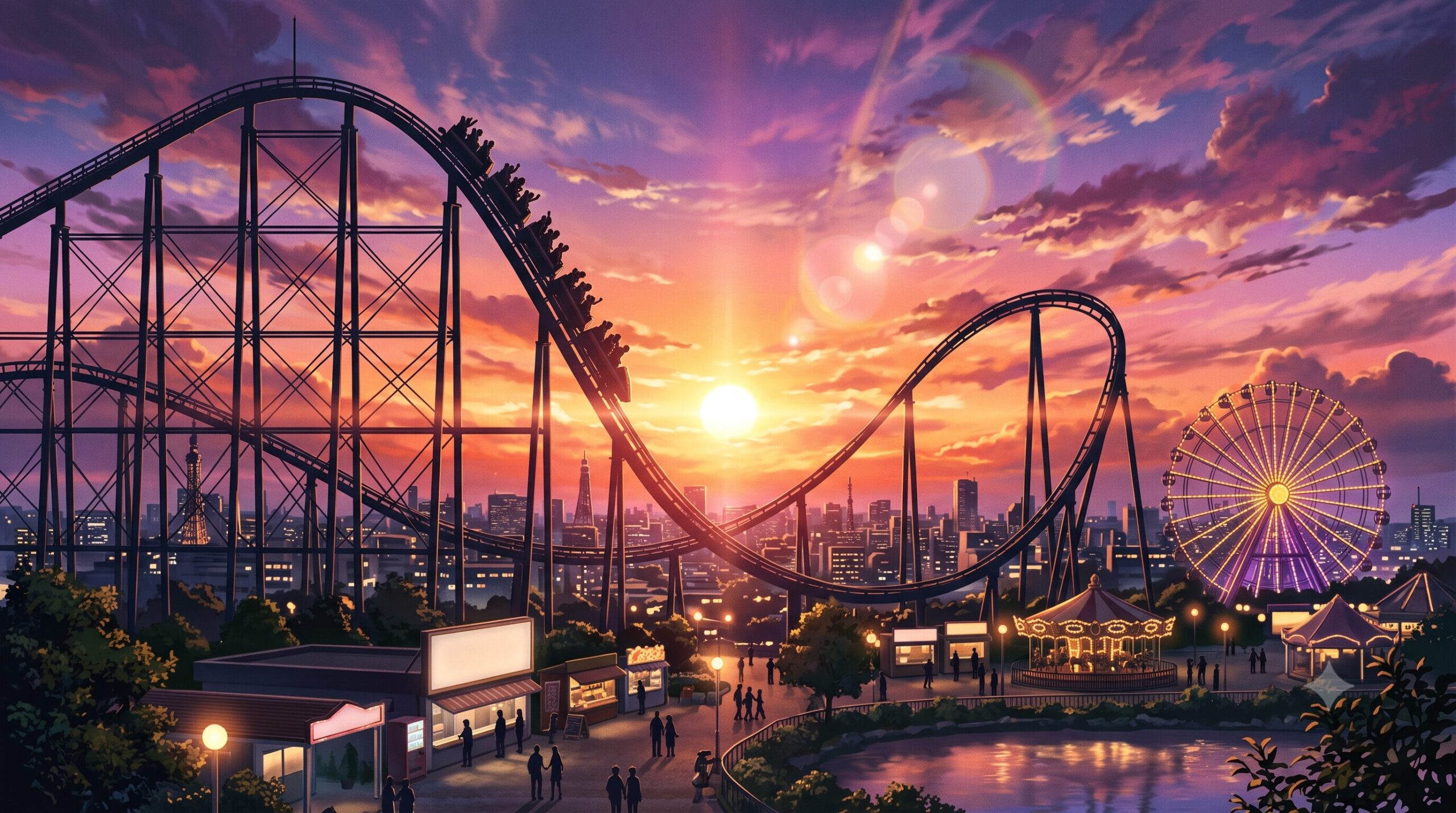
Roller coasters are the undisputed kings of thrill in amusement parks worldwide. But did you know that here in Japan, they are called by a completely different name? In Japan, the term “Jet Coaster” is the standard word used by everyone. Interestingly, this is a perfect example of “Wasei-Eigo” (Japanese-made English) and is entirely unique to Japan.
Every year on July 9, Japan celebrates “Jet Coaster Day”. Today, we will dive deep into why roller coasters are called Jet Coasters in Japan, exploring the historical background, the evolution of Japanese amusement park culture, and what this reveals about the Japanese mindset.
The Origins and History of Jet Coaster Day
On July 9, 1955 (Showa 30), the Korakuen Amusement Park (now Tokyo Dome City Attractions) opened its doors in the heart of Tokyo. The centerpiece of this grand opening was Japan’s very first full-scale roller coaster.
Racing along a 550-meter track at a top speed of 55 km/h, this revolutionary ride brought unprecedented thrill and excitement to the public. The operators named this specific attraction the “Jet Coaster”. During the 1950s, the world was transitioning from propeller planes to jet aircraft. The word “Jet” was strongly associated with cutting-edge technology, the future, and ultimate speed. The name was a massive hit, and eventually, the term “Jet Coaster” became the universal pronoun for all large-scale roller coasters across Japan.
Deciphering Cultural Adaptation through “Wasei-Eigo”
The transition from “roller coaster” to “Jet Coaster” perfectly illustrates Japan’s unique approach to cultural adaptation. Historically, when incorporating foreign technologies or concepts, the Japanese do not merely copy them; they adapt, repackage, and add new value to fit their own cultural sensibilities.
Just like words such as “Salaryman” or “Smartphone (Sumaho)”, the term Jet Coaster embodies the robust energy and romanticism of post-war Japan during its period of rapid economic growth. Instead of a literal translation focusing on a mechanism (a coaster on rollers), they focused on the emotional experience—”feeling like flying in a jet plane”. This poetic and experience-driven approach to naming is a distinctly Japanese cultural trait.
The Evolution of Japanese Thrill Rides and “Omotenashi” Safety
Since their debut in 1955, Japanese Jet Coasters have evolved spectacularly. Major theme parks like Fuji-Q Highland and Nagashima Spa Land have continually produced “monster coasters” that break Guinness World Records for speed, drop angles, and number of inversions.
What is truly remarkable is that this pursuit of extreme thrills is underpinned by Japan’s world-renowned safety management and engineering. Meticulous daily inspections, tracks manufactured with millimeter precision, and the attentive guidance of the staff all stem from the traditional spirit of “Omotenashi” (Japanese hospitality) combined with the pride of Japanese “Monozukuri” (craftsmanship). Delivering the ultimate fear while maintaining world-class safety is the true essence of Japanese technological prowess.
Jet Coasters and the Japanese Mindset
Everyday Japanese society is famous for its emphasis on politeness, harmony, and discipline. It is a virtue to behave quietly in public and avoid causing trouble for others. However, the moment they strap into a Jet Coaster, people are liberated from daily repressions, screaming at the top of their lungs and letting their emotions explode.
For the Japanese, who live highly disciplined lives, the Jet Coaster serves as a vital “device for catharsis”—a socially acceptable way to release stress and express raw emotion. This extreme contrast between the silence of daily life and the chaotic enthusiasm at the amusement park is one of the deepest reasons why Jet Coasters are so beloved in Japan.
Conclusion: How Do You Feel?
A single amusement park ride’s name reveals the energy of post-war Japan, the culture of transforming language, and the psychological contrast of Japanese society.
After reading this, what are your thoughts on Japan’s “Jet Coasters”? If you ever have the chance to visit Japan, will you ride a Jet Coaster, trust the impeccable Japanese safety engineering, and shout your heart out alongside the typically reserved locals?
[References and Related Links]
- External Link: Historical Data on the First Jet Coaster at Korakuen (Wikipedia)
- Internal Link: Explore More in the What’s Today’s Special Day Series
7月9日は「ジェットコースターの日」!日本独自の呼称に隠された歴史と文化
世界中の遊園地で人々を熱狂させる絶叫マシン、ローラーコースター。しかし、ここ日本では少し異なる名前で呼ばれていることをご存知でしょうか。日本では広く「ジェットコースター」という名称が定着しています。実はこの言葉、英語圏では通じない完全な「和製英語(Wasei-Eigo)」なのです。
毎年7月9日は、日本において「ジェットコースターの日」と制定されています。今回は、なぜ日本ではジェットコースターと呼ばれるようになったのか、その歴史的背景と、日本の遊園地文化や日本人の精神性との関連を深く掘り下げていきます。
ジェットコースターの日の由来と歴史的背景
1955年(昭和30年)7月9日、東京の中心部に位置する「後楽園ゆうえんち(現在の東京ドームシティ アトラクションズ)」が開園しました。この開園の目玉として設置されたのが、日本初となる本格的なローラーコースターでした。
全長約550メートル、最高時速55キロメートルで駆け抜けるこの画期的な乗り物は、当時の人々にとって未知のスリルと興奮をもたらしました。そして、このアトラクションに付けられた固有の名称こそが「ジェットコースター」だったのです。1950年代は、プロペラ機からジェット機への移行が進み、人々の間で「ジェット機=最先端のスピード、未来の象徴」というイメージが強く根付いていた時代でした。その圧倒的なスピード感をジェット機になぞらえて命名されたこのアトラクションは大ヒットを記録し、いつしか日本中で大型コースターの代名詞として「ジェットコースター」という言葉が一般化していったのです。
和製英語から読み解く日本の文化受容
「ローラーコースター」を「ジェットコースター」と言い換えたこの歴史には、日本の独特な文化受容の姿勢が表れています。日本人は古来より、海外から持ち込まれた文化や技術をそのまま模倣するのではなく、自分たちの感性や社会的背景に合わせてアレンジし、新しい価値を付加することを得意としてきました。
「サラリーマン」や「スマートフォン(スマホ)」といった言葉と同様に、ジェットコースターという呼称には、戦後の高度経済成長期において、より速く、より高く、より先進的でありたいという当時の日本社会の力強いエネルギーとロマンが込められています。単なる「車輪で転がる乗り物(ローラーコースター)」ではなく、「ジェット機のように空を飛ぶような体験」という感情的な付加価値を言葉に込めるセンスは、非常に日本的なアプローチだと言えます。
日本の絶叫マシン文化と「おもてなし」の安全基準
1955年の誕生以来、日本のジェットコースターは独自の進化を遂げてきました。富士急ハイランドやナガシマスパーランドに代表される日本の主要なテーマパークは、世界最速、最大落下角度、総回転数など、数々のギネス世界記録を打ち立てるモンスターコースターを次々と生み出してきました。
ここで注目すべきは、極限のスリルを追求しながらも、日本の徹底した安全管理とエンジニアリング技術が根底にあることです。毎日の厳格な点検、ミリ単位の精度で作られるレール、そして乗客を安心させるスタッフの細やかな案内。これらは、日本の伝統的な「おもてなし」の精神と、製造業における「モノづくり」の誇りが融合した結果です。極限の恐怖を提供する装置でありながら、世界トップクラスの安全性を誇る点に、日本の技術力の真髄を見ることができます。
ジェットコースターと日本人の精神性
日常の日本社会は、礼儀正しさ、調和、そして規律を重んじることで知られています。公共の場では静かに振る舞い、他人に迷惑をかけないことが美徳とされています。しかし、ジェットコースターに乗った瞬間、人々は日常の抑圧から解放され、大声で叫び、感情を爆発させます。
ジェットコースターは、規律正しい生活を送る日本人にとって、合法的に感情を開放し、ストレスを発散するための「カタルシス(浄化)の装置」として機能しているのかもしれません。日常の静寂と、遊園地での非日常の熱狂。この極端なコントラストこそが、日本におけるジェットコースター人気の根強い理由の一つです。
終わりに:あなたはどう感じますか?
たった一つのアトラクションの名前から、戦後の日本のエネルギー、言葉を独自に変化させる文化、そして日本社会の心理的なコントラストが見えてきます。
この記事を読んで、あなたは日本の「ジェットコースター」についてどう思いましたか?もし日本を訪れる機会があれば、厳格な安全基準に守られながら、規律正しい日本人が大声で叫ぶ極限のスリルを、あなた自身も体験してみませんか?
【参考資料・関連リンク】
コメント