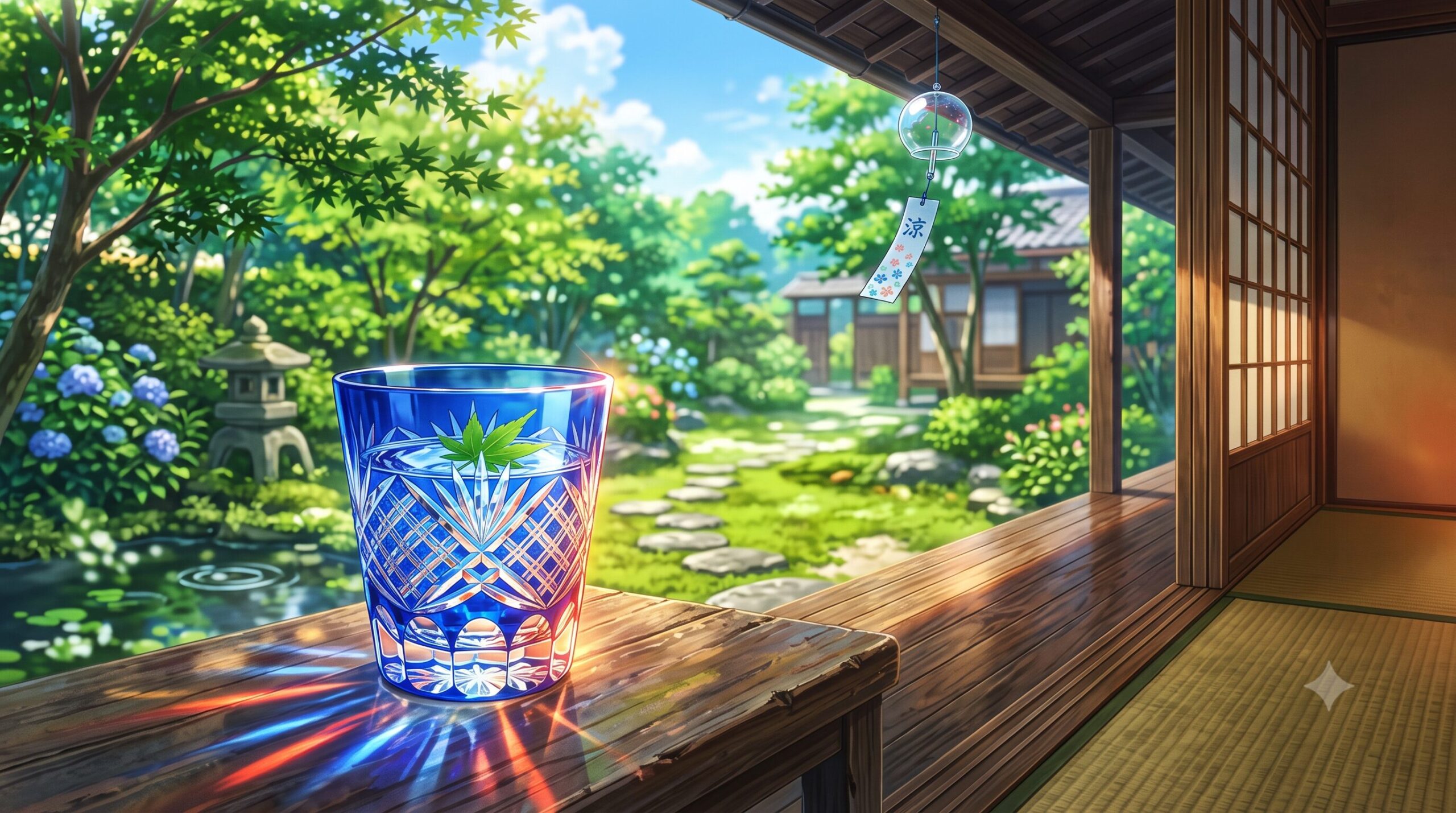
In Japan, the culture of seeking “Ryo” (coolness) to ease the characteristic hot and humid summer climate has taken root since ancient times. The sound of wind chimes, the sprinkling of water on the streets, and visually cool glassware are all part of this tradition. July 5th marks “Edo Kiriko Day,” a day celebrating a traditional craft essential to the Japanese summer.
Edo Kiriko is a traditional Japanese cut glass craft where delicate geometric patterns are carved into the surface of the glass. The overwhelming beauty created by the transmission and refraction of light goes beyond mere everyday objects; it captivates people worldwide as true works of art. Using “Edo Kiriko Day” as our gateway, let us guide you into the world of Japan’s proud craftsmanship and unique aesthetic sense.
Why July 5th? The Meaning Behind the “Nanako” Pattern
“Edo Kiriko Day” was established by the Edo Kiriko Cooperative Association. The origin of this date lies in the “Nanako” (fish roe) pattern, one of the most representative traditional cut patterns of Edo Kiriko. The date July 5th was chosen as a play on words based on the numbers “7” (read as ‘Na’ in Japanese) and “5” (read as ‘Ko’).
The Nanako pattern, true to its name, is a continuous pattern of fine cuts that look like a cluster of fish eggs. Because fish lay numerous eggs, this design has been used in kimonos and crafts since ancient times as an auspicious symbol of “prosperity of descendants” and “abundant harvest.” Carving this fine pattern evenly onto the curved surface of glass requires extremely high skill and deep concentration from a master artisan. When struck by light, the countless fine cuts reflect irregularly like jewels, emitting a breathtaking brilliance.
The History of the Birth and Evolution of Edo Kiriko
The history of Edo Kiriko dates back about 200 years to 1834, during the late Edo period. It is said to have originated when Kyubei Kagaya, a glassware merchant in the Odenmacho area of Edo (modern-day Tokyo), used emery sand to carve patterns onto the surface of glass. Although Japan was in a state of national isolation at the time, Kagaya drew inspiration from foreign glass products brought in through Nagasaki, leading to the creation of his own unique techniques.
Later, as the Meiji period began, Japan’s modernization policies took effect. In 1881, the government invited Emanuel Hauptmann, a cut glass instructor from England. Under his guidance, several Japanese craftsmen learned modern Western cutting techniques, blending traditional Japanese sensibilities with Western methodology. This became the direct root of modern Edo Kiriko, which reached its golden age from the Taisho era through the early Showa era.
The Aesthetics of “Wa” (Harmony) and Artisan Culture Woven by Light and Shadow
The greatest appeal of Edo Kiriko lies in its embodiment of Japan’s unique aesthetic of “light and shadow.” While Western cut glass often emphasizes heavy brilliance and overall sparkle, Edo Kiriko cherishes the “beauty of empty space” (Yohaku no bi). The contrast between the clear, uncut sections of the glass and the intricately carved sections creates an exquisite harmony. When you tilt a glass under the soft natural light filtering through a Shoji screen in a traditional Japanese room, or under the dim light of dusk, the kaleidoscope-like shadows cast upon the table deeply soothe the observer’s soul.
Furthermore, the creation of Edo Kiriko begins with a process called “Waridashi,” where the artisan carves the glass relying solely on feeling and experience, without any drafting or guidelines. Reading the thickness of the glass and the overlapping of colors through the tips of their fingers, they press the glass against the grinding wheel in a single-chance operation. The attitude of these artisans, carving patterns with sub-millimeter precision in a state of extreme tension where failure is not an option, breathes life into the Japanese spirit of “Do” (The Way)—a culture of elevating one’s spirituality through the mastery of technique.
Sustainable Art Connecting Tradition to the Future
Today, Edo Kiriko is officially designated as a National Traditional Craft of Japan. In an age flooded with cheap, mass-produced glassware, an Edo Kiriko glass handcrafted one by one by an artisan is by no means inexpensive. However, the traditional Japanese value of “using good things carefully and for a long time” is being re-evaluated in recent years.
Passed down from parents to children, and then to grandchildren, an Edo Kiriko glass fits more comfortably in the hand the more it is used, its brilliance growing alongside the family’s history. This can be seen as a beautiful, practical example of the sustainability that modern society seeks.
What Would You Savor in This Glass?
Edo Kiriko is a poetic symbol of the Japanese summer, infused with history and the soul of the artisan. Pour cold green tea, and its refreshing quality stands out; pour Japanese sake, and you can enjoy the refraction of light along with a rich aroma. Even pouring chilled mineral water or sparkling water transforms a casual everyday drink into a special experience.
After reading this article, what aspect of Edo Kiriko captivated you the most? If you had this beautiful glass in your hands right now, what drink would you pour, who would you share it with, and what kind of moment would you like to spend? Please tell us about the wonderful time you imagine.
Reference Links
7月5日は「江戸切子の日」:ガラスに刻まれた日本の美と職人魂
日本の夏は、特有の高温多湿な気候を和らげるための「涼(りょう)」を求める文化が古くから根付いています。風鈴の音色、打ち水、そして目にも涼やかなガラスの器。7月5日は、そんな日本の夏に欠かせない伝統工芸品を祝う「江戸切子の日(Edo Kiriko Day)」です。
江戸切子とは、ガラスの表面に繊細な幾何学模様を彫り込む日本の伝統的なカットグラスのことです。光を透過し、屈折させることで生まれるその圧倒的な美しさは、単なる日用品の枠を超え、芸術品として世界中の人々を魅了しています。今回は、この「江戸切子の日」を入り口に、日本が誇る職人技と独自の美意識の世界へご案内します。
なぜ7月5日なのか?「魚子(ななこ)」紋様に込められた意味
「江戸切子の日」は、江戸切子協同組合によって制定されました。この日付の由来は、江戸切子を代表する伝統的なカットパターンのひとつである「魚子(ななこ)」紋様にあります。数字の「7(なな)」と「5(こ)」の語呂合わせから、7月5日が記念日として選ばれました。
魚子紋様とは、その名の通り魚の卵が連なっているように見える細かいカットの連続模様です。魚の卵は数が多いため、古来より「子孫繁栄」や「豊穣」を象徴する縁起の良いデザインとして着物や工芸品に用いられてきました。ガラスの表面にこの細かい紋様を均一に刻み込むには、熟練した職人の極めて高度な技術と集中力が要求されます。光が当たると、無数の細かなカットが宝石のように乱反射し、息をのむような輝きを放ちます。
江戸切子の誕生と進化の歴史
江戸切子の歴史は、今から約200年前の1834年(江戸時代後期)に遡ります。江戸の大伝馬町でビードロ(ガラス)問屋を営んでいた加賀屋久兵衛という人物が、金剛砂を用いてガラスの表面に彫刻を施したのが始まりとされています。当時の日本は鎖国状態にありましたが、長崎を通じて入ってきた海外のガラス製品にインスピレーションを受け、独自の技術を生み出したのです。
その後、明治時代に入ると日本の近代化政策が始まります。1881年(明治14年)、政府はイギリスからカットグラスの指導者であるエマニュエル・ホープトマンを招聘しました。彼のもとで数人の日本人が近代的な西洋のカット技術を学び、日本の伝統的な感性と西洋の技術が融合しました。これが現在の江戸切子の直接的なルーツとなり、大正時代から昭和初期にかけて、江戸切子は全盛期を迎えることになります。
光と影が織りなす「和」の美意識と職人文化
江戸切子の最大の魅力は、日本特有の「光と影」の美意識を体現している点にあります。西洋のカットグラスが重厚感と全体的な輝きを重視するのに対し、江戸切子は「余白の美」を大切にします。ガラスの透明な部分(切磨きを残した部分)と、精緻なカットが施された部分とのコントラストが、絶妙な調和を生み出すのです。和室の障子から差し込む柔らかな自然光や、夕暮れ時の淡い明かりの下でグラスを傾けたとき、テーブルに映し出される万華鏡のような影は、見る者の心を深く落ち着かせます。
また、江戸切子は下書きをせずに、職人の感覚と経験だけを頼りにガラスを削っていく「割り出し」という工程から始まります。ガラスの厚みや色の重なりを指先の感覚で読み取り、砥石にガラスを押し当てていくその作業は、まさに一発勝負です。失敗が許されない極度の緊張感の中で、コンマ数ミリの精度で模様を刻む職人たちの姿勢には、日本の「道(Do)」の精神——技術を極めることで精神性を高めていく文化が息づいています。
伝統を未来へ繋ぐ、持続可能な芸術
現在、江戸切子は国の伝統的工芸品に指定されています。安価で大量生産されるガラス製品が溢れる現代において、職人が一つひとつ手作りする江戸切子は決して安価なものではありません。しかし、「良いものを長く、大切に使う」という日本の伝統的な価値観が、近年再び見直されています。
親から子へ、そして孫へと受け継がれていく江戸切子のグラスは、使うほどに手に馴染み、家族の歴史とともに輝きを増していきます。これは、現代社会が求めるサステナビリティ(持続可能性)の美しい実践例とも言えるでしょう。
あなたなら、このグラスで何を味わいますか?
日本の夏の風物詩であり、歴史と職人の魂が込められた江戸切子。冷たい緑茶を注げばその清涼感が際立ち、日本酒を注げば芳醇な香りと共に光の屈折を楽しむことができます。もちろん、冷えたミネラルウォーターや炭酸水を注ぐだけでも、日常の何気ない一杯が特別な体験へと変わります。
この記事を読んで、あなたは江戸切子のどのような点に最も心惹かれましたか?もしあなたの手元にこの美しいグラスがあったら、どんな飲み物を注ぎ、誰と一緒に、どのような時間を過ごしたいですか?ぜひ、あなたの想像する素敵なひとときを教えてください。
コメント