In Japanese history, the moments when eras drastically shift are always hidden behind dramatic tales. Today, we introduce July 4th (May 22, 1333, in the lunar calendar), the historical day when the Kamakura Shogunate—Japan’s first full-fledged samurai government—collapsed.
How did Kamakura, the capital of the samurai who had been the de facto rulers of Japan for about 150 years, fall? Today, we will deeply explore the history of Japanese Samurai and the underlying spirituality for our international readers.
The Prosperity of the Kamakura Shogunate and the Approaching Footsteps of Collapse
Established at the end of the 12th century by Minamoto no Yoritomo, the Kamakura Shogunate was an epoch-making government that shifted political power from the aristocrats in Kyoto to the warriors (samurai). Surrounded by mountains on three sides and facing the ocean to the south, Kamakura was a natural fortress and an ideal land for samurai to cultivate their robust and practical culture.
However, the two Mongol Invasions in the late 13th century shook the foundation of the Shogunate. The samurai risked their lives to protect Japan from foreign threats. But because these were defensive wars, there were no new territories to conquer. As a result, the Shogunate could not provide sufficient rewards (land) to the warriors who fought desperately. This massive dissatisfaction swirled throughout Japan, and trust in the government gradually plummeted.
The March of Nitta Yoshisada and the Miracle of Inamuragasaki
As dissatisfaction mounted, Emperor Go-Daigo finally raised an army to overthrow the Shogunate. Responding to this call was Nitta Yoshisada, a powerful warlord. He led his troops and fiercely marched toward Kamakura, the natural fortress.
However, Kamakura’s defense line was solid and could not be easily breached. Yoshisada attempted to break through from the coastline of a cape called Inamuragasaki, located in the southwest of Kamakura. At the time, it was an impassable chokepoint blocked by steep cliffs and rough waves.
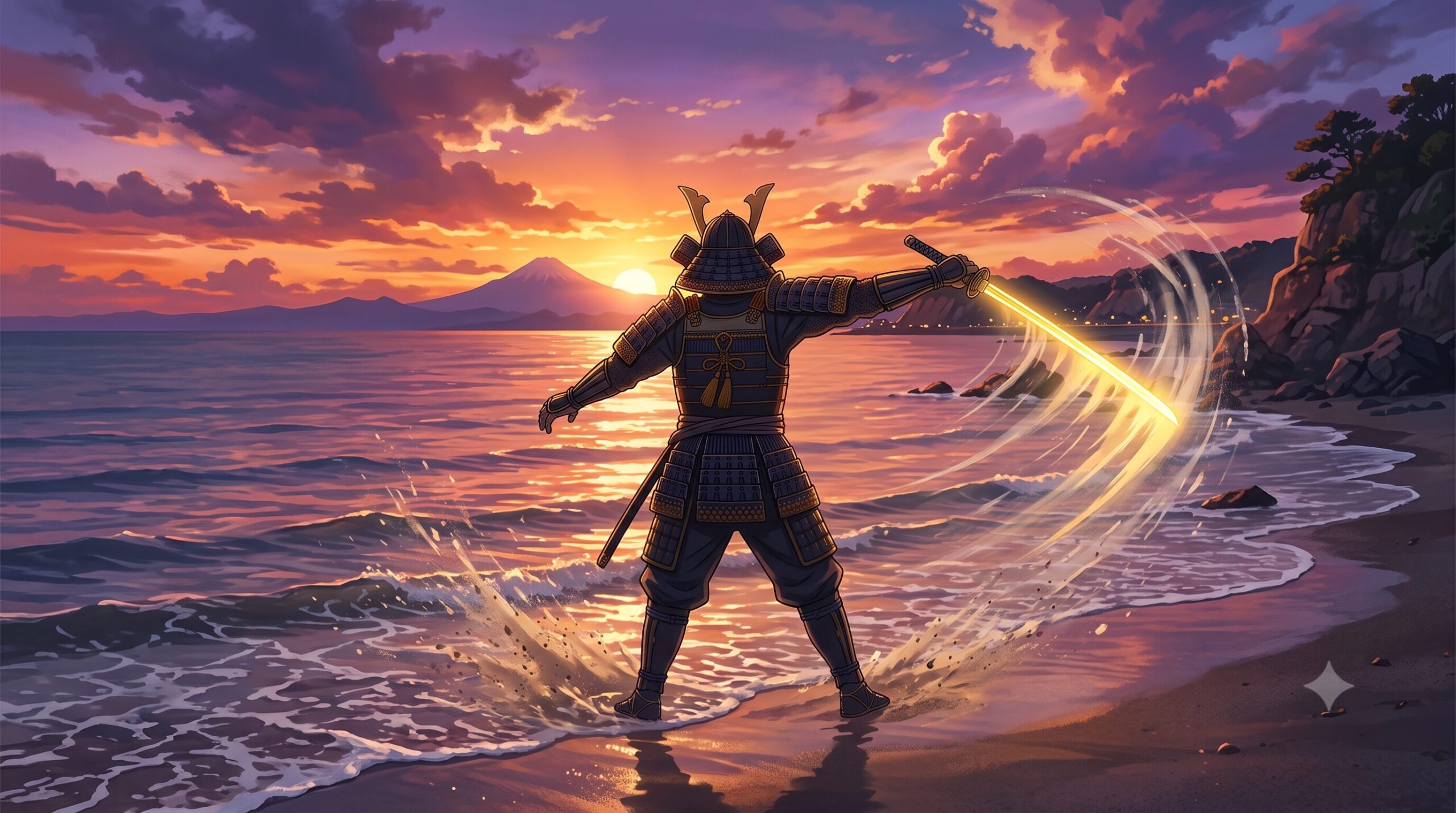
Here, one of the most famous legends in Japanese history was born. Facing the ocean, Yoshisada took off his helmet, prayed to the sea god (the Dragon God), and threw his golden sword into the waves as an offering. Suddenly, as if by a miracle, the tide receded dramatically, revealing a vast tidal flat. Yoshisada’s army rushed across this flatland at once, successfully invading the city streets of Kamakura.
The Battle of Tosho-ji and the Tragic End of the Hojo Clan
Allowing the enemy into the city, Hojo Takatoki, the supreme leader of the Kamakura Shogunate, realized it was the end. He retreated with his family and retainers to Tosho-ji Temple, the family temple of the Hojo clan.
On this day in 1333, hundreds of samurai (some theories say over 800), including Takatoki, set fire to the temple and committed mass Seppuku (ritual suicide) all at once. They refused to surrender, choosing instead the path of sharing their lord’s fate. Thus, the Kamakura Shogunate, which had lasted for 150 years, disappeared in flames, and the history of the samurai transitioned to a new chapter (the Muromachi period).
Understanding Japanese Culture from This Day: Impermanence and the “Aesthetics of Ruin”
From the fall of the Kamakura Shogunate, we can decipher unique Japanese culture and spirituality.
First is the spirit of “Shogyo Mujo” (Impermanence). This is a Buddhist teaching that “all things in this world are constantly changing, and no power or prosperity lasts forever.” Even the Hojo clan, who boasted absolute power, was destroyed in an instant. The Japanese find profound sorrow and beauty in this historical fact.
Second is “Bushido” (The Way of the Warrior) and Loyalty. The hundreds of retainers who took their own lives at Tosho-ji could have fled or surrendered. However, they valued “honor” and “loyalty to their lord” more than their own lives. To scatter beautifully and gracefully at the very end—this “aesthetics of ruin” became the core of subsequent Japanese samurai culture and continues to deeply influence themes of self-sacrifice and loyalty in modern Japanese literature, movies, and anime.
What Are Your Thoughts?
July 4th marks the day a massive government that lasted 150 years came to an end through a single day of fierce determination. How does the lifestyle of samurai, who valued honor and loyalty over life itself, appear to us living in the modern world?
If you were in Nitta Yoshisada’s position, what decision would you have made facing the threat of nature (the sea)? Furthermore, how do you feel about the pride of the samurai who chose to fight to the bitter end? Please share your thoughts or any similar historical events from your own country’s history.
Explore More:
- JNTO Kamakura Official Guide
- Kamakura City Tourist Association Official Website
- Read more from What’s Today’s Special Day Series
- The Prosperity of the Kamakura Shogunate and the Approaching Footsteps of Collapse
- The March of Nitta Yoshisada and the Miracle of Inamuragasaki
- The Battle of Tosho-ji and the Tragic End of the Hojo Clan
- Understanding Japanese Culture from This Day: Impermanence and the “Aesthetics of Ruin”
- What Are Your Thoughts?
- 7月4日:武士の時代の転換点、鎌倉幕府が滅亡した日
7月4日:武士の時代の転換点、鎌倉幕府が滅亡した日
日本の歴史において、時代が大きく転換する瞬間には、常にドラマチックな物語が隠されています。今日ご紹介する7月4日(旧暦:元弘3年5月22日、西暦1333年)は、日本初の本格的な武家政権である「鎌倉幕府(Kamakura Shogunate)」が滅亡した歴史的な日です。
約150年にわたって日本の実質的な支配者であった武士たちの都・鎌倉は、いかにして陥落したのでしょうか。今回は、海外の皆様に日本の武士(Samurai)の歴史と、その根底に流れる精神性について深く解説します。
鎌倉幕府の繁栄と、忍び寄る崩壊の足音
12世紀末、源頼朝(Minamoto no Yoritomo)によって開かれた鎌倉幕府は、それまで京都の貴族が握っていた政治の実権を武士の手に移した画期的な政権でした。三方を山に囲まれ、南は海に面した鎌倉は、まさに天然の要塞であり、武士たちが質実剛健な文化を育む理想的な土地でした。
しかし、13世紀後半に二度にわたって起きた「元寇(Mongol Invasions of Japan)」が、幕府の屋台骨を揺るがします。武士たちは命懸けで外国の脅威から日本を守り抜きましたが、防衛戦であったため奪うべき新たな領地がなく、幕府は命懸けで戦った武士たちに十分な恩賞(土地)を与えることができませんでした。この不満が日本全国に渦巻き、幕府への信頼は徐々に失墜していったのです。
新田義貞の進軍と、稲村ヶ崎の奇跡
幕府に対する不満が高まる中、ついに後醍醐天皇(Emperor Go-Daigo)が倒幕の兵を挙げます。これに呼応したのが、有力な武将である新田義貞(Nitta Yoshisada)です。彼は軍勢を率いて、天然の要塞である鎌倉へ向けて猛進しました。
しかし、鎌倉の防衛線は固く、容易には突破できません。そこで義貞は、鎌倉の南西に位置する「稲村ヶ崎(Inamuragasaki)」という岬の海岸線から突破を図ります。当時、そこは険しい崖と荒々しい波に阻まれた通行不能な難所でした。
ここで、日本の歴史上最も有名な伝説の一つが生まれます。義貞は海に向かって兜を脱ぎ、海神(竜神)に祈りを捧げ、自らの黄金の太刀(剣)を海へと投げ入れました。すると、まるで奇跡のように潮が大きく引き、広大な干潟が現れたのです。義貞の軍勢はこの干潟を一気に駆け抜け、鎌倉市街への突入に成功しました。
東勝寺合戦と、北条一族の最期
市街地に敵の侵入を許した鎌倉幕府の最高権力者・北条高時(Hojo Takatoki)は、もはやこれまでと悟ります。彼は一族や家臣たちと共に、北条氏の菩提寺であった東勝寺(Tosho-ji)へと退却しました。
そして1333年のこの日、高時をはじめとする数百人(一説には800人以上)の武士たちが、寺に火を放ち、一斉に切腹(Seppuku)をして果てました。降伏を潔しとせず、主君と運命を共にする道を選んだのです。こうして、150年続いた鎌倉幕府は炎の中に消え去り、武士の歴史は新たな章(室町時代)へと移り変わっていきました。
この日から読み解く日本文化:諸行無常と「滅びの美学」
鎌倉幕府の滅亡から、私たちは日本特有の文化や精神性を読み解くことができます。
第一に「諸行無常(Shogyo Mujo:Impermanence)」の精神です。これは「この世のすべてのものは常に変化し、永遠に続く権力や繁栄はない」という仏教の教えです。絶対的な権力を誇った北条氏でさえ、最後は一瞬にして滅び去った。日本人はこの歴史的事実の中に、深い哀愁と美しさを見出します。
第二に「武士道(Bushido)」と忠誠心です。東勝寺で自刃した何百もの家臣たちは、逃げることも降伏することもできたはずです。しかし彼らは、「名誉」と「主君への忠義」を自らの命よりも重んじました。最後まで美しく、潔く散る。この「滅びの美学」は、その後の日本の侍文化の核となり、現代の日本の文学や映画、アニメーションにおける「自己犠牲」や「忠誠」のテーマに深く影響を与え続けています。
あなたはどう考えますか?
150年続いた巨大な政権が、たった一日の壮絶な決断によって幕を閉じた7月4日。武士たちが命よりも名誉と忠誠を重んじた生き方は、現代を生きる私たちの目にどのように映るでしょうか。
もしあなたが新田義貞の立場なら、自然の脅威(海)を前にしてどのような決断を下したでしょうか。また、敗北を悟った北条氏の立場であれば、最後まで徹底抗戦を選んだ武士たちの誇りをどう感じますか? ぜひ、あなたの意見や、あなたの国の歴史にある似たような出来事について教えてください。
Explore More (参考リンク):

コメント