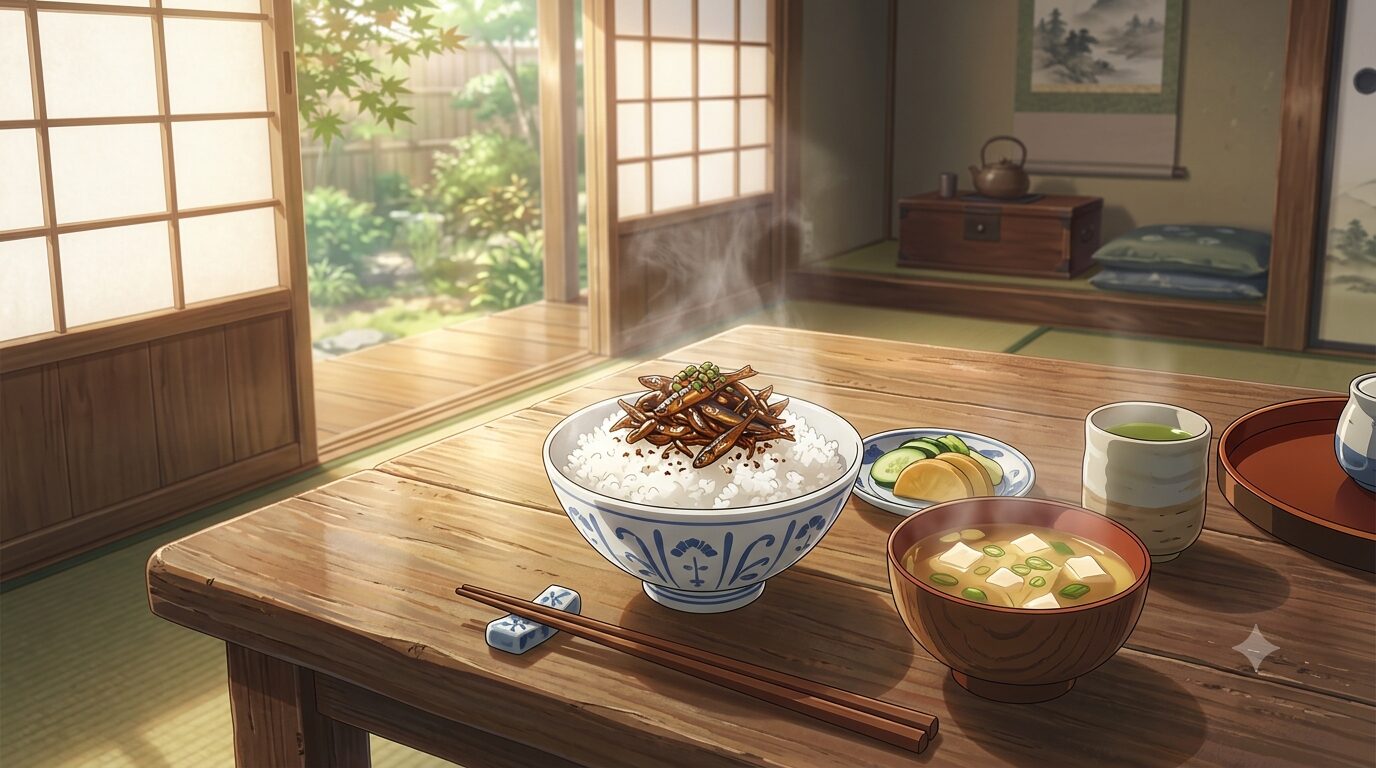
An essential part of the Japanese dining table, “Tsukudani” is a mesmerizing, sweet, and savory simmered side dish. Take one bite along with the steam rising from a bowl of white rice, and the deep, rich flavors of soy sauce and sugar will instantly spread across your palate. Every year, June 29th is celebrated as “Tsukudani Day,” a day dedicated to honoring this incredible traditional Japanese food.
Today, we dive deep into the history and cultural significance of Tsukudani—the very heart of Japanese cuisine—to share its wonders with people across the sea.
What is Tsukudani? Its Historical Background
Tsukudani is a traditional preserved food made by slowly simmering ingredients like small fish, seaweed, shellfish, or even beef in a mixture of classic Japanese condiments: soy sauce, sugar, and mirin, until all the liquid is absorbed. The name originates from an area called “Tsukudajima” (Tsukuda Island), located in present-day Chuo Ward, Tokyo.
The story dates back to the late 16th and early 17th centuries during the Edo period. When the shogun Tokugawa Ieyasu—who laid the foundations of a unified Japan—established his government in Edo (now Tokyo), he invited highly skilled fishermen from Tsukuda Village in Settsu Province (now Osaka) and granted them special fishing privileges. The origins of Tsukudani began when these fishermen took the tiny fish from Edo Bay that couldn’t be sold and simmered them in salt and soy sauce to create a preserved food for their own families.
Later, through a system called “Sankin-kotai” (alternate attendance), samurai from all over the country gathered in Edo. They found Tsukudani to be long-lasting, highly nutritious, and exceptionally delicious. By taking it back to their hometowns as a souvenir from Edo, Tsukudani spread throughout the entirety of Japan. June 29th was designated as Tsukudani Day because the Sumiyoshi Shrine, the guardian deity of Tsukudajima, was established on this exact date in 1646.
What Tsukudani Tells Us About Japanese Food Culture and the “Mottainai” Spirit
Tsukudani is more than just food; it embodies Japanese culture itself. The most prominent example is the spirit of “Mottainai” (a sense of regret over waste), which has now become widely known globally.
In an era before modern refrigeration and freezing technologies, Tsukudani was the crystallization of wisdom. It allowed people to preserve massive catches of fish or commercially low-value small fish deliciously and for long periods without wasting anything. This cooking method is filled with gratitude and respect for nature, ensuring that every part of the ingredient’s life is utilized.
Furthermore, Tsukudani is intimately connected to Japan’s “White Rice Culture.” The center of a Japanese meal has always been white rice, and side dishes evolved with the goal of “making white rice taste as delicious as possible.” The concentrated saltiness and sweetness of Tsukudani boast a perfect marriage, seemingly calculated to draw out the subtle, natural sweetness of plain white rice to its absolute maximum.
The Evolution of Tsukudani in Modern Times
While protecting the traditions passed down since the Edo period, Tsukudani continues to evolve to match modern lifestyles. In the past, mainstream Tsukudani had a very high salt content for maximum preservation. Today, however, milder flavors with reduced sodium are preferred to align with modern health consciousness.
The variations have also expanded infinitely. Beyond traditional seafood like kombu (kelp) and asari clams, you can now find “Shigureni” made with beef, or Tsukudani featuring mountain ingredients like walnuts, ginger, and shiitake mushrooms. Whether as a filling for onigiri (rice balls) or a perfect pairing for sake, Tsukudani remains a beloved staple on the modern Japanese dining table.
Which Tsukudani Would You Choose?
In a single, tiny bite of Tsukudani, the rich bounties of Japan’s oceans and mountains, along with hundreds of years of human wisdom, are densely packed. When you visit Japan, please step into a local supermarket, a department store food hall (depachika), or a traditional specialty shop. The beautifully arranged, diverse varieties of Tsukudani will delight your eyes, much like a jewelry box.
After reading this article, what is your impression of Tsukudani? If you were to try Tsukudani for the first time, would you prefer to top your rice with a seafood variety or a mountain-harvest variety? Please imagine the flavors you would love to taste, and let us know what you would choose!
Discover more Japanese anniversaries here: What’s Today’s Special Day Series
6月29日は「佃煮の日」:日本の保存食文化と江戸の歴史を味わう
日本の食卓に欠かせない、甘辛く煮詰められた魅惑のおかず「佃煮(つくだに)」。白いご飯から立ち上る湯気とともに、一口食べれば醤油と砂糖の深いコクが口いっぱいに広がります。毎年6月29日は、この素晴らしい日本の伝統食を称える「佃煮の日」です。
今回は、海を越えて多くの人々に知ってほしい、日本の心とも言える「佃煮」の歴史と文化的な意義について深く掘り下げていきます。
佃煮とは何か?その歴史的背景
佃煮とは、小魚、海藻、貝類、あるいは牛肉などを、醤油、砂糖、みりんといった日本の伝統的な調味料で水分がなくなるまでじっくりと煮詰めた保存食です。この名前の由来は、現在の東京都中央区にある「佃島(つくだじま)」という地名にあります。
時代は16世紀末から17世紀初頭の江戸時代に遡ります。日本の基礎を築いた将軍・徳川家康は、江戸(現在の東京)に幕府を開く際、摂津国(現在の大阪府)の佃村から優秀な漁師たちを呼び寄せ、特別に漁業の特権を与えました。彼らが江戸湾で獲れた小魚の中で、売り物にならない小さな魚を自家消費するために、塩や醤油で煮込んで保存食を作ったのが佃煮の始まりとされています。
その後、参勤交代という制度を通じて全国から江戸に集まった武士たちが、日持ちがして栄養価が高く、何より美味しいこの佃煮を江戸土産として故郷に持ち帰ったことで、佃煮は日本全国へと広まっていきました。6月29日が「佃煮の日」に制定されたのは、佃島の守り神である住吉神社が1646年のこの日に創建されたことに由来しています。
佃煮が語る日本の食文化と「もったいない」精神
佃煮は単なる食べ物ではなく、日本の文化そのものを体現しています。その最も顕著な例が、世界でも広く知られるようになった「もったいない(Mottainai)」という精神です。
冷蔵庫などの冷凍保存技術がなかった時代、大量に獲れた魚や、商品価値の低い小魚を無駄にせず、美味しく長期保存するための知恵の結晶が佃煮でした。食材の命を余すところなくいただくという、自然への感謝と敬意がこの調理法には込められています。
また、佃煮は日本の「白米文化」と密接に結びついています。日本の食事の中心は常に白米であり、おかずは「いかに白米を美味しく食べるか」という観点で進化してきました。佃煮の濃厚な塩気と甘みは、淡白な白米の甘みを最大限に引き出すように計算し尽くされたかのような、完璧なマリアージュを誇ります。
現代に生きる佃煮の進化
江戸時代から続く伝統を守りながらも、佃煮は現代のライフスタイルに合わせて進化を続けています。かつては塩分濃度が高く、非常に保存性の高いものが主流でしたが、現代では健康志向に合わせて塩分を控えたまろやかな味付けのものが好まれるようになりました。
また、昆布やアサリといった伝統的な海の幸だけでなく、牛肉を使った「牛肉のしぐれ煮」や、くるみ、生姜、さらには椎茸などの山の幸を使った佃煮など、そのバリエーションは無限に広がっています。おにぎりの具材として、あるいはお酒のおつまみとして、佃煮は今もなお日本の食卓で愛され続けているのです。
あなたなら、どの佃煮を選びますか?
小さな一粒に、日本の豊かな海と山の恵み、そして何百年にもわたる人々の知恵が凝縮された佃煮。日本を訪れた際は、ぜひスーパーマーケットやデパ地下、あるいは伝統的な専門店に足を運んでみてください。美しく並べられた多種多様な佃煮は、まるで宝石箱のようにあなたの目を楽しませてくれるはずです。
この記事を読んで、あなたは佃煮にどのような印象を持ちましたか?もしあなたが初めて佃煮を食べるとしたら、海の幸と山の幸、どちらの佃煮をご飯に乗せてみたいですか?ぜひ、あなたの考えや食べてみたい味を想像してみてください。
その他の日本の記念日についてはこちら:What’s Today’s Special Day Series

コメント