1. The Heartwarming Story of “The Spring of Idei”
Long ago, in a lush, mountainous village in what is now Itabashi Ward, Tokyo, lived a kind-hearted young man named Tomekichi and his elderly father. Their lives were far from wealthy. Tomekichi worked from dawn to dusk weaving straw sandals and traveling to the town to sell them. His father, despite his bent back, worked tirelessly in the muddy fields every day.
They lived in an old, drafty house, struggling with poverty. Yet, his father always had a gentle smile on his face. This was because his son, Tomekichi, was an incredibly kind and devoted young man. The father often worried about his son’s future, wondering if any woman would marry into such a poor, remote family. Tomekichi, on the other hand, felt deeply apologetic that his poverty prevented him from buying his hardworking father even a single cup of his favorite sake.
One evening, after an exhausting day of selling sandals in town, Tomekichi returned to an empty home. His father, who usually came back well before sunset, was nowhere to be found. Worried as the sky grew dark, Tomekichi lit a lantern and went out to search for him. To his surprise, he saw his father staggering down the path. His father’s face was flushed red, and he was cheerfully singing a tune while carrying his hoe—he was completely drunk.
“Father, what happened? Where did you drink sake?” Tomekichi hurriedly supported his father and took him home. He was bewildered. They had no money to buy alcohol. The strange occurrences did not end there. The next day, and the day after that, his father consistently returned home at dusk, pleasantly intoxicated and remarkably happy.
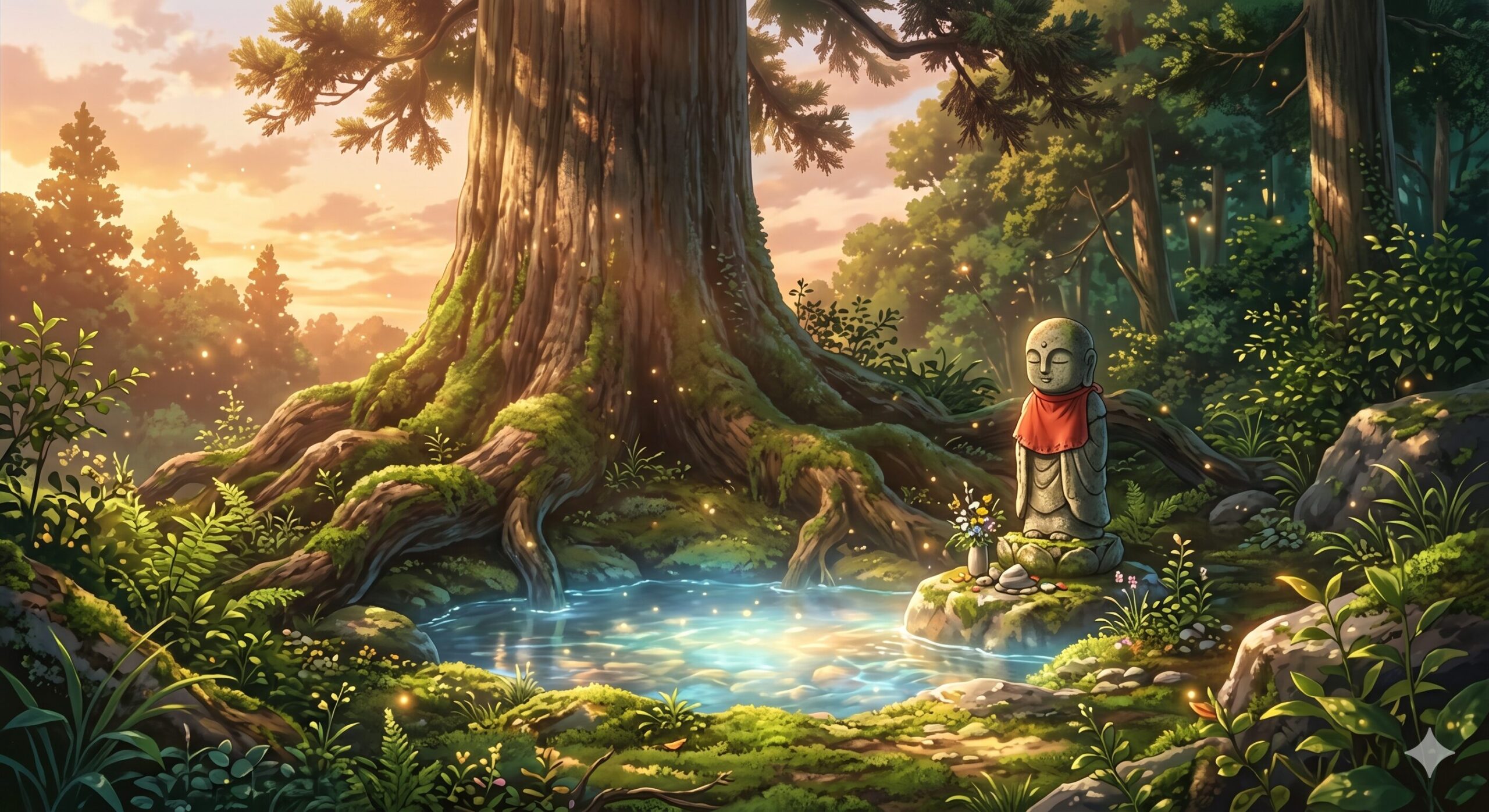
“What on earth is happening at the fields?” Filled with doubt, Tomekichi decided to secretly follow his father one afternoon. Watching from the shadows, he saw his father diligently tending the crops, showing more vigor than in his youth. Nothing seemed unusual. However, as the sun began to set and the sky turned crimson, his father stopped working, put down his hoe, and began to walk. Tomekichi held his breath and followed him to a spring flowing beneath a lone, giant cedar tree at the mountain pass. His father scooped the water with both hands and eagerly drank it down.
Then, a miracle happened. Though he had only drunk water, the father’s face quickly turned red, and he became happily drunk just as before. Astonishingly, the spring water had transformed into the finest sake for his father.
The next morning, Tomekichi went to the spring alone. He gently scooped the water and took a sip. However, what filled his mouth was just crisp, cold water. There was not a trace of alcohol. Yet, it was the purest, most incredibly delicious water he had ever tasted in his life.
At that moment, Tomekichi noticed a small, moss-covered stone Jizo statue quietly standing beside the spring. Seeing the Jizo’s gentle, smiling face, a truth suddenly dawned on him. “I see… Because I am too poor to buy sake, Jizo-sama has given my father his favorite drink in my place.”
The Jizo statue, taking pity on Tomekichi’s inability to buy sake, had magically turned the water into alcohol only when his father drank it. Tomekichi felt a deep, overwhelming shame for having doubted his father, even for a moment, suspecting him of wasting money. He bowed deeply before the Jizo statue, shedding large tears of gratitude.
To express his eternal thanks, Tomekichi built a splendid small shrine for the Jizo and beautifully maintained the area around the spring. Eventually, this place became a vital resting spot, quenching the thirst and healing the fatigue of countless travelers crossing the mountain pass. Tomekichi built a small hut next to the spring and began selling his sandals and traveling hats there. Drawn by his kindness and the delicious water, travelers bought his wares enthusiastically, and it is said that the father and son lived happily ever after.
2. Deep Analysis of the Folktale
At first glance, “The Spring of Idei” seems like a simple fantasy about a magical spring. However, at its core, it portrays profound and universal human psychology and moral values.
The most crucial element is the mutual compassion between Tomekichi and his father. The father prioritizes worrying about his son’s future over his own hardships, while the son blames himself for his inability to provide his father with a simple luxury. This intersection of self-sacrificing love is the primary condition for the miracle. Had either of them harbored selfish desires, the Jizo would never have turned the water into sake.
Furthermore, the most beautiful highlight of this story is Tomekichi’s deep remorse for doubting his father. It is entirely natural for a human to feel suspicious when a family member suddenly starts coming home drunk. Yet, upon learning the truth, he doesn’t just rejoice; he feels profound shame for his lack of absolute trust. This high ethical standard and pure heart are exactly why the Jizo granted them divine protection.
Tomekichi’s actions after the miracle are also vital. He did not keep the blessing to himself. By building a shrine and maintaining the spring for travelers, he elevated a personal miracle into a service for society. The resulting prosperity of his business beautifully illustrates the principle of karmic reward—that good deeds ultimately return to the doer.
3. Connection to Japanese Culture and Spirituality
This story acts as a mirror reflecting traditional Japanese spiritual culture and beliefs.
First, it highlights the powerful Japanese virtue of “Oyakoko” (Filial Piety). Respecting one’s parents and striving to repay their love has been the foundation of Japanese morality since ancient times. Tomekichi is depicted as the ideal embodiment of Oyakoko, teaching that a deeply caring heart, regardless of material wealth, can reach the heavens.
Second, it showcases the fusion of Jizo beliefs and animism. Jizo statues, found quietly standing on roadsides all over Japan, are Bodhisattvas in Buddhism but are affectionately revered as local guardian deities and saviors of the weak. They exist not in grand temples, but in the daily living spaces of the common people. The pairing of the natural “spring” with the “Jizo” is a perfect example of Shinbutsu-shugo (the syncretism of Shinto and Buddhism), finding sacredness in nature itself.
Finally, it reflects a special reverence for “water.” In Japan, a mountainous island nation blessed with abundant water veins, pure water is not merely a resource; it is considered sacred, capable of purifying the mind and body. The motif of ordinary water turning into exquisite sake symbolizes the deep gratitude the Japanese people hold for the blessings of nature.
4. How Did This Story Resonate With You?
Through the pure kindness of Tomekichi and the miracle granted by the unseen divine, what can we learn from “The Spring of Idei”?
In our busy modern lives, do we have the emotional space to care for our loved ones as deeply as Tomekichi did? If you were in his shoes, how would you have reacted to a father coming home drunk every day? Could you have watched over him without suspicion, or would you have immediately confronted him?
Miracles might not fall suddenly like magic; perhaps they quietly appear as the culmination of small, daily acts of compassion and gratitude. Today, after reading this story, please bring the face of someone important to you to mind. Why not offer them a few kind words?
Reference: Learn more about Japanese Folklore (Wikipedia)
Explore more fascinating Japanese folktales here: Japanese Folktale Series
【日本昔話】出井の泉が教える真実の愛と奇跡の物語
① 昔話「出井の泉」の心温まるストーリー
かつて、現在の東京都板橋区にあたる緑豊かな山深い村に、一人の心優しい青年、とめ吉と、その年老いた父親が暮らしていました。二人の生活は決して裕福なものではありません。とめ吉は毎日、朝から晩までわらじを編み、それを街へと売り歩くことで生計を立てていました。一方、父親も曲がった腰に鞭を打ち、毎日泥だらけになって畑仕事に精を出していました。
家は古く、風が吹けば隙間風が入り込むような貧しい暮らしでした。しかし、父親の顔にはいつも穏やかな笑顔が浮かんでいました。なぜなら、息子のとめ吉が誰よりも優しく、親思いの素晴らしい青年だったからです。「こんな山奥の貧しい家に、お嫁に来てくれる娘などいるのだろうか」と、父親は息子の将来を案じていましたが、とめ吉自身は、自分が貧しいがゆえに父親に大好きな酒の一杯すら飲ませてあげられないことを、いつも深く申し訳なく思っていました。
そんなある日のことです。とめ吉が街でわらじを売り終え、くたくたになって家に帰ると、いつもならとっくに帰っているはずの父親の姿がありません。外はすでに薄暗く、夜の帳が下りようとしていました。心配になったとめ吉は、提灯の明かりを頼りに夜道を迎えに出ました。すると、向こうから千鳥足で歩いてくる父親の姿が見えました。驚いたことに、父親の顔は赤く染まり、すっかり酒に酔っ払って上機嫌に歌まで口ずさみながら、鍬を担いで帰ってきたのです。
「おやじ、一体どうしたんだ?どこで酒を飲んできたんだ?」とめ吉は慌てて父親を支え、家へと連れ帰りました。しかし、不思議でたまりません。酒を買うお金など、どこにもないはずだからです。不思議な出来事はこれだけで終わりませんでした。次の日も、そのまた次の日も、父親は夕暮れ時になると、きまって酒に酔って、ふらふらと幸せそうに帰ってくるようになったのです。
「一体、畑で何が起きているというのだ?」疑問に思ったとめ吉は、ある日、畑仕事に向かう父親の後をそっと尾行することにしました。物陰から様子を伺っていると、父親は若い頃以上に力強く、熱心に畑を耕しています。特に変わった様子はありません。しかし、太陽が西の空に傾き、空が茜色に染まり始めた頃、父親は突然作業の手を止め、鍬を置いて歩き出しました。とめ吉が息を潜めて後を追うと、父親は峠にある一本杉の根元にこんこんと湧き出る泉のそばまでやってきました。そして、泉の水を両手ですくい、美味しそうにごくごくと飲み始めたのです。
するとどうでしょう。ただの水を飲んだだけのはずなのに、父親の顔はみるみるうちに赤く染まり、いつものようにすっかり酔っ払ってしまったのです。なんと、その泉の水は、父親にとって極上の「酒」になっていたのです。
翌日の朝、とめ吉は父親に内緒でその泉へ向かいました。そして、そっと泉の水をすくい、口に含んでみました。しかし、とめ吉の口に広がったのは、澄み切った冷たい「ただの水」でした。お酒の味など微塵もしません。けれども、それは今まで飲んだどんな水よりも清らかで、五臓六腑に染み渡るような、信じられないほど美味しい水でした。
その瞬間、とめ吉は泉のすぐそばにひっそりと佇む、苔むしたお地蔵様に気がつきました。柔らかな表情で微笑むお地蔵様を見たとき、とめ吉の胸に一つの真実がストンと落ちてきました。「そうか……。貧しい俺に代わって、お地蔵様がおやじに大好きな酒を飲ませてくれたんだ。」自分が酒を買ってやれないことを不憫に思ったお地蔵様が、父親が水を飲んだときだけ、それを酒に変えてくれていたのです。
とめ吉は、父親がどこかで無駄遣いをしているのではないかと、ほんのわずかでも疑ってしまった自分を激しく恥じました。そして、お地蔵様の前で深く頭を下げ、大粒の涙を流して感謝しました。その後、とめ吉はこの感謝の気持ちを形にするため、お地蔵様のために立派な祠を建て、泉の周りを美しく整備しました。やがてこの場所は立派な水飲み場となり、峠を越える多くの旅人たちの乾いた喉と疲れを癒すオアシスとなりました。とめ吉は泉のすぐ横に小さな小屋を建て、そこでわらじや旅笠を売るようになりました。道行く人々は、とめ吉の優しさと美味しい水に惹かれ、彼が編んだわらじや笠は飛ぶように売れ、親子は末永く幸せに暮らしたと伝えられています。
② 昔話「出井の泉」の深い考察
この「出井の泉」の物語は、一見すると「不思議な泉の魔法」を描いたファンタジーのように思えますが、その根底には非常に深く、そして普遍的な人間の心理と道徳観が描かれています。
まず注目すべきは、とめ吉と父親の「互いを思いやる心のベクトル」です。父親は自分の苦労よりも「息子の将来」を第一に案じており、息子は自分の貧しさよりも「父親に酒一つ飲ませてあげられない不甲斐なさ」を責めています。この自己犠牲的な愛情の交差が、奇跡を呼び起こすための最大の条件となっています。もし、どちらか一方が利己的な欲求を持っていれば、お地蔵様は決して泉の水を酒に変えることはなかったでしょう。
また、この物語の最も美しいハイライトは、とめ吉が「父親を疑ってしまった自分を深く反省する」という描写にあります。突然酒を飲んで帰ってくるようになった父親に対し、とめ吉が不信感を抱くのは人間として極めて自然な感情です。しかし、真実を知ったとき、彼は父親を責めるのではなく、疑った自分自身を恥じました。この高い倫理観と清らかな心こそが、お地蔵様が彼らに加護を与えた最大の理由と言えます。
さらに、奇跡が起きた後のとめ吉の行動も重要です。彼は個人的な恩恵で終わらせず、お地蔵様に祠を建て、泉を整備し、旅人たちに開放しました。個人的な奇跡を、社会全体への奉仕へと昇華させたのです。善行が最終的には自分自身に還ってくるという因果応報の理を見事に示しています。
③ 「出井の泉」から読み解く日本文化と精神性
この物語は、日本の伝統的な精神文化や信仰のあり方を鏡のように映し出しています。
第一に、「親孝行(Oyakoko)」という日本独自の強い美徳です。親を敬い、その恩に報いようとする姿勢は、古来より日本の道徳の根幹を成してきました。物質的な豊かさがなくても、相手を深く思いやる心があれば、それは天(神仏)に通じるという教えが込められています。
第二に、「お地蔵様(Jizo)」信仰とアニミズムの融合です。日本中どこにでも道端にひっそりと佇むお地蔵様は、地域の守り神や弱者の救済者として非常に親しまれています。立派な寺院にいるのではなく、人々の日常の生活空間に存在し、庶民のささやかな願いや悲しみに寄り添う存在です。自然界の「泉」と「お地蔵様」がセットになっている点も、自然そのものに神聖さを見出す日本の古神道的な自然観と仏教が融合した「神仏習合」の素晴らしい例です。
そして最後に、「水」に対する特別な畏敬の念です。豊かな水脈を持つ日本では、清らかな水は単なる資源ではなく、心身の穢れを祓う神聖なものとされてきました。ただの水が極上の酒になるというモチーフは、自然の恵みに対する日本人の深い感謝の念を象徴しています。
④ あなたの心に、どう響きましたか?
「出井の泉」の物語を通して、とめ吉の純粋な優しさと、それに応えた見えない存在の奇跡に、私たちは何を学ぶべきでしょうか。
現代の忙しい日々の中で、私たちはとめ吉のように、身近な大切な人を心から思いやる余裕を持っているでしょうか。もしあなたがとめ吉の立場なら、毎日酒に酔って帰ってくる父親に対して、どのような行動をとったでしょうか。疑いを持たずに見守ることができたでしょうか、それとも真っ先に問い詰めてしまったでしょうか。
奇跡は、魔法のように突然降ってくるものではなく、日々のささやかな思いやりや感謝の積み重ねの先に、そっと現れるものなのかもしれません。この物語を読んだ今日、ぜひあなたの大切な人の顔を思い浮かべてみてください。そして、ほんの少しだけ、優しい言葉をかけてみてはいかがでしょうか。
参考リンク:日本の民間伝承について深く知る(Wikipedia・英語)
もっと日本の不思議で心温まる昔話に出会いたい方はこちら:日本の昔話シリーズ一覧

コメント