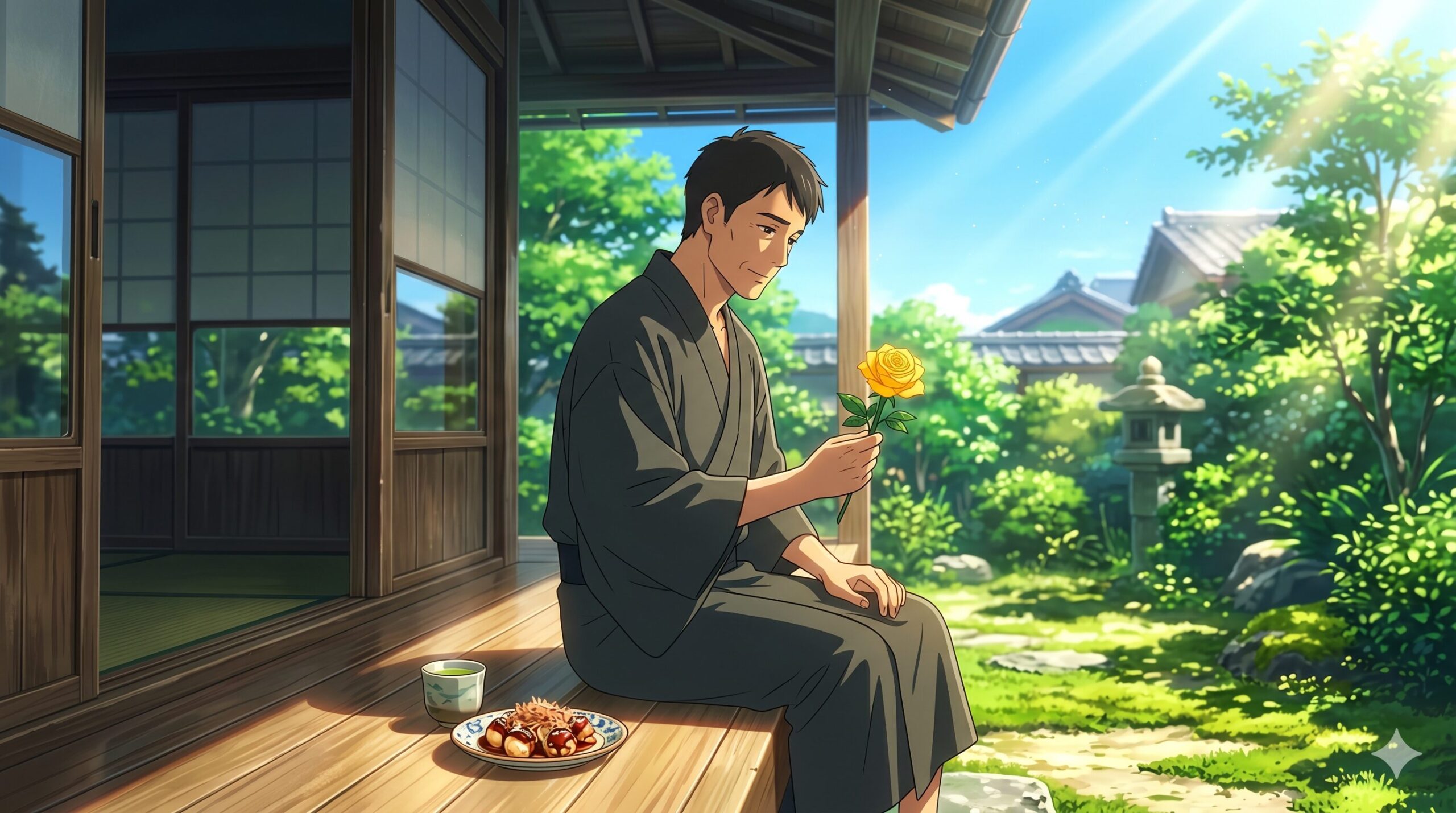
Japan possesses a genius for seamlessly blending ancient nature worship with modern cultures adopted from abroad. June 21 is a day that perfectly proves this fact. This day marks the peak of the sun’s power, known as the “Summer Solstice” (Geshi) in the 24 Solar Terms, while simultaneously serving as “Father’s Day,” a modern reaffirmation of family bonds. Let’s peel back the deep historical and cultural layers to discover what prayers the Japanese have woven into this day, where the movement of celestial bodies intersects with warm familial gratitude.
The Day the Sun Rises Highest: The Truth of the Summer Solstice (Geshi)
The Summer Solstice is the day with the longest daylight and the shortest night of the year. Astronomically, it marks the moment the sun reaches exactly 90 degrees of celestial longitude. However, in Japan’s traditional calendar system known as the “24 Solar Terms” (Nijushi Sekki), it is revered as the crucial 10th milestone of the year.
Ancient Japanese society was fundamentally an agrarian culture centered entirely around rice cultivation. The period of the Summer Solstice falls right in the middle of Japan’s rainy season (Tsuyu). For farmers, the roughly 11-day period from the Solstice to “Hangesho” was the absolute, grueling deadline by which all rice planting had to be completed. On the day when the sun’s energy reaches its zenith, people gave thanks for its blessings while simultaneously developing unique food cultures to survive the backbreaking labor.
- “Octopus” in the Kansai Region: In the Kansai area, centering around Osaka, it is a tradition to eat octopus from the Solstice through Hangesho. This carries a magical, desperate prayer: just as the eight legs of an octopus firmly suction to rocks, farmers prayed that “the roots of the planted rice will grip the earth deeply and firmly in all directions.”
- “Roasted Mochi” in the Kanto Region: Meanwhile, in the Kanto area around Tokyo, there was a custom of eating “Hangesho Mochi”—a roasted cake made by mixing newly harvested wheat with glutinous rice. This is a remnant of a ritual offering the first wheat harvest to the gods to pray for agricultural abundance.
- “Figs” in Aichi and “Minazuki” in Kyoto: Depending on the region, diverse cultures breathe life into this day, such as eating figs as the fruit of immortality, or consuming “Minazuki,” a traditional Japanese sweet shaped like ice to ward off the summer heat and evil spirits.
The Summer Solstice is not merely an astronomical phenomenon; it is the crystallization of survival wisdom, showcasing how the Japanese perfectly synchronized their lives with the cycles of nature to absorb its power.
Yellow Roses and Unagi: The Unique Evolution of Father’s Day in Japan
On the other hand, “Father’s Day,” celebrated on the third Sunday of June, is a culture that originated in the United States. It began in 1909 when Sonora Smart Dodd advocated for a day to honor her late father, a single parent who raised six children. This culture officially took deep root in Japan in the 1980s.
What is truly fascinating is the “unique evolution” of Father’s Day in Japan. While it is common in the US to give red roses (if living) or white roses (if deceased), in Japan, “yellow roses” are overwhelmingly the flower of choice. This was sparked by the “Yellow Ribbon Campaign” launched by the Japan Father’s Day Committee, established in 1981. In the UK and elsewhere, yellow is considered a color of protection, love, trust, and respect. Thus, it became infused with the Japanese people’s gratitude and prayers for the safety of fathers as the pillars of the household.
Furthermore, in modern Japan, it has become highly popular to gift “Unagi” (eel) to help fathers survive the oppressive humidity typical of the Solstice season, along with premium Japanese Sake, craft beer, or traditional summer loungewear called “Jinbei.” This perfectly illustrates the Japanese trait of not merely imitating foreign cultures, but reconstructing them by tying them to indigenous seasons and culinary traditions.
Decoding Japanese Culture: The Rice that Roots the Earth, The Father that Roots the Family
At first glance, the ancient agrarian rituals of the Summer Solstice and the modern Father’s Day seem to have no connection. However, within the Japanese spiritual landscape, these two draw a beautiful synchronicity.
Just as the reason for eating octopus in Kansai was a prayer for the rice roots to stretch deeply, the Japanese Summer Solstice is a period that heavily emphasizes “solidifying one’s foundation.” To withstand the coming severe summer typhoons and droughts, the invisible “roots” beneath the soil must be incredibly resilient.
This aligns perfectly with the traditional Japanese view of the “father” (or parental guardian) in a family. Rather than a brightly blooming flower in plain sight, the father is often viewed as the entity that takes deep root in the soil of the family, protecting it from storms. The spirit of “resilient rooting” prayed for on the Solstice and the “prayers for gratitude and safety” offered on Father’s Day are profoundly connected at the base of the Japanese psyche. This perspective of capturing the changing of the seasons (the macro) and human endeavors (the micro) as fractals is the very essence of Japanese culture.
Over to You: At the Crossroads of Seasons and Bonds
Today, Japan experiences its longest day, bathed in the maximum sunlight of the year. And that light warmly illuminates those who strive daily for their families.
Does your country have unique customs to celebrate the peak of the sun? And if you were to express your gratitude to someone today following Japanese culture, what would you give them? A yellow rose, or perhaps a special dish featuring octopus? Please spend this beautiful day reflecting on your own roots and feelings for your family. I would love to hear what you think and what you would do.
Reference Links (External)
- For precise astronomical data on the Solstice and the 24 Solar Terms: National Astronomical Observatory of Japan (NAOJ) Ephemeris Computation Office
- For the history of Father’s Day in Japan and the Yellow Ribbon Campaign: Japan Father’s Day Committee (FDC)
Dive Deeper into Japan’s Special Days (Internal)
To discover more secrets of Japanese anniversaries and calendars, visit here: What’s Today’s Special Day Series
- The Day the Sun Rises Highest: The Truth of the Summer Solstice (Geshi)
- Yellow Roses and Unagi: The Unique Evolution of Father’s Day in Japan
- Decoding Japanese Culture: The Rice that Roots the Earth, The Father that Roots the Family
- Over to You: At the Crossroads of Seasons and Bonds
- 6月21日は何の日?夏至と父の日が交差する、日本の深い根幹を知る一日
6月21日は何の日?夏至と父の日が交差する、日本の深い根幹を知る一日
日本という国は、古来の自然信仰と海外から取り入れた近代的な文化を、違和感なく独自の形に融合させる天才です。6月21日という日は、まさにその事実を完璧に証明する一日と言えます。この日は、太陽の力が極まる二十四節気の「夏至(げし)」であり、同時に現代社会における家族の絆を再確認する「父の日」でもあります。天空の星の運行と、家庭内の温かな感謝の念が交差するこの日、日本人がどのような祈りを込めてきたのか、その深い歴史と文化のレイヤーを一枚ずつ紐解いていきましょう。
太陽が最も高く昇る日:二十四節気「夏至」の真実
夏至は、一年で最も昼の時間が長く、夜が短い日です。天文学的には太陽の黄経が90度に達する瞬間を指しますが、日本の伝統的な暦である「二十四節気(にじゅうしせっき)」においては、第10番目の重要な節目として扱われます。
古代の日本社会は、稲作を中心とした完全な農耕社会でした。夏至の時期は、ちょうど日本の梅雨(つゆ)の真っ只中にあたります。農家にとって、夏至から約11日後の「半夏生(はんげしょう)」までの期間は、田植えを終わらせなければならない最も過酷で重要なタイムリミットでした。太陽のエネルギーが最高潮に達するこの日、人々は太陽の恵みに感謝すると同時に、過酷な労働を乗り切るための特別な食文化を発達させました。
- 関西地方の「タコ」: 大阪を中心とする関西地方では、夏至から半夏生にかけてタコを食べる習慣があります。これは、タコの八本の足が岩にしっかりと吸い付くように、「植えた稲の根が大地に深く、八方にしっかりと根付きますように」という切実な祈りが込められた呪術的な意味合いを持っています。
- 関東地方の「焼き餅」: 一方、東京周辺の関東地方では、小麦に半分餅米を混ぜて焼いた「半夏生餅(焼き餅)」を食べる風習がありました。これは収穫したばかりの小麦を神様に供え、豊作を祈願する儀式の名残です。
- 愛知県の「イチジク」や京都の「水無月(みなづき)」: 地域によっては不老長寿の果実としてイチジクを食べたり、氷を模した和菓子「水無月」を食べて夏の邪気を払うなど、多種多様な文化が息づいています。
夏至は単なる天文学的な現象ではなく、日本人が自然のサイクルに自らの生活を完全に同期させ、自然の力の一部を取り込もうとした生存の知恵の結晶なのです。
黄色いバラとウナギ:日本独自の進化を遂げた「父の日」
一方、6月の第3日曜日である「父の日」は、アメリカ発祥の文化です。1909年、アメリカのソノラ・スマート・ドッドという女性が、男手一つで6人の子供を育て上げた亡き父を讃えるために提唱したのが始まりです。この文化が日本に本格的に定着したのは、1980年代に入ってからのことでした。
ここで注目すべきは、日本における父の日の「独自の進化」です。アメリカでは父の日に赤いバラ(存命の場合)や白いバラ(亡くなっている場合)を贈るのが一般的ですが、日本では圧倒的に「黄色いバラ」が贈られます。これは1981年に設立された「日本ファーザーズ・デイ委員会」が展開した「イエローリボンキャンペーン」がきっかけです。黄色はイギリスなどで「身を守るための色」「愛と信頼と尊敬を表す色」とされており、家族の大黒柱としての父親への感謝と安全の祈りが込められました。
さらに、現代の日本では黄色いバラに加えて、夏至の時期特有の蒸し暑さを乗り切るための「うなぎ(鰻)」や、特別な「日本酒・クラフトビール」、あるいは伝統的な「甚平(じんべい)」などを贈るのが非常にポピュラーになっています。海外の文化をそのまま模倣するのではなく、日本の季節感や食文化と結びつけて再構築する日本人の特性がここにも表れています。
読み解く日本文化:大地に根を張る稲と、家族を支える父
一見すると、古代の農耕儀礼である「夏至」と、近代的な「父の日」には何の関連性もないように思えます。しかし、日本の精神世界において、この二つは美しいシンクロニシティを描いています。
関西地方でタコを食べる理由が「稲の根が深く張るように」という祈りであったように、日本の夏至は「基盤を固めること」に重きを置いた時期です。これからの過酷な夏の台風や日照りに耐えるためには、目に見えない「根」の部分が強靭でなければなりません。
これはまさに、家族における「父親(または親としての保護者)」の役割に対する日本人の伝統的な見方と一致します。表立って華やかに咲く花というよりも、家族という土壌の地中深くでしっかりと根を張り、嵐から守り抜く存在。夏至の日に祈る「強靭な根付き」の精神と、父の日に捧げる「感謝と安全への祈り」は、日本人の精神の根底において完全に繋がっているのです。季節の移ろい(マクロ)と、人間の営み(ミクロ)をフラクタルに捉えるこの視点こそが、日本文化の真髄です。
あなたへ:季節と絆の交差点で
日本は今日、一年で最も太陽の光が降り注ぐ長い一日を迎えています。そしてその光は、家族のために日々奮闘する人々を暖かく照らし出しています。
あなたの国には、太陽のピークを祝う独自の風習がありますか?そして、もしあなたが今日、日本の文化に倣って誰かに感謝を伝えるとしたら、何を贈りますか?黄色いバラでしょうか、それともタコを使った特別な料理でしょうか。ぜひ、あなた自身のルーツや家族への思いと重ね合わせながら、この美しい一日を過ごしてみてください。あなたの考えを、ぜひ教えてください。
参考リンク(外部リンク)
- 夏至や二十四節気の正確な天文学的データについてはこちら:国立天文台 暦計算室
- 日本の父の日の歴史とイエローリボンキャンペーンについてはこちら:日本ファーザーズ・デイ委員会(FDC)
日本の記念日をもっと深く知る(内部リンク)
その他の日本の特別な日や暦の秘密については、こちらをご覧ください:What’s Today’s Special Day Series

コメント