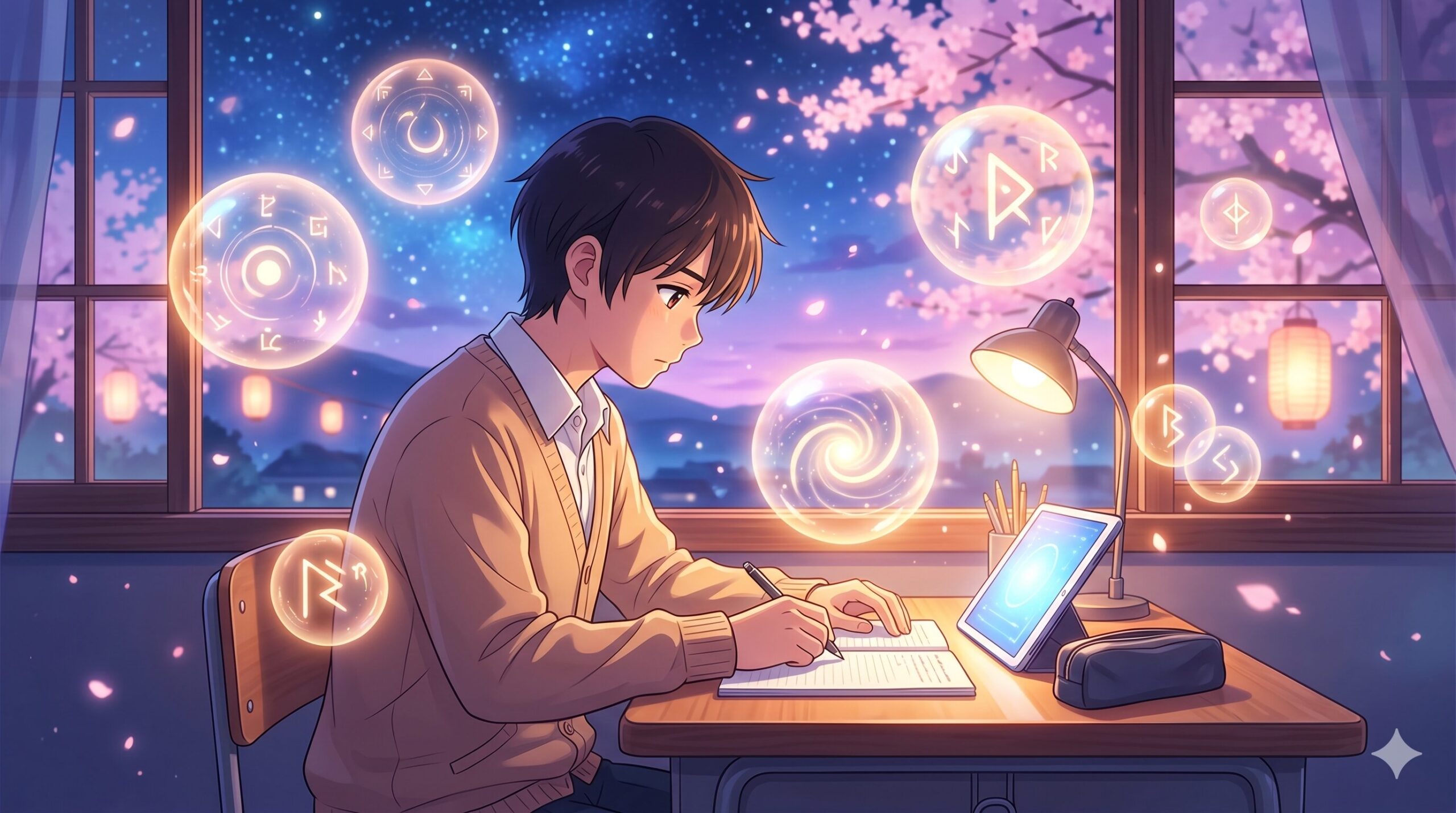
There is a massive wall that almost all overseas learners of Japanese hit at some point. Is it the memorization of Kanji? Or the complex rules of Keigo (honorifics)? While those are certainly formidable foes, the element that frustrates learners the most—yet simultaneously radiates the deepest charm of the Japanese language—is “Onomatopoeia” (Giongo and Gitaigo).
Because it requires installing a completely new “sense” that doesn’t exist in your native language, simply memorizing words will never be enough to master it. Today, we will explore why Japanese onomatopoeia is so unique and difficult, and dive into the profound depths of Japanese culture that lie behind it.
1. The Magic of Expressing Non-Sounds as Words (Gitaigo & Gijougo)
Many languages, including English, have onomatopoeic words that mimic actual sounds, such as a dog’s “bow-wow” or an explosion’s “bang.” Up to this point, it’s a universal linguistic approach. However, what makes Japanese extraordinary is that it expresses states and emotions that produce no physical sound as if they were sounds.
- Expressing States (Gitaigo): Stars shine “kira-kira” (sparkling), a baby’s skin is “tsuru-tsuru” (smooth).
- Expressing Emotions (Gijougo): Your chest goes “doki-doki” (heart pounding) from nervousness, or you feel “sowa-sowa” (restless) before an exam.
You cannot record the light of a star, the smoothness of skin, or psychological tension with a microphone. The fundamental difference in perception—”Why are there sound words for things that make no sound?”—is the first factor that leaves logically-minded language learners scratching their heads.
2. The Subtle Mastery of Dakuten (゛) and Handakuten (゜)
Japanese onomatopoeia uses highly systematic phonetic changes to fine-tune nuances. While native speakers intuitively use these differences as naturally as breathing, learners often feel like they are walking through a minefield. Generally, adding a voiced mark (Dakuten ゛) gives a “heavy, large, rough, or negative” impression, while adding a semi-voiced mark (Handakuten ゜) changes the impression to something “light, popping, or cute.”
By understanding this regularity, you can feel the energy a word carries.
- Sara-sara vs. Zara-zara: “Sara-sara” describes fine, smooth sand or hair. “Zara-zara” is a rough, unpleasant surface to touch.
- Ton-ton vs. Don-don: “Ton-ton” is the sound of a light knock on a door. “Don-don” is a strong banging sound, or the state of things progressing rapidly and forcefully.
- Hara-hara vs. Bara-bara: “Hara-hara” describes cherry blossoms falling beautifully, or the feeling of being kept in suspense. “Bara-bara” means things are scattered chaotically or broken apart.
3. The Ultimate Context Dependency: The Shapeshifter “Goro-goro”
Because the same onomatopoeic word can completely change its meaning depending on the context, memorizing one definition from a dictionary is utterly useless. The most infamous and beloved example of this is “Goro-goro.” Take a look at the table below.
| Situation | Meaning / Role of “Goro-goro” |
|---|---|
| When thunder strikes | The low, heavy rumbling sound of thunder |
| When petting a cat | The sound of a satisfied cat purring |
| When moving a large rock | The sound or appearance of a heavy object rolling |
| When staying home on a day off | The state of lounging around and doing nothing (Gitaigo) |
| When dust gets in your eye | The painful, gritty sensation of a foreign object (Gitaigo) |
Expressing the sound of thunder, a lazy holiday attitude, and eye pain all with the exact same repetition of sounds (“Goro-goro”) seems like absolute madness from the perspective of other language speakers.
4. The Overwhelming Frequency in Daily Conversation
In languages like English, when you want to convey subtle nuances, you choose “more specific verbs or adjectives.” For example, for the action of walking, you change the verb entirely: “stroll,” “trudge,” or “march.”
On the other hand, Japanese depicts scenes by attaching onomatopoeia to basic verbs like “walk,” “eat,” or “laugh.” Expressions like “tobo-tobo aruku” (trudge), “gatsu-gatsu taberu” (devour/eat greedily), and “niya-niya warau” (smirk) are incredibly natural.
Therefore, if you avoid learning onomatopoeia, you will face the reality of not grasping the nuances of natural daily conversations among Japanese people, and you will miss out on the rich scenic descriptions in manga and novels.
Deep Dive: Why Do Japanese People Love Onomatopoeia So Much?
Why did the Japanese language evolve in such a unique way? It is believed to be deeply connected to Japan’s traditional view of nature, “Animism” (the belief that spirits dwell in all things), and a culture that values a sense of unity with nature.
Since ancient times, Japanese people have listened closely to “voiceless things” like the movement of the wind, the twinkling of stars, and the changing of the seasons, sensing emotions and the presence of life within them. Gitaigo, which gives sound (words) to the soundless, is the crystallization of the delicate sensibility unique to the Japanese, who sensitively perceive subtle changes in the natural world and the atmosphere of a space.
Advice for Learners: How to Acquire Onomatopoeia as a “Sense”
So, how should you go about learning this complex onomatopoeia? The biggest secret is: “Do not memorize them with flashcards.” Onomatopoeia is not logic; it is a feeling.
- Read Manga: Japanese manga is a treasure trove of onomatopoeia. By visually connecting the background text like “Dodoon” or “Shiiin” with the characters’ expressions and the situation, you can absorb the feeling along with the context.
- Pronounce While Moving Your Body: When saying “sara-sara,” move your hands smoothly; when saying “zara-zara,” try frowning. Linking physical sensations with sound helps it stick in your brain.
- Expose Yourself to Live Conversation: Use practical resources like NHK’s Japanese learning site or listen to native conversation podcasts, and observe what kind of facial expressions they make when uttering those sounds.
If you want to delve deeper into the background of Japanese culture and language, be sure to check out other articles in the Japanese Culture category on our blog.
Over to You: How Do You Feel?
Japanese onomatopoeia might seem like an unreasonable wall at first. However, once you grasp the feeling, it becomes a magic lens that makes the world look more colorful, emotionally rich, and high-resolution.
After reading this article, what do you think about Japanese onomatopoeia? Do you want to try mastering polysemous words like “Goro-goro”? Or do you have similarly interesting expressions in your native language? Please let me know your favorite—or the weirdest—Japanese onomatopoeia you’ve encountered. And starting today, try searching for the hidden “sounds” in your daily life!
- 1. The Magic of Expressing Non-Sounds as Words (Gitaigo & Gijougo)
- 2. The Subtle Mastery of Dakuten (゛) and Handakuten (゜)
- 3. The Ultimate Context Dependency: The Shapeshifter “Goro-goro”
- 4. The Overwhelming Frequency in Daily Conversation
- Deep Dive: Why Do Japanese People Love Onomatopoeia So Much?
- Advice for Learners: How to Acquire Onomatopoeia as a “Sense”
- Over to You: How Do You Feel?
- 音のない世界に音を与える:日本語のオノマトペが持つ奇妙で奥深い魅力
音のない世界に音を与える:日本語のオノマトペが持つ奇妙で奥深い魅力
日本語を学ぶ多くの海外学習者が、ある段階で必ずと言っていいほどぶつかる巨大な壁があります。漢字の暗記でしょうか?それとも敬語の複雑なルールでしょうか?確かにそれらも難敵ですが、最も学習者を悩ませ、同時に日本語の底知れぬ魅力を放っているのが「オノマトペ(擬音語・擬態語)」です。
母語には存在しない全く新しい「感覚」をインストールしなければならないため、単なる単語の暗記では決して使いこなすことができません。今回は、なぜ日本語のオノマトペがこれほどまでに独特で、難しいのか。そして、その背後にある日本文化の深淵に迫ります。
1. 物理的な「音」がしないものまで言葉にする魔法(擬態語・擬情語)
英語などの多くの言語にも、犬の鳴き声である「ワンワン(bow-wow)」や、爆発音の「ドカン(bang)」といった、実際の音を模倣した擬音語は存在します。ここまでは世界共通の言語的アプローチです。しかし、日本語が特異なのは、「本来音がしない状態や感情までも、音として表現してしまう」という点にあります。
- 状態の表現(擬態語): 星が「きらきら」光る、赤ちゃんの肌が「つるつる」だ。
- 感情・心理の表現(擬情語): 緊張で胸が「どきどき」する、試験前で落ち着かず「そわそわ」する。
星の光も、肌の滑らかさも、心臓の鼓動以外の心理的緊張も、マイクを向けても音は録音できません。「音が鳴っていないのに、なぜ音の言葉が存在するのか?」という根本的な感覚の違いが、論理的に言語を学ぼうとする学習者の頭を抱えさせる最初の要因です。
2. 濁点(゛)や半濁点(゜)がもたらす絶妙なニュアンスの支配
日本語のオノマトペは、非常にシステマチックな音の変化でニュアンスを微調整します。日本人にとっては空気を吸うように自然に使い分けている違いですが、学習者にとってはトラップの連続に感じられるでしょう。一般的に、濁音(゛)がつくと「重い、大きい、粗い、ネガティブ」な印象になり、半濁音(゜)がつくと「軽い、弾けるような、可愛らしい」印象に変化します。
この規則性を知ることで、単語の持つエネルギーを感じ取ることができます。
- さらさら vs ざらざら: 「さらさら」はきめ細かく滑らかな砂や髪の毛。「ざらざら」は粗く、触ると不快な表面。
- とんとん vs どんどん: 「とんとん」はドアを軽くノックする音。「どんどん」は強く叩く音、あるいは物事が勢いよく進行する様子。
- はらはら vs ばらばら: 「はらはら」は桜の花びらが美しく落ちる様子や、心配する感情。「ばらばら」は秩序なく無惨に散らばる様子。
3. 究極の文脈依存:カメレオンのような言葉「ゴロゴロ」
同じ一つのオノマトペが、文脈によって全く違う意味に変化するため、辞書で一つの意味を覚えただけでは全く太刀打ちできません。その最も悪名高く、かつ愛すべき代表例が「ゴロゴロ」です。以下の表を見てみてください。
| 状況 | 「ゴロゴロ」の意味・役割 |
|---|---|
| 雷が鳴っている時 | 雷の低く重く響く音(擬音語) |
| 猫を撫でている時 | 猫が満足して喉を鳴らす音(擬音語) |
| 大きな岩を動かす時 | 重い物が転がる音や様子(擬音・擬態語) |
| 休日に家にいる時 | 何もせずにダラダラ過ごしている状態(擬態語) |
| 目にゴミが入った時 | 異物感があって痛い状態(擬態語) |
雷の音と、休日の怠惰な態度と、目の痛みをすべて同じ「ゴロゴロ」という音の連続で表現することは、他言語のスピーカーからすれば狂気の沙汰にも思えるほど特殊な構造です。
4. 日常会話の解像度を決める圧倒的な出現頻度
英語などでは、細かいニュアンスを伝える際には「より具体的な動詞や形容詞」を選びます。例えば「歩く」という動作でも、散歩なら”stroll”、重い足取りなら”trudge”、行進なら”march”と動詞そのものを変えます。
一方、日本語では「歩く」「食べる」「笑う」といった基本的な動詞にオノマトペをくっつけることで情景を描写します。「とぼとぼ歩く」「ガツガツ食べる」「にやにや笑う」といった表現です。
そのため、オノマトペを避けて通ると、日本人の自然な日常会話のニュアンスが掴めず、マンガや小説の豊かな情景描写を味わうことができないという事態に直面します。
日本語の考察:なぜ日本人はこれほどオノマトペを愛するのか
なぜ日本語はこのような独自の進化を遂げたのでしょうか。それは、日本の伝統的な自然観である「アニミズム(万物に魂が宿るという考え方)」や、自然との一体感を重んじる文化が深く関係していると考えられます。
日本人は古来より、風の動き、星の瞬き、季節の移ろいといった「声なきもの」に耳を澄ませ、そこに感情や命の気配を感じ取ってきました。音がしないものに音(言葉)を与える擬態語は、自然界の微細な変化や場の空気を敏感に察知する、日本人特有の繊細な感性の結晶なのです。
学習者へのアドバイス:オノマトペを「感覚」として身につける方法
では、この難解なオノマトペをどうやって学習すれば良いのでしょうか。最大の秘訣は「単語カードで暗記しないこと」です。オノマトペは論理ではなく感覚です。
- マンガを読む: 日本のマンガはオノマトペの宝庫です。背景に描かれた「ドドーン」や「シーン」という文字と、キャラクターの表情や状況を視覚的に結びつけることで、文脈ごと感覚を吸収できます。
- 身体を動かしながら発音する: 「さらさら」と言う時は手を滑らかに動かし、「ざらざら」と言う時は顔をしかめてみる。身体の感覚と音をリンクさせることで、脳に定着しやすくなります。
- 生きた会話に触れる: NHKの日本語学習サイトのような実践的なリソースや、ネイティブの会話ポッドキャストを聴き、彼らがどんな表情でその音を発しているかを観察しましょう。
より深く日本文化や言語の背景を知りたい方は、当ブログのJapanese Culture(日本文化)カテゴリーの他の記事もぜひ参考にしてください。
最後に:あなたはどう感じますか?
日本語のオノマトペは、最初は理不尽な壁に見えるかもしれません。しかし、ひとたびその感覚を掴むと、世界がよりカラフルで、より感情豊かに解像度高く見えてくる魔法のレンズになります。
この記事を読んで、日本語のオノマトペについてどう思いましたか?「ゴロゴロ」のような多義語に挑戦してみたいですか?それとも、あなたの母語にも似たような面白い表現はありますか?ぜひ、あなたが一番好きな、あるいは一番奇妙だと感じた日本語のオノマトペを教えてください。そして今日から、あなたの日常に隠れた「音」を探してみてください。
コメント