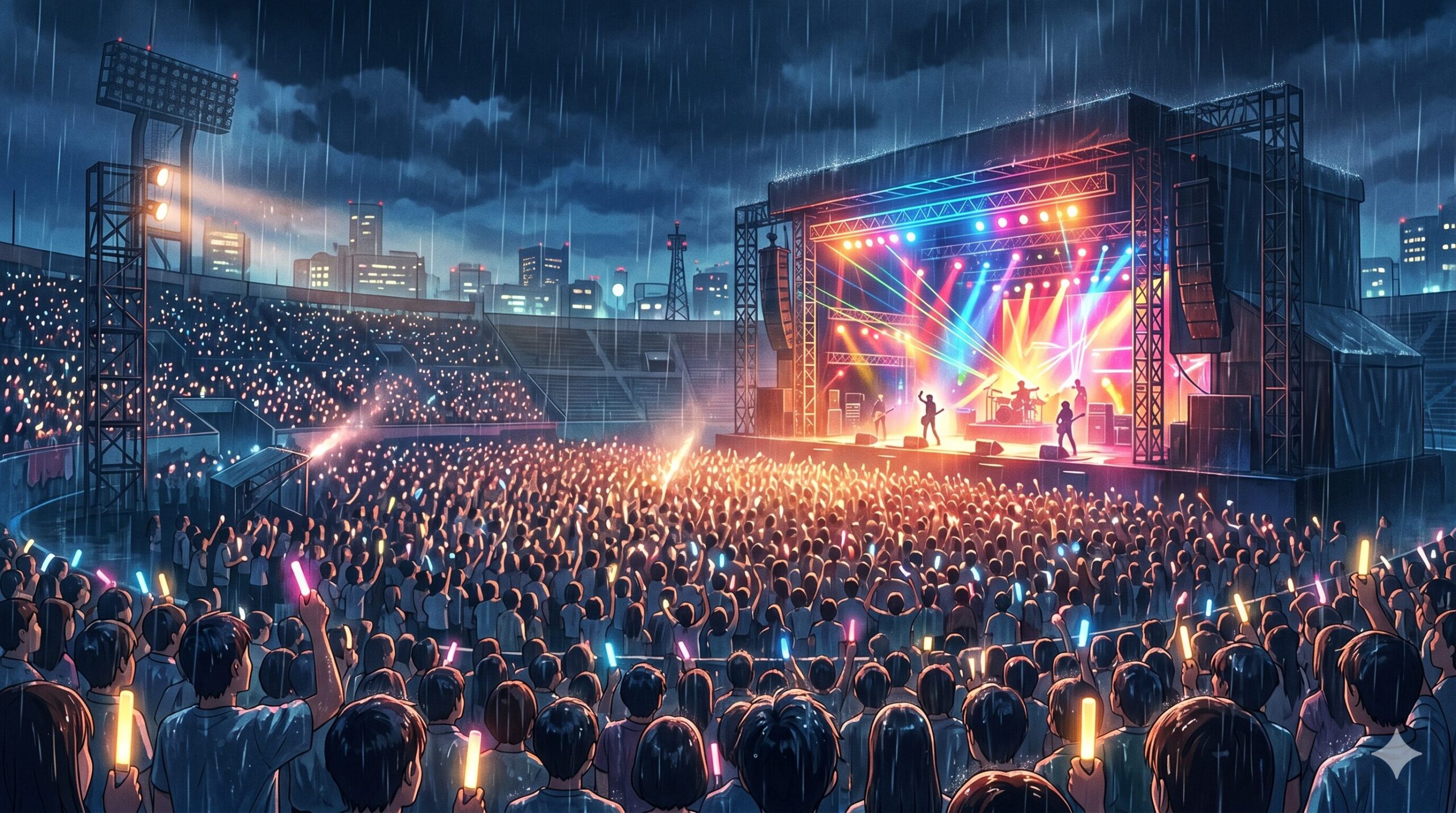
On June 14, 1987, a global pop icon stepped onto Japanese soil for the first time, delivering a performance that would echo through history. The memorable opening night of Madonna’s “Who’s That Girl World Tour” took place at Osaka Stadium. As fate would have it, Osaka was battered by torrential rain that day. However, even the heavy downpour could not cool the blazing enthusiasm of the 25,000 fans who packed the venue. The sight of Madonna delivering a flawless performance while drenched in the rain sent a massive shockwave through the youth of Japan.
This visit was dubbed the “Madonna Typhoon” by the Japanese media, dominating headlines day after day. From the frenzied welcome at the airport to the emergence of “Madonna Wannabes” mimicking her bold fashion, it transcended a mere musical event to become a colossal social phenomenon. In an era before the internet, having a top-tier international star directly crash her raw energy into the country marked a critical turning point in the history of Japanese entertainment.
1980s Bubble Economy Japan and Madonna as the “Black Ship”
Deciphering the historical context of 1987 is essential for understanding the evolution of Japanese culture. At the time, Japan was in the midst of its “Bubble Economy,” an unprecedented period of economic prosperity. People were celebrating newfound wealth, greedily absorbing foreign brands and the latest international trends. It was an era when Japanese society opened itself wide to the outside world.
Madonna’s presence can be likened to the “Kurofune” (Black Ships) that forced the end of Japan’s isolation in the 19th century. At the time, Japan’s domestic music scene had reached the peak of its unique “Idol Culture,” characterized by stars like Seiko Matsuda and Akina Nakamori. Into this scene arrived Madonna, an artist who powerfully affirmed her sexuality and fearlessly expressed herself without regard for taboos. Just a year prior, in 1986, Japan enacted the Equal Employment Opportunity Law. For Japanese women who were just beginning to strive for greater social advancement, Madonna’s image of a strong, fiercely independent woman resonated intensely as the ultimate ideal for a new era. She was not just a singer; she was a cultural icon who shook the very foundations of Japanese social structures and gender norms.
A Lost Landscape: Osaka Stadium Today
Osaka Stadium, the stage for Madonna’s legendary performance, was long beloved as the home ground of the Nankai Hawks professional baseball team. Today, however, it no longer exists. After being demolished in 1998, the vast site was reborn through massive urban redevelopment.
Today, a gigantic commercial complex named “Namba Parks” stands in its place. Featuring magnificent rooftop gardens, this futuristic building has become a new symbol of Osaka. In the exact same physical space where tens of thousands once stood in a muddy field, soaked by rain, screaming for a global diva, people now quietly enjoy shopping and relaxing in lush, green cafes. This dynamic spatial transformation perfectly symbolizes the resilience and constant evolution of Japanese urban culture—always tearing down the old to regenerate into something breathtakingly new.
How Do You Face Historical Turning Points?
June 14, 1987, was a day when music, passion, and the raw energy of an era violently intersected. It teaches us that culture has the profound power to cross oceans and alter the deeply held values of the masses.
How did you feel reading this article? If you could time-slip back to 1987 Japan and stand in the torrential rain of Osaka Stadium, what would you have felt amidst that deafening roar of music and enthusiasm? How would you express your own heart in a moment of such intense cultural collision? Take a moment to deeply imagine this, and reflect on similar historical moments that may have shifted the culture in your own country.
Related Links
Learn more about Osaka’s history and current tourism (External Link):
Osaka Convention & Tourism Bureau Official Site
Discover more about Japanese anniversaries and culture (Internal Link):
Read the What’s Today’s Special Day Series
1987年6月14日:伝説の幕開け「マドンナ・タイフーン」が大阪に上陸
1987年6月14日、世界のポップアイコンが初めて日本の土を踏み、歴史的な公演を行いました。マドンナの初来日公演「Who’s That Girl World Tour」の記念すべき初日が、大阪球場で幕を開けたのです。折しもこの日の大阪は激しい雨に見舞われました。しかし、土砂降りの雨すらも、会場を埋め尽くした2万5千人の観客が放つ熱狂を冷ますことはできませんでした。ステージ上で雨に濡れながらも完璧なパフォーマンスを披露するマドンナの姿は、当時の日本の若者たちに強烈な衝撃を与えました。
この来日は「マドンナ・タイフーン」と称され、連日メディアで大々的に報道されました。空港での熱狂的な出迎え、彼女のファッションを模倣する「マドンナ・ウォナビー」と呼ばれる若者たちの出現など、単なる音楽イベントの枠を超えた巨大な社会現象となりました。インターネットのない時代において、海外のトップスターが日本に直接やってきて、その生身のエネルギーをぶつけたこの日は、日本のエンターテインメント史において極めて重要な転換点です。
バブル経済絶頂期の日本文化と「黒船」としての影響
この1987年という時代背景を読み解くことは、日本文化の変遷を知る上で非常に重要です。当時の日本は、歴史上類を見ない好景気である「バブル経済」のただ中にありました。人々は豊かさを謳歌し、海外ブランドや最新のカルチャーを貪欲に吸収していました。日本社会全体が、外の世界に向けて大きく開かれていた時代です。
マドンナの存在は、19世紀に日本の鎖国を終わらせた「黒船」に例えることができます。当時の日本の音楽シーンは、松田聖子や中森明菜に代表される独自の「アイドル文化」が成熟の極みに達していました。そこへ、自らのセクシュアリティを力強く肯定し、タブーを恐れずに自己表現を行うマドンナが到来したのです。特に、前年の1986年に「男女雇用機会均等法」が施行され、社会進出を目指し始めた日本の女性たちにとって、マドンナの自立した強い女性像は、新しい時代の理想像として強烈に響きました。彼女は単なる歌手ではなく、当時の日本の社会構造やジェンダー観に揺さぶりをかける文化的なアイコンだったのです。
失われた風景:熱狂の舞台「大阪球場」の現在
マドンナが伝説のステージを繰り広げた「大阪球場」は、プロ野球チーム・南海ホークスの本拠地として長年親しまれたスタジアムでしたが、現在ではその姿を見ることはできません。1998年に解体された後、その広大な跡地は大規模な都市開発によって生まれ変わりました。
現在、その場所には「なんばパークス」という巨大な商業施設が建っています。見事な屋上庭園を持つこの近未来的な建物は、大阪の新しいシンボルとなっています。かつて泥だらけのグラウンドで数万人が雨に打たれながら世界の歌姫に熱狂したその同じ空間で、今では人々が静かに買い物を楽しみ、緑豊かなカフェでくつろいでいます。このダイナミックな空間の変遷そのものが、常に変化し、古いものを新しい形へと再生していく日本の都市文化の力強さを象徴しています。
あなたは歴史の転換点にどう向き合いますか?
音楽と熱狂、そして時代のエネルギーが交差した1987年6月14日。この出来事は、文化が海を越えて人々の価値観を変える力を持っていることを私たちに教えてくれます。
この記事を読んで、あなたはどう感じましたか?もしあなたが1987年の日本にタイムスリップし、土砂降りの大阪球場に立っていたとしたら、その雨と音楽の熱狂の中で何を思ったでしょうか。文化が激しくぶつかり合う歴史的な瞬間に、あなたならどうやって自分の心を表現しますか?ぜひ、あなたの考えや、あなたの国での似たような歴史的瞬間について深く想像してみてください。
関連リンク
大阪の歴史と現在の観光情報について(外部リンク):
Osaka Convention & Tourism Bureau 公式サイト
日本の記念日と文化をもっと知る(内部リンク):
What’s Today’s Special Day Series を読む

コメント