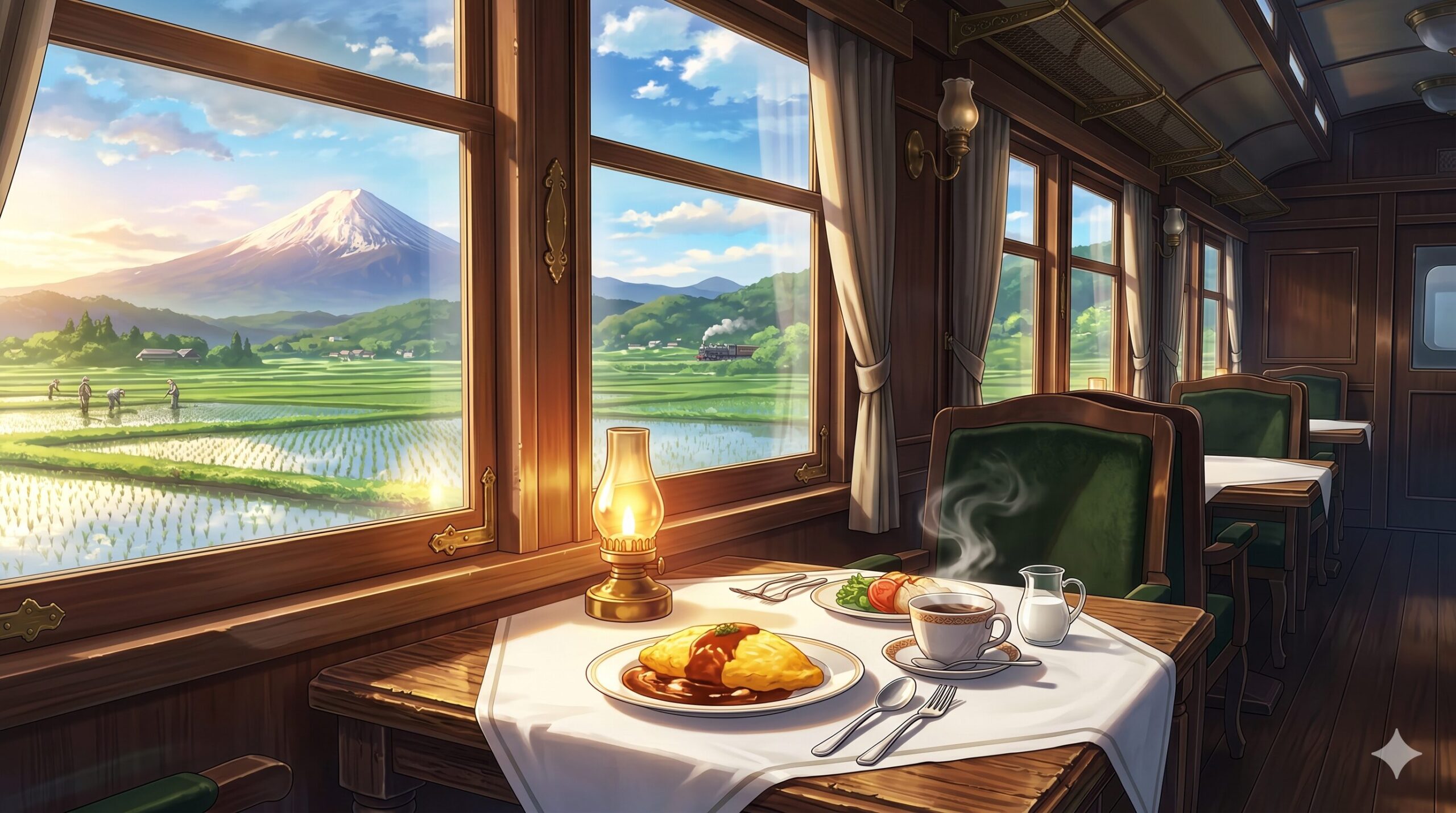
May 25th marks a highly significant milestone in Japanese railway history: “Dining Car Day” (Shokudosha no Hi). On this day in 1899 (Meiji 32), the Sanyo Railway (now the JR Sanyo Main Line) attached Japan’s very first dining car to an express train running from Kyoto to Mitajiri (modern-day Hofu) in Yamaguchi Prefecture. This historic moment was the definitive turning point when Japanese railways evolved from a mere “means of transportation from point A to B” into a “special experience where the journey itself is the reward.”
The Context of 1899: Rapid Modernization and Western Influence
Late 19th-century Japan, known as the Meiji Era, was a turbulent time when the nation rapidly adopted Western technology and culture to modernize at an unprecedented pace. Under the slogan of “Bunmei Kaika” (Civilization and Enlightenment), people’s clothing, architecture, and culinary culture underwent dramatic transformations. During this era, dining aboard a state-of-the-art steam locomotive while gazing at the beautiful Japanese landscape out the window was the ultimate status symbol and a cutting-edge modern experience.
Interestingly, it was not the state-owned national railway that introduced this innovative service to Japan, but rather a private company: the Sanyo Railway. Highly dedicated to improving passenger services to stay competitive, Sanyo Railway realized a series of groundbreaking ideas, including not only the dining car on express trains but also Japan’s first sleeping cars and on-board attendant services.
“Haikara” Western Cuisine and the Magic of the Train Cabin
The food served in Japan’s first dining car was not traditional Japanese fare, but rather authentic Western cuisine, which was considered “Haikara” (stylish and Westernized) at the time. The menu featured high-end dishes that ordinary citizens rarely had the chance to taste, such as curry and rice, beefsteak, omelets, and post-meal coffee and beer. With specially designed tableware that wouldn’t spill in the swaying train, pristine white tablecloths, and the refined service of uniformed attendants, the dining car felt like a rolling luxury hotel. This space functioned as more than just a dining area; it was a high-society lounge where politicians, business leaders, and cultural figures exchanged information and networked.
The Decline of the Dining Car and the Rise of “Ekiben” and Luxury Sleepers
As time progressed and the introduction of the Shinkansen (bullet train) drastically increased train speeds, travel times were significantly shortened. Consequently, the demand for dining cars—where passengers took their time to enjoy a meal—declined, and they gradually disappeared from Japan’s regular passenger trains. However, the culture of enjoying a meal on a train did not vanish. It simply evolved into the uniquely Japanese and world-renowned “Ekiben” (station bento box) culture, which remains deeply rooted today. Opening an Ekiben, beautifully packed with fresh local specialties from various regions, and savoring it while watching the changing scenery is an indispensable highlight of modern travel in Japan.
Furthermore, in recent years, ultra-luxury cruise trains that take several days to tour different regions of Japan, such as the “Seven Stars in Kyushu” and “TWILIGHT EXPRESS Mizukaze,” have become immensely popular. These trains offer the ultimate dining experience, resurrecting the dining cars of the past at the highest modern standards, with top-tier chefs preparing meals using premium local ingredients. The spirit of “Omotenashi” (Japanese hospitality) on the rails has continued to evolve uninterrupted since that fateful day in 1899.
To Our Readers
Imagine the excitement of the passengers in 1899, tasting curry and rice for the very first time inside a swaying wooden train car. If you were to travel by train in Japan today, which would you choose: a multi-course meal prepared by a top chef in a luxurious dining car rolling past spectacular landscapes, or the casual, authentic experience of choosing a vibrant local “Ekiben” at a bustling station to eat in your express train seat? Please tell us what your ideal travel style looks like!
Reference Links
- Dive deeper into Japanese railway history: The Railway Museum Official Website
- Discover more special days in Japan: What’s Today’s Special Day Series
5月25日:日本初の「食堂車の日」がもたらした鉄道旅行の革命
5月25日は、日本の鉄道史において非常に重要なマイルストーンである「食堂車の日」です。1899年(明治32年)のこの日、山陽鉄道(現在のJR山陽本線)が、京都から山口県の三田尻(現在の防府)へ向かう急行列車に、日本で初めてとなる食堂車を連結しました。この歴史的瞬間は、日本の鉄道が単なる「A地点からB地点への移動手段」から、「移動そのものを楽しむ特別な体験」へと進化した決定的なターニングポイントと言えます。
1899年という時代背景:文明開化と西洋文化の吸収
19世紀末の日本は「明治時代」と呼ばれ、国を挙げて西洋の技術や文化を急速に取り入れて近代化を推し進めていた激動の時代でした。「文明開化」というスローガンのもと、人々の服装、建築、そして食文化が劇的に変化していました。この時代において、最新鋭の蒸気機関車に乗り、車窓から流れる美しい日本の風景を眺めながら食事をするということは、当時の人々にとって究極のステータスであり、最先端のモダンな体験でした。
興味深いことに、この革新的なサービスを日本で最初に導入したのは、国営の鉄道(官設鉄道)ではなく、民間企業の山陽鉄道でした。山陽鉄道は、乗客を獲得するためのサービス向上に非常に熱心で、急行列車への食堂車連結だけでなく、日本初の寝台車や、列車内でのボーイ(給仕)によるサービスなど、次々と画期的なアイデアを実現させていきました。
「ハイカラ」な西洋料理と車内空間の魔法
日本初の食堂車で提供されたのは、和食ではなく、当時「ハイカラ(西洋風で洗練されていること)」とされた本格的な洋食メニューでした。カレーライス、ビフテキ(ビーフステーキ)、オムレツ、そして食後のコーヒーやビールなど、当時の一般庶民にとってはなかなか口にすることのできない高級料理が並んでいました。揺れる車内でこぼれないように工夫された食器類や、純白のテーブルクロス、そして制服に身を包んだ給仕たちの洗練されたサービスは、まるで走る高級ホテルのようでした。この空間は、単なる食事の場を超え、政治家や実業家、文化人たちが情報交換を行う社交場としても機能していました。
食堂車の衰退と、日本独自の「駅弁」文化・豪華寝台列車への昇華
時代が下り、新幹線の登場によって列車のスピードが飛躍的に向上すると、乗車時間が大幅に短縮されました。それに伴い、ゆっくりと時間をかけて食事を楽しむ従来の食堂車の需要は減少し、徐々に日本の定期列車からその姿を消していきました。しかし、車内で食事を楽しむという文化そのものが消滅したわけではありません。それは日本が世界に誇る独自の食文化である「駅弁(Ekiben)」へと形を変え、今日まで強く根付いています。各地の新鮮な特産品が美しく詰められた駅弁を膝の上に広げ、移りゆく景色と共に味わう時間は、現代の日本旅行において欠かせないハイライトの一つです。
さらに近年では、「ななつ星 in 九州」や「TWILIGHT EXPRESS 瑞風」といった、数日間かけて日本各地を巡る超豪華クルーズトレインが大人気となっています。これらの列車では、一流シェフが地元の高級食材を使って腕を振るう、かつての食堂車を現代の最高基準で蘇らせた究極のダイニング体験が提供されています。日本の鉄道における「おもてなしの心」は、1899年のあの日から途切れることなく、進化を続けているのです。
読者の皆様へ
かつて人々が揺れる木造客車の中で初めてカレーライスを食べた時の興奮を想像してみてください。もしあなたが日本で鉄道の旅をするなら、数日かけて絶景を巡る豪華な食堂車でのフルコースと、活気あふれる駅のホームで選んだご当地の「駅弁」を特急列車の座席で食べるカジュアルな体験、どちらを選びますか? ぜひあなたの旅の理想のスタイルを教えてください。
参考リンク集
- 日本の鉄道の歴史を深く知る:鉄道博物館(The Railway Museum)公式ウェブサイト
- その他の日本の特別な日を探す:What’s Today’s Special Day Series

コメント