Japanese folktales are not just about terrifying monsters; they are filled with very human, comical characters. Today, we introduce a highly entertaining and somewhat moralistic folktale set in ancient Japanese temples: “Hoshiha no Ojiya” (Dried Leaves Porridge). It is a story of wit, failure, and young monks striving to eat something delicious despite their strict ascetic training. Enjoy this charming tale packed with Japanese traditional lifestyle, food culture, and a great sense of humor!
The Story of “Hoshiha no Ojiya”
Once upon a time, there were two grand temples in a village—one in the North and one in the South. In each temple lived a young novice monk, known as a Kobozu, working and training hard every day.
However, both the head priest of the North Temple and the head priest of the South Temple were notorious misers. The daily meals they provided to the young monks were always the same: “Hoshiha no Ojiya.” This was a simple, watery porridge made by boiling a small amount of rice with dried, chopped radish leaves. For growing boys, eating nothing but grassy-tasting leaf porridge from morning till night was deeply unsatisfying for both stomach and soul.
One day, the young monk of the North Temple couldn’t take it anymore and directly pleaded with his priest: “Master, just once, I would love to eat pure, fluffy white rice!” But the stingy priest flatly refused.
Now, the North Priest and the South Priest were good friends and rivals in Go (a traditional board game). On this particular day, the North Priest visited the South Temple for a match and won by a landslide. The North Priest laughed boastfully, “The reason I am so strong at Go is thanks to the mighty Tengu (a legendary mountain spirit) that has lived in my temple since ancient times!”
A few days later, while the North monk was cleaning the main hall, the South monk dropped by to visit. As they secretly snacked on sweet buns meant as temple offerings, they vented their daily frustrations. “I’m so sick of eating dried leaf porridge every single day,” one complained. “Absolutely. Isn’t there any way we can get our hands on some white rice?”
Right then, a brilliant idea flashed in the North monk’s mind. He remembered his master bragging about the “protection of the Tengu.”
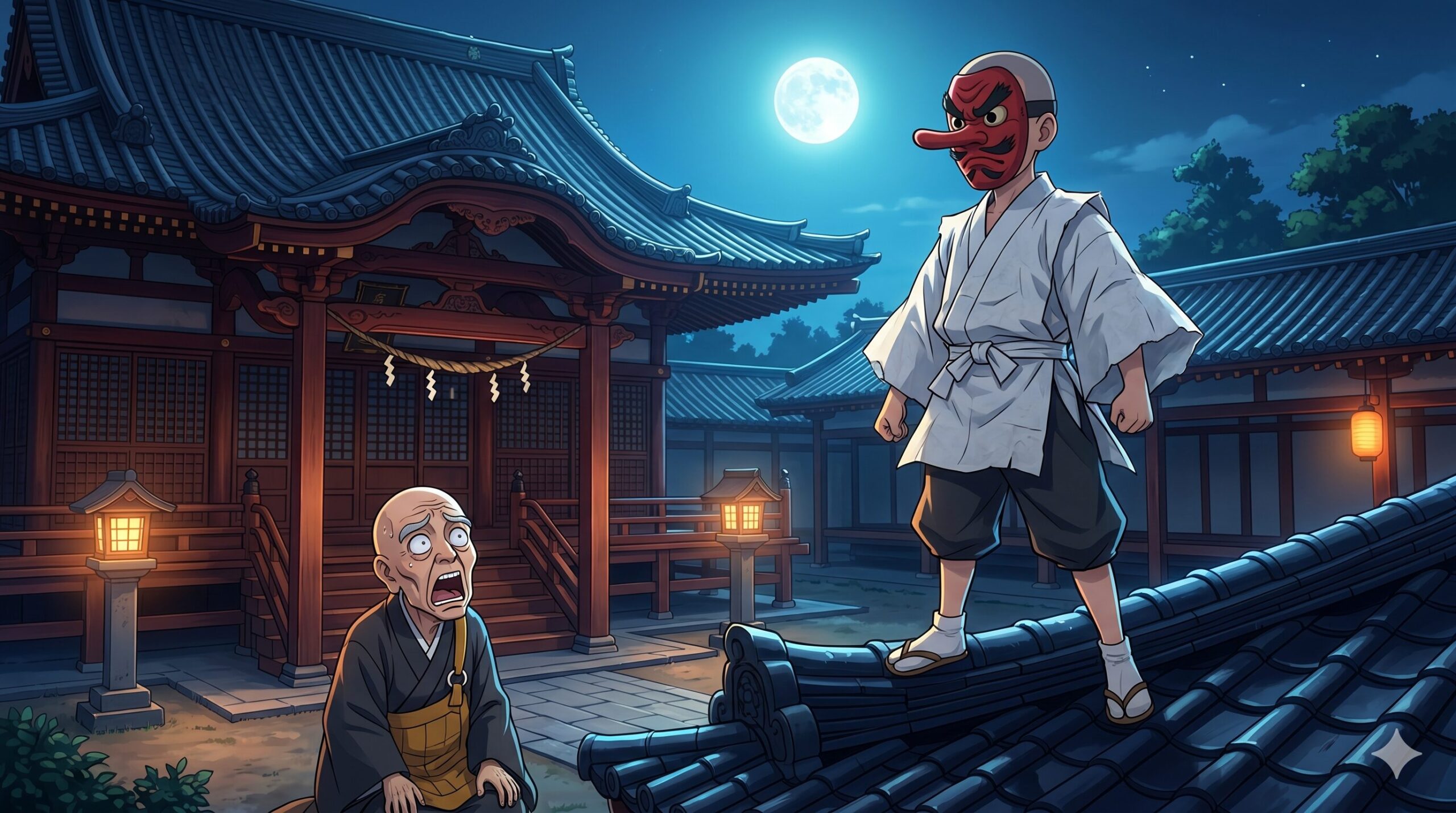
Using paper and scissors, the North monk cleverly crafted a terrifying red “Tengu mask” and a white ceremonial robe. Waiting for the dead of night, he secretly climbed onto the high roof of the temple’s main hall. The young monk knew perfectly well that the priest always woke up at the exact same time every night to use the outhouse.
Eventually, the sleepy priest stumbled outside. At that very moment, the young monk stood tall on the roof in his Tengu disguise and roared in a deep, menacing voice:
“Listen well, Priest! If you do not feed your young monk white rice starting tomorrow, I will burn this precious temple of yours to the ground!”
Seeing the terrifying silhouette standing on the roof in the pitch dark, the priest was entirely convinced that a real Tengu had appeared. Trembling with fear, he prostrated himself on the ground, begging, “Y-yes, I understand! Mighty Tengu, please forgive me!” The very next day, keeping his promise, the priest fed the young monk a massive bowl of glossy, delicious white rice.
Hearing the rumor of this massive success, the South monk determined, “I’m going to do the exact same thing and eat my fill of white rice!” He immediately ran to the North Temple and borrowed the handmade Tengu mask and white robe.
That night, the South monk put on the Tengu disguise and climbed onto the roof of his own temple. He waited with bated breath for his priest to come out to the toilet. However, no matter how long he waited, the priest never came out.
Shivering on the roof in the cold night wind, dawn finally began to break, illuminating the eastern sky. Finally, the South priest stepped outside. Exhausted from waiting, the South monk shouted as loudly as he could, pretending to be the Tengu.
But it was already broad daylight. When the priest looked up, he didn’t see a fearsome demon; he saw his own young monk, whose paper mask had slipped off, exposing his true face. The disguise was completely ruined.
“You disrespectful fool! What nonsense are you up to?!”
Furious, the priest scolded him relentlessly. The South monk’s grand operation ended in a miserable failure.
For breakfast that day, the South monk was served not white rice, but a punishment meal: a thick green porridge packed with more dried leaves than ever before.
The young monk ate the porridge while on the verge of tears. Ironically, however, these “dried leaves” were packed with vitamins and minerals, making it an incredibly healthy superfood. Much to his dismay, the punished monk grew up healthier and stronger than ever.
Deep Dive: The Crossroad of Success and Failure
The most fascinating aspect of this story is that “using the exact same method resulted in entirely opposite outcomes.” The reasons for the North monk’s success and the South monk’s failure are clear.
First, “Observation of the Target.” The North monk perfectly grasped his master’s nighttime routine. This allowed him to play the Tengu in the ultimate setting: complete darkness. The South monk, however, had no idea about his master’s habits, resulting in him waiting all night and executing his plan in broad daylight—the worst possible timing.
Second, “Originality vs. Imitation.” The North monk exploited his master’s specific weakness (his belief in the Tengu) and built his strategy from scratch. The South monk merely copied someone else’s success without adapting it to his own environment. This offers a remarkably sharp lesson for modern business and daily life.
What This Story Tells Us About Japanese Culture
Hidden within “Hoshiha no Ojiya” are several elements of Japanese culture that we want foreign readers to know.
1. The “Mottainai” Spirit and Shojin Ryori (Monk’s Diet)
The “dried radish leaves” the priests fed the monks were made by saving the leaves left over after eating the root, drying them, and turning them into preserved food. This symbolizes Japan’s “Mottainai” (zero-waste) spirit. Furthermore, Buddhist temples practice “Shojin Ryori,” a vegetarian diet meant to teach the sanctity of life through humble meals. It might have been boring for kids, but nutritionally, it is a highly rational superfood.
2. Tengu: The Fearsome Yet Familiar Yokai
Tengu are legendary creatures (Yokai or minor gods) believed to live in the mountains of Japan. They have red faces, long noses, wings on their backs, and fly using supernatural powers. Often dressed as ascetic monks, they act as tricksters who punish the arrogant or bring luck. The fact that the priest was so easily tricked shows how real and deeply respected—yet intimately familiar—Tengu are to the Japanese people.
3. The Comedy of “Rakugo”
The plot of someone failing miserably by blindly copying someone else is a classic comedic trope found in Rakugo, Japan’s traditional comic storytelling. The humorous contrast between the clever and the foolish, ending with a brilliant punchline (“He was forced to eat even more leaf porridge… but it made him super healthy”), perfectly embodies Japanese comedic aesthetics.
Over to You!
What did you think? The struggle of children trying to escape strict rules and plain food is something people can relate to across eras and borders.
If you were in the young monk’s shoes, how would you trick a stubborn, stingy priest into giving you delicious white rice? Also, have you ever experienced a funny failure by trying to copy someone else’s success?
Please share your thoughts and stories in the comments!
Reference: Manga Nippon Mukashibanashi Database – Hoshiha no Ojiya
Explore more: Japanese Folktale Series
日本の不思議でユーモラスな昔話の世界へようこそ!
日本の昔話には、恐ろしい妖怪だけでなく、どこか人間臭くて笑えるキャラクターがたくさん登場します。今回は、日本の古いお寺を舞台にした、とてもコミカルで少し教訓めいた昔話「干し葉のおじや(ほしばのおじや)」をご紹介します。厳しい修行生活の中で、なんとか美味しいものを食べようと奮闘する小僧(子供の僧侶)たちの知恵と失敗の物語です。日本の伝統的な生活様式や食文化、そして笑いのセンスが詰まったこのお話を、ぜひ最後までお楽しみください!
昔話「干し葉のおじや」のストーリー
昔々、ある村の北と南に、それぞれ立派なお寺がありました。そして、どちらのお寺にも、住み込みで修行に励む幼い「小僧さん」が一人ずつおりました。
ところが、この北の寺の和尚さんも、南の寺の和尚さんも、村で一、二を争うほどの「大変なケチ」でした。彼らが小僧さんたちに与える毎日の食事は、決まって「干し葉のおじや」でした。これは、細かく刻んでカラカラに干した大根の葉っぱを、少しの米と一緒に煮込んだだけの質素なお粥です。育ち盛りの子供にとって、毎日毎日、朝から晩まで青臭い葉っぱのお粥ばかりでは、お腹も心も満たされません。
ある日、北の寺の小僧さんはたまらなくなって、和尚さんに直談判しました。「和尚様、たまには真っ白でふっくらした白いご飯が食べたいです!」しかし、ケチな和尚さんは首を縦に振ることはなく、白いご飯を炊いてはくれませんでした。
さて、この北の和尚さんと南の和尚さんは囲碁(日本の伝統的なボードゲーム)のライバルであり、仲良しでした。今日も北の和尚さんは南の寺へ出向き、囲碁の勝負をしました。結果は北の和尚さんの圧勝です。北の和尚さんは得意げに笑って言いました。「わしが囲碁に強いのは、古くからうちの寺に住み着いている、霊験あらたかな『天狗(てんぐ)さま』が守ってくださっているおかげじゃろう!」
数日後、北の寺の小僧さんが本堂の掃除をしていると、南の寺の小僧さんがひょっこり遊びにやってきました。二人はお供え物の甘いおまんじゅうをこっそりつまみ食いしながら、日々の不満を爆発させました。「毎日毎日、干し葉のおじやばかりで本当に嫌になるね」「全くだ。どうにかして白いご飯を食べられないものか」
その時、北の寺の小僧さんの頭に、素晴らしい名案が閃きました。和尚さんが「天狗さまのおかげだ」と自慢していたことを思い出したのです。
北の寺の小僧さんは、紙を器用に切ったり貼ったりして、恐ろしい「天狗のお面」と、神主が着るような白い衣(千早)を作りました。そして夜が更けるのを待ち、本堂の高い屋根の上にこっそりとよじ登りました。小僧さんは、和尚さんが毎晩必ず決まった時間に、外にあるトイレ(便所)に起きてくることを知っていたのです。
やがて、和尚さんが眠い目をこすりながら外に出てきました。その瞬間、屋根の上の小僧さんは天狗の格好で仁王立ちになり、低く恐ろしい声で叫びました。
「これなる和尚よ!よく聞け!明日から小僧に白いご飯を食べさせなければ、お前の大事なこの寺を、火の海にして焼き払ってしまうぞ!」
暗闇の中で屋根の上に立つ恐ろしいシルエットを見て、和尚さんは本物の天狗が現れたと完全に信じ込んでしまいました。震え上がった和尚さんは平伏し、「わ、わかりました!天狗さま、どうかお許しを!」と命乞いをしました。そして翌日、約束通り、和尚さんは小僧さんにツヤツヤの白いご飯をたっぷりと食べさせてあげたのです。
この大成功の噂を聞きつけた南の寺の小僧さんは、「自分も同じことをやって、白いご飯をお腹いっぱい食べるぞ!」と決意しました。彼はすぐに北の寺へ走り、小僧さんから手作りの天狗のお面と白い衣を借り受けました。
その夜、南の寺の小僧さんは天狗の格好をして、自分の寺の屋根の上に登りました。そして和尚さんがトイレに出てくるのを今か今かと待ち構えました。しかし、待てど暮らせど、和尚さんは一向に外に出てきません。
冷たい夜風に吹かれながら屋根の上で震え続け、ついに東の空が明るくなり始めた夜明け頃。ようやく、南の寺の和尚さんが外に出てきました。すっかり待ちくたびれていた小僧さんは、「ここぞ!」とばかりに天狗のふりをして大声で怒鳴りつけました。
しかし、すでに辺りはすっかり明るくなっています。和尚さんが見上げると、そこには天狗ではなく、紙のお面がズレて素顔が丸見えになっている、自分の寺の小僧の姿がありました。変装が完全にバレてしまったのです。
「この罰当たりめが!何をふざけたことをしておるか!」
激怒した和尚さんにこってりと絞られ、南の寺の小僧さんの大作戦は無惨な大失敗に終わりました。
その日の朝食、南の寺の小僧さんのお膳に出されたのは、白いご飯どころか、罰として「いつもよりさらに大量の干し葉が入った、青汁のようなおじや」でした。
小僧さんは半泣きでそのおじやを食べましたが、実はこの「干し葉」、ビタミンやミネラルがたっぷりで、体にはこの上なく良い健康食だったのです。皮肉なことに、小僧さんはますます健康にすくすくと育っていくのでした。
昔話を深く考察する:成功と失敗の分かれ道
この物語の非常に面白い点は、「まったく同じ方法を使ったのに、結果が正反対になった」というところにあります。北の寺の小僧さんが成功し、南の寺の小僧さんが失敗した原因は明確です。
第一に、「ターゲットの観察力」です。北の寺の小僧さんは、自分の和尚さんの夜の行動パターン(決まった時間にトイレに起きること)を完全に把握していました。だからこそ、暗闇という最高の舞台設定で天狗を演じることができたのです。一方、南の寺の小僧さんは自分の和尚さんの行動を全く把握しておらず、ただ屋根の上で一晩中待ちぼうけを食らい、明るくなってから行動するという最悪のタイミングを選んでしまいました。
第二に、「オリジナルと模倣の違い」です。北の小僧さんは、和尚さんが「天狗を信じている」という弱点を突き、自ら戦略をゼロから構築しました。南の小僧さんは他人の成功体験をそのまま真似しただけで、自分の環境に合わせたアレンジを怠りました。これは現代のビジネスや日常生活においても、非常に鋭い教訓を与えてくれます。
この物語から読み解く日本文化
「干し葉のおじや」には、外国の方にぜひ知っていただきたい日本文化の要素がいくつも隠されています。
1. 「もったいない(Mottainai)」精神と精進料理
和尚さんが毎日食べさせていた「大根の干し葉」は、大根の根の部分を食べた後に残る葉を捨てずに乾燥させ、保存食にしたものです。これは、食材を一切無駄にしない日本の「もったいない」精神の象徴です。また、仏教の寺院では肉や魚を使わない「精進料理(Shojin Ryori)」が基本であり、質素な食事の中で命の尊さを学ぶという深い哲学があります。子供にとっては退屈な味だったかもしれませんが、現代の栄養学から見ても非常に理にかなったスーパーフードなのです。
2. 恐ろしくも身近な妖怪「天狗(Tengu)」
天狗は、日本の山に住むとされる伝説の生き物(妖怪・神様)です。赤い顔に長い鼻、背中には翼を持ち、神通力を使って空を飛ぶとされています。仏教の修行僧の姿をしており、傲慢な者を罰したり、時には人に幸運をもたらしたりするトリックスターのような存在です。和尚さんが「天狗が守ってくれている」と信じ、小僧の変装にあっさり騙されたのは、日本人にとって天狗がそれほどリアルで恐れ多い、しかしどこか親しみのある存在だったからです。
3. 日本の古典喜劇「落語(Rakugo)」の笑い
他人の成功をそのまま真似して大失敗する、というストーリー展開は、日本の伝統的な話芸である「落語」によく見られる王道のコメディ・パターンです。賢い人間と愚かな人間の対比をユーモラスに描き、最後には「いつもより干し葉が多いおじやを食べさせられた(でも実は健康に良い)」という見事な「オチ(Punchline)」で終わる構成は、日本人の笑いの美学を完璧に体現しています。
読者の皆様へ:あなたならどうしますか?
いかがでしたか?厳しいルールや質素な食事から抜け出そうとする小僧さんたちの姿は、時代や国境を越えて共感できるものではないでしょうか。
もしあなたがこの小僧さんと同じ立場だったら、どうやって頑固でケチな和尚さんから美味しい白いご飯を引き出しますか?また、誰かの成功を真似して大失敗してしまったという、くすっと笑える経験はありますか?
ぜひ、あなたの考えやエピソードをコメント欄で教えてください!
参考リンク:まんが日本昔ばなし~データベース~ 干し葉のおじや
さらに日本の昔話を知りたい方はこちら:Japanese Folktale Series

コメント