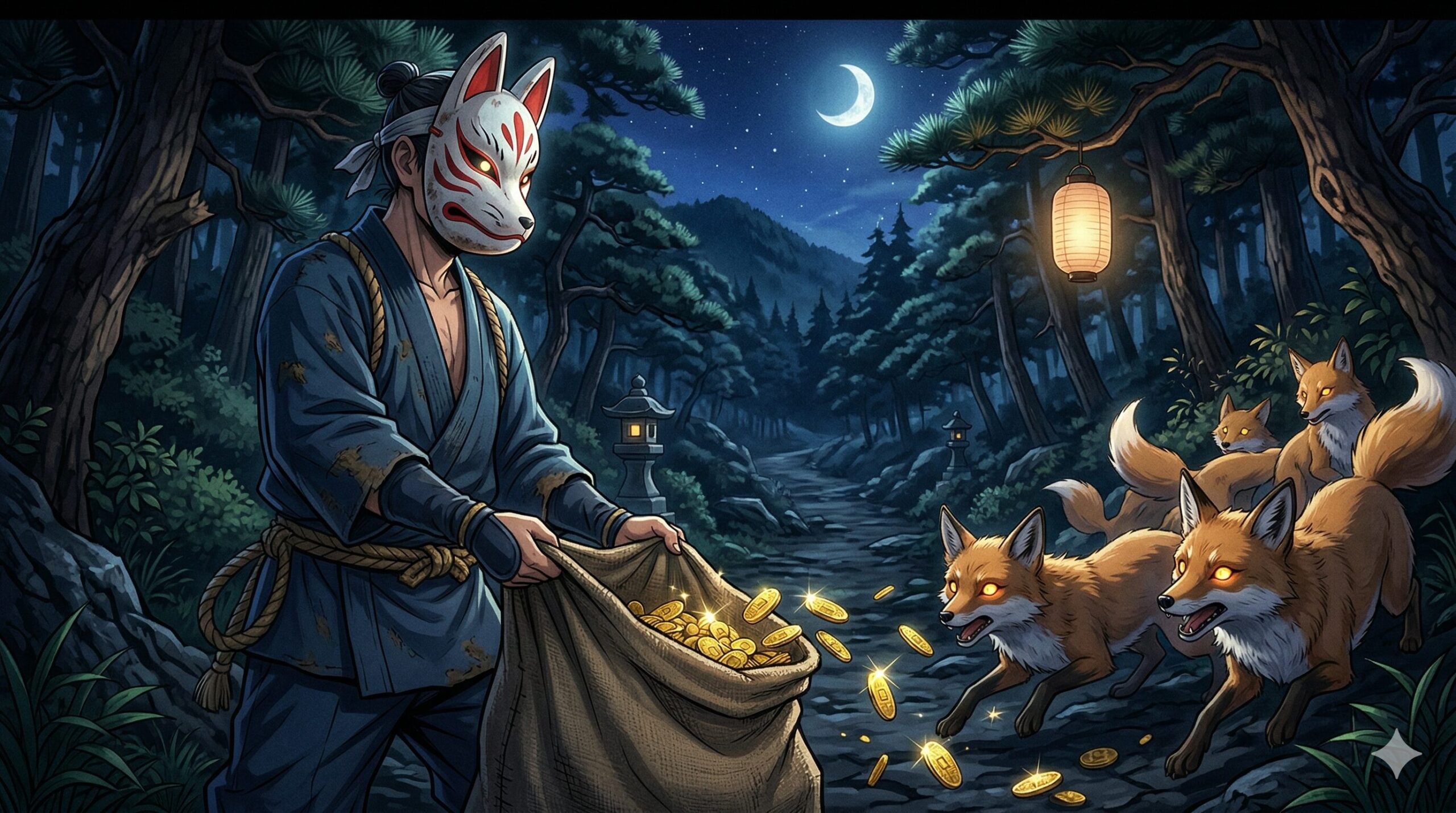
Once upon a time, in a peaceful Japanese village, there was a mountain pass that caused endless trouble for the locals. When night fell, shape-shifting foxes (Kitsune) would appear on the pass, tricking travelers one after another and making fools of them. The villagers were completely terrified and eventually stopped crossing the pass at night.
Amidst this fear, Chozaemon, the most confident man in the village—proud of both his physical strength and his sharp mind—stood up. “It is pathetic to be frightened by mere foxes! Watch me, I will exterminate them myself!” he boasted. Full of confidence, he headed towards the dark mountain pass.
The midnight pass was wrapped in an eerie silence. As Chozaemon walked with his eyes peeled, he crossed paths with a young woman wearing a towel over her head. Suspicious, Chozaemon called out to her. She replied, “My name is Otsuta from the neighboring village. I am just returning from shopping in the town.” Chozaemon thought to himself, “Even if she is a fox in disguise, she will surely expose her true form and run away once we reach the next village.” Feeling superior, he decided to escort her home.
Upon arriving at a house in the neighboring village, an old woman—seemingly Otsuta’s mother—greeted them politely. “Thank you so much for protecting my daughter on the dark road. Please, allow us to offer you a meal as a token of our gratitude,” she said, inviting Chozaemon inside. He was served delicious, steaming Soba noodles and magnificent Kashiwamochi (rice cakes wrapped in oak leaves) that smelled sweet and inviting. Chozaemon, in high spirits, ate until his stomach was full and was offered a comfortable futon to sleep in for the night.
The next morning, Chozaemon was awakened by a cold wind and strange noises. Opening his eyes, he found himself not in a warm bed, but lying on a cold, hard stone bridge. Looking around in horror, he realized the truth: the leftover broth from the “delicious Soba” he ate last night was actually muddy water crawling with earthworms, and the “magnificent Kashiwamochi” was nothing but horse manure.
“I’ve been had! The foxes tricked me!”
Overwhelmed by intense nausea and sheer humiliation, Chozaemon fled back to his village. However, the sight of the overly confident man returning in such a miserable state quickly became the talk of the town, and all the villagers laughed at him mercilessly. The shame was too much to bear. He locked the doors of his house and shut himself inside, refusing to see anyone.
But Chozaemon was not the type of man to just cry himself to sleep. In his dark room, his anger boiled over. “Those cursed foxes… I will never forgive them. Merely killing them won’t satisfy me. I will outsmart and trick them back!” He began to formulate a meticulous plan for revenge.
A few days later, Chozaemon crafted a strange disguise. It was a magnificent papier-mâché costume of “Inari-sama” (the Inari Deity), whom the foxes fear and revere as their divine master. Wearing this costume and carrying a large empty sack, Chozaemon returned to the haunted mountain pass.
Waiting at the pass, the fox disguised as a woman appeared once again. Chozaemon yelled at the fox with a majestic, booming voice: “Listen here, fox! I am the great Inari-sama. Your shape-shifting skills are a complete disgrace! Right now, in the capital city, the Tanuki (raccoon dogs) are working desperately to outsmart foxes. With your childish tricks, you might fool humans, but you will never fool a Tanuki! I shall train you myself. Summon all your fellow foxes here at once!”
Completely fooled by the appearance and authoritative voice of their deity, the terrified fox immediately gathered all the other foxes from the mountain. Chozaemon commanded them: “We shall now begin rigorous training. First, to rid yourselves of worldly desires, surrender all the gold coins and treasures you have stolen from humans and place them before me.” The foxes frantically piled up their hidden treasures in front of Chozaemon.
“Good. Next is mental discipline. Get inside this sack and reflect upon yourselves in absolute silence!”
When Chozaemon opened the mouth of the large sack, the foxes, unable to disobey the order of their god, jumped in one by one. Chozaemon was laughing heartily on the inside as he counted the foxes going in. However, at the exact moment the very last fox was about to enter, the string of Chozaemon’s papier-mâché costume snapped, revealing his human form.
“Oh no!”
Realizing the deception, the final fox fled into the mountains at full speed. Although his perfect plan failed at the very last second, Chozaemon hoisted the sack full of foxes and the reclaimed treasure over his shoulder and returned to the village with pride. Thus, Chozaemon successfully exacted his revenge on the foxes and restored his lost honor.
Deep Dive: A Battle of Wits and Humor
The story of “Chozaemon’s Fox Extermination” is not your typical monster-slaying tale. Its greatest feature is the battle of “wits” and “deception” between humans and Yokai (supernatural creatures). While villains in Western fairy tales are often defeated physically with swords or magic, Japanese folktales frequently employ this humorous approach of “tricking the trickster.”
Chozaemon suffers the ultimate humiliation of being tricked into eating horse manure. Yet, instead of drawing a sword to slay the beasts, he chooses a highly psychological and intellectual revenge. He exploits the foxes’ religious faith (their fear of the Inari Deity) and uses false authority to steal their wealth. This reflects the values of the Japanese commoners, who highly respected intelligence and cunning over brute force. The ending—where the disguise falls apart and one fox escapes—adds a layer of charming imperfection to the human side, leaving a rich, lingering flavor to the story.
Connections to Japanese Culture: Fox Worship and the Culture of Shame
Through this story, we can deeply understand traditional Japanese culture and spirituality.
1. The Duality of Kitsune: Divine Messengers and Yokai
In Japan, foxes hold a very special status. The “Inari-sama” that Chozaemon impersonated is the Shinto deity of agriculture and grain, and foxes are enshrined across Japan as the divine messengers of this god. At the same time, it was widely believed that foxes who live a long time gain magical powers and become “Yako” (wild foxes) or Yokai that deceive humans. This duality—being both sacred entities and mischievous monsters—is the foundation of the tale. Chozaemon’s strategy brilliantly weaponized the foxes’ own absolute fear of the divine.
2. The Intense “Culture of Shame”
The primary motivation for Chozaemon’s revenge was not physical injury, but being “laughed at” by the villagers. In traditional Japanese village societies (Mura shakai), one’s reputation, public image, and “face” within the community were sometimes valued more than life itself. The intense obsession to clear the “shame” of being mocked and to restore his honor is the driving force behind this entire narrative.
What Would You Do?
Chozaemon used his humiliation as a springboard to brilliantly outwit the supernatural foxes. If you were walking down a lonely night road, got tricked by creatures with magical powers, and had your pride torn to shreds, how would you react?
Would you let anger take over and try to fight them with force? Or would you, like Chozaemon, analyze your enemy’s psychological weaknesses and execute the ultimate prank to get back at them? We would love to hear your thoughts.
If you want to read more mysterious and fascinating Japanese folktales, be sure to explore other stories in our Japanese Folktale Series category.
For a deeper, academic look into the history and mythology of Japanese foxes (Kitsune), this comprehensive Wikipedia article on Kitsune is an excellent resource.
日本の不思議な昔話:長左ヱ門の狐退治(Chozaemon’s Fox Extermination)
昔々、日本のとあるのどかな村に、村人たちを困らせている一つの峠がありました。夜になると、その峠には人を化かす狐が出没し、通行人を次々と騙しては笑い者にしていたのです。村人たちはすっかり怯え、夜にその峠を越えることを避けるようになっていました。
そんな中、村で一番の自信家であり、腕っぷしにも知恵にも自信を持っていた男、長左ヱ門(ちょうざえもん)が立ち上がりました。「キツネごときに怯えるなど情けない。よし、俺がそのキツネを退治してくれよう!」と豪語し、彼は意気揚々と夜の峠へと向かいました。
真夜中の峠は不気味な静けさに包まれていました。長左ヱ門が目を光らせて歩いていると、手ぬぐいでほっかむりをした若い女とすれ違いました。不審に思った長左ヱ門が声をかけると、女は「隣村のおつたと申します。町へ買い物に出た帰りなのです」と答えました。長左ヱ門は心の中で「もしこいつが狐だとしても、隣村まで行けばボロを出して逃げ出すだろう」と高をくくり、彼女を隣村まで送り届けることにしました。
隣村の家に着くと、おつたの母親と思われる老婆が丁寧に出迎えてくれました。「娘を夜道から守っていただき、本当にありがとうございます。どうかお礼に食事を召し上がってください」と、老婆は長左ヱ門を家の中に招き入れました。出されたのは、湯気を立てる美味しそうな蕎麦と、甘い香りのする立派な柏餅でした。長左ヱ門はすっかり気を良くし、お腹いっぱいご馳走を食べ、そのまま心地よい布団で一晩泊めてもらうことになりました。
翌朝、冷たい風と奇妙な声で長左ヱ門は目を覚ましました。目を開けると、そこは暖かい布団の中ではなく、冷たく硬い橋の上でした。驚いて周囲を見渡すと、昨晩食べたはずの美味しい蕎麦の残り汁はドロドロの泥水とミミズに変わり、美味しそうな柏餅はなんと馬糞だったのです。
「やられた!狐に化かされたのだ!」
長左ヱ門は激しい吐き気と屈辱にまみれながら村へ逃げ帰りました。しかし、自信満々で出かけていった彼がこんな無惨な姿で帰ってきたことは、あっという間に村中の噂になり、長左ヱ門は村人たちから大笑いされることになりました。あまりの恥ずかしさに、彼は家に固く鍵をかけ、誰とも会わずに引きこもってしまいました。
しかし、長左ヱ門はただ泣き寝入りするような男ではありませんでした。暗い部屋の中で、彼の腹の虫は怒りで煮えくり返っていました。「あの忌まわしい狐め、絶対に許さない。ただ殺すだけでは気が済まない。必ず化かし返してやる!」と、彼は緻密な復讐計画を練り始めました。
数日後、長左ヱ門は奇妙な工作を作り上げました。それは、狐たちが神の使いとして恐れ敬う「お稲荷様(稲荷明神)」の立派な着物のハリボテでした。長左ヱ門はそのハリボテを被り、大きな空の袋を手に持って、再びあの峠へと足を運びました。
峠で待ち構えていると、再び女に化けた狐が現れました。長左ヱ門は威厳に満ちた声で狐を一喝しました。「こりゃあ狐!わしはお稲荷様である。お前たちの化け方は全くなっておらん!今、都の方では狸どもが狐を化かすことに一生懸命になっておる。そんな稚拙な化け方では、人間は騙せても狸は騙せんぞ!このわしが直々に修行をつけてやるから、仲間の狐を全員ここに集めい!」
お稲荷様の姿と威厳ある声にすっかり騙された狐は、震え上がりながら仲間の狐たちを全員呼び集めました。長左ヱ門は狐たちに向かって、「これより厳しい修行を始める。まずは煩悩を捨てるため、お前たちが人間から巻き上げた小判などの全財産をここに差し出せ」と命じました。狐たちは慌てて隠し持っていた宝物を長左ヱ門の前に積み上げました。
「よし、次は精神を鍛える修行だ。この袋の中に入り、静寂の中で己を見つめ直せ!」
長左ヱ門が大きな袋の口を開けると、狐たちは神の命令に逆らえず、次々と袋の中に入っていきました。長左ヱ門は心の中で大笑いしながら、狐が袋に入るのを数えていました。しかし、最後の一匹が袋に入ろうとしたまさにその瞬間、長左ヱ門の着ていたお稲荷様のハリボテの紐が切れ、人間の姿が露わになってしまいました。
「しまった!」
正体がバレたことに気づいた最後の一匹の狐は、一目散に山の中へと逃げていきました。完璧な計画の最後の最後で失敗してしまいましたが、長左ヱ門は奪い返した財産と、袋に閉じ込めた狐たちを背負い、誇らしげに村へと帰っていきました。こうして長左ヱ門は、見事に狐への意趣返しを果たし、失った名誉を取り戻したのです。
昔話を深く読み解く:知恵とユーモアの戦い
この「長左ヱ門の狐退治」は、単なる怪物退治の物語ではありません。最大の特徴は、人間と動物(妖怪)が「知恵」と「騙し合い」で対決する点にあります。西洋の童話では、悪者は剣や魔法で物理的に倒されることが多いですが、日本の昔話ではこのように「化かし返す」というユーモアに溢れた解決方法が頻繁に登場します。
長左ヱ門は、狐に騙されて馬糞を食べさせられるという最大の屈辱を味わいます。しかし、彼は刀を持って狐を切り捨てるのではなく、狐の信仰心(お稲荷様への畏れ)を利用し、権威を装って狐の財産を巻き上げるという、極めて心理的かつ知的な復讐を選択しました。ここには、力ではなく知恵を尊ぶ日本の民衆の価値観が強く反映されています。最後の最後でハリボテが脱げて一匹だけ逃がしてしまうという結末も、人間側の「完全無欠ではない愛嬌」を描いており、物語に豊かな余韻を与えています。
日本文化との深いつながり:狐信仰と恥の文化
この物語から、日本の伝統的な文化や精神性を深く理解することができます。
1. 狐(Kitsune)の二面性:神と妖怪
日本では、狐は非常に特別な存在です。物語の中で長左ヱ門が利用した「お稲荷様」とは、穀物や農業の神様であり、狐はその神の使い(神使)として日本全国の神社で祀られています。しかし同時に、狐は長生きすると魔力を持ち、人を化かす「妖狐(野狐)」になるとも信じられていました。神聖な存在でありながら、身近でイタズラ好きな妖怪でもあるという、この狐の二面性が物語の根幹を成しています。長左ヱ門の作戦は、狐自身が持つ「神への絶対的な畏れ」を逆手に取った見事な戦略でした。
2. 強烈な「恥の文化」
長左ヱ門が復讐を決意した最大の動機は、狐に怪我をさせられたからではなく、村人たちから「笑い者にされた」からです。日本の伝統的な村社会(ムラ社会)において、コミュニティ内での自分の評価や体面(面子)は、時には命よりも重いものでした。他人から嘲笑されるという「恥」を雪ぐためには、何としても名誉を挽回しなければならないという強い執念が、この物語の原動力となっています。
あなたなら、どうしますか?
長左ヱ門は、屈辱をバネにして見事な知恵で狐にやり返しました。もしあなたが、誰もいない夜道で不思議な力を持つ存在に騙され、プライドをズタズタにされたとしたら、どう行動しますか?
怒りに任せて力で戦いを挑みますか?それとも、長左ヱ門のように相手の弱点や心理を読み解き、知恵を使った究極のドッキリでやり返しますか?ぜひ、あなたの考えを巡らせてみてください。
もっと日本の不思議で魅力的な昔話を読みたい方は、ぜひJapanese Folktale Seriesのカテゴリーから他の記事もご覧ください。
日本の狐(Kitsune)の伝承についてさらに学術的で深い歴史を知りたい方は、こちらの妖狐に関する解説(Wikipedia)も素晴らしい参考になります。

コメント