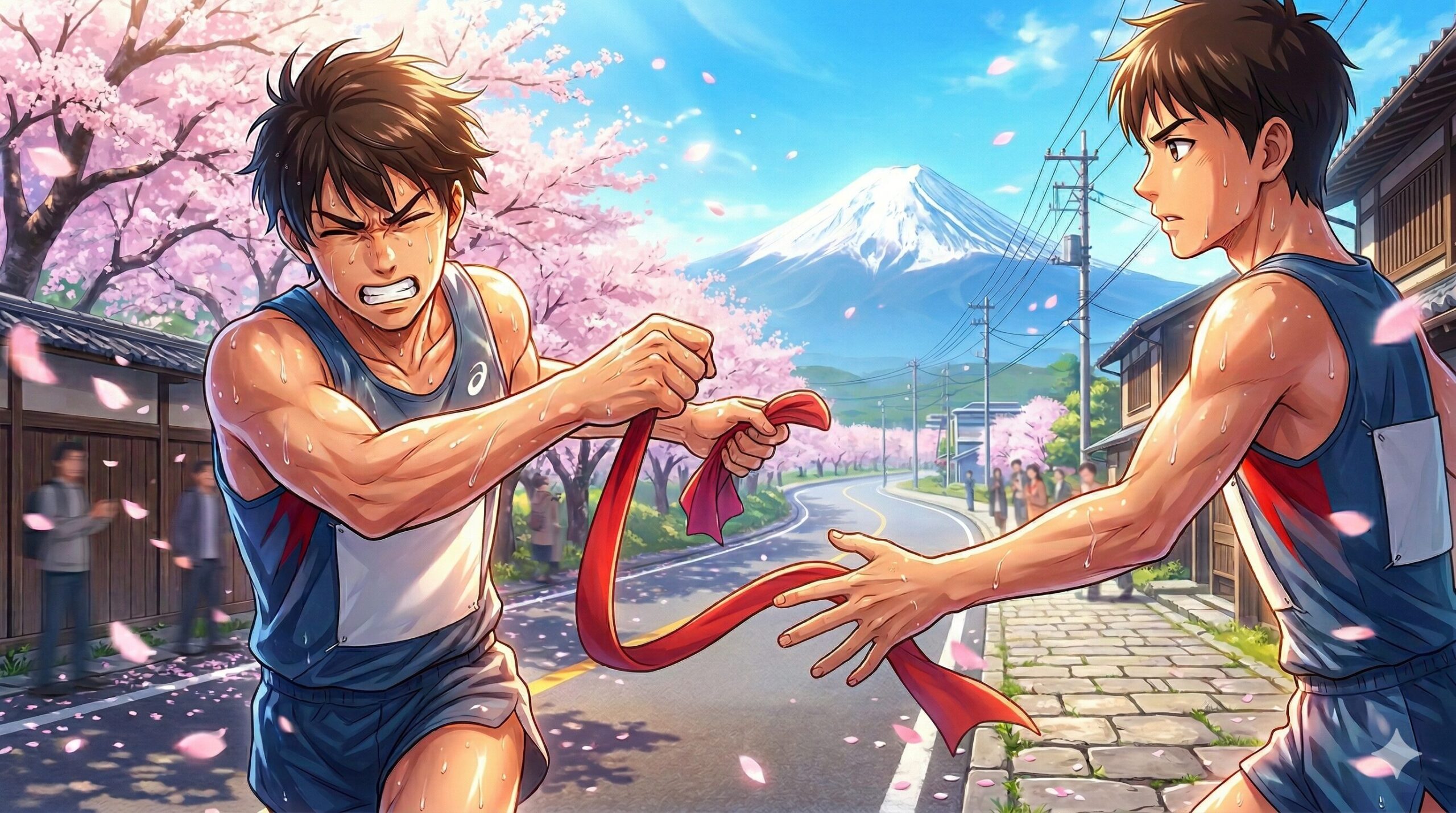
April 11, 1917, is a day of profound significance in the history of Japanese sports. On this day, the “Tokaido Gojusan-tsugi Ekiden Tohokyoso” (the Tokaido 53 Stations Ekiden Footrace), Japan’s first-ever Ekiden race, was held. Sponsored by the Yomiuri Shimbun to commemorate the 50th anniversary of the transfer of the capital to Tokyo, this event was an incredibly grueling and epic race, even by modern standards. Runners started from Sanjo Ohashi Bridge in Kyoto and ran all the way to Shinobazu Pond in Ueno, Tokyo, covering a staggering distance of approximately 508 kilometers.
Divided into the Kanto (East) and Kansai (West) teams, the athletes ran day and night, taking three days to reach Tokyo. The style of passing a “Tasuki” (a cloth sash)—which is now a standard practice in Ekiden—was invented during this very race. In an era when transportation networks were not fully developed, the act of covering such vast distances on foot and entrusting the next runner with a shared goal drove the entire nation of Japan into a frenzy of excitement.
The Japanese Spirit of “Wa” Woven into the Tasuki
Ekiden is not merely a long-distance relay. It is deeply rooted in ancient Japanese culture and spirituality. The ultimate symbol of this is the “Tasuki,” the single strip of cloth that runners wear across their chests.
In Western relay sports, athletes pass a “baton.” A baton is an object; if you drop it, you simply pick it up. However, the Tasuki in Ekiden is treated as a symbol of the soul. It absorbs the sweat, the intense energy, and the passion of the previous runner. Passing the Tasuki represents self-sacrifice and a fierce sense of responsibility to achieve the team’s collective goal, often overriding the pursuit of individual records.
In Japanese culture, “Wa” (harmony) is one of the most highly valued principles. An Ekiden runner, no matter how much pain they endure in their section, will push beyond their physical limits for the sake of the teammate waiting for them, desperate not to let the Tasuki be broken. One person’s failure becomes everyone’s burden, and one person’s triumph becomes everyone’s joy. This attitude of “valuing the whole over the individual” and the visualization of strong bonds with others is the true essence of Ekiden.
Even today, Ekiden races of all sizes, including the famous New Year’s “Hakone Ekiden,” are held throughout Japan, bringing tears and inspiration to millions. This is because Japanese people see in these runners the enduring spirit of empathy and the collective overcoming of hardships that they have cherished for centuries.
Who Would You Pass Your Tasuki To?
Ekiden, where emotions are woven into a single piece of cloth and passed onto the next person, offers deep insights for us living in modern society. We are all, in a sense, runners receiving an invisible “Tasuki” from our families, our ancestors, and our society, with the duty to pass it on to the next generation.
Does your country have a culture or sport that values spiritual connection with teammates above individual achievement? If you were an Ekiden runner, what emotions would you weave into your Tasuki, and who would you want to pass it to? Please share your thoughts and your culture’s perspectives.
Reference Links
- Internal Link: What’s Today’s Special Day Series
- External Link: Hakone Ekiden Official Website (Japan’s most famous Ekiden race)
- External Link: Japan Association of Athletics Federations (JAAF)
4月11日:日本独自のスポーツ「駅伝」が誕生した日
1917年(大正6年)4月11日は、日本のスポーツ史において非常に重要な意味を持つ日です。この日、日本で初めての「駅伝」大会である「東海道五十三次駅伝徒歩競走」が開催されました。東京奠都(てんと)50周年を記念して読売新聞社が主催したこの大会は、京都の三条大橋を出発し、東京の上野不忍池までの約508キロメートルを駆け抜けるという、現代の常識から見ても極めて過酷で壮大なレースでした。
関東組と関西組に分かれた選手たちは、昼夜を問わず走り続け、3日間かけて東京を目指しました。現在では当たり前となっている「たすき(襷)」をつないで走るというスタイルは、この時に考案されたものです。交通網が発達していなかった時代において、自らの足で長距離を踏破し、次の走者へと想いを託すこの競技は、当時の日本中の人々を熱狂させました。
「たすき」に込められた日本文化と「和」の精神
駅伝は、単なる長距離リレーではありません。そこには、日本古来の文化と精神性が深く根付いています。それを象徴するのが、選手たちが肩からかける一本の布「たすき」です。
西洋のスポーツにおいて、リレーで用いられるのは「バトン」です。バトンは「物体」であり、落とせば拾うことができます。しかし、駅伝の「たすき」は、汗を吸い、前の走者の熱量と想いが直接染み込む「魂の象徴」として扱われます。たすきをつなぐことは、個人の記録を追求すること以上に、チーム全体の目標を達成するための自己犠牲と強い責任感を意味します。
日本の文化において、「和(調和)」は最も重んじられる価値観の一つです。駅伝のランナーは、自分の区間でどれほど苦しくとも、待っている仲間のために、そしてたすきを途切れさせないために、限界を超えて走り続けます。一人のミスは全員の責任となり、一人の快挙は全員の喜びとなります。この「個よりも全を重んじる」姿勢や、他者との強い結びつき(絆)を視覚化したものこそが、駅伝というスポーツの真髄です。
現在でも、お正月の風物詩である「箱根駅伝」をはじめ、日本全国で大小さまざまな駅伝大会が開催され、多くの日本人が涙し、感動を覚えます。それは、私たちがたすきをつなぐ選手たちの姿に、日本人が古くから大切にしてきた「他者を思いやり、共に困難を乗り越える精神」を見出しているからです。
あなたなら、誰に「たすき」を渡しますか?
一本の布に想いを乗せ、次の人へとつないでいく駅伝。それは、現代社会を生きる私たちにとっても、多くの示唆を与えてくれます。私たちは、家族から、先人から、社会から、目に見えない「たすき」を受け取り、それを次の世代へと渡していくランナーのような存在なのかもしれません。
あなたの国には、このように「個人の成果以上に、仲間との精神的なつながりを重んじる」文化やスポーツはありますか? もしあなたが駅伝のランナーだとしたら、そのたすきにどんな想いを込め、誰に渡したいと考えますか? ぜひ、あなたの考えや文化について教えてください。
参考リンク
- 内部リンク:What’s Today’s Special Day Series
- 外部リンク:箱根駅伝 公式Webサイト(日本で最も有名な駅伝大会)
- 外部リンク:日本陸上競技連盟(JAAF)

コメント