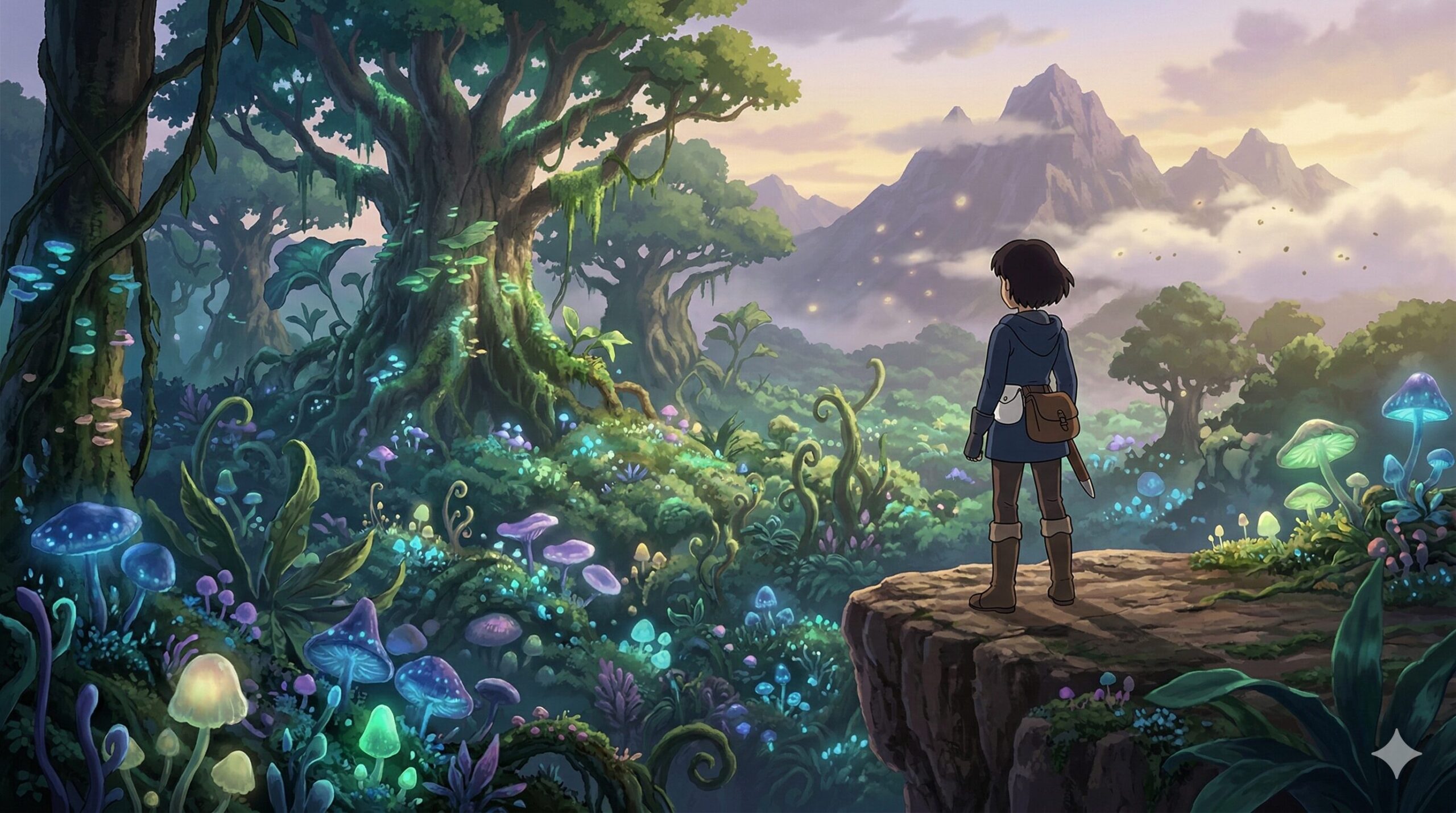
On March 8, 1984, a legend began in Japanese theaters with the release of Hayao Miyazaki’s feature-length animated film, “Nausicaa of the Valley of the Wind.” This monumental work profoundly influenced the Japanese animation industry and creators worldwide, ultimately laying the foundation for the establishment of “Studio Ghibli.”
The story is set 1,000 years after a global war known as the “Seven Days of Fire” destroyed modern industrial civilization. Humanity is threatened by the “Sea of Corruption,” a toxic fungal forest, and the giant mutant insects that dwell within it. The narrative follows Nausicaa, the princess of the Valley of the Wind, as she desperately seeks a way for humanity and nature to coexist.
At the time of its release, the film shocked audiences with its stark warning about environmental issues, its breathtaking world-building, and its meticulously animated flight sequences. It transcended mere entertainment, possessing a philosophical depth that questioned the very nature of human society.

Japanese Culture and Animism: Living “With” Nature, Not “Ruling” It
To deeply understand “Nausicaa of the Valley of the Wind,” one must look at “Animism” (nature worship), an ancient Japanese spiritual belief. In traditional Western perspectives, nature is often viewed as something for humans to conquer and manage. However, in Japan, there is a concept of “Yaoyorozu no Kami” (eight million gods), the belief that divinity resides in mountains, rivers, trees, and even invisible microscopic entities.
Nausicaa’s attitude throughout the film perfectly embodies this Japanese view of nature. She never hates the terrifying Ohmu (giant insects) that attack humans, nor the toxic plants of the Sea of Corruption. Instead, she seeks to understand why they exist and treats all forms of life with profound reverence. The revelation that the Sea of Corruption is actually a system purifying a polluted Earth resonates strongly with the Shinto concepts of “Kegare” (impurity) and “Purification.”
While the Tolmekian army tries to crush the threat of nature with sheer military force, Nausicaa chooses dialogue and harmony, even at the risk of her own life. This reflects the philosophy of “awe and coexistence with nature” cultivated by Japanese people throughout history, having lived alongside unavoidable natural disasters like earthquakes and typhoons.
How Would You Live in This World?
Decades after its 1984 release, the message of “Nausicaa of the Valley of the Wind” has not faded. In fact, its urgency has only increased in our modern era of severe climate change and environmental destruction.
After reading this article, what are your thoughts on the relationship between humanity and nature? If you found yourself in Nausicaa’s world, how would you interact with the terrifying Sea of Corruption and its creatures? Please take a moment to find your own answer.
Reference Links
- Internal Link: What’s Today’s Special Day Series
- External Link: Studio Ghibli Official Website
1984年3月8日:日本アニメの歴史を変えた『風の谷のナウシカ』公開
1984年3月8日、日本の映画館で一つの伝説が幕を開けました。宮崎駿監督の長編アニメーション映画『風の谷のナウシカ』の劇場公開です。この作品は、その後の日本のアニメーション産業、そして世界中のクリエイターに多大な影響を与え、後に設立される「スタジオジブリ」の礎を築いた記念碑的な作品です。
舞台は、高度な産業文明が「火の7日間」と呼ばれる最終戦争によって滅びてから1000年後の地球。有毒な瘴気を放つ菌類の森「腐海(ふかい)」と、そこに棲む巨大な蟲(むし)たちに人類が脅かされる世界で、風の谷の族長の娘・ナウシカが、人間と自然の共生を模索する姿が描かれています。
公開当時、環境問題に対する警鐘を鳴らすテーマ性、圧倒的な世界観、そして緻密に描かれた飛翔シーンは観客に大きな衝撃を与えました。単なるエンターテインメントの枠を超え、人間社会のあり方そのものを問う哲学的な深さを持っていたからです。
日本文化とアニミズム:「自然を支配する」のではなく「自然に生かされる」
『風の谷のナウシカ』を深く読み解く上で欠かせないのが、日本古来の精神性である「アニミズム(自然崇拝)」です。西洋の伝統的な価値観においては、自然は「人間が征服し、管理すべき対象」として描かれることが少なくありません。しかし、日本においては「八百万の神(やおよろずのかみ)」という言葉があるように、山、川、木、そして目に見えない微小な存在にさえ神性が宿ると信じられてきました。
ナウシカが作中で見せる態度は、まさにこの日本的な自然観の体現です。彼女は、人間を襲う恐ろしい王蟲(オーム)や、毒を放つ腐海の植物たちを決して憎みません。むしろ、「なぜ彼らがそのような存在になったのか」を理解しようと努め、生命そのものへの深い畏敬の念を持ち接しています。腐海が実は汚染された地球を浄化するためのシステムであったという作中の真実は、日本の神道における「穢れ(けがれ)」と「浄化(清め)」の概念に強く通じています。
自然の脅威を力でねじ伏せようとするトルメキアの軍勢に対し、ナウシカは自らの命を投げ打ってでも対話と調和を選びます。この姿勢は、地震や台風といった避けられない自然災害と隣り合わせで生きてきた日本人が、長い歴史の中で培ってきた「自然への畏れと共生」の哲学そのものです。
あなたなら、この世界でどう生きますか?
1984年の公開から長い年月が経った今でも、『風の谷のナウシカ』が発するメッセージは全く色褪せていません。むしろ、気候変動や環境破壊が深刻化する現代において、その切実さは増しています。
この記事を読んで、あなたは人間と自然の関係についてどう思いましたか?もしあなたがナウシカの生きる世界にいたならば、恐ろしい腐海や蟲たちとどのように向き合い、どう行動するでしょうか。ぜひ、あなた自身の答えを探してみてください。
参考リンク
- 内部リンク:今日は何の日シリーズ
- 外部リンク:スタジオジブリ公式ウェブサイト
コメント