① The Story of “The Master of Tosenbuchi”
The story takes place in Miyanoura on Yakushima Island, Kagoshima Prefecture—a mystical island breathing with ancient forests and ancient gods. In this village lived a man who made his living as a crow hunter. His wife was heavily pregnant, and the long-awaited birth of their baby was drawing near.
One day, before heading out for his usual hunt, the man clapped his hands in prayer at the family altar, wishing for a safe delivery, and stepped into the deep mountains. However, on that particular day, he couldn’t find a single prey. As he relentlessly pursued a catch, the man wandered deeper and deeper into the dense, dark woods of Yakushima.
Eventually, the sun set, and the surroundings were enveloped in complete darkness. Having lost his way, the man gave up on returning home and decided to spend the night under a massive, moss-covered tree. In the dead of night, as the man dozed, he heard strange voices from above. It was the voices of tree spirits (Kodama) calling out to each other.
The spirits conversed: “Today, a baby boy was born to the house of that crow hunter. But that child is bound by a pitiful fate. In the winter of his 7th year, it is ordained that he will be taken by the master of Tosenbuchi (dragged into the river to drown).”
Hearing this, the blood drained from the man’s face. Without waiting for dawn, he desperately rushed down the mountain toward his home. When he arrived, just as the spirits had said, a healthy baby boy had been born. The man kept the terrifying prophecy he heard in the mountain forest a strict secret, locking it deep within his heart, not even telling his wife. Years passed, and the boy grew up healthy and strong, without ever falling ill. Gradually, the man began to forget the events of that night.
Then came the fateful year. It was a winter’s day when the boy turned seven. The man, seen off by his family, went hunting deep in the mountains for the first time in a while. But just like that day seven years ago, he found no prey and lost his way once again. Forced to camp under a large tree, the eerie voices echoed in his ears once more.
“Hey, hey. That child from before has finally turned seven this year. The year of the river-taking has arrived. Truly a pitiful thing.”
The man awoke with a start, cold sweat pouring from his body. The forgotten, terrifying memory rushed back vividly, and he was certain that his son’s life was targeted.
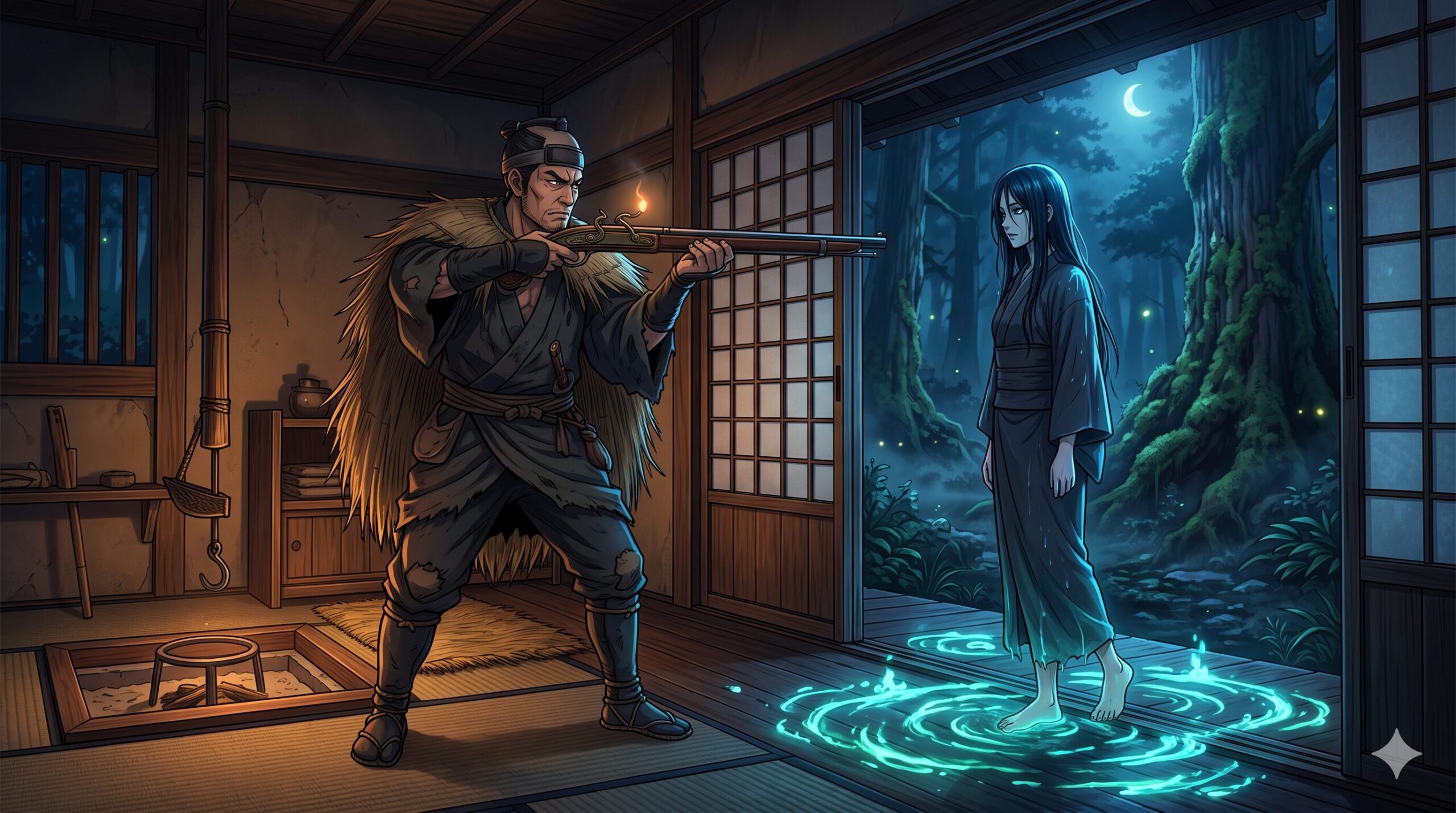
A few days later, the village of Miyanoura held the “Water God Festival.” It was a village custom on this day for the local boys to hold a boat race from Tosenbuchi to the river mouth. The man forcefully locked his son, who wanted to join the festival, inside the house, commanding him, “Do not step one foot outside today!” He then loaded his matchlock gun and stood guard at the doorway, waiting for whatever was to come.
Before long, accompanied by a cold wind, an unfamiliar, strikingly beautiful woman appeared in front of the man’s house. She spoke in a quiet voice, “I have come to take the child of this house to the Water God Festival.” But the man’s eyes were not deceived. Looking at her feet, he saw an unnatural puddle of water slowly spreading from where she stood. He instantly realized that this woman was a “river being” disguised as a human.
“You’ve come to take my child to the river!!”
With a roar of anger, the man pulled the trigger of his gun at the woman without hesitation. A deafening blast echoed, and the woman let out an ear-piercing scream before fleeing. Where she had run, a trail of water droplets remained. Following the trail of water, the man saw that it led straight down to the bottom of the eerie, deep abyss outside the village known as “Tosenbuchi.”
The man was convinced that the woman was “The Master of Tosenbuchi” who had tried to take his son’s life. By repelling the master, the curse was completely shattered, and the boy never faced danger again. The surviving boy lived a happy life, eventually reaching the grand age of 100.
② Deep Analysis of “The Master of Tosenbuchi”
This folktale goes far beyond a simple monster-slaying story; it encompasses deeply profound themes. The following three analytical points are particularly noteworthy:
First, the karmic consequence of being a “Crow Hunter.”
In Japanese folk religion, crows are considered sacred beings, messengers of the gods (Yatagarasu), or equated with the mountain spirits known as Tengu. The very fact that the man made his living shooting crows was an “invasion” against nature and the realm of gods. The hidden structure here is karmic retribution: his child’s life was targeted as punishment. The tree spirits’ prophecy can be seen as a warning regarding his deviation from the laws of nature.
Second, the true identity of the “Master of Tosenbuchi.”
The depiction of water welling up from the woman’s feet clearly indicates she is a water deity or a powerful aquatic Yokai (such as a Kappa or water dragon). The abyss named “Tosen” (meaning Chinese Ship) symbolizes an unfathomable depth and a gateway to the otherworldly realm beyond human understanding. The master was not merely an evil monster but an executor carrying out the “laws of nature” (the cycle of lifespan and sacrifice).
Third, the power of “Human Will” to break fate.
In many myths and legends, an oracle or prophecy (fate) is absolute, and any human attempt to defy it ultimately ends in tragedy. However, the father in this story was different. He mercilessly fired a “gun”—a human weapon—at the water god, a being from the divine realm. This is a highly realistic and powerful expression of humanism: “Even the absolute fate decreed by the gods can be changed by a parent’s strong love, will, and decisive action.”
③ Decoding Japanese Culture from the Folktale: Water Gods and Awe of Nature
Through this story, we can clearly decipher Japan’s unique view of nature and its spiritual structure. The spirit of “Animism” (eight million gods) flows at the foundation of Japanese culture.
The Duality of Gratitude and Fear Towards Water
Japan has been an agricultural nation centered on rice cultivation since ancient times, making water the most vital resource for nurturing life. However, at the same time, it was a terrifying force that caused typhoons and floods, easily taking human lives. The Japanese harbored conflicting emotions of “gratitude” and “fear” toward water, worshipping it as a “Suijin” (Water God). The “Water God Festival” in the story is an actual custom in Japanese society, designed to appease raging water spirits and pray for the safety of children.
The Psychological Function of the Concept of “Kawa-tori”
The phrase “Kawa-tori” (taken by the river) spoken by the spirits is an old Japanese expression for a child drowning in a river. In ancient Japan, tragedies of children being lost to accidental drownings were everyday occurrences. To overcome the unreasonable grief, bereaved parents created the concept that “the river god took the child away.” Giving a personality or divine status to natural phenomena was a psychological defense mechanism of the Japanese people to mentally accept cruel realities, heavily reflected in this folktale.
“Forests” and “Abysses” as Boundaries to the Otherworld
The deep forests of Yakushima and the bottomless Tosenbuchi represent the boundary (barrier) between the human sphere and the “Otherworld” where gods and Yokai dwell. The Japanese believed that entities beyond human comprehension resided deep within nature, cautioning against entering recklessly. The man could hear the spirits’ voices only when he lost his way because he had physically and mentally stepped into the territory of the “Otherworld.”
④ How Would You Confront Destiny?
The profound love and resolve of a father who, refusing to yield to the cruel fate of his child’s death decreed by the gods, took up arms to repel a deity. This story poses a powerful question to us living in the modern world.
If you discovered a “tragic fate” that you were told was absolutely inescapable, how would you act? Would you accept destiny and live in fear of the fateful day? Or, like this father, would you fight to protect your loved one using whatever unconventional means necessary?
How do you feel about the strength of “human will and parental love” that can defy even the immense power of gods and nature? Please envision your own thoughts and feelings.
⑤ Reference Links
- External Link: Manga Nippon Mukashibanashi Database – The Master of Tosenbuchi
- Internal Link: Japanese Folktale Series
唐船淵の主(The Master of Tosenbuchi):屋久島に伝わる運命と親子の絆の物語
① 昔話「唐船淵の主」のストーリー
舞台は、太古の森と神々が息づく神秘の島、鹿児島県屋久島の宮之浦です。この村に、カラス撃ち(狩人)を生業とする一人の男が住んでいました。男の妻は臨月を迎えており、待望の赤ん坊の誕生は目前に迫っていました。
ある日、男はいつものように狩りに出る前、家の神棚に向かって「どうか無事に赤ん坊が産まれますように」と柏手を打って祈願し、深い山へと足を踏み入れました。しかし、その日に限って獲物は全く見つかりません。男は獲物を追い求めるうちに、屋久島の鬱蒼とした深い森の奥へ奥へと迷い込んでしまいました。
やがて日が暮れ、周囲は完全な闇に包まれます。道を見失った男は帰宅を諦め、苔むした巨大な木の下で夜を明かすことにしました。深夜、男がまどろんでいると、頭上から奇妙な声が聞こえてきました。「おーい、おーい」と呼び合う、木に宿る精霊(木の精)たちの声です。
精霊たちはこう語り合っていました。「今日、あのカラス撃ちの男の家に男の子が産まれたぞ。しかし、あの赤ん坊は不憫な運命にある。7歳になった年の冬、唐船淵(とうせんぶち)の主に川取り(川に引きずり込まれて命を落とすこと)される定めに従うのだからな」
それを聞いた男は血の気が引きました。夜が明けるのも待たずに、男は無我夢中で山を駆け下り、家へと急ぎました。家に着くと、精霊の言葉通り、元気な男の子が産まれていました。男は山の森で聞いた恐ろしい予言を誰にも、妻にさえも話さず、自分の胸の奥底にだけ固く封じ込めました。月日は流れ、男の子は病気一つせず、すくすくと健やかに成長していきました。男も次第に、あの夜の出来事を忘れかけていました。
そして運命の年。男の子が7歳になったある冬の日のことです。男は家族に見送られ、久しぶりに山の奥深くへと猟に出かけました。ところが、7年前のあの日と全く同じように獲物は見つからず、男は再び道に迷ってしまいます。仕方なく一本の大きな木の下で野宿を決めた男の耳に、再びあの不気味な声が響きました。
「おーい、おーい。いつかの子供も、とうとう今年は7つになったな。いよいよ川取りの年だ。本当にかわいそうなことだ」
男はハッと目を覚まし、全身から冷や汗が吹き出しました。忘れかけていた恐ろしい記憶が鮮明に蘇り、息子の命が狙われていることを確信しました。
その数日後、宮之浦の村では「水神祭り」が行われる日を迎えました。この日は村の習わしで、近所の男の子たちが唐船淵から河口まで「押し舟(小舟の競争)」をする決まりになっていました。男は、祭りに参加したがる息子を無理やり家の中に閉じ込め、「今日は一歩も外に出てはならない!」と厳命しました。そして自らは弾を込めた鉄砲を構え、家の戸口に仁王立ちして何者かが来るのを待ち構えました。
やがて、冷たい風と共に、見知らぬ見目麗しい女が男の家の前に姿を現しました。女は静かな声で「ここの家の子を、水神祭りに連れて行くために迎えにきました」と告げます。しかし、男の目は誤魔化されませんでした。女の足元を見ると、立っている場所から不自然な水たまりがジワジワと広がっていたのです。男は、この女が人間の姿に化けた「川の者」であると即座に見破りました。
「オラの子供を川取りに来ただな!!」
男は怒号とともに、迷うことなく女に向かって鉄砲の引き金を引きました。轟音が響き渡り、女は鼓膜を劈くような悲鳴を上げて逃げ出しました。女が逃げ去った後には、点々と水滴の跡が残されていました。男がその水の跡を追っていくと、それは村の外れにある不気味な深い淵、「唐船淵」のどん底へと真っ直ぐに続いていました。
男は、あの女こそが息子の命を奪おうとした「唐船淵の主」であったと確信しました。主を退けたことで呪縛は完全に打ち砕かれ、その後、男の子の身に危険が降りかかることは二度とありませんでした。生き延びた男の子は、とうとう100歳の天寿を全うするまで幸せに生きたということです。
② 「唐船淵の主」の深い考察
この昔話は、単なる怪物退治の物語にとどまらない、非常に深いテーマを含んでいます。注目すべき考察ポイントは以下の3点です。
第一に、「カラス撃ち」という職業の因果です。
日本の民間信仰において、カラスは神の使い(八咫烏)や、山の神霊である天狗と同一視される神聖な存在です。男がカラスを撃つことを生業としていたこと自体が、自然界や神々の領域に対する「侵犯」であり、その報いとして我が子の命が狙われたという因果応報の構図が隠されています。山の精霊が予言を行ったのも、彼が自然の理から外れた行為をしていたことへの警告と捉えられます。
第二に、「唐船淵の主」の正体です。
女の足元から水が湧き出す描写は、彼女が水神、あるいは強力な水系の妖怪(蛟や河童の類)であることを明確に示しています。「唐船(外国の船)」という名がつく淵は、底知れぬ深さと、人間の理解を超えた異界への入り口を象徴しています。主は悪意を持った化け物というよりも、「自然の掟(寿命や生贄のサイクル)」を遂行する執行者としての役割を担っていました。
第三に、運命を打ち破る「人間の意志」の力です。
多くの神話や伝承において、神託や予言(宿命)は絶対であり、人間が逆らおうとしても最終的には悲劇に終わるのが定石です。しかし、この物語の父親は違いました。彼は神霊の領域の存在である水神に対し、人間の武器である「鉄砲」を容赦無く撃ち放ちます。これは「神々の定めた絶対の運命であっても、親の強い愛と意志、そして行動力によって変えることができる」という、極めて現実的で力強いヒューマニズムの表れです。
③ 昔話から読み解く日本文化:水神信仰と自然への畏怖
この物語を通して、日本独自の自然観と精神構造を明確に読み解くことができます。日本文化の根底には「アニミズム(八百万の神々)」の精神が流れています。
水への感謝と恐怖の二面性
日本は古来より稲作を中心とした農業国家であり、水は命を育む最も重要な資源です。しかし同時に、台風や洪水を引き起こし、いとも簡単に人命を奪う恐ろしい存在でもありました。日本人は水に対して「感謝」と「恐怖」という相反する感情を抱き、それを「水神(すいじん)」として祀り上げました。物語に登場する「水神祭り」は、荒ぶる水の神を鎮め、子供たちの安全を祈願するための現実の日本社会の風習そのものです。
「川取り」という概念の心理的機能
物語の中で精霊が口にする「川取り(かわとり)」とは、子供が川で溺れ死ぬことを指す日本の古い表現です。昔の日本では、不慮の水難事故で子供を失う悲劇が日常的に起こっていました。残された親たちは、その理不尽な悲しみを乗り越えるため、「川の神様が子供を連れて行ってしまった(川取り)」という概念を生み出しました。自然現象に人格や神格を与えることで、残酷な現実を精神的に受容しようとした日本人の心の防衛機制が、この昔話には色濃く反映されています。
異界との境界線としての「森」と「淵」
屋久島の深い森や、底の見えない唐船淵は、人間の生活圏と神々や妖怪が住む「異界」との境界線(結界)を意味しています。日本人は自然の奥深くには人知の及ばない存在がいると信じ、無闇に立ち入ることを戒めてきました。男が山で道に迷った時にだけ精霊の声が聞こえたのは、彼が物理的にも精神的にも「異界」の領域に足を踏み入れていたからです。
④ あなたならどう運命に立ち向かいますか?
神々が定めた「我が子の死」という残酷な運命に対し、決して屈することなく、銃を手に取って神を撃ち退けた父親の深い愛情と覚悟。この物語は、現代に生きる私たちにも強烈な問いを投げかけます。
もし、あなたが絶対に逃れられないと宣告された「悲劇的な運命」を知ってしまったら、あなたはどう行動しますか?運命を受け入れて運命の日に怯えるでしょうか。それとも、この父親のように、どんな常識外れな手段を使ってでも大切な人を守り抜くために戦うでしょうか。
神や自然という巨大な力にさえ抗う「人間の意志と親の愛」の強さについて、あなたはどのように感じましたか?ぜひ、あなたの考えや感想を思い描いてみてください。
⑤ 参考リンク集
- 外部参考リンク: まんが日本昔ばなし〜データベース〜 唐船淵の主(出典元)
- 内部リンク: Japanese Folktale Series (日本昔話シリーズ)
コメント