Japan’s rich natural environment has blessed its people since ancient times. However, behind these blessings exist strict “laws” that must never be broken. Today, we introduce a spine-chilling Japanese folktale, “The Nut Thrown into the Fire,” where a young girl faces terrifying consequences after breaking the rules of nature. Let us guide you into a story that is not merely a ghost tale, but a deep reflection of the Japanese spiritual mind.
① The Story: The Nut Thrown into the Fire
Once upon a time, deep within an isolated mountain, a charcoal burner couple lived quietly with their only daughter, Hana. Surrounded by dense forests and locked in by snow during the winter, the environment was harsh. Yet, the family lived peacefully, deeply grateful for the blessings of nature.
One late autumn day, as the cold winds began to blow, Hana’s parents left early for work in the mountains. Hana stayed behind to watch the house and prepare the meals. Glancing out the window, she spotted a starving fox crouching, ready to pounce on a small, trembling squirrel. While the survival of the fittest is the absolute law of the forest, kind-hearted Hana could not bear to see the poor squirrel die.
“Stop it!”
Instinctively, Hana threw the large wooden water dipper (hishaku) she was holding with all her might. She only meant to scare the fox away. Unfortunately, the dipper struck a vital spot on the fox’s head. The fox died instantly without even letting out a cry.
Seeing the motionless fox and the fresh blood smeared on the dipper, Hana fell into a deep panic. Consumed by the guilt of taking a life and the fear of being scolded by her parents, she picked up the bloodied dipper with trembling hands. To hide her “sin,” she threw it straight into the roaring fire of the traditional floor hearth (irori). The dipper sizzled with an eerie sound and quickly turned to ash.
In the evening, her parents returned from the mountains, their arms full of autumn bounties like acorns and chestnuts. Unaware of the tragedy, they handed the nuts to Hana. She silently cracked them open, ate the contents, and casually spat the remaining seeds straight into the hearth’s fire.
Seeing this, her parents turned pale and scolded her severely.
“What are you doing?! Never throw nuts into the fire. It has been told since ancient times that nuts cast into the fire will hold a grudge and return as monsters to haunt you!”
The next day, her parents had urgent business down in the village. An icy rain fell relentlessly outside, wrapping the solitary mountain hut in an eerie, unsettling silence. Night fell, but her parents did not return. Driven by the darkness of the mountain, the biting cold, and the guilt from the previous day, Hana curled up near the hearth’s fire and eventually drifted into a restless sleep.
—Chime, tap-tap, tap.
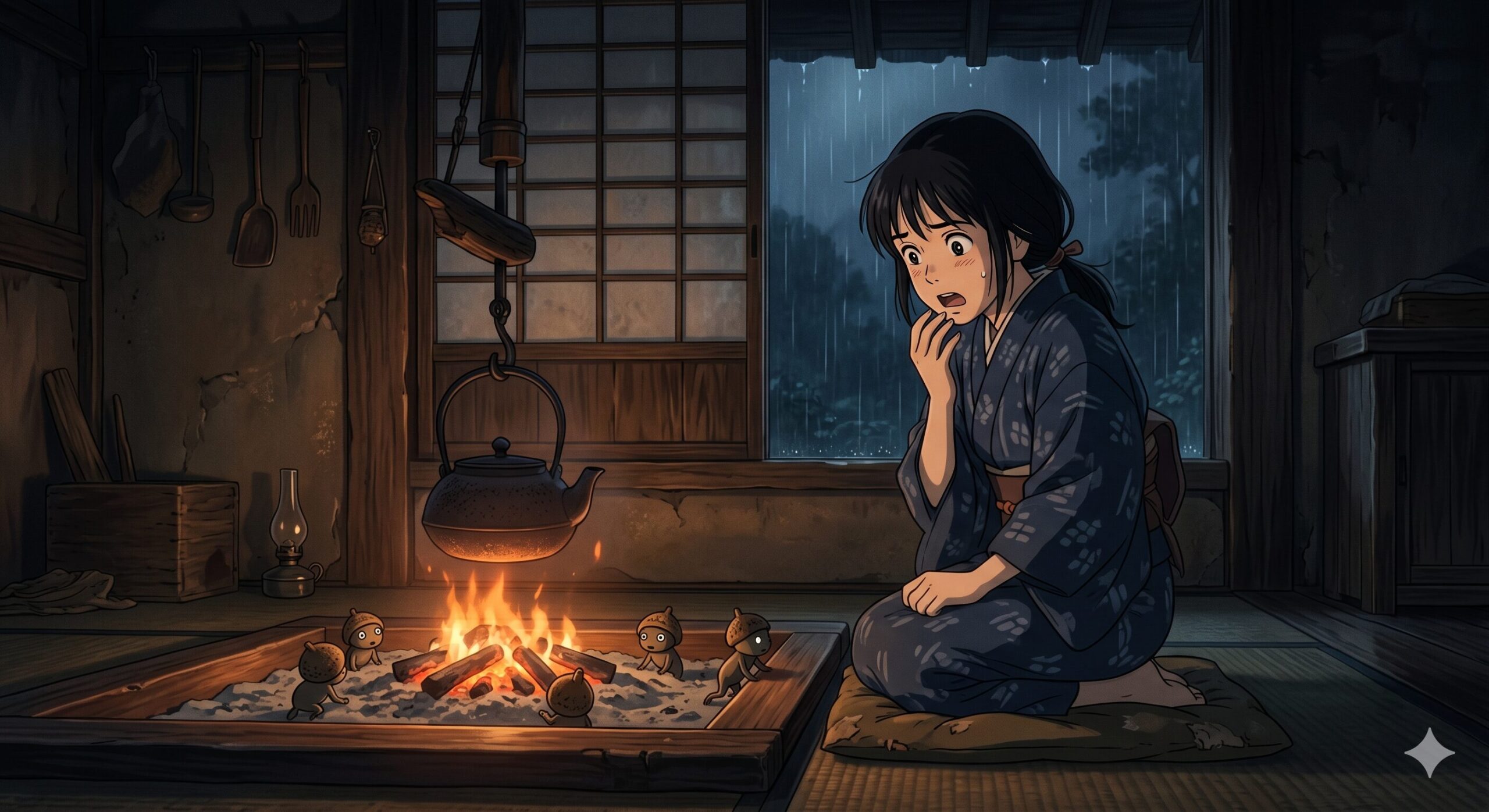
Suddenly, a strange sound reached her ears. Startled awake, Hana looked at the hearth. To her horror, tiny dwarfs—barely three inches tall and wearing nut shells as hats—were crawling out of the burnt ashes. Holding microscopic flutes and drums, they played a bizarre, festive tune as they began to dance in circles around the edge of the hearth.
At first, Hana thought they were cute, but the dwarfs multiplied endlessly from the ashes. Dozens turned into hundreds, and their tiny faces seemed to harbor a deep, burning resentment. Pushed to the absolute limit of her terror, Hana screamed, “Go away!” Frantically swinging the iron fire tongs, she tried to shove the dwarfs deep back into the ashes to bury them.
But at that exact moment, from the deepest abyss of the ashes, a massive, pale, translucent hand violently thrust upward! The hand grabbed her ankle with crushing strength, attempting to drag her down into the ashes.
“Kyaaaa!!”
Her scream echoed through the mountains, and Hana fainted on the spot. The next morning, when her parents returned and found her collapsed, they sifted through the hearth’s ashes. All they found were the charred remains of the wooden dipper and countless pitch-black nut seeds. The anger over disrespecting the mountain’s bounty and burning life in the fire had transformed them into monsters.
② Analysis: Why Was the Girl Attacked by Monsters?
This story is not just a scary bedtime story for children. The horror Hana faced was the inevitable consequence of her own actions.
Her first sin was “Interfering with Nature’s Law and Unnecessary Killing.” The fox hunting the squirrel was a natural part of the ecosystem; humans should not intervene based on personal emotion. As a result, she took a life pointlessly.
Her second major sin was “Bringing Impurity (Kegare) into the Sacred Fire.” In ancient Japanese homes, the hearth (irori) is the center of life, a place where meals are cooked and warmth is shared. It is considered a sacred space where the “God of Fire (Kojin)” resides. Bringing the impurity of “blood” and death into it was a severe blasphemy.
Her third sin was “Incinerating the Seeds of Life.” Nut seeds are entities that will eventually sprout and become new life. Casually tossing them into the fire is an absolute taboo that completely severs the rebirth of life. The tiny dwarfs were the vengeful souls of the nuts, and the giant hand was either the grudge of the murdered fox or the sheer wrath of the Fire God.
③ Cultural Connection: “Animism” and the “Cycle of Life”
This folktale provides deep insights into Japan’s unique spiritual culture. The most important concepts here are “Animism” and the “Cyclical View of Nature.”
- Tsukumogami and Animism: In Japan, it is believed that souls dwell not only in trees, stones, and animals but also in tools used for many years (like the dipper). By treating the tool poorly and tossing it into the fire, it transformed into a vengeful spirit known as “Tsukumogami.”
- Returning to the Earth: The parents’ anger over burning the nuts stems from the belief that the mountain’s bounty is not human property, but borrowed. By returning seeds to the soil, they grow the forest again. Burning them to ash is heavily condemned as human arrogance breaking the eternal cycle of nature.
The profound Japanese philosophy of “reverence for nature” and the belief that “all lives are connected” run deep beneath this terrifying tale.
④ What Would You Have Done?
Through this story, we are strongly questioned about our relationship with nature.
If you were in Hana’s shoes and witnessed the brutal reality of the food chain, would you intervene to save the poor squirrel? Or would you quietly watch it as a law of nature? And do we pay enough respect to the cycle of life and the blessings of nature in our daily lives?
Please share your thoughts and what you felt reading this story in the comments section below!
⑤ Reference Links & Related Categories
- Reference URL: Manga Nippon Mukashibanashi Database (The Nut Thrown into the Fire)
- Explore More Folktales: Japanese Folktale Series
日本の隠された怪談「火なたに捨てられた木の実」:自然の摂理と恐るべき掟
日本の豊かな自然は、古くから人々に多くの恵みをもたらしてきました。しかし、その裏には決して破ってはいけない「掟」が存在します。今回は、自然の掟を破った一人の少女に降りかかる、身の毛もよだつ恐怖の昔話「火なたに捨てられた木の実」をご紹介します。ただの怖い話にとどまらない、日本人の精神性が色濃く反映された物語の世界へご案内します。
① 昔話「火なたに捨てられた木の実」のストーリー
むかしむかし、人里離れた深い山奥に、炭焼きを生業とする夫婦と、その一人娘である「花」がひっそりと暮らしていました。周囲は鬱蒼とした森に囲まれ、冬になれば雪に閉ざされる厳しい環境でしたが、家族は自然の恵みに感謝しながら、ささやかで平穏な日々を送っていました。
木枯らしが吹き始める晩秋のある日のことです。両親は朝早くから山へ仕事に出かけ、花は一人で留守番をしながら炊事の支度をしていました。ふと窓の外に目をやると、一匹の飢えた狐が、小さなリスを狙って今にも飛びかかろうと身構えています。弱肉強食は森の絶対的な掟ですが、心優しい花には、震える小さなリスが可哀想でなりませんでした。
「やめて!」
花はとっさに、手に持っていた水汲み用の大きな柄杓(ひしゃく)を力いっぱい投げつけました。それは狐を追い払うだけのつもりでした。しかし、運悪く柄杓は狐の頭の急所に激突し、狐は悲鳴を上げる間もなく、その場で息絶えてしまったのです。
動かなくなった狐と、柄杓にべっとりと付着した生々しい血を見て、花は激しいパニックに陥りました。命を奪ってしまった罪悪感と、両親に叱られるかもしれないという恐怖。彼女は震える手で血塗られた柄杓を拾い上げると、その「罪」を隠蔽するかのように、赤々と燃え盛る囲炉裏(いろり)の火の中へ投げ込んでしまったのです。柄杓はシューッと不気味な音を立てながら、あっという間に灰になっていきました。
夕方になり、両親が山から帰ってきました。彼らの手には、山の恵みであるどんぐりや栗などの「木の実」が両手いっぱいに抱えられていました。何も知らない両親から木の実を受け取った花は、無言のまま殻を剥いて食べ、残った種をぷっ、ぷっと囲炉裏の火に向かって吹き捨てました。
それを見た両親は血相を変え、花を厳しく叱りつけました。
「何てことをするんだ!火なた(火の中)に木の実を捨ててはいかん。昔から、火に投げ込まれた木の実は、恨みを持って化けて出ると言われているんだぞ!」
翌日、両親はどうしても外せない用事があり、里へ下りることになりました。あいにく外は冷たい氷雨が降りしきり、山奥の一軒家は薄気味悪い静寂に包まれています。夜の帳が下りても、両親は一向に帰ってきません。山の暗闇と底冷えする寒さ、そして昨日の罪悪感から、花は囲炉裏の火のそばで小さく丸まり、いつしかうとうとと眠りに落ちていきました。
――チリリン、トトントン。
ふと、耳元で奇妙な音が聞こえました。目を覚ました花が囲炉裏を見ると、燃え残った灰の中から、身の丈わずか三寸(約9センチ)ほどの、木の実の殻を頭に被った小人たちが這い出してくるではありませんか。彼らは極小の笛や太鼓を持ち、不気味なお囃子を奏でながら、囲炉裏の縁をぐるぐると踊り歩き始めました。
最初は「可愛い」と思った花でしたが、小人たちは灰の中から無限に湧き出してきます。数十、数百と増殖し、その表情には深い恨みが込められているように見えました。異様な光景に花の恐怖は頂点に達しました。「あっちへ行って!」と叫びながら、無我夢中で火箸を振り回し、小人たちを灰の奥へ押し戻して埋めようとしました。
しかしその瞬間、灰の最深部から、小人たちとは比べ物にならないほど巨大な、青白く透き通った腕が「ぬっ」と突き出してきたのです!その手は花の足首をガシッと力強く掴み、灰の中へ引きずり込もうとしました。
「きゃああっ!!」
山奥に絶叫が響き渡り、花はそのまま気を失ってしまいました。翌朝、帰宅した両親が倒れている花を見つけ、囲炉裏の灰をかき分けてみると、そこには焼け焦げた柄杓の残骸と、無数の真っ黒な木の実の種だけが残されていました。山の恵みを粗末にし、命を火で燃やしたことへの怒りが、彼らを化け物に変えてしまったのです。
② 考察:なぜ少女は恐怖の怪異に襲われたのか
この物語は、単なる子供向けの怪談ではありません。主人公の花が遭遇した恐怖は、彼女自身の行動が引き起こした必然的な結果でした。
第一の罪は、「自然の摂理への介入と殺生」です。狐がリスを襲うのは自然のサイクルの一部であり、人間が感情で介入すべきものではありませんでした。結果として彼女は無駄な殺生をしてしまいます。
第二の重大な罪は、「穢れ(けがれ)を神聖な火に持ち込んだこと」です。昔の日本家屋における囲炉裏は、家族の命を繋ぐ食事を作り、暖を取る中心地であり、「火の神(荒神)」が宿る神聖な場所です。そこへ「血」という死の穢れを持ち込んだことは、神への冒涜でした。
第三の罪は、「命の種を焼き尽くしたこと」です。木の実の種は、やがて芽吹き新しい命となる存在です。それを無造作に火に投げ捨てる行為は、命の再生を完全に断ち切る絶対的なタブーでした。灰から現れた小人は木の実の無念の魂であり、巨大な腕は殺された狐の怨念、あるいは火の神の怒りそのものだったのです。
③ 日本文化との関連:「万物有霊」と「命の循環」
この昔話からは、日本固有の精神文化を深く読み解くことができます。最も重要な概念は「アニミズム(万物有霊)」と「循環型自然観」です。
- 付喪神(つくもがみ)とアニミズム: 日本では、木や石、動物だけでなく、長く使われた道具(柄杓など)にも魂が宿ると信じられています。道具を粗末に扱い、火に投げ込んだことで、柄杓は怨みを持つ「付喪神」と化しました。
- 土へ還す思想: 両親が「木の実を火に投げてはいけない」と怒ったのは、山の恵みは人間の所有物ではなく、借り物だからです。種は土に還すことで再び森を育てます。火で燃やして灰にする行為は、人間が自然の永遠のサイクルを傲慢に断ち切る行為として、厳しく戒められてきました。
日本人が古来から抱いてきた「自然への畏敬の念」と、「すべての命は繋がっている」という哲学が、この身の毛もよだつ物語の根底には流れているのです。
④ あなたならどうしますか?
この物語を通して、私たちは自然との関わり方について強く問いかけられます。
もしあなたが花の立場だったら、弱肉強食の現場に直面したとき、可哀想なリスを助けるために介入しますか?それとも自然の掟として静かに見守りますか?そして、命の循環や自然の恵みに対して、私たちは日頃から十分な敬意を払えているでしょうか?
ぜひ、あなた自身の考えや、この物語を読んで感じたことをコメント欄で教えてください。
⑤ 参考リンクと関連カテゴリ
- 参考URL:まんが日本昔ばなし〜データベース〜(火なたに捨てられた木の実)
- その他の昔話はこちら:Japanese Folktale Series(日本の昔話シリーズ)
コメント