Once upon a time, in a small village hidden deep within the mountains of Japan, a terrible event occurred. That year, the land was struck by a long and severe famine. The villagers had nothing to eat and were desperate just to survive another day. The fields were barren, the animals had vanished, and the shadow of death loomed over the entire village.
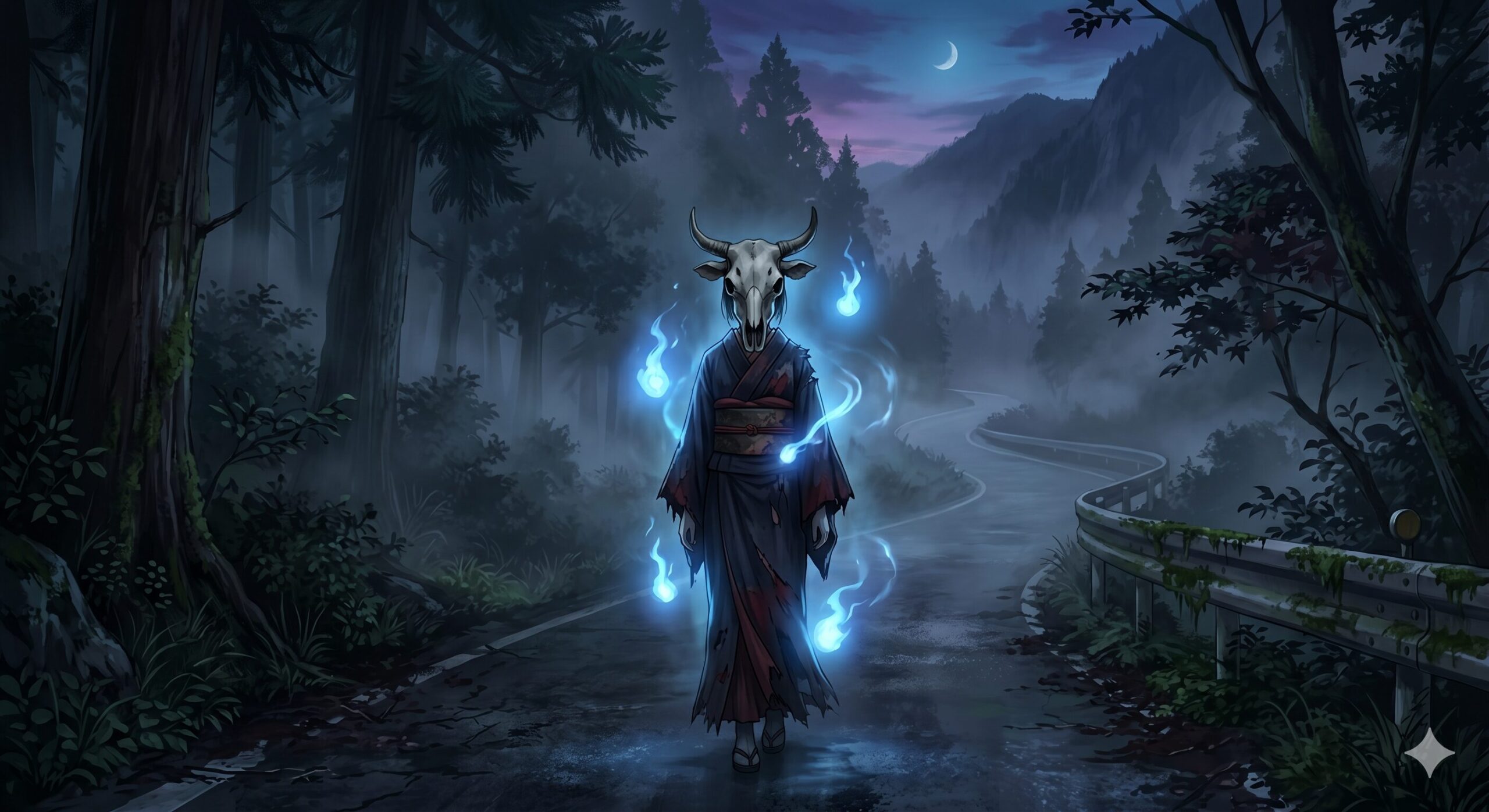
It happened on a night with a full moon. A bizarre silhouette stood in the grounds of the old shrine at the entrance to the village. Illuminated by the moonlight, it was the figure of a woman wearing a brightly colored kimono, but from the neck up, she had the terrifying “head of a cow.” This entity came to be known as the “Ushi-onna” (Cow Woman).
The villagers were paralyzed with fear and tried to run away, but when they looked into the Ushi-onna’s sorrowful, deep eyes, not a single person could move. The Ushi-onna began to speak quietly in human language.
“Do not be afraid. I am the soul of a mother who once lived in this village. I ended my own life and prayed to the mountain gods to save my starving children. The gods heard my plea, transformed me into this form, and entrusted me with a prophecy to save this village.”
The Ushi-onna proclaimed that starting the next day, heavy rain would fall for three days and three nights. She brought a prophecy of hope: the rainwater would purify the village’s soil, restoring it to a rich land where crops would grow again. However, she also issued a terrifying warning. “While that rain is falling, you must never step outside your homes. Anyone who steps outside will incur the wrath of the mountain and lose their life.”
Having delivered her prophecy, the Ushi-onna quietly disappeared into the mist. The next day, just as prophesied, the sky was covered with black clouds, and a violent torrential rain battered the village. The villagers strictly obeyed the Ushi-onna’s words and spent the time hiding quietly inside their homes.
After three days and three nights, the rain stopped. On the once-barren earth, fresh green sprouts were beginning to emerge. The village was saved. However, only one man, driven by greed, had rushed outside into the rain to hoard the fresh water. He was swallowed by the deep mud and never returned. Ever since that day, the villagers held a deep mix of gratitude and awe for the Ushi-onna, and every year at that time, they began offering fresh vegetables in front of the shrine.
Deep Love Beneath the Terror: An Analysis of the Ushi-onna
At first glance, the story of the “Ushi-onna” seems like a simple ghost story about the fear of a grotesque monster. However, its true essence is a profound tale of “maternal love” and “self-sacrifice.” The terrifying appearance of the Ushi-onna symbolizes the harshness and unforgiving nature of the natural world. On the other hand, her words and actions are filled with deep affection, worrying about the future of her children and the village.
The contrast between her frightening exterior and her gentle interior teaches us the lesson that we must not judge things solely by their surface appearance. Furthermore, the ending—where the villagers are saved by following the prophecy, while the one who succumbed to greed loses his life—serves as a warning against human arrogance and the danger of dismissing nature’s rules and sacred warnings. The Ushi-onna did not appear simply to threaten the villagers, but as an absolute protector guiding them in the right direction.
Japanese Culture and Yokai: What We Must Learn from the Ushi-onna
From this folktale, we can deeply interpret traditional Japanese “Animism” (the belief that spirits dwell in all things) and the unique cultural perspective on “Yokai” (supernatural entities).
While monsters in Western folklore are often depicted as “absolute evils that must be defeated,” Japanese Yokai are different. Yokai are born from human sorrow, grudges, or intense desires; they sometimes issue warnings to people and at other times bring salvation. In ancient times, the cow was a human’s most important partner in agriculture, symbolizing labor and a bountiful harvest. The Ushi-onna, possessing the head of a cow and the body of a human, is an entity that transcends the boundary between “nature (animals)” and “humans,” acting as a messenger from the natural world.
Additionally, the unique Japanese culture of “Osore” (awe/reverence) is evident here. “Osore” is not merely fear; it is an emotion that includes profound respect for the subject. What the villagers felt toward the Ushi-onna was exactly this “Osore.” Through this story, we can learn the ancient, beautiful moral values of Japan: a sense of awe toward the fierce power of nature and the spirit of caring for others, no matter how difficult the circumstances.
A Question for You
If you found yourself in deep despair and encountered this terrifying Ushi-onna, what would you do? Would you be overcome by the fear of her appearance and run away, or would you listen to the truth hidden deep within her sorrowful eyes? When faced with the unknown, what choice would you make? Please think deeply about this.
Reference Links
【日本の昔話】牛女(うしおんな)の悲しき伝説と予言
むかしむかし、日本の山深くにある小さな村での出来事です。その年は長く厳しい飢饉に見舞われ、村人たちは食べるものもなく、日々をただ生き延びることに必死でした。田畑は枯れ果て、動物たちの姿も消え、村全体が死の影に覆われていました。
そんなある満月の夜のことです。村の入り口にある古い神社の境内に、異様な影が立っていました。月明かりに照らし出されたその姿は、色鮮やかな着物を身にまとった女性のものでしたが、首から上は恐ろしい「牛の頭」だったのです。その存在は「牛女(うしおんな)」と呼ばれました。
村人たちは恐怖のあまり逃げ出そうとしましたが、牛女の悲しげで深い瞳に見つめられると、誰一人として動くことができませんでした。牛女は、人間の言葉で静かに語り始めました。
「恐れることはありません。私はかつて、この村で飢えに苦しむ我が子を救うため、自らの命を絶って山の神に祈った母親の魂です。神は私の祈りを聞き届け、私をこの姿に変えて村を救う予言を託しました」
牛女は、明日から三日三晩、大雨が降ることを告げました。そして、その雨水が村の土を浄化し、再び作物が育つ豊かな土地に戻るという希望の予言をもたらしたのです。しかし、同時に恐ろしい警告も発しました。「その雨が降っている間は、決して家の外に出てはなりません。外に出た者は、山の怒りに触れて命を落とすでしょう」
予言を終えた牛女は、静かに霧の中へと消えていきました。翌日、予言通りに空は黒い雲に覆われ、激しい豪雨が村を打ちつけました。村人たちは牛女の言葉を固く守り、家の中で息を潜めて過ごしました。
三日三晩が過ぎ、雨が上がると、枯れ果てていた大地には青々とした新芽が顔を出していました。村は救われたのです。しかし、ただ一人、欲に駆られて雨の中に外へ飛び出した男だけが、深い泥に飲み込まれて帰らぬ人となりました。それ以来、村人たちは牛女への感謝と畏れを抱き、毎年その時期になると神社の前に新鮮な野菜を備えるようになりました。
恐怖の底にある深い愛情:牛女の物語を考察する
この「牛女」の物語は、一見すると異形の怪物に対する恐怖の怪談のように思えます。しかし、その本質は「母性愛」と「自己犠牲」の物語です。牛女の恐ろしい外見は、自然の過酷さや容赦のなさを象徴しています。一方で、彼女の言葉や行動には、我が子や村の未来を憂う深い愛情が込められています。
外見の恐ろしさと内面の優しさというコントラストは、物事の表面だけで判断してはならないという教訓を示しています。また、村人が予言を守ることで救われ、欲に負けた者が命を落とすという結末は、自然のルールや神聖な警告を軽んじてはいけないという人間の傲慢さに対する戒めでもあります。牛女は、ただ村人を脅かすためではなく、彼らを正しい方向へと導くために現れた絶対的な庇護者なのです。
日本文化と妖怪:私たちが牛女から読み解くべきこと
この物語からは、日本の伝統的な「アニミズム(万物に魂が宿るという思想)」と「妖怪」に対する独特の死生観を深く読み解くことができます。
西洋におけるモンスターは「打ち倒すべき絶対悪」として描かれることが多いですが、日本の「妖怪」は異なります。妖怪は人間の悲しみ、怨念、あるいは強い願いから生まれ、時に人々に警告を与え、時に救いをもたらす存在です。牛は古来より農耕において人間の最も重要なパートナーであり、労働と豊穣の象徴でした。その牛の頭と人間の体を持つ牛女は、「自然(動物)」と「人間」の境界を越えた存在であり、自然界からのメッセンジャーとしての役割を担っています。
また、日本特有の「畏れ(おそれ)」の文化もここに表れています。「畏れ」とは単なる恐怖ではなく、相手に対する深い敬意を含んだ感情です。村人たちが牛女に対して抱いたのは、まさにこの「畏れ」でした。私たちはこの物語を通して、自然の猛威に対する畏敬の念と、どんなに困難な状況でも他者を思いやる精神という、日本古来の美しい道徳観を学ぶことができるのです。
あなたへ問いかけたいこと
もしあなたが、深い絶望の中でこの恐ろしい姿をした牛女に出会ったとしたら、どうしますか?外見の恐怖に支配されて逃げ出しますか、それとも彼女の悲しげな瞳の奥にある真実に耳を傾けますか?未知の存在と対峙したとき、あなたならどのような選択をするのか、ぜひ深く考えてみてください。

コメント