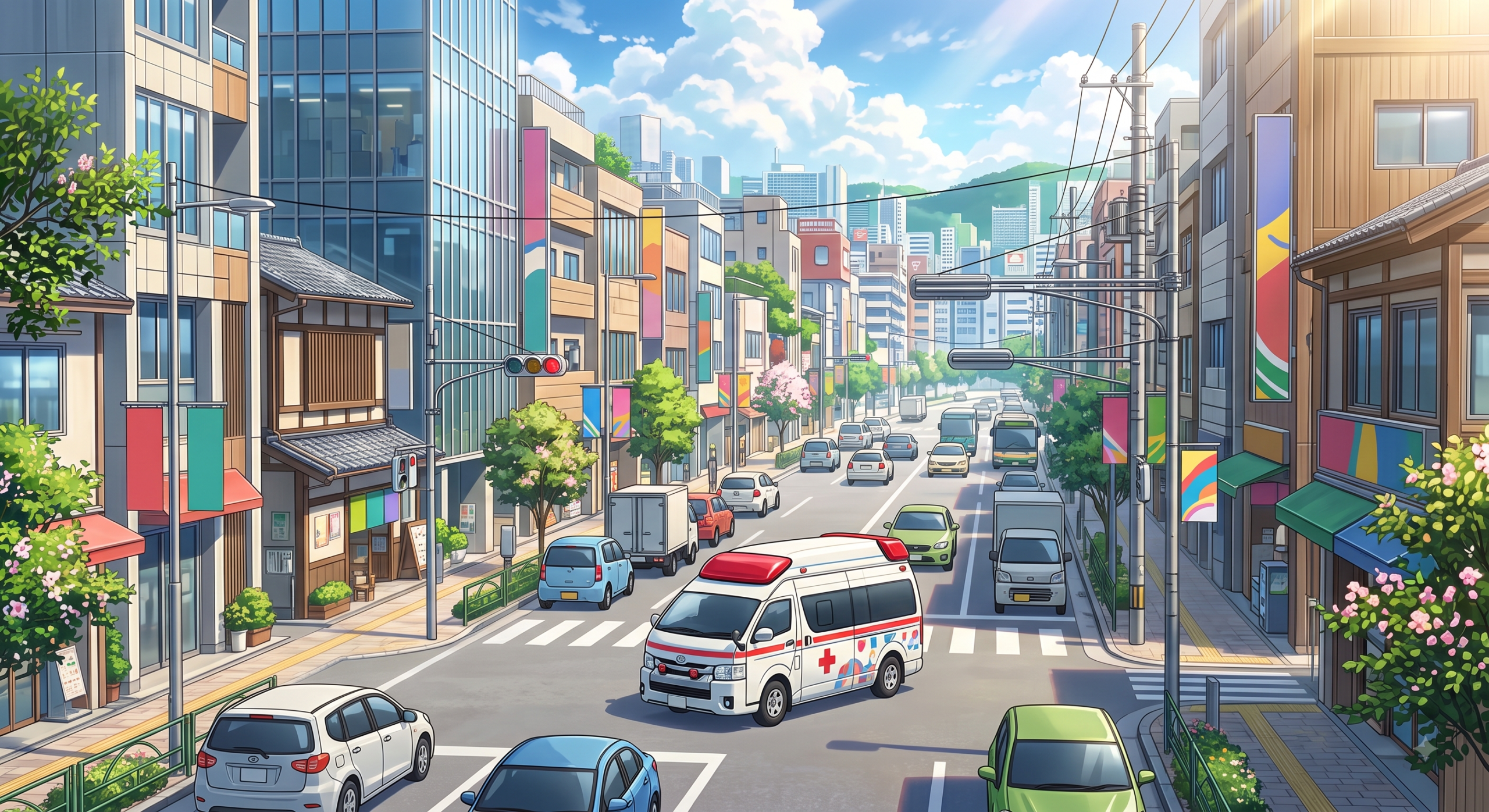
There are countless Japanese cultural aspects and systems that surprise foreign tourists and expats. Trains arriving exactly on time, immaculate city streets, and an endless array of vending machines are well-known. However, when an emergency strikes, the one fact that shocks them the most is this: calling an ambulance in Japan costs absolutely nothing.
In many countries around the world, using an ambulance is a paid service, often resulting in exorbitant medical bills. In this article, we will explain to our international readers why Japanese ambulances are free, exploring the national mindset and the current social challenges behind this unique system.
The Global Reality: High Ambulance Fees are the Norm
In Japan, anyone can call an ambulance immediately by dialing “119”. Furthermore, the transportation itself is entirely free of charge. While this is taken for granted by Japanese people, it is a highly exceptional system by global standards.
For instance, in the United States, calling an ambulance typically results in a bill ranging from several hundred to over a thousand dollars, depending on the state. In Australia, the cost is also notably high. While some European countries offer free services under specific conditions, they often require prior registration or send a hefty bill later if the case is deemed non-urgent.
Because of this global norm, there have been actual cases in Japan where foreigners suffering from sudden illnesses beg bystanders not to call an ambulance because they “don’t have the money to pay for it.” For them, an ambulance is a service to be used only in life-or-death situations when one is prepared for severe financial consequences.
Why is the System Free in Japan?
The primary reason Japanese ambulances are free is that their operational costs are fully covered by public taxes. Under the Fire Service Act, local fire departments are legally mandated to handle emergency medical services as a public duty to protect the lives of residents.
This system is deeply rooted in the Japanese values of “equality” and “mutual aid.” In 1961, Japan established the Universal Health Care System, ensuring that every citizen is enrolled in health insurance and has equal access to proper medical care.
The core philosophy of Japan’s emergency medical system is that “a person’s financial status should never determine whether their life can be saved.” This is proof that the ancient Japanese spirit of valuing the community and helping one another has taken shape in modern social infrastructure.
For more details on the history of Japanese medical and insurance systems, please read our related post on Japanese Social Systems and Culture.
A System of “Omotenashi” That Saves Lives Regardless of Nationality
What surprises foreigners even further is that Japanese ambulances are free not only for Japanese citizens and taxpayers but also for international tourists.
If you have an accident or fall ill while staying in Japan, emergency responders will rush to the scene and transport you to an appropriate hospital, even if you don’t speak the language or lack health insurance. (Please note that while the transportation is free, you are responsible for the actual medical treatment costs once you arrive at the hospital.)
This represents a safe social infrastructure that prioritizes human life above all else, acting as a profound extension of Japanese “Omotenashi” (hospitality). You can verify official data regarding Japan’s high-quality public safety services on the official website of the Fire and Disaster Management Agency.
The Problem with Free Services: A Matter of Morals
However, this wonderful system is currently facing a significant challenge: malicious misuse (using ambulances as a free taxi service) by a minority of people.
Cases of people calling ambulances for non-emergencies are increasing. Excuses range from “I was too tired to walk to the hospital” to “I wanted to save money on a taxi,” or “I wanted to be examined faster.” Consequently, this creates a severe problem where ambulances are delayed in reaching patients who are facing true life-threatening emergencies.
As a result, discussions have begun within Japan about charging fees for patients with minor symptoms. Maintaining this compassionate system requires a strong sense of morality and responsibility from every single user.
Conclusion
The fact that ambulances are free in Japan is more than just a public service; it heavily reflects the historical background and national character of a society that values human life equally. When you visit Japan, please respect this incredible system and remember the rule to use it only in true emergencies.
Japan continues to evolve uniquely today, always striving for a society where everyone can live with peace of mind.
外国人が驚く日本の常識:なぜ日本の救急車は無料なのか?
日本を訪れる外国人観光客や移住者が驚く日本の文化やシステムは数多くあります。時間通りに来る電車、街の清潔さ、そして自動販売機の多さ。しかし、いざという時に彼らが最も衝撃を受けるのが「救急車を呼んでもお金がかからない」という事実です。
多くの国では救急車の利用は有料であり、時には高額な請求を伴います。本記事では、海外読者に向けて、なぜ日本の救急車は無料なのか、そしてその背景にある日本人の精神性と現在の課題について詳しく解説します。
世界の救急車事情:海外では高額請求が当たり前
日本では「119番」に電話をかければ、誰でもすぐに救急車を呼ぶことができます。しかも、搬送にかかる費用は完全に無料です。これは日本人にとっては当たり前のことですが、世界基準で見ると極めて異例なシステムです。
例えば、アメリカでは州や地域によって異なりますが、救急車を1回呼ぶだけで数万円から十数万円(数百ドルから千ドル以上)の請求が来るのが一般的です。オーストラリアでも非常に高額であり、数万円の支払いが発生します。ヨーロッパの一部の国(イギリスやイタリアなど)では条件付きで無料になるケースもありますが、事前登録が必要であったり、軽症と判断されると後から請求されたりする仕組みが導入されています。
そのため、日本で急病になった外国人が「お金がないから救急車は呼ばないでくれ」と懇願するケースが実際に起きています。彼らにとって、救急車は「命の危険がある時に、高額な費用を覚悟して呼ぶもの」なのです。
なぜ日本の救急車は無料なのか?
日本の救急車が無料である最大の理由は、その運用費用が全額「税金(公費)」で賄われているからです。消防法という法律により、各自治体の消防署が救急業務を担うことが定められており、住民の命を守るための行政サービスとして提供されています。
この背景には、日本特有の「平等」と「助け合い」の精神が強く影響しています。日本は1961年に「国民皆保険制度」を確立し、国民全員が医療保険に加入することで、誰もが平等に適切な医療を受けられる社会を築き上げました。
「お金があるかないかで、救える命が左右されてはならない」という考え方が、日本の医療・救急システムの根底にあります。これは、共同体を重んじ、困っている人がいれば互いに助け合うという日本古来の精神(相互扶助の精神)が現代の制度に形を変えて根付いている証拠です。
日本の医療や保険制度の歴史については、当ブログの日本の社会システムと文化の記事でも詳しく解説していますので、ぜひ併せてご覧ください。
国籍を問わず命を救う「おもてなし」のシステム
さらに外国人が驚くのは、日本の救急車は「日本人や納税者だけでなく、外国人観光客であっても無料で利用できる」という点です。
日本滞在中に事故に遭ったり急病になったりした場合、言葉が通じなくても、保険に入っていなくても、救急隊員は現場に駆けつけ、適切な病院へと搬送してくれます。(※病院に到着した後の「治療費」は当然実費がかかりますが、搬送そのものは無料です。)
これこそが、命を最優先に考える日本の安全な社会インフラであり、究極の「おもてなし」の一部であると言えます。日本の治安の良さや公共サービスの質の高さに関する公式なデータは、総務省消防庁の公式ウェブサイトでも確認することができます。
無料だからこその課題:モラルの問題
しかし、この素晴らしいシステムにも現在大きな課題が生じています。それは、一部の人々による「悪質な利用(タクシー代わりの利用)」です。
「歩いて病院に行くのが面倒だから」「タクシー代を浮かせたいから」「病院で優先的に診察してもらいたいから」といった、全く緊急性のない理由で救急車を呼ぶケースが増加しています。これにより、本当に命の危機に瀕している重症患者のもとへ救急車が到着する時間が遅れるという深刻な問題が発生しています。
そのため、日本国内でも「軽症者からは料金を徴収するべきだ」という有料化の議論が始まっています。誰にでも手を差し伸べる優しいシステムを維持するためには、利用者一人ひとりのモラルと責任が強く求められています。
まとめ
日本の救急車が無料であることは、単なる行政サービスの一部にとどまらず、人命を平等に尊ぶ日本の国民性や歴史的背景を色濃く反映しています。日本を訪れる際は、この素晴らしいシステムに敬意を払い、本当に必要な時にのみ利用するというルールをぜひ知っておいてください。
日本という国は、誰もが安心して過ごせる社会を目指して、今日も独自の進化を続けています。


コメント