Discover the fascinating, mysterious, and profoundly moving history of a Japanese general who risked everything for gratitude and honor.
- The Enchanting Tapestry of Japanese History
- Chapter 1: The Crucible of Inner Mongolia and the Protection of the “Great Treasure”
- Chapter 2: A Vow of Gratitude and the Concept of “On”
- Chapter 3: The Perilous Secret Journey Across the Sea
- Chapter 4: The Miracle of Kinmen Island (The Battle of Guningtou)
- Chapter 5: The Silent Hero’s Return and the Royal Vase
- Conclusion: The Enduring Spirit of Japan
- 日本の歴史が織りなす魅惑のタペストリー
- 第1章:内蒙古の試練と「大御宝」の守護
- 第2章:恩義への誓い
- 第3章:海を越える危険な密航
- 第4章:金門島の奇跡(古寧頭戦役)
- 第5章:物言わぬ英雄の帰還と皇室の花瓶
- 結論:永遠に受け継がれる日本精神
The Enchanting Tapestry of Japanese History
Welcome to the profound and enchanting world of Japanese history, a realm we continually explore here at kiri53.com. To understand Japan is to understand a nation unlike any other—a country that boasts a continuous, unbroken national polity spanning over 2,600 years. At the very heart of this extraordinary longevity is the sacred, deeply benevolent relationship between the Emperor and the people.
Throughout the millennia, the Emperor of Japan has historically regarded the citizens not as mere subjects to be ruled, but as Omitakara (大御宝)—the “Great Treasure.” This divine perspective, viewing the people as a precious treasure to be protected and cherished, has fundamentally shaped the Japanese national character. It has cultivated a unique cultural ethos built on boundless compassion, absolute duty, and a profound sense of Gi (義)—righteousness, justice, and honor. This spirit of self-sacrifice and reverence for life is not merely a philosophical concept; it is the driving force behind some of the most miraculous and moving events in world history.
Today, we delve into a staggering true story that perfectly exemplifies this beautiful national spirit. It is the largely hidden history of Lieutenant General Hiroshi Nemoto—a man who defied military orders to save tens of thousands of innocent lives, and later secretly crossed a treacherous ocean to save an entire island nation from annihilation. His life is a testament to the miraculous and noble soul of Japan.
Chapter 1: The Crucible of Inner Mongolia and the Protection of the “Great Treasure”
Hiroshi Nemoto was born in 1891 in Fukushima Prefecture, Japan, into a farming family. He rose through the ranks of the Imperial Japanese Army, becoming a highly respected Lieutenant General known for his deep expertise in Chinese affairs and his unwavering moral compass. However, his true test of character—and his ultimate display of the Omitakara spirit—came at the darkest hour of the Second World War.
In August 1945, Nemoto was serving as the commander of the Japanese garrison in Mengjiang (modern-day Inner Mongolia). On August 9, the Soviet Union abruptly declared war on Japan, launching a massive and brutal invasion across the borders. A few days later, on August 15, the Japanese government officially surrendered, issuing a strict order to all military forces to immediately cease fighting and lay down their weapons.
General Nemoto faced a catastrophic and heart-wrenching dilemma. If his troops obeyed the order to disarm immediately, the 40,000 Japanese civilian colonists trapped in the region—women, children, and the elderly—would be left completely defenseless against the advancing and notoriously ruthless Soviet forces. For a commander steeped in the Japanese tradition of protecting the people, abandoning the “Great Treasure” was an unimaginable sin.
In a moment of unparalleled historical courage, Nemoto made a monumental decision. He defied the direct orders of the high command. He famously declared to his officers: “For whatever reason, I cannot accept the order to disarm when it means abandoning our innocent people to slaughter. I will take all responsibility. We will fight to protect our citizens to the very last man.”
Under Nemoto’s brilliant tactical command, the Japanese garrison fought a desperate, fierce rearguard action against overwhelming Soviet armor and artillery. His unyielding resolve and strategic brilliance held the enemy at bay just long enough for all 40,000 civilians to safely evacuate to trains bound for the coast. It was a miraculous escape, born of sheer willpower and an absolute, self-sacrificing love for the people.
Chapter 2: A Vow of Gratitude and the Concept of “On”
Following the successful evacuation, Nemoto and his remaining troops were eventually repatriated to a devastated Japan. The safe return of millions of Japanese soldiers and civilians from the Chinese mainland was largely facilitated by Generalissimo Chiang Kai-shek of the Republic of China. Following the war, Chiang issued a famous broadcast advocating “returning good for evil” (以徳報怨). He pardoned Japanese forces, ensuring their safe passage home rather than subjecting them to harsh retribution.
For Hiroshi Nemoto, a man whose soul was deeply rooted in the traditional samurai code of honor, this act of grace was an enormous debt that had to be repaid. In the Japanese cultural mindset, On (恩)—a debt of gratitude—is a bond that transcends time, politics, and circumstance. It is a sacred obligation. Nemoto retired to a quiet life in Tokyo, but he watched the geopolitical situation in East Asia deteriorate with growing anxiety.
By 1949, Chiang Kai-shek’s Nationalist forces were on the verge of total defeat in the Chinese Civil War against the Communist forces led by Mao Zedong. The Nationalists were forced to retreat to the island of Taiwan. Seeing the man who had shown immense mercy to the Japanese people now facing imminent destruction, Nemoto knew his time to repay his life debt had come. Despite being a 58-year-old retired general in a defeated and occupied nation, his spirit of Gi (righteousness) compelled him to act.
Chapter 3: The Perilous Secret Journey Across the Sea
In the summer of 1949, Nemoto kissed his family goodbye and secretly left his home. Gathering a small handful of loyal comrades, he orchestrated a dangerous smuggling operation to leave Japan, which was heavily monitored by the Allied Occupation Forces. They traveled to Nobeoka in Miyazaki Prefecture, where they boarded a tiny, fragile wooden fishing boat.
The journey was nothing short of harrowing. The small vessel braved the turbulent typhoons and treacherous currents of the East China Sea. At one point, the boat struck a hidden reef, tearing a hole in the hull and taking on freezing seawater. For four grueling days and nights, the men bailed water by hand, surviving on meager rations, driven forward solely by the burning desire to fulfill their sacred duty of gratitude. Against all odds, the battered fishing boat finally reached the shores of Keelung, Taiwan.
Chapter 4: The Miracle of Kinmen Island (The Battle of Guningtou)
Upon his arrival, Nemoto immediately offered his services to Chiang Kai-shek. The Chinese leader was deeply moved and astonished that a Japanese general would risk his life to help them in their darkest hour. Operating under the Chinese alias “Lin Baoyuan” (林保源), Nemoto was appointed as a top military advisor to General Tang Enbo, the commander charged with defending Taiwan’s frontline.
The decisive moment of the war came in late October 1949. The Communist People’s Liberation Army (PLA) was preparing a massive amphibious assault on Kinmen Island (also known as Quemoy), a small island located just two kilometers from the Chinese mainland but serving as the crucial gateway to Taiwan. If Kinmen fell, the invasion of Taiwan would inevitably follow, and the Republic of China would be erased from the map.
General Nemoto drew upon his vast tactical genius and combat experience. He advised General Tang to completely overhaul the defensive strategy. Instead of attempting to destroy the enemy forces out at sea—which was the standard doctrine—Nemoto proposed a brilliantly unorthodox and daring trap. He advised the Nationalist forces to allow the vanguard of the Communist army to land on the beaches of Kinmen unopposed.
Once the enemy forces had disembarked, Nemoto instructed the Nationalist troops to launch a devastating counter-attack under the cover of darkness, specifically targeting and burning the enemy’s wooden landing craft. This bold strategy was executed flawlessly on October 24, 1949. The Communist forces rushed ashore, only to have their entire fleet of transport ships incinerated by Nationalist forces. The invading army was suddenly trapped on the island with no reinforcements, no supplies, and no route of retreat.
The ensuing conflict, known as the Battle of Guningtou, resulted in a resounding and miraculous victory for the Nationalists. Nemoto’s brilliant tactical masterstroke utterly shattered the Communist momentum. By decisively defeating the invasion force on Kinmen, the Nationalists secured the Taiwan Strait. Nemoto’s strategy had quite literally saved Taiwan from annexation, cementing the geopolitical reality of East Asia that persists to this very day.
Chapter 5: The Silent Hero’s Return and the Royal Vase
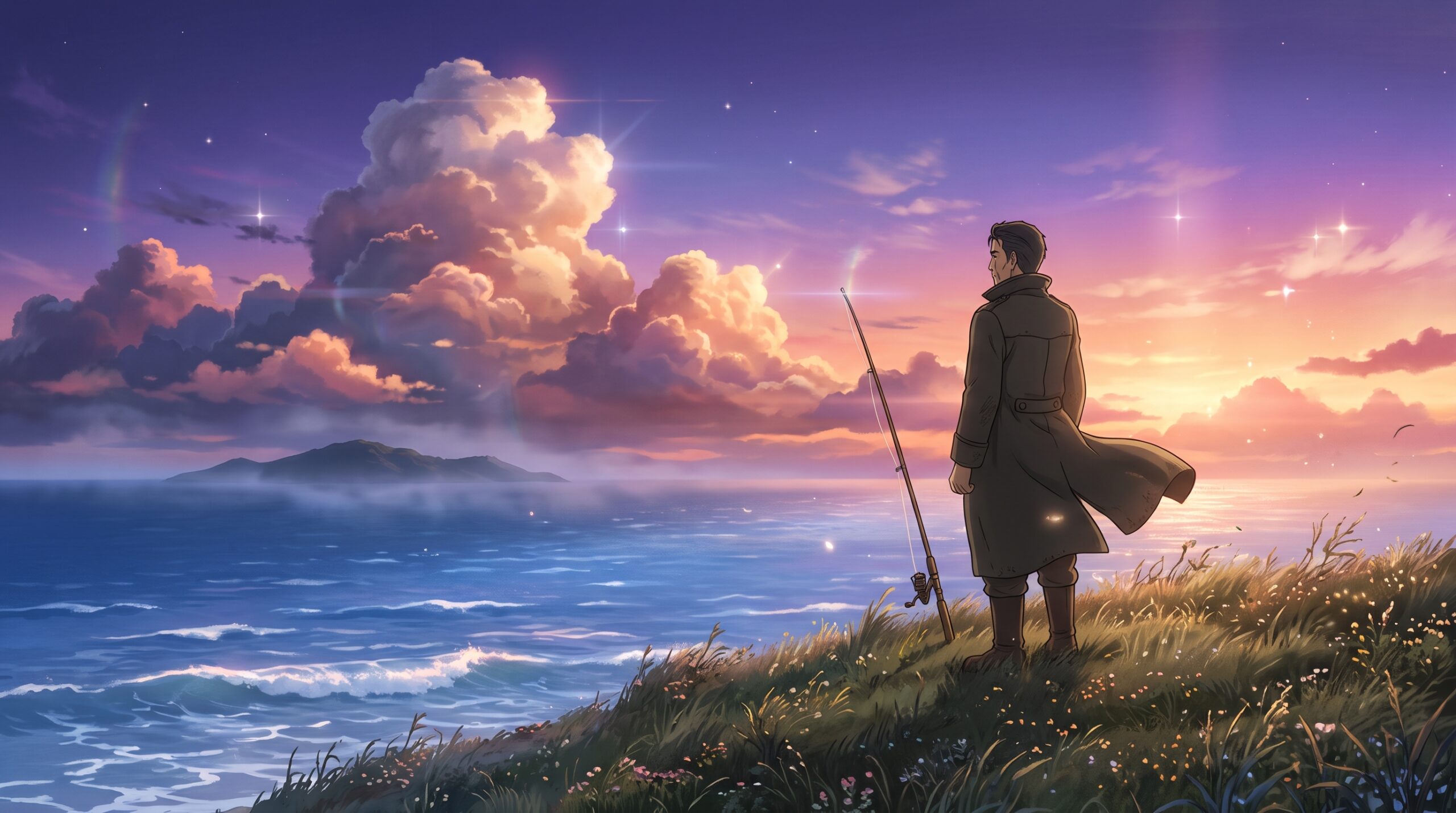
Having fulfilled his solemn vow and repaid his debt of gratitude, Nemoto sought no fame, no medals, and no financial reward. True to the selfless nature of the Japanese spirit, he wished only to return home quietly. To maintain the strict secrecy of his mission and to avoid arrest by the Allied Occupation Authorities upon his return to Japan, Nemoto famously stepped off the ship carrying a simple fishing rod. When questioned by authorities about his whereabouts, he calmly smiled and stated that he had merely been out fishing.
Chiang Kai-shek, profoundly touched by Nemoto’s unparalleled loyalty, strategic brilliance, and humility, gifted him a pair of exquisite, custom-made ceramic vases as a token of eternal thanks. These extraordinary vases were originally crafted as gifts for the British Royal Family (Queen Elizabeth) and the Japanese Imperial Family (Emperor Showa). Chiang gave one half of his personal pair to Nemoto, keeping the other for himself. Today, that counterpart vase sits proudly on display in the Chiang Kai-shek Memorial Hall in Taipei—a silent, enduring testament to an unbreakable bond forged in the fires of war, honor, and profound gratitude.
Conclusion: The Enduring Spirit of Japan
The story of Lieutenant General Hiroshi Nemoto is an awe-inspiring chapter in the 2,600-year history of Japan. It is a narrative that beautifully bridges nations and generations, reminding the world of the profound strength found in Gi (righteousness) and On (gratitude). He was a true warrior who embodied the ancient spirit of a nation that treasures its people as Omitakara and honors its debts even at the cost of one’s own life.
By understanding the life of Hiroshi Nemoto, we gain a much deeper appreciation for the enchanting, deeply moral, and endlessly fascinating culture of Japan. His legacy continues to live on, teaching us timeless lessons about humanity, courage, and the beautiful, hidden currents of history.
If you want to discover more about the captivating mysteries, folklore, and profound history of Japan, continue exploring with us at kiri53.com.
References & Further Reading
二つの国を救った影の英雄:根本博中将と日本の気高き精神
恩義と名誉のために全てを懸けた日本人将軍の、魅惑的で神秘的、そして深く胸を打つ歴史の真実。
日本の歴史が織りなす魅惑のタペストリー
kiri53.comへようこそ。ここでは、日本の歴史という奥深く魅惑的な世界を探求しています。日本を理解するということは、他に類を見ない国—2600年以上もの間、一度も途切れることなく国体を維持し続けている奇跡の国—を理解するということです。この驚異的な歴史の長さの根底には、天皇と国民との間の神聖で慈愛に満ちた関係が存在しています。
数千年の長きにわたり、歴代の天皇は国民を単なる支配下の民としてではなく、「大御宝(おおみたから)」として敬い、慈しんできました。国民を護るべき尊い宝とみなすこの神聖な視点は、日本人の国民性を根底から形作ってきました。それは、限りない思いやり、絶対的な使命感、そして「義」—正義と名誉—の感覚に基づく独自の文化精神を育んだのです。自己犠牲と生命への畏敬の念は、単なる哲学ではなく、世界史における最も奇跡的で感動的な出来事の原動力となってきました。
本日は、この美しい日本精神を見事に体現した驚愕の実話に迫ります。それは、何万人もの無実の命を救うために軍の命令に背き、その後、ひとつの島国を消滅の危機から救うために密かに危険な海を渡った男、根本博(ねもと ひろし)中将の、歴史に隠された物語です。彼の生涯は、日本の奇跡的で気高き魂の証明でもあります。
第1章:内蒙古の試練と「大御宝」の守護
根本博は1891年、日本の福島県にある農家に生まれました。帝国陸軍で昇進を重ねた彼は、中国情勢に対する深い専門知識と、揺るぎない道徳心で高く評価される陸軍中将となりました。しかし、彼の人格に対する真の試練、そして「大御宝」の精神を最大限に発揮する舞台は、第二次世界大戦の最も暗い時期に訪れました。
1945年8月、根本は駐蒙軍(現在の内モンゴル自治区周辺)の司令官を務めていました。8月9日、ソ連が突如として日本に宣戦布告し、国境を越えて大規模かつ残忍な侵攻を開始しました。その数日後の8月15日、日本政府は正式に降伏し、すべての軍隊に即時戦闘停止と武装解除の厳命を下しました。
根本将軍は、絶望的で胸を引き裂かれるようなジレンマに直面しました。もし軍が直ちに武装解除の命令に従えば、現地に取り残された4万人の日本人開拓民—女性、子供、老人たち—は、迫り来る非情なソ連軍に対して完全に無防備な状態となってしまいます。国民を守るという日本の伝統精神を重んじる司令官にとって、「大御宝」を見捨てることは想像もできない大罪でした。
歴史に残る比類なき勇気をもった瞬間、根本は重大な決断を下します。彼は軍上層部の直接の命令に背き、部下たちにこう宣言したのです。「理由の如何を問わず、陣地に侵入し来る企図ある者に対しては断乎之を撃滅すべし。これに対する全責任は司令官たる私が負う。我々は、国民を守るために最後まで戦う」
根本の卓越した戦術指揮のもと、日本軍は圧倒的なソ連の戦車と砲兵に対し、決死の防衛戦を展開しました。彼の不屈の意志と見事な戦略により、4万人の民間人全員が海岸へ向かう列車に安全に避難するまでの間、敵を食い止めることに成功したのです。それは、国民への絶対的な自己犠牲と愛から生まれた奇跡の脱出劇でした。
第2章:恩義への誓い
無事に民間人を避難させた後、根本と残存部隊も最終的に焼け野原となった日本へと復員しました。中国大陸から何百万人もの日本人兵士や民間人が無事に帰還できたのは、中華民国の蔣介石総統の寛大な措置によるものでした。戦後、蔣介石は「以徳報怨(徳を以て怨みに報いる)」という有名な演説を行い、日本軍を赦免し、過酷な報復を行う代わりに無事な帰国を保証したのです。
伝統的な武士道の誇りを胸に刻む根本博にとって、この恩寵は必ず報いなければならない大きな借義でした。日本の文化的精神において、「恩」とは、時間や政治、状況を超える絆であり、神聖な義務です。根本は東京で静かな隠居生活を送っていましたが、東アジアの地政学的状況の悪化を不安と共に見守っていました。
1949年までに、蔣介石率いる国民党軍は毛沢東率いる共産党軍との国共内戦で完全な敗北の危機に瀕し、台湾島への撤退を余儀なくされていました。かつて日本人に多大な慈悲を示した人物が今、絶望的な窮地に立たされているのを見た根本は、自らの命の恩を返す時が来たと悟りました。敗戦国の占領下にある58歳の退役将軍であったにもかかわらず、彼の「義」の精神が彼を突き動かしたのです。
第3章:海を越える危険な密航
1949年の夏、根本は家族に別れを告げ、密かに家を後にしました。一握りの忠実な同志を集めた彼は、連合国軍の厳しい監視下にあった日本を脱出するため、危険な密航を企てます。一行は宮崎県の延岡に向かい、そこで小さく脆い木造の釣り船に乗り込みました。
その航海は凄惨を極めました。小さな船は東シナ海の台風と荒れ狂う海流に翻弄されました。途中、船は隠れた岩礁に乗り上げて船底に穴が開き、冷たい海水が流れ込みました。4昼夜にわたり、彼らは乏しい食料で飢えをしのぎながら、手桶で海水を掻き出し続けました。ただ恩義を果たすという神聖な義務感だけが、彼らを前へ前へと突き動かしていました。そして幾多の困難を乗り越え、ボロボロになった釣り船は奇跡的に台湾の基隆(キールン)の岸に辿り着いたのです。
第4章:金門島の奇跡(古寧頭戦役)
到着するや否や、根本は直ちに蔣介石に協力を申し出ました。最も暗い時代に、一人の日本人将軍が命を懸けて助けに来てくれたことに、蔣介石は深く感動し驚愕しました。根本は「林保源」という中国名を名乗り、台湾防衛の最前線を任された湯恩伯将軍の最高軍事顧問に任命されました。
運命を分ける決戦は1949年10月下旬に訪れました。共産党の人民解放軍は、中国本土からわずか2キロに位置し、台湾への重要な玄関口である金門島に対する大規模な上陸作戦を準備していました。もし金門島が陥落すれば、台湾への侵攻は避けられず、中華民国は地図から消滅する運命にありました。
根本将軍は、過去の膨大な戦術的知見と実戦経験を最大限に引き出しました。彼は湯将軍に対し、防衛戦略の完全な見直しを進言します。海上での敵の殲滅を試みる従来の戦術ではなく、根本は奇抜かつ大胆な罠を提案しました。あえて共産軍の先陣を金門島の海岸に無抵抗で上陸させるというのです。
敵部隊が上陸した直後、根本は国民党軍に対し、暗闇に乗じて敵の木造上陸用舟艇を集中攻撃し、焼き払うよう指示しました。この大胆な戦略は1949年10月24日に完璧に実行されました。共産党軍は海岸に押し寄せましたが、輸送船団は国民党軍によってすべて焼き払われました。侵攻軍は、増援も補給も退路も断たれた状態で島に完全に孤立したのです。
古寧頭戦役(こねいとうせんえき)として知られるこの戦いは、国民党軍の奇跡的な大勝利に終わりました。根本の見事な戦術的采配が、共産党軍の勢いを完全に粉砕したのです。金門島での侵攻軍撃破により、国民党は台湾海峡の安全を確保しました。根本の戦略は文字通り台湾を併合の危機から救い、今日に至る東アジアの地政学的な形を決定づけたのです。
第5章:物言わぬ英雄の帰還と皇室の花瓶
厳粛な誓いを果たし、恩義に報いた根本は、名声も勲章も金銭的報酬も一切求めませんでした。日本人の無私の精神そのままに、彼はただ静かに故郷へ帰ることを望みました。極秘任務を隠し通し、帰国時に連合国軍に逮捕されるのを避けるため、根本は船を降りる際、片手に釣り竿を持っていました。当局にどこに行っていたのかと尋ねられると、彼は穏やかに微笑み、「ただ釣りをしていただけだ」と答えたという有名な逸話が残っています。
根本の比類なき忠誠心、卓越した戦略、そしてその謙虚さに深く心を打たれた蔣介石は、永遠の感謝のしるしとして、特別に作られた美しい陶磁器の花瓶を一対贈りました。この花瓶は元々、英国王室(エリザベス女王)と日本の皇室(昭和天皇)への贈り物として作られた極めて貴重なものでした。蔣介石はその一対のうちの一つを根本に贈り、もう一つを自らの手元に残しました。今日、その対となる花瓶は台北の中正紀念堂に誇らしく展示されており、戦争の炎、名誉、そして深い感謝の中で結ばれた、決して壊れることのない絆を静かに証言し続けています。
結論:永遠に受け継がれる日本精神
根本博中将の物語は、日本の2600年の歴史における畏敬の念を起こさせる輝かしい一章です。それは国や世代を越えて架け橋となり、「義」と「恩」の中にある深い力強さを世界に思い起こさせる物語です。彼は、国民を「大御宝」として大切にし、自らの命を懸けてでも恩義に報いるという、古き良き国の精神を体現した真の武人でした。
根本博の生涯を理解することで、私たちは日本の魅惑的で、深く道徳的で、果てしなく魅力的な文化に対する認識をさらに深めることができます。彼の残した遺産は今も生き続け、人間性、勇気、そして歴史の底流に流れる美しい真実について、私たちに時代を超えた教訓を与えてくれます。
日本の魅力的な謎、民間伝承、そして深い歴史についてさらに探求したい方は、ぜひ引き続き kiri53.com をご覧ください。
コメント