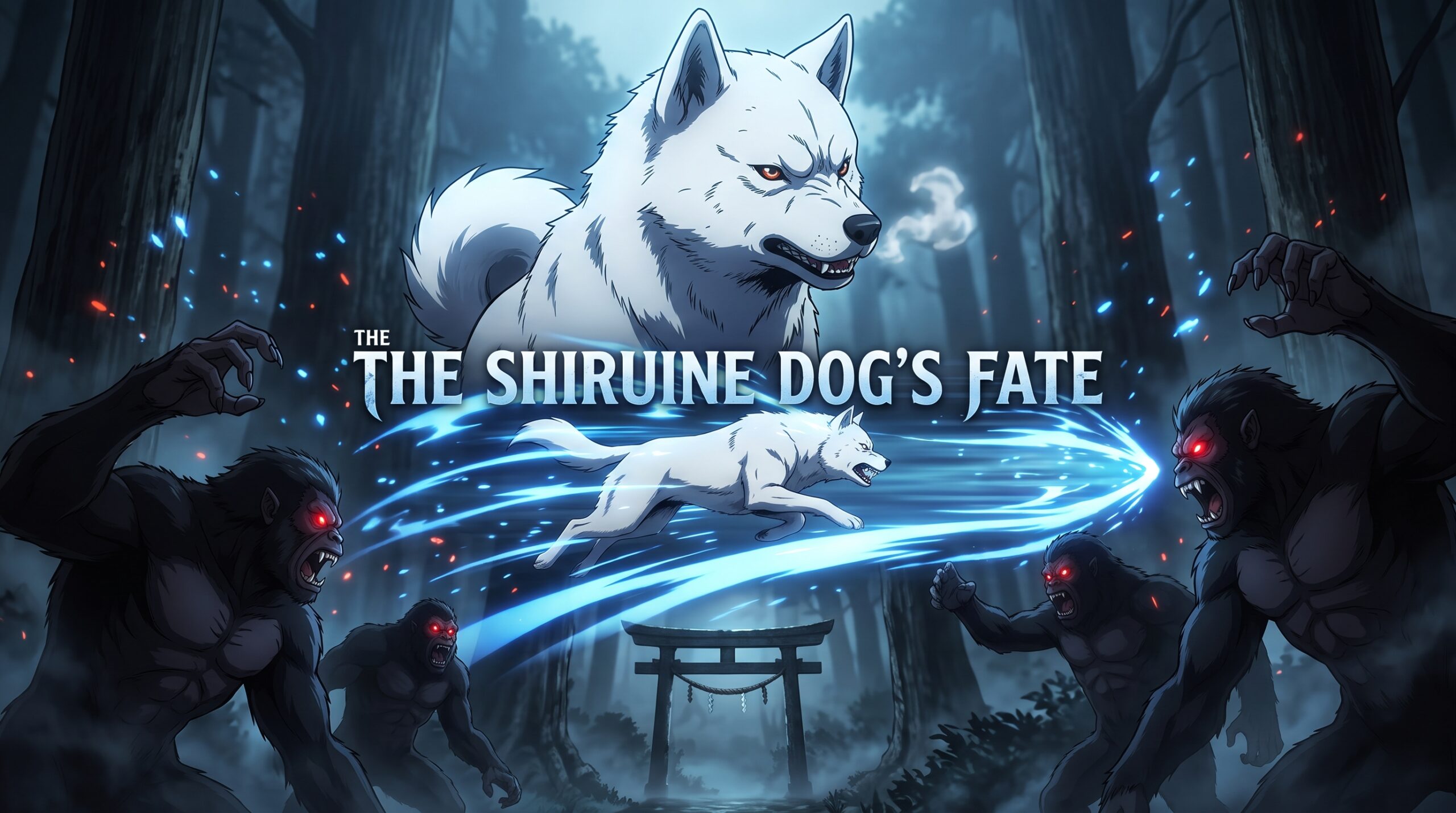
Within Japan’s rich natural landscapes, it has long been believed that gods, spirits, and terrifying “Yokai” (monsters/demons) lurk in the shadows. Today, among the many Japanese folktales, we introduce an emotional and thrilling story that has touched many hearts with its courage and loyalty: “Shippei Taro.” This tale is not just a heroic fantasy; it vividly depicts Japanese history, beliefs, and the deep bond between humans and animals.
1. The Folktale: The Legend of Shippei Taro
Once upon a time, there was a traveling monk walking through the provinces of Japan. When he stopped at a village deep in the mountains, he found the entire community engulfed in deep sorrow and a heavy atmosphere. When the puzzled monk asked the villagers for the reason, they answered with tears in their eyes.
“Every year in this village, we must sacrifice one of our daughters to the Mountain God. If we refuse, the god’s wrath will destroy our crops and our village. This year, it is my beloved daughter’s turn to be the sacrifice.”
Heartbroken, the monk resolved to uncover the true identity of this “Mountain God.” On the night of the festival, he hid himself alone in an old shrine deep in the mountains. At midnight, an eerie wind blew, and with a terrifying rumble, something appeared. They were not gods at all, but a pack of giant, ferocious “Hihi” (giant monkey Yokai). The monsters were drinking sake and dancing madly, singing a strange song:
“Don’t let Shippei Taro of Mitsuke know about this! Never let Shippei Taro find out!”
The monk immediately descended the mountain and headed for a place called “Mitsuke” (in present-day Iwata City, Shizuoka Prefecture). He searched for a great samurai or priest named “Shippei Taro,” but no one knew of such a person. However, at a certain temple, he finally discovered the truth. “Shippei Taro” was not a human warrior, but a muscular, strong, and highly intelligent “dog” kept by the head priest.
The monk explained the situation to the priest and borrowed Shippei Taro. Returning to the village, the monk placed the dog in the plain wood sacrifice box instead of the village girl and placed it on the shrine’s altar. Late at night, the monsters appeared again, but the moment they opened the lid of the box…
Shippei Taro lunged fiercely from the box and bit into the throat of the largest monster. After a brutal death match, Shippei Taro successfully defeated the ferocious Yokai. Peace returned to the village, and the sacrificial rituals were never performed again. Shippei Taro was deeply thanked by the villagers and forever passed down as a legendary hero.
2. Analysis: Why was the “God” actually a “Yokai”?
The most fascinating aspect of this story is the structure where “the entity worshipped as a god was actually a Yokai harming humans.” In ancient Japan, there are traditions in some regions where the fury of nature (typhoons, famines) was interpreted as the “wrath of a savage god,” and sacrifices were offered to appease them.
However, a trained monk (a symbol of wisdom and truth) sees through the deception and uses physical power (Shippei Taro) to eliminate the evil. This can be seen as a metaphor for the process of people being liberated from superstition and irrational fear, transitioning into a more civilized society. It carries a universal message that false gods ruling through fear are powerless against true courage and wisdom.
3. Connection to Japanese Culture: The Dog as a Guardian
In Japanese culture, dogs hold a very special status. At the entrances of Shinto shrines, there are statues of imaginary guardian beasts resembling dogs called “Komainu,” which prevent evil spirits and dark energy from entering sacred spaces. Shippei Taro’s heroic actions perfectly express this role of the dog as a “guardian beast warding off evil” in narrative form.
Furthermore, Japanese dog breeds (such as the Shiba Inu and Akita) are characterized by their overwhelming “loyalty” to their masters and their “bravery” to confront enemies larger than themselves. Shippei Taro risked his life to fight for villagers he had never met. This self-sacrificing attitude to protect others resonates deeply with the Japanese, as a virtue connected to the spirit of Bushido (the way of the warrior).
4. To Our Readers: What Would You Do?
How did you like the story of Shippei Taro? The one who saved the terror-stricken village was not a legendary warrior, but a single brave dog.
If you were a villager in this town, how would you have stood up against this terrifying custom? Also, are there legends of brave animals fighting evil to help humans in your country? Please let us know your thoughts and opinions on the bond between animals and humans in the comments section below!
References & Related Links
- Internal Link: Read more from the Japanese Folktale Series
しっぺいたろう:村を救った伝説の英雄犬と日本の妖怪文化
日本の豊かな自然の中には、古くから神々や精霊、そして恐ろしい「妖怪」が潜んでいると信じられてきました。今回は、数ある日本の昔話の中でも、その勇気と忠誠心で多くの人々の心を打つ感動的でスリリングな物語、「しっぺいたろう(悉平太郎)」をご紹介します。この物語はただのヒロイックファンタジーではなく、日本の歴史や信仰、そして人間と動物の深い絆を鮮明に描き出しています。
① 昔話:しっぺいたろうの物語
昔々、ある国を旅して回る一人の修行僧がいました。僧が山深い村に立ち寄ると、村中が深い悲しみに包まれ、重苦しい空気が漂っていました。不思議に思った僧が村人に理由を尋ねると、村人は涙ながらにこう答えました。
「この村では毎年、山の神様に村の娘を一人、生贄として捧げなければならないのです。もし断れば、神の怒りに触れ、田畑は荒らされ村は滅ぼされてしまいます。今年は私の愛する娘がその犠牲になる番なのです」
僧は心を痛め、その「山の神」の正体を突き止める決意をしました。祭りの日の夜、僧は一人で山奥の古い神社に身を潜めました。真夜中になると、不気味な風が吹き荒れ、恐ろしい地鳴りとともに何者かが現れました。それは神などではなく、巨大で凶悪な「狒々(ひひ:巨大な猿の妖怪)」の群れだったのです。妖怪たちは酒を飲み、狂ったように踊りながらこう歌っていました。
「このことは、見附のしっぺいたろうに言うな。しっぺいたろうには絶対に知らせるな」
僧はすぐに山を下り、「見附(現在の静岡県磐田市)」という場所へ向かいました。「しっぺいたろう」という名を持つ立派な武士か法師を探し回りましたが、誰も知りません。しかし、あるお寺でついにその正体を知ることになります。「しっぺいたろう」とは、人間の武士ではなく、住職が飼っている一匹の筋骨隆々とした逞しく賢い「犬」だったのです。
僧は住職に事情を話し、しっぺいたろうを借り受けました。村に戻った僧は、生贄の娘の代わりにしっぺいたろうを白木の箱に入れ、神社の祭壇に置きました。夜更けに再び妖怪たちが現れ、箱の蓋を開けた瞬間です。
しっぺいたろうは箱の中から猛然と飛び出し、一番大きな妖怪の喉元に食らいつきました。凄まじい死闘の末、しっぺいたろうは凶悪な妖怪たちを見事に退治しました。村には平和が戻り、生贄の儀式は二度と行われることはありませんでした。しっぺいたろうは村人たちに深く感謝され、伝説の英雄として永遠に語り継がれることになったのです。
② 考察:なぜ「神」は「妖怪」だったのか?
この物語から読み取れる最も興味深い点は、「神として崇められていた存在が、実は人間に危害を加える妖怪だった」という構造です。古代の日本では、自然の猛威(台風や飢饉など)を「荒ぶる神の怒り」と解釈し、それを鎮めるために生贄を捧げるという風習が一部の地域で伝承として残っています。
しかし、修行を積んだ僧侶(知恵と真理を象徴する存在)がその正体を見破り、物理的な力(しっぺいたろう)を用いて悪を排除します。これは、迷信や理不尽な恐怖から人々が解放され、より文明的な社会へと移行していく過程を暗喩していると考えられます。恐怖で人々を支配する偽りの神は、真の勇気と知恵の前には無力であるという普遍的なメッセージが込められています。
③ 日本文化との関連:守護獣としての「犬」
日本文化において、犬は非常に特別な地位を占めています。神社の入り口には「狛犬(こまいぬ)」と呼ばれる犬に似た想像上の守護獣の像が置かれ、悪霊や邪気が神聖な場所に入るのを防いでいます。しっぺいたろうの活躍は、まさにこの「邪気を払う守護獣」としての犬の役割を物語の形で表現したものです。
また、日本犬(柴犬や秋田犬など)は、主人に対する圧倒的な「忠誠心」と、自分より大きな敵にも立ち向かう「勇敢さ」が特徴です。しっぺいたろうは、見ず知らずの村人たちを救うために命を懸けて戦いました。自己犠牲を厭わず他者を守る姿は、日本の武士道精神にも通じる美徳として、昔から日本人の深く共感するポイントとなっています。
④ 読者の皆様へ:あなたならどうしますか?
しっぺいたろうの物語はいかがでしたか?恐怖に支配された村を救ったのは、伝説の戦士ではなく、一匹の勇敢な犬でした。
もしあなたがこの村の村人だったら、恐ろしいしきたりにどう立ち向かったでしょうか?また、あなたの国にも、人間を助け、悪と戦う勇敢な動物の伝説はありますか?動物と人間の絆についてどう感じるか、ぜひあなたの意見や考えをコメント欄で教えてください!
参考・関連リンク
- 内部リンク:日本の昔話シリーズをもっと読む


コメント