① The Tragedy of the Rule-Breaker: The Story of Ukai Monogatari
Once upon a time, in a village called Isawa in present-day Fuefuki City, Yamanashi Prefecture, a traveling Buddhist monk arrived on a freezing, rainy night. Having traveled all the way from Awa Province (now Chiba Prefecture), the monk was exhausted and desperately knocked on the doors of the village houses, begging for a night’s lodging.
Strangely, the villagers were terrified of something. They kept their doors tightly shut and completely refused to let the monk in. One villager peeked through a crack in the door and warned him, “Whatever you do, absolutely do not stay at the temple downstream,” before disappearing into the darkness. Though puzzled by the warning, the monk had nowhere else to shelter from the storm, so he headed to the downstream temple to spend the night.
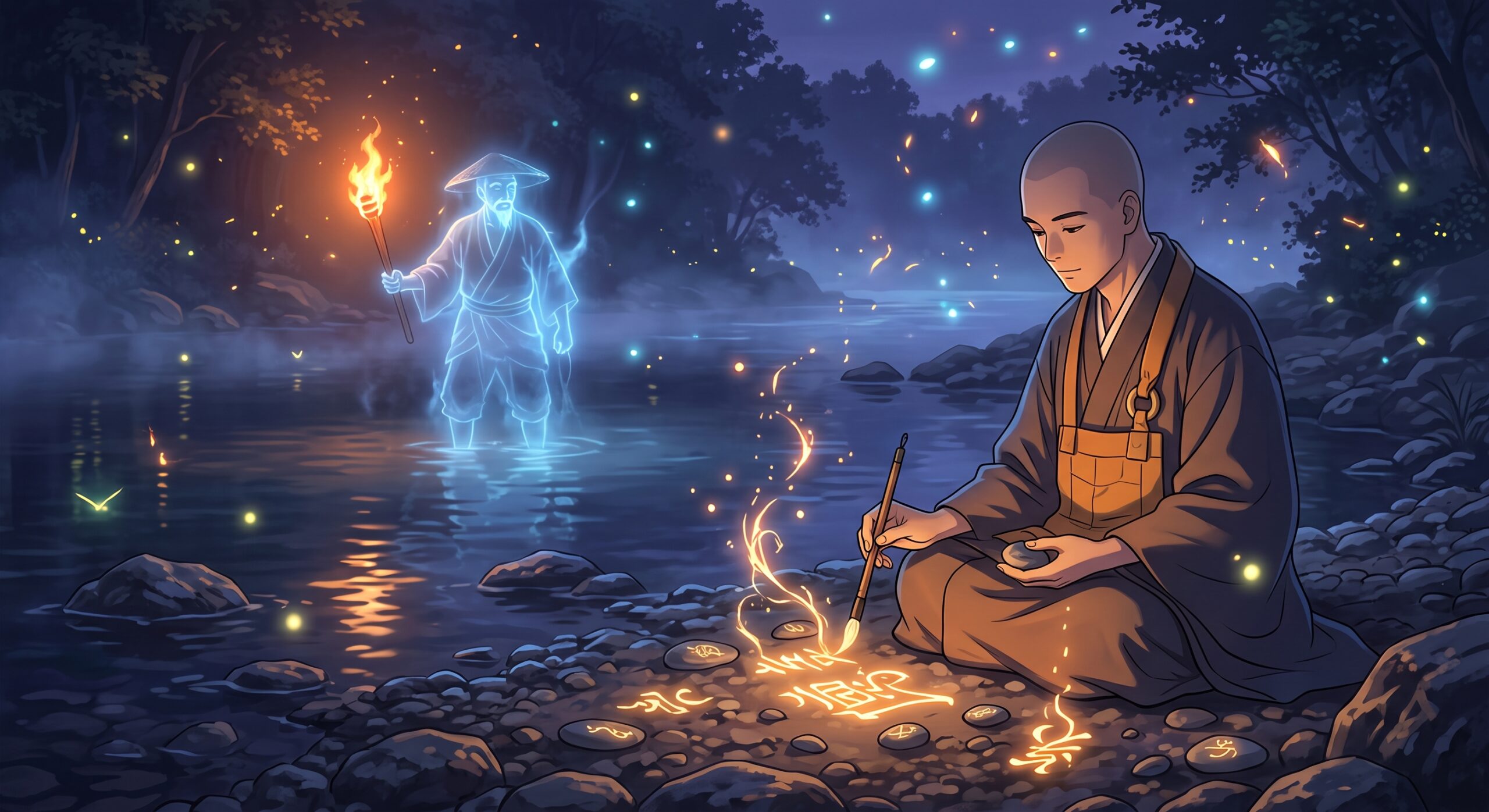
Late at night, an eerie and chilling presence filled the air around the temple. Suddenly, the ghost of a man holding a flaming torch appeared before the monk. The man revealed that when he was alive, he was a fisherman who practiced “Ukai” (cormorant fishing) in this very river. He explained that taking any life by fishing in the Isawa River was strictly forbidden by the authorities. If the rule was broken, the entire village would face severe collective punishment.
However, the man simply could not give up his livelihood. Under the cover of darkness, he secretly continued to fish with his cormorants. Eventually, the villagers caught him. As punishment for breaking the sacred law and endangering the whole community, he was wrapped tightly in a bamboo mat (a torturous execution method called “Sumaki”) and thrown into the freezing depths of the river to drown. Unable to move on to the afterlife, the man’s tormented soul wandered the riverbank every single night.
Hearing this tragic tale, the monk felt deep compassion and resolved to save the man’s soul. The next morning, the monk sat by the riverbank, picked up small round stones from the ground, and began to painstakingly write the Buddhist sutra “Namu Myoho Renge Kyo” on them, one character per stone. Day and night, without rest, he wrote the sacred words and threw the stones into the river with heartfelt prayers.
A few days later, when the monk finally finished writing the sutras on all the stones, the fisherman’s ghost was saved by the monk’s profound mercy and the power of the Buddhist teachings. The ghost found peace, smiled gently, and ascended to the afterlife. From that day on, no ghosts ever appeared in the village of Isawa again, and peace was fully restored. It is said that this traveling monk was none other than Nichiren, the great high priest who later founded a major sect of Japanese Buddhism.
② Rules and Redemption: An Analysis of the Folktale
The “Tale of Cormorant Fishing” is not just a ghost story; it is a profound narrative that deeply reflects the harsh realities of ancient Japanese society and human sorrow. First, we must look at the absolute nature of “rules” in the village. Under the ancient Japanese system of collective responsibility, one person’s mistake could cost the lives of everyone in the community. The villagers did not execute the man out of cruelty, but out of a desperate, agonizing need to protect their own families.
On the other hand, why did the man break the rules to fish? This highlights the tragedy of poverty, the deep karma of a lifelong fisherman, and a human’s fatal attachment to their craft. It portrays the weakness and ego of humans that cannot simply be restrained by laws or threats of death.
The actions of the monk (Nichiren) in the latter half of the story symbolize “unconditional love and ultimate salvation.” The monk harbored no prejudice against the man who died as a criminal abandoned by his peers. By undertaking the immense, time-consuming task of writing sutras on countless pebbles, the story beautifully illustrates the core Buddhist philosophy that “no matter how deep the sins a soul carries, they can always be saved through sincere and selfless prayer.”
③ Connection to Japanese Culture: Vengeful Spirits, Noh Theatre, and Ukai
This folktale contains three highly important elements for understanding traditional Japanese culture.
First is the “Belief in Onryo (vengeful spirits) and Memorial Services.” In Japan, there has long been a belief that those who die tragically or with deep regrets remain in this world to cause misfortune. To calm these spirits, memorial services (Kuyo) are held. The practice of writing sutras on stones, known as “Ichiji Isseki” (one character, one stone), is a traditional ritual actually practiced at temples across Japan, representing the spiritual belief in purifying souls through the mystical power of words (Kotodama).
Second is its deep connection to “Noh,” a highly refined traditional Japanese performing art. In fact, this folktale is the direct origin of the famous Noh play titled “Ukai.” On the Noh stage, the tragedy of the fisherman who committed the sin of taking life and his salvation through the Lotus Sutra is elegantly danced. It is fascinating to see how high theatrical arts from the Muromachi period drew inspiration from local, earthy legends.
Third is the traditional fishing method of “Ukai” (cormorant fishing) itself. This method, where fishermen tie a string around the neck of a cormorant bird to make it catch and then regurgitate river fish, is still preserved today as a summer tradition in places like the Nagara River in Gifu Prefecture and the Fuefuki River in Yamanashi (the setting of this story). Through this tale, we glimpse the history of the Japanese people, who have lived alongside nature and animals for centuries.
④ To Our Readers: What Would You Do?
How did you feel after reading this story?
The anguish of the villagers who had to punish their comrade to uphold the law.
The fatal attachment of a fisherman who couldn’t give up his trade even upon pain of death.
And the unconditional kindness of a monk who spent days writing sutras for a stranger’s ghost.
If you were in the villagers’ shoes, could you have forgiven the man who broke the rules?
Or, if you were the traveling monk, would you have gone to such extreme lengths to pray for a terrifying ghost?
Please let us know your thoughts, or if there are similar stories in your own culture, in the comments below!
Reference Links & Categories
Read more mysterious Japanese folktales here:
Japanese Folktale Series (Internal Link)
For more detailed information on the reference for this story (External site in Japanese):
Manga Nippon Mukashibanashi Database – Ukai Monogatari
鵜飼いものがたり:禁じられた川と悲しき漁師の魂
① 掟を破った漁師の悲劇:鵜飼いものがたりのストーリー
昔々、現在の山梨県笛吹市にあたる石和(いさわ)という村での出来事です。ある冷たい雨が降る晩、安房国(現在の千葉県)から長い旅を続けてきた一人の僧侶が村にたどり着きました。疲労困憊していた僧侶は、村の家々の戸を叩いて一晩の宿を乞いました。
ところが、村人たちは何かにひどく怯え、誰一人として僧侶を家に入れようとしません。ある村人は、戸の隙間から「村の川下にあるお堂にだけは、絶対に泊まってはならねえ」とだけ言い残し、姿を消してしまいました。他に雨風をしのぐ場所がなかった僧侶は、警告を不思議に思いながらも、言われた川下のお堂へと向かい、そこで夜を明かすことにしました。
夜更け、お堂の周りに不気味な気配が漂い始めます。すると、松明(たいまつ)を持った一人の男の幽霊が僧侶の前に姿を現しました。男は生前、この石和川で「鵜飼(うかい)」という、鵜を使って魚を獲る漁をしていた漁師でした。男が言うには、この川では生き物を殺生する漁が厳格に禁じられており、もし掟を破れば、村全体が連帯責任として重い罰を受ける定めになっていました。
しかし、男はどうしても漁を諦めることができず、夜陰に紛れてこっそりと鵜飼を続けていました。やがてそれが村人たちに見つかり、掟を破った罰として簀巻き(すまき:竹の網で体を巻かれること)にされ、冷たい川の底へと沈められて処刑されてしまったのです。処刑された男の魂は成仏できず、夜な夜な苦しみを抱えて川辺をさまよっていました。
哀れな身の上話を聞いた僧侶は深く同情し、男の魂を救う決意をします。僧侶は翌朝から河原に座り込み、足元にある小さな丸い石を一つ一つ拾い上げ、そこに「南無妙法蓮華経」という経文を一文字ずつ書き込み始めました。昼も夜も休むことなく、石に経文を書き、祈りを込めて川へ投げ入れる日々が続きました。
数日後、すべての経文を石に書き終えたとき、男の幽霊は僧侶の深い慈悲と仏法の力によってついに救われ、安らかな顔をして成仏していきました。それ以来、石和の里に幽霊が出ることはなくなり、村には再び平和が訪れました。この旅の僧侶こそが、後に仏教の一派を開くこととなる偉大な高僧、日蓮上人であったと伝えられています。
② 掟と救済:昔話の深い考察
この「鵜飼いものがたり」は、単なる幽霊話ではなく、当時の社会の過酷さと人間の悲哀が色濃く反映された物語です。まず注目すべきは、「掟(ルール)」の絶対性です。当時の日本の村社会では「連帯責任」という制度があり、一人の過ちが村全員の命に関わる危険性を持っていました。村人たちが男を処刑したのは、決して残酷な楽しみからではなく、村全体を守るための苦渋の決断でした。
一方で、男がなぜ禁を破ってまで漁をしたのかを考えると、そこには生きていくための貧しさや、長年培ってきた漁師としての業(ごう)、あるいは生き物を狩ることへの抗いがたい執着があったことが窺えます。法律や掟だけで縛りきれない人間の弱さやエゴが、この漁師の姿を通してリアルに描かれています。
そして物語の後半に登場する僧侶(日蓮上人)の行動は、「無償の愛と究極の救済」を象徴しています。村人たちから見捨てられ、罪人として死んだ男に対し、僧侶は一切の偏見を持たず、ひたすらに経文を石に書き続けました。途方もない時間と労力をかけることで、「どんなに深い罪を背負った魂であっても、心からの祈りによって必ず救われる」という仏教の教えを見事に表現しています。
③ 日本文化との繋がり:怨霊信仰と能楽、そして鵜飼
この物語は、日本の伝統文化を理解する上で非常に重要な要素を3つ含んでいます。
第一に「怨霊(おんりょう)信仰と供養」です。日本には古くから、非業の死を遂げた者や、強い恨みを持って死んだ者の魂がこの世に留まり、生きている者に災いをもたらすという信仰がありました。これを鎮めるために行われるのが「供養」です。石に経文を書く「一字一石(いちじいっせき)」という方法は、日本各地の寺院で実際に見られる伝統的な儀式であり、言霊(ことだま)の力を通じて魂を浄化するという日本人の精神性を表しています。
第二に、日本の伝統芸能である「能楽(のうがく)」との深い関連です。実はこの昔話は、能の有名な演目『鵜飼』の元になったと言われています。能の舞台では、殺生の罪を犯した漁師の悲劇と法華経による救済が美しく舞われます。室町時代から続く高度な舞台芸術が、このような土着の伝説からインスピレーションを受けていることは、日本の芸術史において非常に興味深い点です。
第三に「鵜飼(うかい)」という伝統漁法そのものです。鵜の首に紐を結び、川魚を飲み込ませてから吐き出させるという漁法は、現在でも岐阜県の長良川や、この物語の舞台である山梨県の笛吹川などで、夏の風物詩として受け継がれています。この物語を通じて、日本人が古くから自然の動物と共生し、命をいただきながら生きてきた歴史を垣間見ることができます。
④ 読者の皆様へ:あなたならどうしますか?
この物語を読んで、あなたはどのように感じましたか?
村の掟を守るために、仲間を罰しなければならなかった村人たちの苦悩。
どうしても漁を諦めきれず、自らの命を落とすことになった漁師の執着。
そして、見ず知らずの幽霊のために、何日も石に経文を書き続けた僧侶の無償の優しさ。
もしあなたが村人たちの立場だったら、掟を破った男を許すことができましたか?
それとも、もしあなたが旅の僧侶だったら、恐ろしい幽霊のためにそこまでして祈りを捧げることができたでしょうか?
ぜひ、あなたの考えや、あなたの国の文化における似たような物語があれば、コメント欄で教えてください。
参考リンク・カテゴリー
日本のその他の不思議な昔話はこちらからお読みいただけます:
Japanese Folktale Series (Folktales Category)
この物語の参考となった詳しい情報はこちら(外部サイト・日本語):
まんが日本昔ばなし〜データベース〜 鵜飼いものがたり

コメント