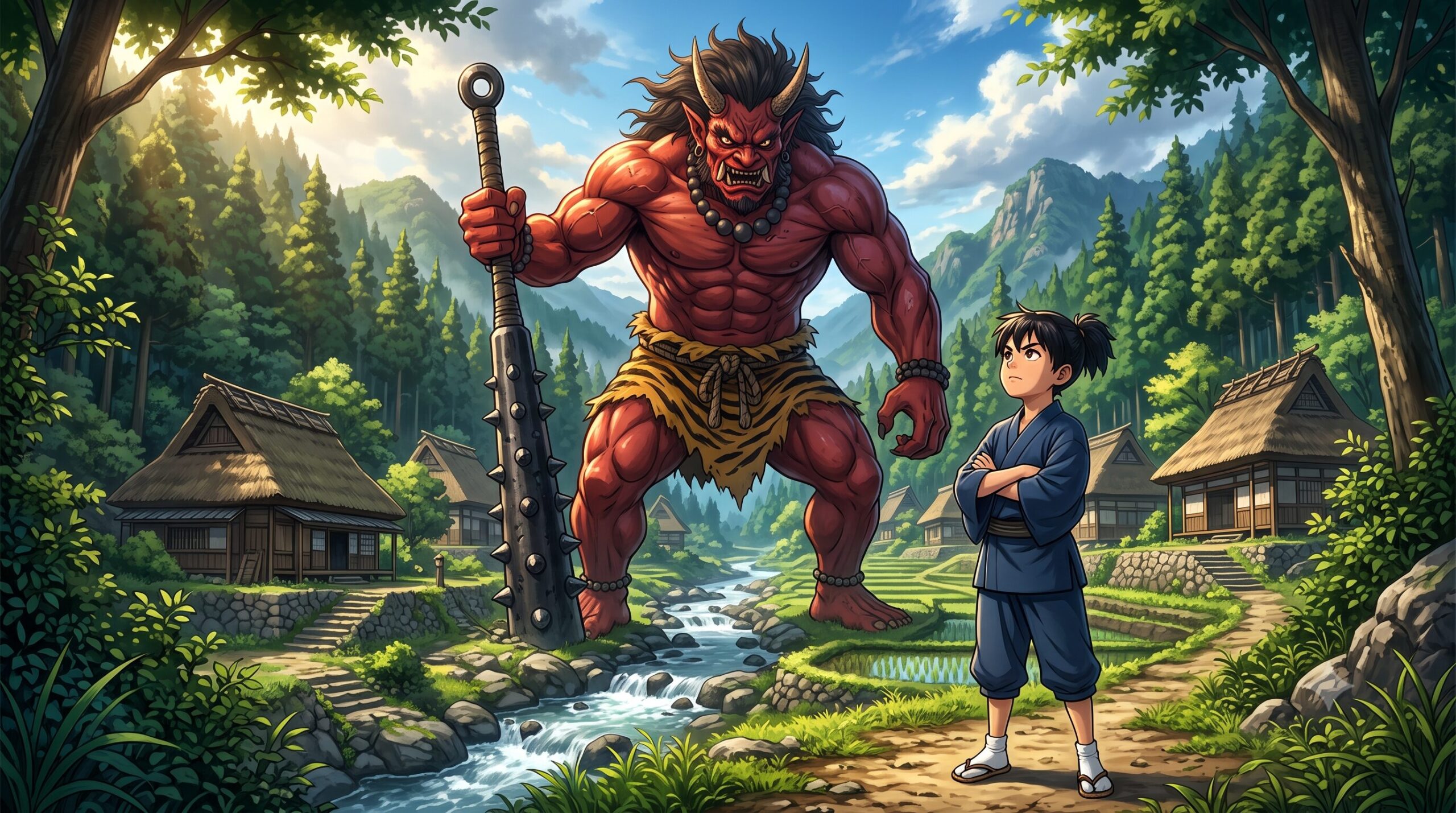
Within Japan’s rich natural landscapes lie countless mystical legends waiting to be discovered. The story of “Oni no Ashikata” (The Demon’s Footprint), set deep in the mountains of Kumamoto Prefecture in the Kyushu region, is one of these profound tales. This narrative of a single young boy standing up to an overwhelmingly powerful and terrifying monster is far more than just a fairy tale. It vividly conveys the Japanese perspective on life and death, their deep reverence for nature, and the timeless “wisdom of survival when facing adversity.” In this article, we will unravel the full scope of this epic story and dive deep into the essence of Japanese culture hidden within its core.
Chapter 1: The Epic Tale of “Oni no Ashikata”
Two Despairs Haunting a Mountain Village
Long ago, deep in the mountains near the upper reaches of the Yoshida River in Kumamoto Prefecture, there was a small village. While blessed with abundant nature, the villagers were forced into a harsh existence, constantly living side-by-side with two major despairs. The first was the devastating floods that swallowed the village with every heavy rainfall. The second was the terrifying existence of a man-eating “Red Oni” (Demon) that plunged the villagers into the depths of fear.
This Red Oni was so gargantuan that he looked down upon the mountain trees. He possessed blood-red skin, a massively muscular physique, and an incredibly terrifying appearance. Operating on mere whim, the Red Oni would descend upon the village, ruthlessly ravaging their painstakingly cultivated fields and devouring their precious cattle and horses. Even worse, he was a cruel monster who kidnapped innocent children who couldn’t escape in time. Night after night, the villagers gathered to discuss how to drive this demon away, but he was not an opponent humans could defeat, even if they banded together. They spent their days trembling, completely at a loss.
The Resolve of Taichi, the Lonely Boy
Living in this despair-ridden village was a young boy named Taichi. Taichi had lost his parents to illness at a young age and lived a solitary life, yet he was astonishingly clever and possessed an incredibly strong sense of courage and justice. Taichi’s emotional support was a single goat that he loved and raised as if it were his own family. However, on one tragic night, his beloved goat fell victim to the Red Oni’s fangs during an attack on the village and was brutally devoured. Gripping the blood-stained collar of his goat and shedding tears, Taichi made a firm vow in his heart: “I swear I will defeat that terrifying demon.”
The Great Leap from the Peak of Mount Yurugi
The fateful day finally arrived. It happened when Taichi went alone into the rugged mountains to gather firewood. Suddenly, with an earth-shattering rumble, trees were knocked down, and the giant Red Oni stood blocking his path. “You look like you have tasty flesh, boy. I’m going to bite your head off and eat you right now,” the Red Oni spat, his breath reeking of raw meat. Taichi’s legs nearly gave out from sheer terror. However, Taichi was brilliant. In this desperate crisis, he desperately hid his fear, stared straight into the demon’s eyes, and declared:
“Mr. Oni, I don’t mind if you eat me. But just being eaten is boring. You are strong and can do anything, right? Then, can you show me an amazing trick, like jumping all the way down here from the top of Mount Yurugi? If you show me that, I will gladly let you eat me.”
Mount Yurugi, which Taichi pointed to, was a steep, sacred mountain that seemed to pierce the clouds. Having absolute confidence and arrogance in his own power, the Red Oni took Taichi’s words as a provocation and sneered. “Hmph, you brat. There is not a single thing in this world that I cannot do!” Boasting loudly, the Red Oni slipped on heavily weighted, steel high-toothed geta (traditional clogs) and charged up to the peak of Mount Yurugi in the blink of an eye, causing the earth to tremble.
From below, the Red Oni on the peak looked no larger than a bean, but the silhouette of him raising his giant iron club high into the sky was crystal clear. “Listen up, boy! Burn the sight of my magnificent power into your eyes!” The Red Oni’s roar echoed through the mountains, and in the next moment, he leapt into the air with fierce momentum. Tearing through the wind, he plummeted straight down toward a massive rock directly below at the terrifying speed of a falling meteorite.
Eternal Memories Carved in Stone
However, the Red Oni’s arrogance proved to be his downfall. Unable to withstand the extreme falling speed and wind pressure, one of his heavy iron geta slipped off mid-air. Losing his balance, the Red Oni could not recover his posture and crashed into the massive rock with a thunderous impact. The foot wearing the iron geta shattered the rock, but his exposed bare foot absorbed all of his body weight and the shock of the fall, ruthlessly crushing his bones. A piercing scream that seemed to split the mountain echoed through the air: “GYAAAAARGH!!” Unable to bear the agonizing pain, the Red Oni crawled away into the darkness deep in the mountains and never appeared in the village again.
Days later, when the villagers timidly went to inspect the massive rock, an unbelievable sight awaited them. On the surface of the giant stone, the deep imprint of the iron geta, the vivid mark of the swung-down iron club, and the bare footprint from the exact moment his bones shattered were clearly etched, as if stamped by a seal. The proof of the miracle where young Taichi’s wisdom and courage saved the village remains around the Ichinose area of the Yoshida River in Kumamoto Prefecture to this day, passed down through generations as the legend of “Oni no Ashikata” (The Demon’s Footprint).
Chapter 2: Profound Analysis Hidden in the Tale
The Universality of “Wisdom” Overcoming “Power”
The greatest charm of this story lies in how a powerless being (Taichi) achieves complete victory over overwhelming physical violence (the Red Oni) using “wisdom” and “composure” as his weapons. This motif of an “underdog’s triumphant reversal,” common in myths and folktales around the world (such as the story of David and Goliath), teaches readers about the infinite potential of human intelligence. Taichi did not fight the demon directly; instead, he skillfully exploited the psychological weaknesses of the demon’s “arrogance” and “desire for display.” This contains a highly strategic and intellectual lesson, emphasizing the importance of not just relying on physical strength, but seeing through the opponent’s true nature and utilizing the environment.
The Threat of Nature and the True Identity of the Oni
The two disasters the village faced—the “flood damage” and the “Red Oni”—are actually closely linked. In Japanese folklore, “Oni” are often depicted as the personification of raging natural disasters, especially uncontrollable, violent rivers and landslides. The Red Oni wearing iron geta and swinging an iron club can be interpreted as a metaphor for a devastating debris flow involving soil and boulders swallowing the village. The story of Taichi defeating the demon is a folklore transmission of the historical feat of how ancient Japanese people faced the threats of nature, used their wisdom to conduct flood control projects (such as smashing rocks and altering river flows), and achieved peaceful lives.
Chapter 3: Connecting “Oni no Ashikata” to Japanese Culture
Animism and Iwakura (Sacred Rock) Beliefs
The “massive rock with footprints” appearing at the end of the story is a quintessential example of ancient Japanese “Animism” (nature worship) and “Iwakura” (sacred rock) beliefs. In Japan, it has long been believed that gods, spirits, or Yokai (monsters) reside in giant rocks or strangely shaped natural objects. When ancient people found rocks with inexplicable depressions, they did not view them merely as natural weathering. Instead, they spun stories, seeing them as “proof that a great being once caused something to happen here.” This unique Japanese spirituality of giving a narrative to every natural landscape and living in harmony with it out of reverence birthed the legend of “Oni no Ashikata.”
The Relationship Between Iron Culture and Demons
The fact that the Red Oni possessed “iron high geta” and an “iron club” strongly reflects Japan’s historical background. In ancient Japan, iron-making was cutting-edge technology that simultaneously required immense energy and environmental destruction (massive logging and mountain excavation). The “Oni” based deep in the mountains often symbolized the mountain people engaged in iron production, or the awe and fear the farming villagers felt toward their immense power. The negative chain reaction of mountains being carved out by iron tools, leading to floods, is incorporated into the story as “the attack of the demon wielding iron tools”—a fascinating point from the perspective of Japanese folklore studies.
Chapter 4: A Question for Our Readers
The story of young Taichi, who never yielded even in the face of massive violence and terror, winning peace through calm observation and wisdom. What do you think about Taichi’s courageous actions after reading this? If you were to face a massive wall or difficulty that seemed absolutely impossible to overcome, would you be able to calmly find your opponent’s weakness and use your wisdom to overcome it like Taichi did? Please reflect the lessons learned from this story on your own life, and share your thoughts and experiences in the comments section below!
Related Links
- Internal Link: Read More in our Japanese Folktale Series
- External Link (Reference): Manga Nippon Mukashibanashi Database “Oni no Ashikata” (Japanese)
- External Link (About Oni): Wikipedia – Oni
はじめに:日本の神秘的な昔話の世界へ
日本の豊かな自然の中には、数え切れないほどの神秘的な伝説が眠っています。九州地方、熊本県の深い山奥を舞台にした「鬼の足かた」という物語もその一つです。圧倒的な力を持つ恐ろしい化け物に、一人の少年が立ち向かうこの物語は、単なるおとぎ話にとどまらず、日本人の死生観や自然に対する畏敬の念、そして「困難に直面した時の生きる知恵」を現代の私たちに鮮明に伝えてくれます。本記事では、この大迫力の物語の全貌を紐解きながら、そこに隠された日本文化の深い真髄に迫ります。
第一章:大迫力の日本昔話「鬼の足かた」の全貌
山奥の村を襲う二つの絶望
昔、九州は熊本県、吉田川の上流に位置する深い山奥に、小さな村がありました。その村は豊かな自然に恵まれる一方で、常に二つの大きな絶望と隣り合わせの過酷な生活を強いられていました。一つは、大雨のたびに村を飲み込む「洪水被害」です。そしてもう一つ、村人たちを恐怖のどん底に陥れていたのが、「人食い赤鬼」の存在でした。
この赤鬼は身の丈が山の木々を見下ろすほど巨大で、血のように赤い肌を持ち、筋骨隆々とした恐ろしい姿をしていました。赤鬼は気まぐれに村へ降りてきては、丹精込めて育てた田畑を無惨に荒らし回り、村の貴重な財産である牛や馬を次々と食い殺しました。さらには、逃げ遅れた罪のない子供たちまでもさらっていくという残虐非道な怪物でした。村人たちは夜な夜な寄り合いを開き、どうにかしてこの鬼を追い払えないかと話し合いましたが、人間が束になっても敵うような相手ではありません。ただ震えながら、途方に暮れる日々が続いていたのです。
孤独な少年太一の決意
そんな絶望に包まれた村に、太一(たいち)という一人の少年が住んでいました。太一は早くに両親を病で亡くし、孤独な身の上でしたが、村の大人たちが驚くほど賢く、そして何より強い勇気と正義感を持つ男の子でした。太一の心の支えは、家族同然に可愛がり、大切に育てていた一匹のヤギでした。しかしある悲劇の夜、その最愛のヤギまでもが、村を襲撃した赤鬼の毒牙にかかり、無惨にも食い殺されてしまったのです。太一は血に染まったヤギの首輪を握りしめ、涙を流しながら固く心に誓いました。「僕が必ず、あの恐ろしい鬼を退治してみせる」と。
ゆるぎ岳の頂上からの大跳躍
運命の日が訪れました。太一が一人、険しい山へ薪(たきぎ)を拾いに入った時のことです。突然、地響きとともに木々がなぎ倒され、あの巨大な赤鬼が目の前に立ちはだかりました。「小僧、うまそうな肉をしているな。これからお前を頭からかじって食ってやるぞ」赤鬼の口からは生臭い息が吐き出され、太一の足は恐怖で震え上がりそうになりました。しかし、太一は賢明でした。この絶体絶命の危機において、恐怖を悟られまいと必死に表情を取り繕い、真っ直ぐに鬼の目を見据えてこう言い放ったのです。
「鬼のおっさん、僕を食べるのは構わないよ。でも、ただ食べられるだけじゃつまらない。おっさんは力持ちで何でもできるんだろ?だったら、あの『ゆるぎ岳』の頂上から、ここまで飛び降りるようなすごい技を見せてくれないか。それを見せてくれたら、僕は喜んでおっさんに食べられてあげるよ」
太一が指差した「ゆるぎ岳」は、雲を突くような険しい霊峰でした。己の力に絶対的な自信と傲慢さを持っていた赤鬼は、太一の言葉を挑発と受け取り、鼻で笑いました。「ふん、小僧め。俺様にできないことなど、この世に一つも無いわ!」そう豪語すると、赤鬼はズシリと重い鋼鉄の高下駄を履き、地響きを立てながらあっという間にゆるぎ岳の頂上へと駆け登っていきました。
頂上に立った赤鬼の姿は、下からは豆粒のようにしか見えませんでしたが、その巨大な金棒を天高く振りかざすシルエットははっきりと見えました。「いいかぁ、小僧!俺様の偉大な力、しっかりと目に焼き付けておけよ!」赤鬼の咆哮が山々に木霊し、次の瞬間、赤鬼は猛烈な勢いで空中へと身を躍らせました。風を切り裂き、隕石のような凄まじいスピードで真下にある大岩に向かって一直線に落下していきます。
岩に刻まれた永遠の記憶
しかし、赤鬼の傲慢さが仇となりました。あまりの落下速度と風圧に耐えきれず、途中で赤鬼の履いていた重い鉄下駄の片方が、すっぽりと脱げ落ちてしまったのです。バランスを崩した赤鬼は体勢を立て直すことができず、凄まじい衝撃音とともに大岩に激突しました。鉄下駄を履いていた足は岩を砕きましたが、むき出しになった裸足の片足は、自らの体重と落下の衝撃をすべて受け止め、無惨にも骨を砕かれてしまったのです。「ギャァァァーッ!!」という、山が割れるような痛切な悲鳴が響き渡りました。激痛に耐えきれず、赤鬼は這うようにして深い山奥の闇へと逃げ去り、二度と村に姿を現すことはありませんでした。
後日、村人たちが恐る恐るその大岩を見に行くと、そこには信じられない光景が広がっていました。巨大な岩の表面には、赤鬼が着地した鉄下駄の深い足跡、振り下ろされた金棒の生々しい跡、そして、骨を折った瞬間の裸足の足跡が、まるで判子を押したようにくっきりと刻み込まれていたのです。少年太一の知恵と勇気が村を救ったこの奇跡の証は、現代に至るまで熊本県吉田川の一の瀬周辺に残り、「鬼の足かた」として語り継がれています。
第二章:物語に隠された深い考察
力に対する「知恵」の勝利の普遍性
この物語の最大の魅力は、圧倒的な物理的暴力(赤鬼)に対して、非力な存在(少年太一)が「知恵」と「冷静さ」を武器に完全勝利を収めるという点にあります。世界中の神話や民話(例えばダビデとゴリアテの物語など)にも共通するこの「弱者の逆転劇」のモチーフは、人間の知性が持つ無限の可能性を読者に教えてくれます。太一は直接鬼と戦うのではなく、鬼の持つ「傲慢さ」と「自己顕示欲」という心理的弱点を巧みに突きました。これは、物理的な力に頼るだけでなく、相手の本質を見抜き、環境を利用することの重要性を説く、非常に戦略的で知的な教訓を含んでいます。
自然の脅威と鬼の正体
村が抱えていた「洪水被害」と「赤鬼」という二つの災厄は、実は密接にリンクしています。日本の民間伝承において「鬼」とは、しばしば荒れ狂う自然災害、特に治水が困難な暴れ川や土砂崩れそのものを擬人化した存在として描かれます。赤鬼が鉄の下駄を履き、金棒を振り回す姿は、土砂や岩石を巻き込んで村を飲み込む土石流のメタファーであると解釈できます。太一が鬼を退治したという物語は、古代の日本人がいかにして自然の脅威と向き合い、知恵を絞って治水工事(岩を砕き、川の流れを変えるなど)を行い、平穏な生活を手に入れたかという歴史的偉業を伝承化したものなのです。
第三章:「鬼の足かた」から読み解く日本文化との深い繋がり
アニミズムと磐座(いわくら)信仰
物語の最後に登場する「足跡が残された大岩」は、日本古来の「アニミズム(自然崇拝)」および「磐座(いわくら)信仰」の典型的な例です。日本では古くから、巨大な岩や奇妙な形をした自然物には神や精霊、あるいは妖怪の力が宿っていると考えられてきました。不可解なくぼみがある岩を見つけた古代の人々は、それを単なる自然の風化とは捉えず、「かつてここで大いなる存在が何かを起こした証」として物語を紡ぎました。自然の風景一つ一つに物語を与え、畏敬の念を持って共生していく日本特有の精神性が、この「鬼の足かた」という伝説を生み出したのです。
鉄の文化と鬼の関連性
赤鬼が「鉄の高下駄」と「金棒」を持っていたことにも、日本の歴史的な背景が色濃く反映されています。古代日本において、製鉄技術は最先端のテクノロジーであり、同時に莫大なエネルギーと自然破壊(木材の大量伐採や山の採掘)を伴うものでした。山奥を拠点とする「鬼」とは、しばしば製鉄に携わる山の民(産鉄民)や、その強大な力に対する里の農耕民の畏怖の象徴でした。鉄の道具によって山が削られ、それが原因で洪水が起きるという負の連鎖を、「鉄の道具を持つ鬼の襲撃」として物語に落とし込んでいる点は、日本の民俗学的に見ても非常に興味深いポイントです。
第四章:読者の皆様へ問いかけ
巨大な暴力と恐怖を前にしても、決して屈することなく、冷静な観察眼と知恵で平和を勝ち取った少年太一の物語。あなたは太一のこの勇気ある行動を読んで、どう思いましたか?もしあなたが、絶対に敵わないと思われるような巨大な壁や困難に直面した時、太一のように冷静に相手の弱点を見抜き、知恵を使って乗り越えることができるでしょうか?ぜひ、この物語から得た教訓をあなたの人生にも照らし合わせ、コメント欄であなた自身の考えや体験をシェアしてください。
関連リンク一覧
- 内部リンク:Japanese Folktale Series(日本の昔話シリーズの一覧はこちら)
- 外部リンク(参考資料):まんが日本昔ばなしデータベース「鬼の足かた」
- 外部リンク(日本の鬼について):Wikipedia – 鬼 (Oni)
コメント