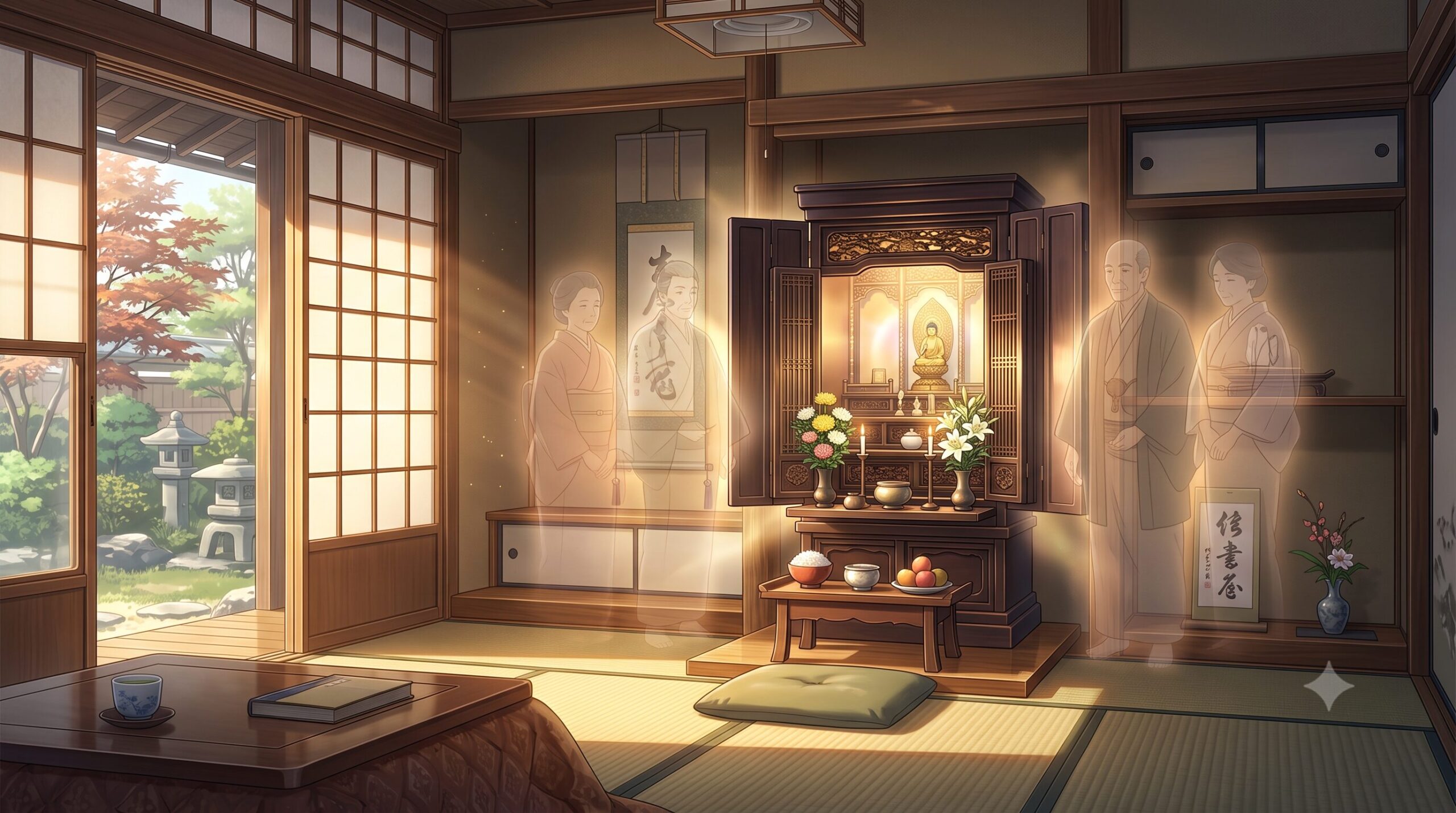
Many people around the world, and surprisingly even many Japanese people themselves, mistakenly believe that “the Japanese are non-religious.” Just because they lack the custom of attending church every Sunday or an absolute scripture that dictates every aspect of their lives, concluding that they “have no faith” is incredibly shallow. A lack of superficial religious rituals is entirely different from a lack of spiritual faith.
I declare this firmly: The Japanese are by no means non-religious. They are simply not bound by the framework of specific religious organizations or dogmas. If one were to name their spirituality, they possess a deeply rooted, unshakeable faith that should be called the “Religion of Ancestor Worship.” Here at kiri53.com, we will clearly convey this unique, beautiful spirituality flowing through the depths of Japanese history and culture to our global audience.
- A Unique Spiritual World: The “Religion of Ancestor Worship” Based on Shinto
- The Deep Psychology of Buddhism “Alaya-vijnana” and the Continuity of Life
- The Invisible Faith Breathing in Modern Japanese Society
- Conclusion: The Most Devout Nation Revering the Connection of Life
- はじめに:世界が誤解する「無宗教国家・日本」の真実
- 神道を土台とした「先祖供養教」という独自の精神世界
- 仏教の深層心理学「阿頼耶識(あらやしき)」と命の連続性
- 現代日本社会に息づく見えない信仰心
- 結論:日本人は命の繋がりを尊ぶ最も敬虔な民族である
A Unique Spiritual World: The “Religion of Ancestor Worship” Based on Shinto
At the very foundation of the Japanese spirit lies the ancient philosophy of Shinto. Shinto is an animistic faith with no scriptures or founders, holding that gods (Kami) reside in absolutely everything in nature. And one of the most important and central elements in Shinto is the concept of “ancestral spirits” (Sorei).
The Japanese firmly believe that deceased family members and ancestors are purified over a certain period and eventually become guardian deities who eternally watch over their clan. Every summer during Obon, and during the autumnal and vernal equinoxes (Higan), the vast majority of citizens return to their hometowns to clean their family graves and offer flowers. Furthermore, many Japanese homes still have a Buddhist altar (Butsudan) or Shinto shrine (Kamidana), where they naturally offer water and rice and pray every single morning. Looking across the entire globe, there is absolutely no other nation that honors and cares for its ancestors so meticulously and naturally on a daily basis.
The unshakeable core of Japanese faith is not absolute obedience to a single, exclusive God, but rather profound “gratitude” and “respect” toward the countless past existences that connected the unbroken chain of life to them.
The Deep Psychology of Buddhism “Alaya-vijnana” and the Continuity of Life
Why, then, do the Japanese place such profound importance on their connection with their ancestors? The deep reason, which cannot be dismissed as mere moral concepts or old customs, is brilliantly linked to the highly advanced concept of “Alaya-vijnana” in Buddhism, specifically in the Yogacara (Consciousness-Only) school.
Alaya-vijnana, or the “storehouse consciousness,” refers to the absolute deepest realm of human consciousness. It is the repository where the “seeds” (Karma) of all actions, thoughts, and emotions are stored—not only from an individual’s past experiences but inherited from generations of ancestors. In other words, our lives and minds do not exist independently in isolation; they are directly and inseparably connected to all our past ancestors through this deep network of Alaya-vijnana.
When Japanese people sit quietly in front of a Buddhist altar, press their hands together, and pray for their ancestors, they are not merely comforting the dead. They are actively purifying the karmic seeds of generations past stored in their own Alaya-vijnana and channeling pure energy in the form of gratitude. Ancestor worship is an extremely advanced and practical spiritual discipline designed to align one’s own deep consciousness and harmonize the continuity of life across the past, present, and future.
The Invisible Faith Breathing in Modern Japanese Society
Modern Japanese people are not logically aware that their daily visits to graves or prayers at altars are Buddhist purification rituals of the Alaya-vijnana. However, they understand deeply at a DNA level, not through logic but through sheer intuition, the absolute truth of life: “If we do not cherish our ancestors, our own present existence can never stand.”
Even in a modern society overflowing with cutting-edge technology, when they buy a new car, they go for a traffic safety blessing; before building a house, they hold a ground-breaking ceremony (Jichinsai). During the New Year, tens of millions of people rush to shrines and temples for Hatsumode. These are not mere events; they are powerful manifestations of deep awe and reverence for unseen forces and connections. They worship the “continuity of life” itself.
Conclusion: The Most Devout Nation Revering the Connection of Life
In conclusion, the Japanese are not atheists. Through ancestor worship, they connect deeply with their roots and live in the present with immense gratitude, practicing a highly practical faith closely tied to daily life. It is exceptionally rare in this world to find a nation with such a beautiful, peaceful, and introspective faith.
Behind Japanese culture, animation, and daily trends, this powerful spirit of revering the “invisible connections of life” is always breathing. Understanding and respecting this spirituality is the ultimate key to knowing the true face of the country of Japan and the Japanese people.
はじめに:世界が誤解する「無宗教国家・日本」の真実
世界中の多くの人々、そして驚くべきことに日本人自身の多くも「日本人は無宗教である」と誤って認識している。毎週日曜日に教会へ通う習慣や、生活のすべてを規定する絶対的な教典を持たないからといって、それを「信仰がない」と結論付けるのはあまりにも浅はかである。表面的な宗教的儀式が少ないことと、精神的な信仰心がないことは全くの別物だ。
断言する。日本人は決して無宗教ではない。彼らは特定の宗教法人や教義という枠組みに縛られていないだけであり、もしその精神性に名前をつけるとするならば、それは「先祖供養教」とでも呼ぶべき、極めて深く生活に根付いた強固な信仰を持っている。kiri53.comでは、日本の歴史と文化の奥底に脈々と流れるこの特異で美しい精神性を、海外の皆様に明確に伝えていく。
神道を土台とした「先祖供養教」という独自の精神世界
日本人の精神の根底には、太古の昔から続く神道(Shinto)の思想が深く根付いている。神道は教典も開祖も持たず、自然界のあらゆるものに神が宿ると考えるアニミズム的な信仰である。そして、この神道において最も重要かつ中心的な要素の一つが「祖先神(祖霊)」という概念だ。
日本人は、亡くなった家族や先祖が、一定の期間を経て浄化され、やがて自分たちを一族の守護神として見守ってくれる存在になると固く信じている。毎年夏のお盆や、秋分・春分(お彼岸)の時期には、国民の大多数が故郷に帰り、お墓の掃除をして花を供える。また、日本の多くの家庭には仏壇や神棚が置かれ、毎朝水やご飯を供え、手を合わせる習慣が現代でも当たり前のように残っている。世界中を広く見渡しても、日常的にここまで手厚く、そして自然に先祖を供養し続ける民族は他に存在しない。
特定の唯一神への絶対的な服従ではなく、自分に命を繋いでくれた過去の無数の存在に対する「感謝」と「敬意」。これこそが、日本人の持つ信仰の揺るぎない核である。
仏教の深層心理学「阿頼耶識(あらやしき)」と命の連続性
では、なぜ日本人はここまで先祖との繋がりを重んじるのか。単なる道徳観念や古くからの習慣という言葉では片付けられないその深い理由は、仏教、特に唯識(ゆいしき)思想における「阿頼耶識(Alaya-vijnana)」という高度な概念と見事に結びついている。
阿頼耶識とは、人間の意識の最も深い奥底にある「根本心」や「蔵識(ぞうしき)」と呼ばれる領域を指す。ここには、個人の過去の経験だけでなく、先祖代々から受け継がれてきたすべての行い、思考、感情の「種子(カルマ)」が蓄えられている。つまり、私たちの命や心は、自分一人で独立して存在しているのではなく、阿頼耶識という深層のネットワークを通じて、過去のすべての先祖と直接的かつ不可分に繋がっているのだ。
日本人が仏壇の前に座り、静かに手を合わせて先祖の冥福を祈る時、それは単に死者を慰めているだけの行為ではない。自身の阿頼耶識に蓄積された先祖代々のカルマの種子を浄化し、感謝の念という清らかなエネルギーを送り込んでいるのだ。先祖供養とは、自分自身の深い意識を整え、過去・現在・未来の命の連続性を調和させるための、極めて高度で実践的な精神修養である。
現代日本社会に息づく見えない信仰心
現代の日本人は、自分たちが日々行っているお墓参りや仏壇への祈りが、仏教的な阿頼耶識の浄化儀式であると論理的に自覚しているわけではない。しかし、彼らは理屈ではなく感覚として「先祖を大切にしなければ、自分自身の今も絶対に成り立たない」という命の真理をDNAレベルで深く理解している。
最先端のテクノロジーが溢れる現代社会においても、新車を買えば交通安全の祈祷に行き、家を建てる前には地鎮祭を行う。正月には何千万人もの人々が神社仏閣に初詣に押し寄せる。これらは単なるイベントではなく、見えない力や繋がりに対する深い畏敬の念の表れである。彼らは「命の連続性」そのものを信仰の対象としているのだ。
結論:日本人は命の繋がりを尊ぶ最も敬虔な民族である
結論として、日本人は無宗教などでは決してない。先祖供養を通して自己のルーツと深く繋がり、感謝とともに今を生きるという、非常に実践的で生活に密着した信仰を持っている。これほどまでに美しく、平和的で、内省的な信仰を持つ民族は世界でも稀有である。
日本の文化、アニメーション、そして日々の流行の背後には、常にこの「目に見えない命の繋がり」を尊ぶ精神が力強く息づいている。この精神性を理解し、リスペクトすることこそが、日本という国、そして日本人という民族の真の姿を知るための最大の鍵となる。

コメント