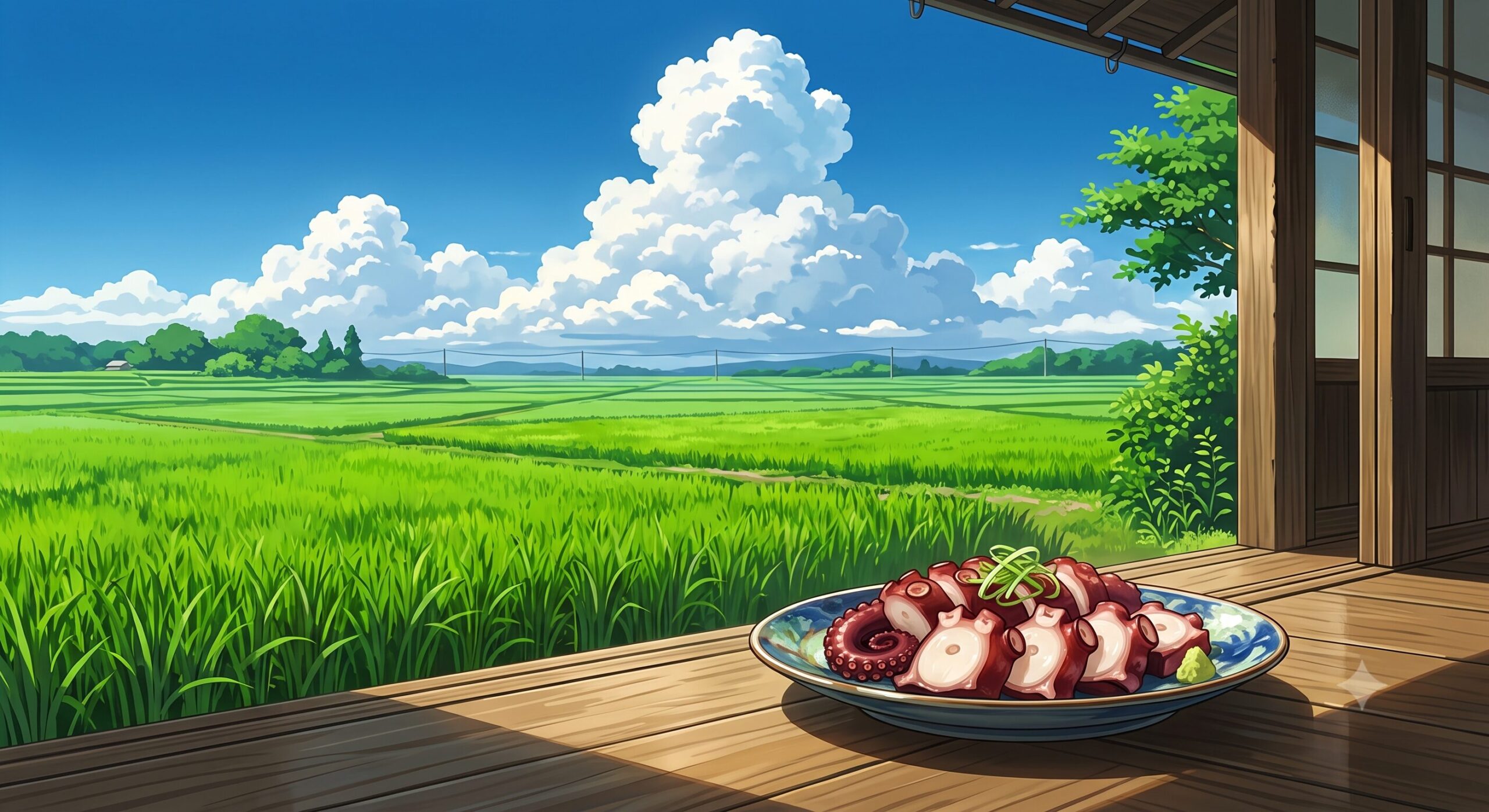
In Japan, there is a beautiful traditional calendar called the “Shichijuni-kou” (72 micro-seasons), which divides the four seasons into even finer periods. “Hangesho,” which falls around July 2, is one of them. In this article, we will explain the history and culture of Hangesho to our overseas readers, and explore the unique custom of why Japanese people eat octopus on this day.
What is Hangesho? Its Historical Background
Hangesho refers to the 11th day counting from the Summer Solstice (the day with the longest daylight of the year). In the modern calendar, it falls between July 2 and July 7 every year. “Hange” refers to a medicinal plant called Crowdipper. It was named because this plant blooms around this time.
For farmers in ancient Japan, Hangesho was the “absolute deadline for finishing rice planting.” It was believed that no matter how bad the weather was, if rice planting was not completed by this day, the autumn harvest would decrease. Farmers who successfully finished planting their rice paddies had a custom of resting from agricultural work for a few days starting from this day to heal their exhausted bodies.
The Deep Connection Between Japanese Culture and Hangesho: Why Eat Octopus?
In Japanese culture, seasonal milestones are always connected to “food.” The most famous custom during Hangesho is “eating octopus.”
This custom is deeply rooted especially in the Kansai region, particularly in Hyogo Prefecture, which is famous for its delicious octopus. It reflects a strong desire for a good harvest, wishing that the newly planted rice seedlings will firmly and deeply take root in all directions, just like the eight tentacles of an octopus. Furthermore, octopus is rich in a nutrient called taurine. Eating it was a highly rational wisdom of the ancestors to restore the physical strength of farmers exhausted from the severe summer heat and grueling rice planting.
Depending on the region, there are also customs of eating “udon noodles” in Kagawa Prefecture and “whole roasted mackerel” in Fukui Prefecture, making it a fascinating day to learn about Japan’s diverse food culture.
Reference Links
- For official information on the Japanese calendar, please visit the National Astronomical Observatory of Japan (NAOJ) Ephemeris.
- To discover more special days in Japan, explore our What’s Today’s Special Day Series category.
How Did You Feel?
Does your country have similar seasonal milestones related to agriculture or customs of eating specific foods to pray for a good harvest? We invite you to incorporate the Japanese culture of appreciating nature’s blessings and feeling the changing of the seasons at the dining table into your own life. How did you feel about the Japanese calendar after reading this article?
7月2日は「半夏生(はんげしょう)」:タコを食べて豊作を祈る日本の美しい季節の節目
日本には、春夏秋冬の四季をさらに細かく分けた「七十二候(しちじゅうにこう)」という美しい暦が存在します。7月2日頃に訪れる「半夏生(はんげしょう)」もその一つです。この記事では、海外の皆様に向けて、半夏生の歴史や文化、そしてなぜこの日にタコを食べるのかというユニークな風習について詳しく解説します。
半夏生とは何か?その歴史的背景
半夏生は、夏至(1年で最も昼が長い日)から数えて11日目にあたる日を指します。現代の暦では毎年7月2日〜7月7日頃にあたります。「半夏(はんげ)」とは、カラスビシャクという薬草のこと。この時期になると、この植物が花を咲かせることから名付けられました。
昔の日本の農家にとって、この半夏生は「田植えを終わらせる絶対的なデッドライン」でした。どんなに天候が悪くても、この日までに田植えを終えなければ、秋の収穫が減ってしまうと信じられていたのです。無事に田植えを終えた農家は、この日から数日間、農作業を休んで疲れた体を癒やす風習がありました。
日本文化と半夏生の深い関わり:なぜタコを食べるのか?
日本の文化において、季節の節目は常に「食」と結びついています。半夏生における最も有名な風習は「タコを食べること」です。
この習慣は特に関西地方、とりわけ美味しいタコの名産地である兵庫県などで深く根付いています。田植えを終えたばかりの稲の苗が、タコの足のように八方にしっかりと深く根を張るように、という豊作への強い願いが込められています。また、タコにはタウリンという栄養素が豊富に含まれており、夏の厳しい暑さや、過酷な田植えで疲労した農家の体力を回復させるという、非常に理にかなった先人たちの知恵でもあります。
地域によっては、香川県では「うどん」を、福井県では「丸焼きの鯖(さば)」を食べる風習もあり、日本の多様な食文化を知る上で非常に興味深い日でもあります。
参考リンク
- 日本の暦に関する公式な情報は、国立天文台 暦計算室をご参照ください。
- 日本のその他の特別な日や記念日については、当ブログのWhat’s Today’s Special Day Seriesからお読みいただけます。
あなたはどう感じましたか?
あなたの国には、このような農業にまつわる季節の節目や、特定の食べ物を食べて豊作を祈る習慣はありますか?自然の恵みに感謝し、季節の移ろいを食卓で感じる日本の文化を、ぜひあなたの生活にも取り入れてみてください。この記事を読んで、あなたは日本の暦についてどう思いましたか?

コメント