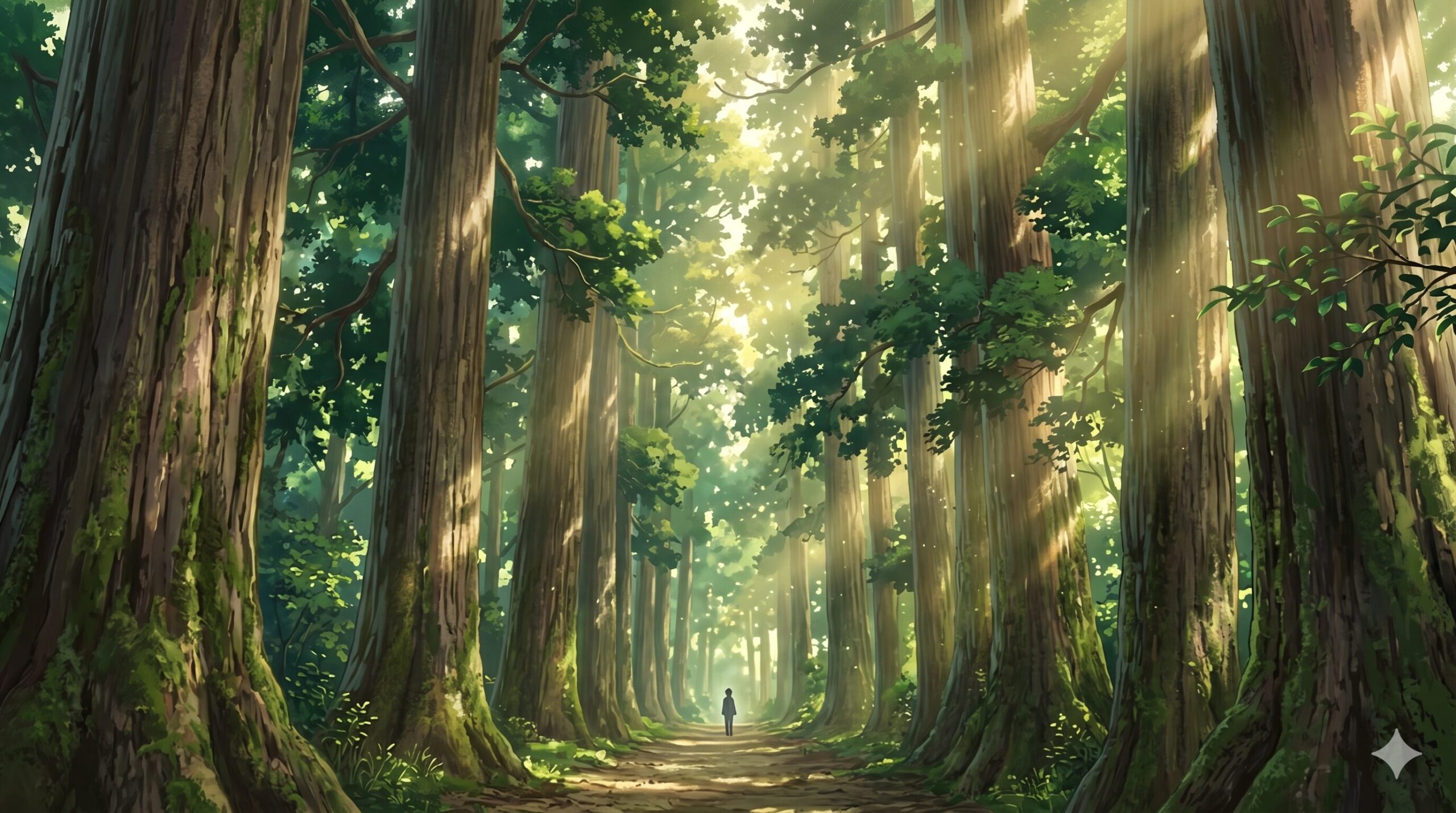
June 8, 1648: The Completion of the Nikko Cedar Avenue, a 200,000-Tree Green Corridor
On June 8, 1648, a grand monument where Japanese history and nature intersect was completed. This day marked the finish of the tree-planting for the “Nikko Cedar Avenue” (Nikko Suginamiki Kaido), stretching approximately 37 kilometers and comprising roughly 200,000 cedar trees. The mastermind behind this epic project was Matsudaira Masatsuna, a feudal lord who served Tokugawa Ieyasu. After the death of his lord, Masatsuna spent over 20 years privately funding and planting cedar saplings along the approach to Nikko Toshogu Shrine, Ieyasu’s mausoleum.
Straddling three historical routes—the Nikko Kaido, Reiheishi Kaido, and Aizu Nishi Kaido—this avenue is recognized by Guinness World Records as the longest tree-lined avenue in the world. Even today, nearly 400 years after its completion, about 12,000 of these magnificent cedars still tower into the sky. With an average height of 30 meters, their thick trunks and growth rings capture the flow of time from the Edo period to the modern era. Masatsuna did not offer gold, silver, or flashy architecture to his deified lord; he offered “growing life.” This monumental undertaking was not merely an infrastructure project, but the ultimate physical manifestation of intense loyalty and faith.
Decoding the Nikko Cedars: Nature Worship and the Aesthetics of Time in Japanese Culture
The existence of the Nikko Cedar Avenue deeply embodies unique Japanese cultural traits and spirituality. While Western monuments are often constructed from stone or metal with the goal of remaining “eternally unchanged,” Japanese monuments are built on the premise of “living and changing alongside nature.”
First is the spirit of Animism. Since ancient times, Japanese people have believed that gods reside in giant trees and forests (the concept of Yorishiro). It is highly symbolic that the approach leading to Nikko Toshogu—the pinnacle of gorgeous, artificial craftsmanship—is a quiet forest of living giant trees. By walking this cedar avenue, pilgrims do not just cover physical distance; they transition their minds from the secular world to the sacred realm. The act of walking while bathing in “Komorebi” (sunlight filtering through the trees) is a soul-cleansing ritual, akin to the modern concept of “Shinrin-yoku” (forest bathing).
Second is the “Aesthetics of Trans-generational Time.” When Matsudaira Masatsuna planted these saplings, he knew he would never live to see them become the sky-piercing giants they are today. However, the Japanese place immense value on “what can be passed down to the next generation, and the generation after that.” Similar to the culture of Bonsai, there is a deeply rooted philosophy that true art is completed through the collaborative work of nature and human hands over hundreds of years. This cedar avenue clearly demonstrates the mind-boggling patience and investment in the future inherent in the Japanese spirit, rejecting the demand for ephemeral, immediate results.
What Will You Plant for the Future?
The strong will and actions of a single individual 400 years ago provide us living today with the world’s longest beautiful landscape and profound inspiration. In our modern age, where information is consumed instantly and immediate results are demanded, the act of “planting a tree” while looking hundreds of years into the future gives us a vital opportunity to stop and reflect.
How did you feel reading this article? If you could leave something behind for future generations that would last hundreds of years after your passing, what would you “plant”? It could be a literal tree, a philosophy, or love for someone. Please share your thoughts with us.
Reference Links & Related Articles
- External Link: Visit Tochigi – Nikko Cedar Avenue
- Internal Link: Read more from “Today’s Special Day” Series
6月8日は何の日?世界最長の日光杉並木街道が完成した日(1648年)
1648年6月8日:20万本の杉が織りなす世界最長の緑の回廊、日光杉並木街道の完成
1648年6月8日、日本の歴史と自然が交差する偉大なモニュメントが完成を迎えました。総延長約37キロメートル、植樹された杉の数はおよそ20万本にも及ぶ「日光杉並木街道」の植樹完了です。この壮大な計画を主導したのは、徳川家康に仕えた大名、松平正綱です。彼は主君である家康の死後、その霊廟である日光東照宮への参道に、約20年以上の歳月をかけて個人的に杉の苗木を植え続けたのです。
この杉並木は、日光街道、例幣使街道、会津西街道の3つの街道にまたがり、現在でもギネス世界記録に「世界最長の並木道」として認定されています。莫大な資金と途方もない時間を費やし、完成から約400年が経過した現在でも、約1万2000本の杉が空高くそびえ立っています。木々の高さは平均で30メートルに達し、江戸時代から現代へと続く時間の流れを、その太い幹と年輪に刻み込んでいるのです。松平正綱は、金銀財宝や華美な建築物ではなく、「成長し続ける命」を神となった主君に捧げました。この壮大なスケールの事業は、単なるインフラ整備ではなく、強烈な忠誠心と信仰心の具現化です。
日光杉並木から読み解く、日本文化における「自然崇拝」と「時間の美学」
この日光杉並木の存在は、日本特有の文化や精神性を深く体現しています。西洋の記念碑が石や金属で作られ、「永遠に変わらないこと」を目指すのに対し、日本の記念碑は「自然と共に生き、変化していくこと」を前提としています。
第一に、「アニミズム(自然崇拝)」の精神です。日本では古来より、巨木や森には神が宿ると信じられてきました(神籬・ひもろぎの思想)。日光東照宮という絢爛豪華な人工の極みへと向かう参道が、静寂に包まれた生きた巨木の森であることは、非常に象徴的です。参拝者はこの杉並木を歩くことで、物理的な距離を進むだけでなく、俗世から神聖な領域へと精神を切り替えていくのです。木漏れ日(Komorebi)を浴びながら歩く行為そのものが、現代で言う「森林浴(Shinrin-yoku)」であり、魂の浄化の儀式でもありました。
第二に、「世代を超える時間の美学」です。松平正綱が苗木を植えた時、彼自身がこの杉並木が天を突く巨木になる姿を見ることはできないと分かっていました。しかし、日本人は「次の世代、さらにその次の世代へと受け継がれる価値」に重きを置きます。盆栽(Bonsai)の文化にも通じるように、自然と人間の手が何百年もかけて共同作業を行うことで、真の芸術が完成するという哲学が根付いているのです。この杉並木は、刹那的な結果を求めない、日本人の気の遠くなるような忍耐強さと未来への投資を明確に示しています。
あなたは、未来へ何を植えますか?
400年前のたった一人の強い意志と行動が、現在を生きる私たちに世界最長の美しい景色と感動を与えてくれています。情報が瞬時に消費され、即効性ばかりが求められる現代において、何百年も先を見据えて「木を植える」という行為は、私たちに立ち止まって考える機会を与えてくれます。
この記事を読んで、あなたはどう感じましたか?あなたがもし、自分の死後も何百年と残るものを未来の世代に遺せるとしたら、何を「植え」ますか?それは木かもしれないし、思想かもしれないし、誰かへの愛情かもしれません。ぜひ、あなたの考えを聞かせてください。
参考リンク・関連記事
- 外部リンク:とちぎ旅ネット – 日光杉並木街道
- 内部リンク:今日は何の日シリーズをもっと読む


コメント