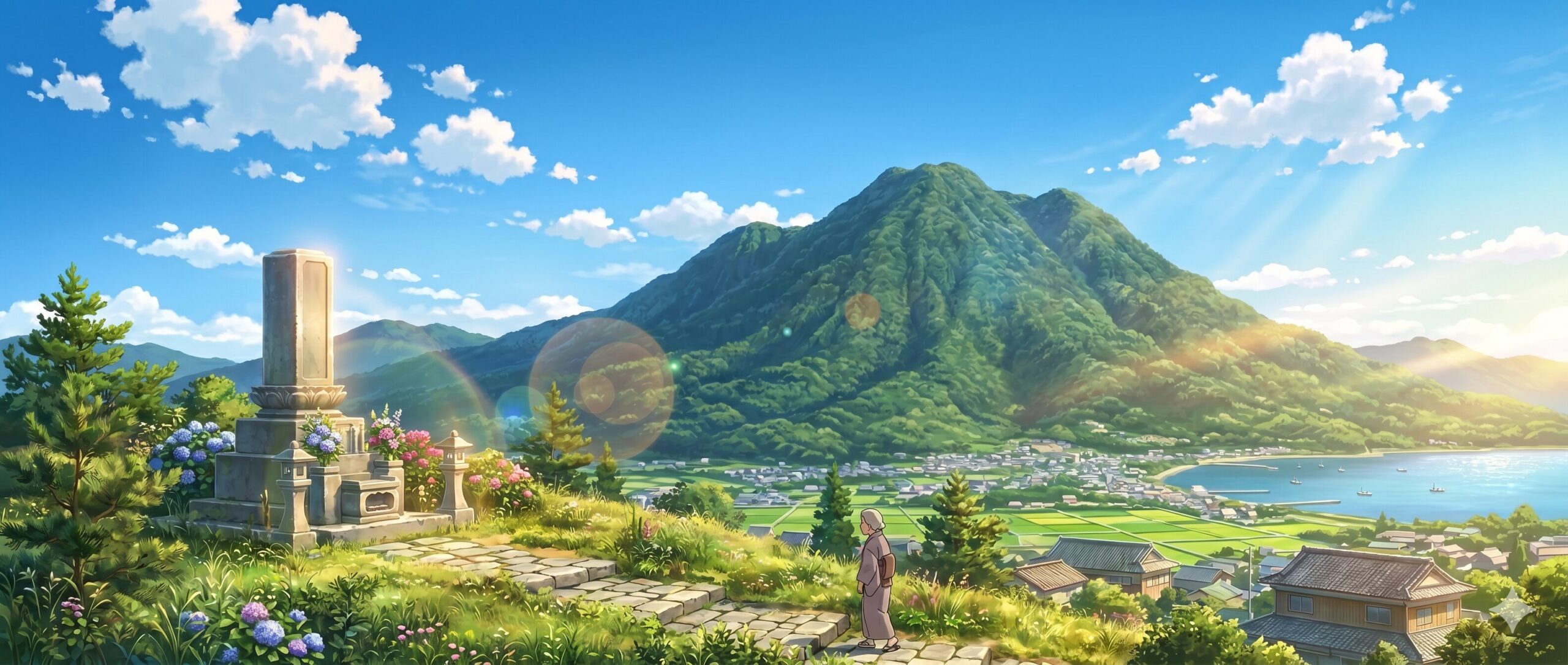
Japan is a country blessed with beautiful four seasons and rich nature, but it is also one of the world’s leading countries for volcanoes and earthquakes. Today, June 3, is “Unzen Fugen-dake Prayer Day.” This day is not just a record of the past; it is a vital day for deeply understanding the Japanese spirituality and disaster prevention culture regarding how to face the fury of nature.
At 4:08 PM on June 3, 1991, a massive pyroclastic flow occurred at Mount Unzen Fugen-dake on the Shimabara Peninsula in Nagasaki Prefecture. A pyroclastic flow is a terrifying natural phenomenon where extremely high-temperature volcanic gas, rocks, and ash, reaching hundreds of degrees Celsius, rush down a mountain slope at incredible speeds exceeding 100 kilometers per hour. This massive pyroclastic flow claimed 43 precious lives, including world-renowned French volcanologists Katia and Maurice Krafft, journalists, firefighters, police officers, and taxi drivers.
In Shimabara City, Nagasaki Prefecture, June 3 is designated annually as a “Prayer Day” to ensure this sad event is never forgotten, to pray for the victims, and to renew the commitment to disaster prevention. At 4:08 PM, sirens wail, and citizens offer a moment of silence in unison. It is a crucial day to remember one of the most horrific volcanic disasters in Japanese history and to use it as a lesson for the future.
- The Massive Pyroclastic Flow of 1991: Background to a Historical Tragedy
- Japanese Culture and “Coexistence” with Nature
- The Spirit of “Bousai” (Disaster Prevention) Connecting to the Future
- A Question for You
- Reference Links
- 6月3日:「雲仙普賢岳祈りの日」とは何か
- 1991年の大火砕流:歴史的悲劇の背景
- 日本文化と自然との「共生」
- 未来へ繋ぐ「防災(Bousai)」の精神
- あなたへの問いかけ
- 参考リンク
The Massive Pyroclastic Flow of 1991: Background to a Historical Tragedy
Mount Unzen Fugen-dake resumed volcanic activity in November 1990 for the first time in about 198 years. Initially, it was a gentle eruption, but by May of the following year, highly viscous magma was pushed up to the crater, beginning to form a mass known as a “lava dome.” This lava dome was highly unstable, and every time a part of it collapsed, small-scale pyroclastic flows occurred.
In Japan at that time, the term “pyroclastic flow” itself was not widely known to the general public, and its destructive power and danger were not fully recognized. Many media personnel approached dangerously close to capture the historic moment, and local residents and firefighters were on high alert. Then, on June 3, the largest lava dome collapse to date occurred, and the resulting colossal pyroclastic flow swallowed an area far exceeding prior estimates.
This event demonstrated to the world the difficulty of scientific prediction and the helplessness of humanity in the face of nature’s overwhelming power. Simultaneously, it strongly engraved in Japanese society how vital correct knowledge and swift evacuation actions are.
Japanese Culture and “Coexistence” with Nature
From this tragic history, we can deeply decipher Japanese culture and its view of nature. Since ancient times, the Japanese people have chosen not to dominate nature, but to “coexist (Kyosei)” with it. The belief in “Yaoyorozu no Kami” (eight million gods), which holds that deities reside in mountains, rivers, grass, and trees, was born from this awe and gratitude toward nature.
The Shimabara Peninsula, where Mount Unzen Fugen-dake is located, is an area that richly receives the blessings of the volcano. Abundant hot springs welling up from underground, delicious agricultural products grown in fertile soil, and breathtakingly beautiful scenery—all of these are gifts from the volcano. The Japanese people, knowing full well that nature can sometimes bare its terrifying fangs, have sought ways to live alongside it while appreciating its blessings for thousands of years.
Every time they experience a disaster, the Japanese people do not just succumb to despair; they learn from it, recover, and build a stronger society. This “resilience”—accepting the fury of nature, overcoming sorrow, and moving forward—is a highly important spiritual essence flowing at the root of Japanese culture.
The Spirit of “Bousai” (Disaster Prevention) Connecting to the Future
The lessons learned from Mount Unzen Fugen-dake are greatly utilized in Japan’s current “Bousai” (disaster prevention) systems. The volcanic observation system has been elevated to the world’s highest standard, and the creation of hazard maps (disaster prediction maps) to detect danger in advance and safely evacuate residents has been mandated nationwide.
At the “Mt. Unzen Disaster Memorial Hall (Gamadasu Dome)” in Shimabara City, visitors can experience the fury of the pyroclastic flows of that time through the latest exhibits and learn the knowledge needed to coexist with volcanoes. “Gamadasu” means “to do one’s best” or “to persevere” in the local dialect. The “Gamadasu” spirit of the people who rose from a city buried in ash and achieved a robust recovery is an important message that should be shared with the world in today’s disaster-prone society.
A Question for You
The overwhelming power of nature, and the strength of the people who rise from it. How did Japan’s way of life, “coexistence,” appear to your eyes? If you were to live in a land where blessings and dangers lie side by side, how would you face nature, and what would you want to pass on to future generations? Please take a moment to deeply imagine your own thoughts and your culture’s relationship with nature.
Reference Links
- Mt. Unzen Disaster Memorial Hall (Gamadasu Dome) – A facility to learn about actual disasters and prevention
- What’s Today’s Special Day Series – Discover more Japanese anniversaries and history
6月3日:「雲仙普賢岳祈りの日」とは何か
日本は美しい四季と豊かな自然に恵まれた国であると同時に、世界有数の火山大国、地震大国でもあります。今日、6月3日は「雲仙普賢岳祈りの日(Unzen Fugen-dake Prayer Day)」です。この日は、単なる過去の記録ではなく、自然の猛威とどう向き合うべきかという、日本人の精神性や防災文化を深く理解するための重要な日です。
1991年(平成3年)6月3日午後4時8分、長崎県の島原半島にある雲仙普賢岳で大規模な火砕流が発生しました。火砕流とは、数百度という超高温の火山ガスや岩石、灰が、時速100キロメートルを超える猛スピードで山の斜面を一気に流れ下る恐ろしい自然現象です。この日の大火砕流により、世界的にも著名なフランス人火山学者であるクラフト夫妻、報道関係者、消防団員、警察官、タクシー運転手など、43名もの尊い命が失われました。
長崎県島原市では、この悲しい出来事を風化させず、犠牲者の鎮魂と防災への誓いを新たにするため、毎年6月3日を「祈りの日」と定めています。午後4時8分にはサイレンが鳴り響き、市民は一斉に黙祷を捧げます。この日は、日本の歴史において最も凄惨な火山災害の一つを記憶し、未来への教訓とするための大切な日なのです。
1991年の大火砕流:歴史的悲劇の背景
雲仙普賢岳は、1990年11月に約198年ぶりの噴火活動を再開しました。当初は穏やかな噴火でしたが、翌年の5月に入ると粘り気の強い溶岩が火口に押し上げられ、「溶岩ドーム」と呼ばれる塊を形成し始めました。この溶岩ドームは非常に不安定で、一部が崩落するたびに小規模な火砕流が発生するようになっていました。
当時の日本においては「火砕流」という言葉自体が一般的にあまり知られておらず、その破壊力や危険性が十分に認知されていませんでした。世紀の瞬間を捉えようと多くのメディアが危険な距離まで接近し、地元の人々や消防団も警戒にあたっていました。そして6月3日、過去最大規模の溶岩ドーム崩落が起こり、発生した巨大な火砕流は事前の想定を遥かに超える範囲を飲み込みました。
この出来事は、自然科学の予測の難しさと、自然の圧倒的な力の前における人間の無力さを世界中に知らしめる結果となりました。同時に、正しい知識と素早い避難行動がいかに重要であるかを、日本社会に強烈に刻み込みました。
日本文化と自然との「共生」
この悲しい歴史から、日本の文化と自然観を深く読み解くことができます。日本人は古来より、自然を支配するのではなく、自然と「共生(Kyosei)」するという道を選んできました。山川草木には神が宿るとされる「八百万の神(Yaoyorozu no Kami)」の信仰も、こうした自然への畏怖と感謝から生まれています。
雲仙普賢岳のある島原半島は、火山がもたらす恩恵を豊かに受けている地域でもあります。地下から湧き出る豊富な温泉、肥沃な土壌で育つ美味しい農産物、そして息を呑むほど美しい景観。これらはすべて火山の恵みです。日本の人々は、自然が時として牙をむく恐ろしい存在であることを知りながらも、その恵みに感謝し、共に生きる術を何千年にもわたって模索してきました。
災害を経験するたびに、日本人は絶望に打ちひしがれるだけでなく、そこから学び、復興し、より強い社会を築いてきました。自然の猛威を受け入れ、悲しみを乗り越えて前へ進むこの「レジリエンス(回復力)」こそが、日本文化の根底に流れる非常に重要な精神性です。
未来へ繋ぐ「防災(Bousai)」の精神
雲仙普賢岳の教訓は、現在の日本の「防災(Bousai)」システムに大きく生かされています。火山の観測体制は世界最高水準にまで引き上げられ、危険を事前に察知して住民を安全に避難させるためのハザードマップ(災害予測地図)の作成が全国で義務付けられました。
島原市にある「雲仙岳災害記念館(がまだすドーム)」では、当時の火砕流の猛威を最新の展示で体感し、火山と共生するための知識を学ぶことができます。「がまだす」とは地元の方言で「がんばる」という意味です。灰に埋もれた街から立ち上がり、力強く復興を遂げた人々の「がまだす」精神は、災害の多い現代社会において、世界中に発信すべき重要なメッセージとなっています。
あなたへの問いかけ
自然の圧倒的な力と、そこから立ち上がる人々の強さ。日本の「共生」という生き方は、あなたの目にどう映りましたか?もしあなたが、恵みと危険が隣り合わせの土地に住むとしたら、どのように自然と向き合い、未来の世代へ何を伝えていきたいと考えますか?ぜひ、あなたの考えや文化における自然との関わり方について深く想像してみてください。
コメント