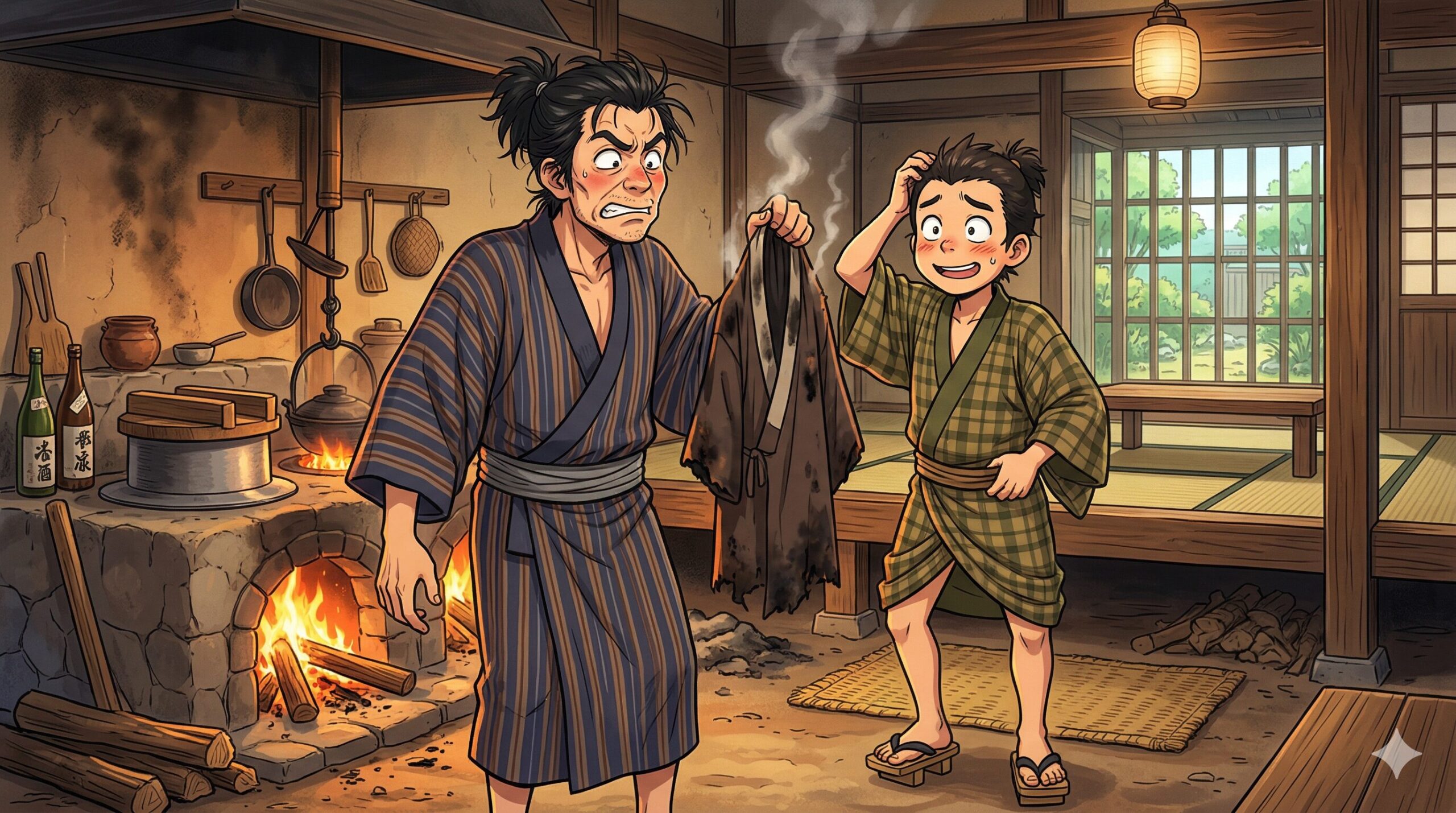
Japanese folktales are filled with brave stories of heroes defeating demons and heartwarming tales of animals returning favors. However, we must not forget the existence of “Warai-banashi” (comical tales) that depict the daily lives of common villagers. The story of “The Foolish Brothers” we introduce today may seem like a simple, comical tale of failure at first glance, but hidden within it is a profound lesson that strikes at the core of Japanese culture.
① The Story of “The Foolish Brothers”
Once upon a time in a small village, there lived an older brother named Guzu and a younger brother named Dabu, along with their parents. The two brothers got along perfectly, but they were infamous throughout the village as “the foolish brothers” who completely lacked common sense and acted without thinking.
One day, a highly respected monk was scheduled to visit their home. The mother was extremely busy preparing from the morning. She instructed the two brothers: “When the honorable monk arrives, we will have him take a bath. Guzu, you make a strong fire in the stove to boil the bathwater. Dabu, you welcome the monk and take good care of the robe he takes off.”
“Understood!” the brothers replied cheerfully. Guzu immediately threw firewood into the stove and started a roaring fire. Soon, the monk arrived. To soothe his exhaustion from the journey, the monk took off his beautiful, expensive silk robe and headed to the bathroom.
Dabu, following his instructions, received the robe. However, he noticed that the robe was slightly dusty and damp with sweat from the journey. Dabu thought to himself, “The monk’s precious robe is dirty. If I clean it and return it warm, he will surely be delighted!”
Dabu washed the robe vigorously with water, getting it completely soaked. “Oh no, the monk will catch a cold if he wears this. I have to dry it immediately!” Panicking, Dabu ran to the stove where his older brother was tending the fire. “Brother, please dry this robe quickly!”
“Leave it to me!” Guzu proudly replied. To anyone’s horror, he threw the monk’s expensive silk robe straight into the raging fire of the stove. The silk robe burst into flames in an instant and disappeared into ashes.
When the monk finished his refreshing bath, he asked, “Could you bring me my robe?” The brothers puffed out their chests and answered proudly, “Your robe was dirty, so we washed it and warmed it thoroughly in the fire! But strangely, it completely disappeared!”
The monk was so shocked and horrified that he was left speechless. Having his precious robe turned to ash, he had no choice but to run all the way back to his temple completely naked. The parents held their heads in despair, crying, “There is no cure for fools.” Meanwhile, Guzu and Dabu just stood there with their mouths wide open, completely failing to understand why they were being scolded.
② Analysis of the Folktale: Tragedy and Comedy Born from Good Intentions
The most important takeaway from this story is that the brothers had absolutely no malicious intent. In fact, their actions were driven by an “excess of goodwill”—they genuinely wanted to please the monk. Dabu tried to clean the robe, and Guzu tried to dry it quickly.
However, they fatally lacked “imagination” and “common sense.” Not only did they fail to grasp the basic physics that silk will burn if thrown into a fire, but they also completely failed to assess the situation and understand what was actually required of them. This fatal disconnect between “purpose” and “method” is a common theme in Japanese comical folktales. While readers laugh at their foolishness, it also serves as a sharp reminder: “Am I doing things with good intentions that are completely missing the mark in my own daily life?”
③ Connection to Japanese Culture: High-Context Society and “Omotenashi”
What we can decode from this story is the immense importance placed on “Kuuki wo yomu” (reading the air/atmosphere) and “Aun no kokyu” (unspoken understanding) in Japanese culture. Japan is known for having a highly “high-context” culture. People are constantly expected to perceive the intentions hidden behind words, rather than just taking the words at face value.
True Japanese “Omotenashi” (hospitality) is not about acting according to a strict manual. It requires observing the other person’s situation, sensing unspoken needs, and taking the optimal action. When the mother said, “Take good care of his robe,” the common-sense, unspoken premise was, “Fold it neatly and place it somewhere so it won’t get dirty.”
The brothers only understood the surface-level meaning of the words and could not read the context or the “air” at all. In Japanese society, rushing into action without understanding the underlying context can sometimes lead to major trouble. This folktale serves as a humorous cautionary tale, teaching that harmony with those around you and flexible thinking adapted to the situation are essential for living smoothly within a community.
④ To Our Readers: What Would You Do?
How did you feel after reading the story of “The Foolish Brothers”? We could simply laugh it off, but don’t similar situations of “good intentions gone wrong” happen in our own modern daily lives and workplaces?
If you were the parents of these brothers, how would you have given instructions to prevent this tragedy? And if you were in the monk’s position, what would you have done other than running home naked? Please share your thoughts and ideas in the comments below!
Reference Link: Manga Nippon Mukashi Banashi Database – “The Foolish Brothers” (Japanese)
Read more folktales here: Japanese Folktale Series
日本の昔話「ばかな兄弟」:笑いに隠された「おもてなし」と「空気を読む」文化の真髄
日本の昔話には、英雄が鬼を退治する勇ましい物語や、動物が恩返しをする心温まる物語がたくさんあります。しかし、絶対に忘れてはならないのが、名もなき村人たちの日常を描いた「笑話(わらいばなし)」というジャンルの存在です。今回ご紹介する「ばかな兄弟」は、一見するとただの滑稽な失敗談ですが、その奥には日本文化の核心とも言える深い教訓が隠されています。
① 昔話「ばかな兄弟」のストーリー
昔ある村に、グズという兄とダブという弟が、両親と一緒に暮らしていました。二人はとても仲良しでしたが、とんでもない慌て者で、物事の道理が全くわかっていない「ばかな兄弟」として村中で有名でした。
ある日のこと、彼らの家に立派な和尚さんが訪ねてくることになりました。母親は朝から大忙しです。母親は二人に言いつけました。「和尚さんが来たら、お風呂に入っていただくから、グズはかまどでしっかり火を焚いてお湯を沸かしなさい。ダブは和尚さんをおもてなしして、脱いだ衣(ころも)を大切にお預かりするんだよ」
「わかった!」と二人は元気よく返事をしました。兄のグズは早速かまどに薪をくべ、ゴーゴーと勢いよく火を燃やし始めました。そこへ和尚さんが到着しました。和尚さんは旅の疲れを癒やすため、高価な美しい絹の衣を脱ぎ、お風呂場へ向かいました。
弟のダブは、言いつけ通りにその衣を受け取りました。しかし、衣には旅の汗と少しの土ぼこりがついていました。ダブは考えました。「和尚さんの大切な衣が汚れている。綺麗にして、温かくしてお返しすれば、きっと喜ばれるに違いない!」
ダブは衣を水でジャブジャブと洗い、ビショビショにしてしまいました。「これでは和尚さんが風邪をひいてしまう。早く乾かさなくては」と焦ったダブは、兄のグズが火を焚いているかまどへと走りました。「兄ちゃん、この衣を早く乾かしてくれ!」
グズも「任せておけ!」と答え、なんと燃え盛るかまどの火の中に、和尚さんの高価な絹の衣を放り込んでしまったのです。絹の衣はあっという間に燃え上がり、灰になって消えてしまいました。
お風呂から上がり、さっぱりした和尚さんが「私の衣を持ってきておくれ」と頼むと、兄弟は胸を張って答えました。「和尚さんの衣は汚れていたので洗い、かまどの火でしっかり温めておきました!でも、不思議なことに消えてなくなってしまいました!」
大切な衣を灰にされた和尚さんは、驚き呆れて言葉も出ず、裸のままお寺へと逃げ帰ってしまいました。両親は「バカにつける薬はない」と頭を抱えて嘆きましたが、グズとダブはなぜ自分たちが叱られているのか全く分からず、ぽかんと口を開けて立っているだけでした。
② 昔話の考察:善意が生み出す悲劇と笑い
この物語の最大のポイントは、兄弟には「悪意が一切ない」ということです。むしろ、彼らは和尚さんに喜んでもらおうという「過剰な善意」から行動を起こしています。ダブは衣を綺麗にしようとし、グズはそれを素早く乾かそうとしました。
しかし、彼らには致命的に「想像力」と「常識」が欠けていました。絹を火に入れれば燃えるという物理的な法則だけでなく、「今、自分が何を求められているのか」という状況判断が全くできていなかったのです。日本の笑話(アホ話)に共通するのは、このような「目的と手段の致命的なズレ」です。読者は彼らの愚行に笑いながらも、「自分も日常で、良かれと思って見当違いなことをしていないだろうか?」とハッとさせられるのです。
③ 日本文化との関連:ハイコンテキストな社会と「おもてなし」
この物語から読み解けるのは、日本文化において非常に重視される「空気を読む(Kuuki wo yomu)」ことや、「阿吽の呼吸(Aun no kokyu)」の大切さです。日本は世界でも有数の「ハイコンテキスト(文脈依存度が高い)」な文化を持っています。言葉の表面だけでなく、その裏にある意図を察することが常に求められます。
日本の「おもてなし(Omotenashi)」は、マニュアル通りに動くことではありません。相手の状況を観察し、言葉にされないニーズを察知して、最適な行動をとることが求められます。母親の「大切に預かりなさい」という言葉の裏には、「汚さないように、丁寧に畳んで置いておきなさい」という常識的な前提が含まれていました。
しかし、兄弟は言葉の表面しか捉えず、文脈や空気を全く読めませんでした。日本社会では、文脈を理解せずに突っ走ることは、時に大きなトラブルを引き起こします。この昔話は、共同体の中で円滑に生きていくためには、周囲との調和や状況に応じた柔軟な思考が不可欠であることを、反面教師として教えてくれているのです。
④ 読者の皆様へ:あなたならどうしますか?
この「ばかな兄弟」の物語を読んで、あなたはどう思いましたか?ただの笑い話として終わらせることもできますが、私たちの日常生活やビジネスの場でも、似たような「善意の空回り」は起こり得るのではないでしょうか。
もしあなたがこの兄弟の親だったら、どのように指示を出していれば、この悲劇を防げたと思いますか?また、あなたが和尚さんの立場だったら、裸で逃げ帰る以外にどんな対応をしたでしょうか?ぜひ、あなたの考えをコメント欄で聞かせてください。
参考リンク:まんが日本昔ばなし〜データベース〜「ばかな兄弟」
その他の昔話はこちら:Japanese Folktale Series
コメント