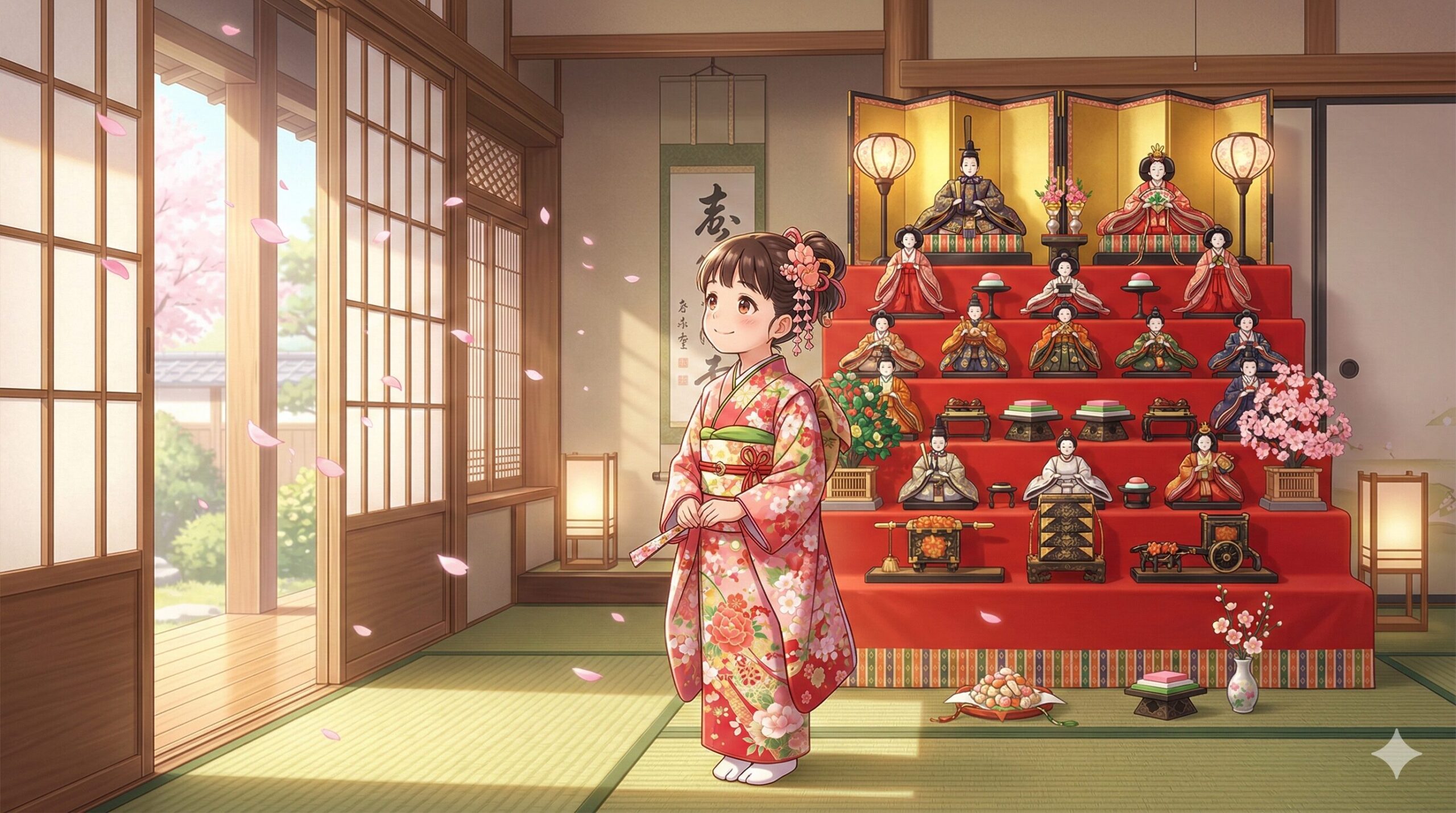
Every year on March 3rd, along with the warm sunshine of spring, Japan is enveloped in vibrant colors. This day is known as “Hinamatsuri” (Girls’ Day or the Doll Festival) or “Momo no Sekku” (Peach Festival). It is a beautiful, ancient Japanese event dedicated to praying for the healthy growth and happiness of young girls. Japanese families celebrate by displaying exquisite “Hina dolls” and gathering around the table to enjoy special traditional dishes. Let’s unravel the deep history of Hinamatsuri and the spiritual essence of Japanese culture embedded within it.

The History of Hinamatsuri: From Ancient Chinese Purification to Elegant Aristocratic Play
The origins of Hinamatsuri trace back to the ancient Chinese festival of “Joshi no Sekku.” There was a custom of purifying oneself in a river to ward off evil spirits on the day of the Snake in early March. This tradition made its way to Japan and merged with “Hiina-asobi” (playing house), a popular pastime among the children of the nobility during the Heian period (794–1185).
In Japan at that time, a ritual called “Nagashi-bina” was practiced. People would transfer their misfortunes and impurities onto simple dolls made of paper or straw (called Katashiro) and float them down rivers or into the sea to purify themselves. As time passed into the Edo period (1603–1868), doll-making techniques improved dramatically. Dolls evolved from simple items meant to be washed away into luxurious, elaborate masterpieces designed to be displayed and admired indoors. When the Shogunate officially established March 3rd as a national holiday known as the “Peach Festival,” this custom rapidly spread from samurai families to the common people, establishing the modern form of Hinamatsuri.
The Meaning Behind Hina Dolls and Their Beautiful Decorations
The most prominent feature of Hinamatsuri is, without a doubt, the “Hina dolls.” In a traditional seven-tiered display, the “Odairi-sama” (Emperor) and “Ohina-sama” (Empress) sit at the very top. Below them are the “San-nin Kanjo” (three court ladies), the “Go-nin Bayashi” (five musicians), the “Zuishin” (two guardian ministers), and the “Shicho” (three servants). This setup perfectly mimics an elegant imperial wedding of the Heian period.
The dolls’ garments faithfully recreate the “Junihitoe” (twelve-layered ceremonial robe) and other formal wear of Heian aristocrats, standing as a testament to Japan’s exceptional dyeing, weaving, and craftsmanship. The Hina dolls serve as guardian deities, taking on any misfortune that might befall the girls. Because of this, there is a superstition that “if you don’t put the dolls away quickly after the festival, the girl’s marriage will be delayed.” This teaching stems from the idea that one should not keep misfortune-bearing dolls around for too long, as well as the Japanese virtue of discipline and respecting the changing of the seasons.
The Traditional Food Culture That Colors Hinamatsuri
Japanese events are invariably linked to special culinary traditions. On Hinamatsuri, tables are adorned with visually stunning dishes that carry auspicious meanings.
- Hishimochi: Diamond-shaped rice cakes layered in green, white, and pink (red). Green represents “health and longevity” (the earth), white stands for “purity” (snow), and pink symbolizes “warding off evil” (peach blossoms). Together, they depict the spring scenery of new shoots sprouting from under the melting snow as peach blossoms bloom.
- Hina-arare: Sweet, bite-sized rice crackers colored in the same three hues as Hishimochi, plus yellow. These four colors represent the four seasons, containing a prayer for the daughter’s happiness throughout the entire year.
- Hamaguri (Clam) Clear Soup: A clam shell will only fit perfectly with its original matching half. Because of this, it symbolizes the wish for a happy and harmonious marriage, hoping that the daughter will one day meet a wonderful partner for life.
- Chirashizushi: “Scattered sushi” featuring colorful ingredients placed on top of vinegared rice. It uses an abundance of lucky ingredients, such as shrimp (for a long life), lotus root (for good prospects in the future), and shredded egg crepes (symbolizing gold/wealth).
Understanding the Spirit of Japanese Culture Through Hinamatsuri
Hinamatsuri is not merely a “festival for girls.” It strongly reflects the cultural spirituality that flows deep within the Japanese people.
First is the “heart that lives in harmony with the changing of nature.” As the alternative name “Peach Festival” suggests, this is the season when peach blossoms begin to bloom. Since ancient times, peaches have been believed to possess the power to ward off evil. Japanese people have always valued a deep connection with nature, borrowing its power at the turning points of the seasons to cleanse misfortune and pray for health.
Second is the “concept of Katashiro (scapegoats) and animism.” The idea of having a doll take on one’s misfortune is connected to the ancient Japanese Shinto belief that spirits reside in all things. The culture of harboring deep affection and gratitude toward inanimate dolls, sometimes even holding “Ningyo Kuyo” (memorial services for dolls) at shrines, demonstrates the Japanese virtue of not treating objects simply as disposable tools.
Third is “family bonds and the passing down of wishes.” Hina dolls are often passed down from mother to daughter, or grandmother to granddaughter. They are engraved with the deep love of a family wishing for their child’s happiness across generations. Through the act of displaying Hina dolls, the history and love of a family are relayed to the next generation.
How Would You Enjoy This Tradition?
March 3rd in Japan is a beautiful day where the joy of spring’s arrival intersects with profound love for children. The artistry of the elaborate Hina dolls and the brightly colored traditional foods speak volumes about the depth of Japanese history and culture.
After reading this, does your country have any special events, traditional decorations, or foods dedicated to praying for the growth of children? If you ever have the chance to visit Japan in the spring, please observe the magnificent Hina dolls displayed in towns, hotels, and museums up close, and feel the breath of history and craftsmanship. Which Hinamatsuri dish would you most like to try?
Explore More:
- The History of Hinamatsuri: From Ancient Chinese Purification to Elegant Aristocratic Play
- The Meaning Behind Hina Dolls and Their Beautiful Decorations
- The Traditional Food Culture That Colors Hinamatsuri
- Understanding the Spirit of Japanese Culture Through Hinamatsuri
- How Would You Enjoy This Tradition?
- 3月3日は「ひな祭り」:日本の美しい伝統と春の訪れを祝う日
3月3日は「ひな祭り」:日本の美しい伝統と春の訪れを祝う日
毎年3月3日、日本は春の暖かな日差しとともに、鮮やかな色彩に包まれます。この日は「ひな祭り(Hinamatsuri)」、または「桃の節句」と呼ばれ、女の子の健やかな成長と幸福を祈る、日本古来の美しい行事です。日本の家庭では、精巧で美しい「雛人形(Hina dolls)」を飾り、特別な料理を家族で囲んでお祝いをします。今回は、このひな祭りの深い歴史と、そこに込められた日本文化の精神性を紐解いていきましょう。
ひな祭りの歴史:古代中国の厄祓いから優雅な貴族の遊びへ
ひな祭りの起源は、古代中国の「上巳(じょうし)の節句」にまで遡ります。3月の上旬の巳の日に、川で身を清めて邪気を祓うという風習がありました。これが日本に伝わり、平安時代(794年〜1185年)の貴族の子供たちの間で流行していた「ひいな遊び(おままごと)」と結びつきました。
当時の日本では、紙や草で作った簡素な人形(形代・かたしろ)に自分の厄災やけがれを移し、川や海に流して清める「流し雛」という儀式が行われていました。時代が下り、江戸時代(1603年〜1868年)に入ると、人形を作る技術が飛躍的に向上します。人形は川に流すものから、家の中に飾って楽しむ豪華で精巧なものへと変化していきました。そして、幕府が3月3日を「桃の節句」として正式な祝日に定めたことで、武家から庶民へとこの風習が一気に広まり、現代のひな祭りの形が確立されたのです。
雛人形と美しい装飾の意味
ひな祭りの最大の特徴は、何と言っても「雛人形」です。伝統的な七段飾りでは、最上段に天皇と皇后を表す「男雛(お内裏様)」と「女雛(お雛様)」が座ります。その下には、お付きの女官である「三人官女」、音楽を奏でる「五人囃子」、警護の武官である「随身(右大臣・左大臣)」、そして雑用をこなす「仕丁」が並びます。これは、平安時代の宮中の優雅な結婚式を模したものです。
人形たちの衣装は、平安貴族の正装である「十二単(じゅうにひとえ)」などを忠実に再現しており、日本の染織技術と職人技の結晶と言えます。雛人形は、女の子に降りかかる災厄を代わりに引き受けてくれる守り神としての役割を担っています。そのため、「早く片付けないと婚期が遅れる」という迷信も存在します。これは、厄を移した人形をいつまでも身近に置いておくべきではないという考えや、季節の節目を大切にする日本の規律正しさから生まれた教えです。
ひな祭りを彩る伝統的な食文化
日本の行事は、常に特別な食文化と結びついています。ひな祭りの日には、見た目も華やかで、縁起の良い意味が込められた料理が食卓に並びます。
- 菱餅(ひしもち):緑、白、ピンク(赤)の三色の餅を重ねたものです。緑は「健康や長寿(大地)」、白は「清浄(雪)」、ピンクは「魔除け(桃の花)」を意味し、雪の下から新芽が芽吹き、桃の花が咲く春の情景を表現しています。
- ひなあられ:菱餅と同じ三色に黄色を加えた、米から作られるお菓子です。四季を表しており、一年を通して娘が幸せに過ごせるようにという願いが込められています。
- はまぐりのお吸い物:はまぐりの貝殻は、対になっている貝殻としか絶対にぴったりと合いません。このことから、将来、娘が素晴らしい伴侶と巡り会い、一生添い遂げられるようにという「夫婦円満」の願いが込められています。
- ちらし寿司:色とりどりの具材をご飯の上に散らしたお寿司です。エビ(長生き)、レンコン(見通しが良くなる)、錦糸卵(財宝)など、縁起の良い食材がふんだんに使われています。
ひな祭りから読み解く日本文化の精神性
ひな祭りは、単なる「女の子のお祭り」ではありません。そこには、日本人の根底に流れる文化的な精神性が色濃く反映されています。
第一に、「自然の移ろいと共生する心」です。桃の節句という名の通り、この時期は桃の花が咲き始める季節です。桃には古来より邪気を祓う力があると信じられてきました。日本人は、季節の変わり目に自然の力を借りて厄を祓い、健康を祈るという自然との深い結びつきを大切にしてきました。
第二に、「形代(かたしろ)の思想とアニミズム」です。人形に厄を身代わりになってもらうという考え方は、万物に魂が宿るとする日本古来の神道の考え方に通じています。無機物である人形に深い愛情と感謝を抱き、時には神社で「人形供養」を行う文化は、物を単なる道具として扱わない日本人の美徳を表しています。
第三に、「家族の絆と願いの継承」です。雛人形は、母から娘へ、あるいは祖母から孫へと受け継がれることも少なくありません。そこには、世代を超えて子供の幸せを願う家族の深い愛情が刻まれています。雛人形を飾るという行為を通じて、家族の歴史と愛情が次世代へとリレーされていくのです。
あなたなら、どう楽しみますか?
日本の3月3日は、春の訪れへの喜びと、子供への深い愛情が交差する美しい一日です。精巧な雛人形の芸術性や、色鮮やかな伝統食は、日本の歴史と文化の深さを物語っています。
この記事を読んで、あなたの国にも子供の成長を願う特別な行事や、それに伴う伝統的な飾り物・食べ物はありますか?もし春に日本を訪れる機会があれば、ぜひ街やホテル、美術館で飾られている壮大な雛人形を間近で観察し、その職人技と歴史の息吹を感じてみてください。あなたは、どのひな祭り料理を一番食べてみたいと思いましたか?
Explore More:
コメント