- 1. A Misguided Wish and a Heavy Price: The Story of “Obiki no Zenroku”
- 2. Deep Analysis: The Irony of the Gods and the Pain of the Flesh
- 3. Reading Japanese Culture: The Shokunin Spirit and Reverence for Nature
- 4. What Would You Do?
- 1. 神への間違った願いと過酷な代償:「大挽きの善六」のストーリー
- 2. 物語の深層考察:神の皮肉と肉体の痛み
- 3. 昔話から読み解く日本文化:職人魂(Shokunin)と自然への畏敬
- 4. あなたならどうする?
1. A Misguided Wish and a Heavy Price: The Story of “Obiki no Zenroku”
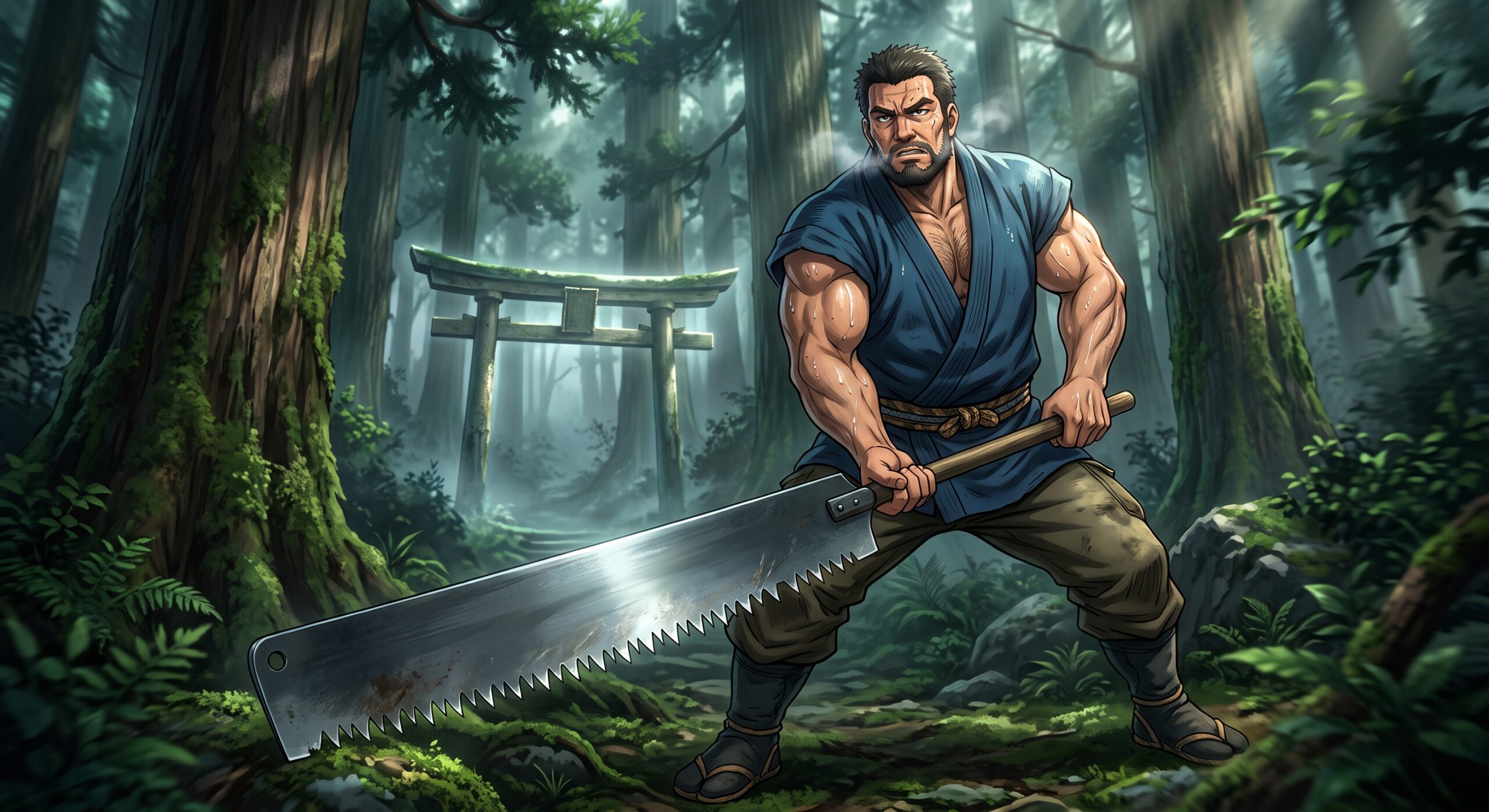
Long ago, in the Amagi mountains of the Izu region in Shizuoka Prefecture, lived a woodcutter named Zenroku. Although he was blessed with a massive physical frame, he was incredibly clumsy and, worst of all, extremely lazy. The only place Zenroku ever achieved anything great as a woodcutter was inside his own convenient dreams.
One day, looking for an easy shortcut to becoming a master craftsman, Zenroku visited the Kumomi Sengen Shrine. He locked himself in the shrine and made an outrageous wish to the gods: “Make me the greatest woodcutter, one who can cut cleanly through even the hardest stone.” He continued to pray day after day. Finally, on the 21st day, his prayers were answered. Filled with newfound divine power, Zenroku took his saw to a massive boulder on the shrine grounds. To his amazement, the saw sliced through the solid rock as if it were soft tofu.
Triumphant, Zenroku returned to his fellow woodcutters, only to immediately face a devastating reality. The saw that could effortlessly slice through stone was now completely useless against wood. The blade simply bounced off the logs. His master reprimanded him furiously: “Your job is a woodcutter! What good is a woodcutter who cannot cut wood?” At that moment, Zenroku realized the gravity of his foolish, misguided wish. He was filled with profound regret.
From that day forward, Zenroku’s entire attitude transformed. For the first time in his life, he gripped his saw with true sincerity and desperation. But there was no magic to help him now. When he pushed the saw against the logs, it wouldn’t bite. He pulled with all his might until massive blisters formed on his hands. The blisters tore open, covering his hands and the handle of his saw in blood. Yet, Zenroku refused to give up, continuing to pull the saw with his bleeding hands day after day.
Then, on a scorching summer day, as Zenroku was desperately battling a log, a single drop of sweat fell from his forehead and landed directly onto the blade of his saw. Instantly, the blade bit deep into the wood, and he successfully sawed through the massive log. By paying the ultimate physical price in blood and sweat, Zenroku finally took his true first step as a craftsman. Through relentless, grueling effort, his skills skyrocketed, and he eventually became legendary even in the great city of Edo (old Tokyo), widely revered as “Obiki no Zenroku” (Zenroku the Great Sawyer).
The story has an epilogue. When Zenroku was in his 40s, he returned to his hometown in Amagi. One day in the mountains, he encountered a young woodcutter who was sawing through giant trees with terrifying speed and precision, vastly surpassing even Zenroku in his prime. Witnessing this, Zenroku did not feel jealousy. Instead, he realized, “The gods are telling me it is time to step down.” He gracefully retired from the mountains and spent the rest of his life humbly serving at the Sengen Shrine.
2. Deep Analysis: The Irony of the Gods and the Pain of the Flesh
The most fascinating aspect of this folktale lies in the deity Zenroku prayed to. The enshrined deity of Kumomi Sengen Shrine is Iwanagahime, the Goddess of Stone. Zenroku prayed for the ability to cut stone, and the Stone Goddess literally granted his wish. However, the ability to cut stone is entirely useless for a woodcutter. This is a severe irony and a harsh trial imposed by the gods to punish human shallowness and the desire for easy shortcuts.
The blood pouring from his hands and the sweat dripping from his brow are not mere bodily fluids. They are powerful symbols of the absolute necessity of “real, painful effort” required for human achievement. Zenroku failed when he relied on divine magic, but succeeded only when he offered his own blood and sweat. The tale asserts a universal truth: true human strength does not come from external magic, but is forged solely through internal struggle and relentless hard work.
3. Reading Japanese Culture: The Shokunin Spirit and Reverence for Nature
The tale of “Obiki no Zenroku” perfectly embodies the unique Japanese “Shokunin” (craftsman) spirit. In traditional Japanese culture, a profession is not just labor or a means to make money; it is a “Do” (a Way or Path) to polish one’s own soul. Zenroku sawing logs until his hands bleed represents the Japanese aesthetic that mastering a skill requires lifelong, life-risking dedication.
Furthermore, it vividly illustrates the nature of the Shinto gods (Kami). Japanese gods do not simply hand out unconditional happiness or convenience. They offer severe trials to test human nature and force personal growth. Finally, when Zenroku meets the young prodigy, he accepts his retirement with grace, acknowledging the natural cycle of generations. This reflects the deep Japanese reverence for the laws of nature and the wisdom of knowing one’s own limits.
4. What Would You Do?
Zenroku almost lost everything because of his naive desire for an easy path to success, but he managed to forge a new destiny through his own blood and sweat. Are you currently looking for a shortcut in your own life or career? If, like Zenroku, you suddenly lost your most important skill, would you have the courage and resolve to start over from zero, enduring the pain and bleeding hands to rebuild yourself? We challenge you to reflect on this story. How does Zenroku’s journey change your perspective on hard work?
Reference URL: Manga Nippon Mukashibanashi Database – Obiki no Zenroku
Discover more deep stories from Japan: View the Japanese Folktale Series Category
【日本昔話】大挽きの善六:怠け者が本物の職人になるまでの血と汗の物語
1. 神への間違った願いと過酷な代償:「大挽きの善六」のストーリー
昔、静岡県は伊豆の天城山に、善六という名の木挽き(こびき:ノコギリで木を切り出して材木を作る職人)がいました。善六は恵まれた大きな体格を持っていましたが、手先は不器用で、何より極度の怠け者でした。彼が立派な木挽きとして活躍するのは、いつも都合の良い夢の中だけでした。
ある日のこと、楽をして一流の職人になりたいと考えた善六は、雲見の浅間神社に足を運びました。そして、「どんな石でもスッパリと切れる、最強の木挽きにしてほしい」という無茶な願掛けを行い、お宮に籠もりました。来る日も来る日も祈り続け、ついに21日目の満願の日を迎えました。神の力を得た善六が試しに神社の境内にあった大石にノコギリを入れると、なんと石はまるで豆腐のように真っ二つに切れたのです。
意気揚々と仲間の元へ戻った善六ですが、すぐに絶望的な事実に直面します。石を簡単に切断できるそのノコギリは、肝心の「木」には全く刃が立たなくなっていたのです。親方からは「お前の仕事は木挽きだ。木が切れなくて何が木挽きだ」と激しく叱責されました。善六はここで初めて、自分が神に対して取り返しのつかない間違った願掛けをしてしまったことに気づき、激しく後悔しました。
その日から、善六の態度は一変します。彼は生まれて初めて、真面目にノコギリを握りしめました。しかし、魔法のように木が切れることはありません。丸太にノコギリを押し当てても全く刃が入らず、力任せに引く彼の手には無数のマメができ、やがてそれが破れて血だらけになりました。それでも善六は諦めず、血にまみれた手でノコギリを引き続けました。
そしてある夏の日のことです。必死に木に向かう善六の額から落ちた一滴の汗が、ノコギリの刃に滴り落ちました。その瞬間、刃はスッと丸太に食い込み、見事に木を切り裂いたのです。血と汗という自らの肉体的な代償を払うことで、善六はついに真の木挽きとしての第一歩を踏み出しました。その後、猛烈な努力を重ねた善六は、江戸の深川にまで「大挽きの善六」としてその名を轟かせる伝説の職人となりました。
後日談として、40歳を過ぎて故郷の天城に戻った善六は、山で自分よりも遥かに早く、正確に巨木を挽く若者に出会います。全盛期の自分すら凌駕するその若者の姿を見た善六は、「これは神様が、私に引き際を教えてくれているのだ」と悟りました。彼は潔く山を降り、残りの生涯を浅間神社への奉仕に捧げました。
2. 物語の深層考察:神の皮肉と肉体の痛み
この物語の最大の面白さは、善六が祈願した雲見浅間神社の祭神にあります。ここに祀られているのは「石長姫(イワナガヒメ)」という石の女神です。善六は「石でも切れるようにしてくれ」と願いましたが、石の女神は文字通りその願いを叶えました。しかし、木挽きにとって石が切れる能力は無用の長物です。これは、安易な近道を求める人間の浅はかさに対する、神からの強烈な皮肉であり、厳しい試練の始まりでした。
手から流れる血と、額から落ちる汗。これらは単なる体液ではなく、人間が何かを成し遂げるために絶対に避けては通れない「現実の努力」の象徴です。神の奇跡(石を切る力)に頼った善六は失敗し、自らの流した血と汗によって初めて木を切る力を得ました。人間の真の力は、外部から与えられる魔法ではなく、自分自身の内なる苦痛と努力の果てにのみ宿るという真理を、この物語は突きつけています。
3. 昔話から読み解く日本文化:職人魂(Shokunin)と自然への畏敬
「大挽きの善六」は、日本独自の「職人魂(Shokunin spirit)」を完璧に体現しています。日本の伝統において、仕事とは単なる労働や金稼ぎの手段ではなく、自己の精神を磨き上げる「道(Do)」です。血まみれになってもノコギリを引き続ける善六の姿は、技術の習得には人生を懸けた修練が必要であるという日本の美学を示しています。
また、日本における「八百万の神々(Shinto)」の性質もよく表れています。神は人間に無条件で幸福を与える便利な存在ではありません。時に厳しい試練を与え、人間の本質を試し、成長を促す存在です。そして最後に若き天才に出会った善六が、嫉妬することなく「神が引き際を教えてくれた」と素直に受け入れ、神社への奉仕に回る姿には、自然の摂理と世代交代に対する日本人の深い畏敬の念と潔さが込められています。
4. あなたならどうする?
善六は「楽をして成功したい」という甘い考えから全てを失いかけ、自らの血と汗で人生を切り開きました。あなたは今、人生において何か安易な近道を探してはいませんか?もしあなたが善六のように、自分の最も重要なスキルを失ってしまったとしたら、そこから血の滲むような努力をゼロから始める覚悟はありますか?この物語を読んで、あなたの心にどのような変化が生まれたか、ぜひ考えてみてください。
参考URL:まんが日本昔ばなし〜データベース〜 大挽きの善六
もっと日本の昔話を深く知る:Japanese Folktale Seriesカテゴリーを見る


コメント