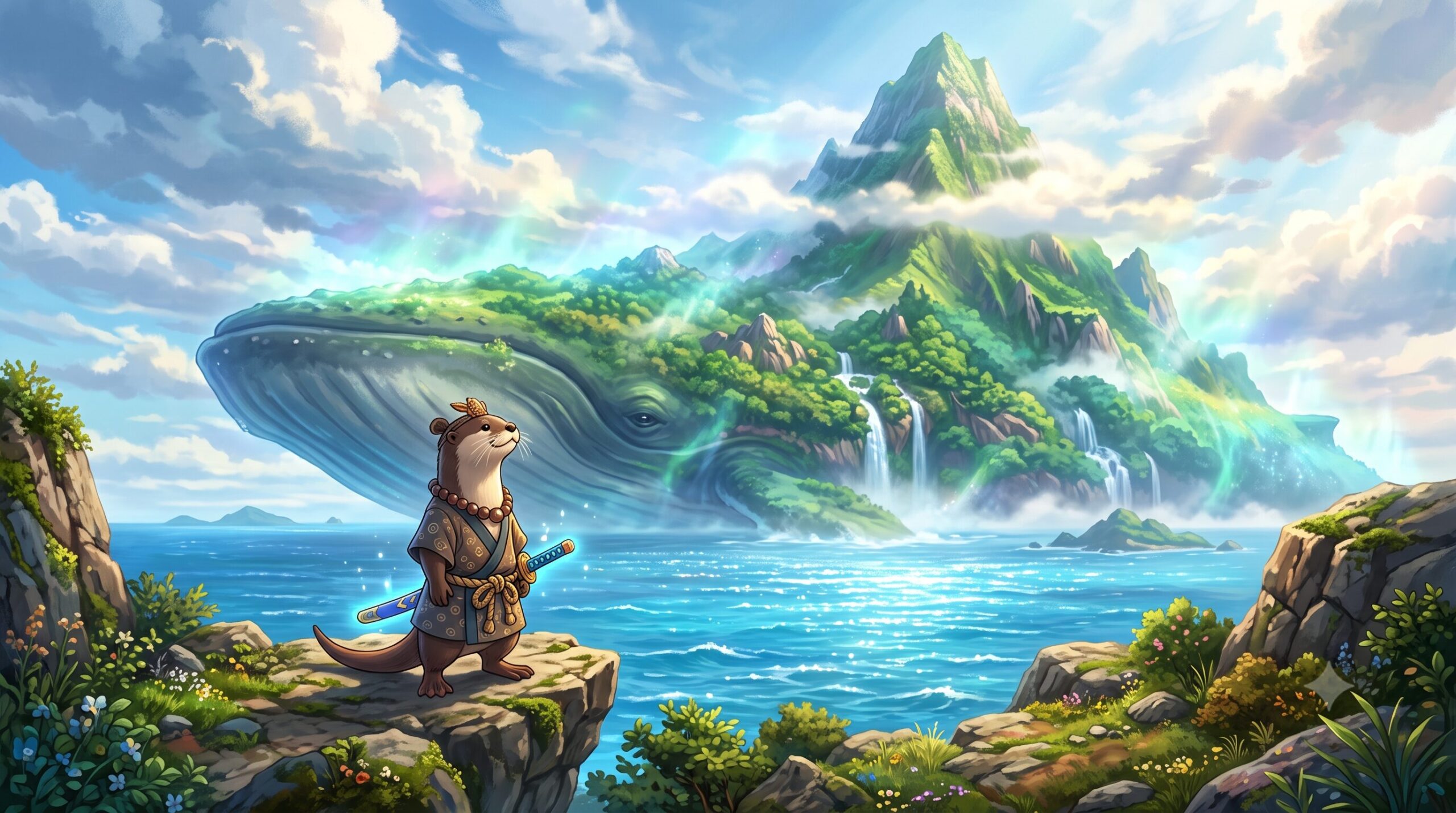
The Story of the Whale that Became a Mountain
Long ago, in the cold, deep seas of Hokkaido, there lived an unimaginably gigantic whale named “Shokina.” Its sheer size was completely beyond human comprehension. It is said that when it breached the surface, its massive head was hidden in the clouds of the sky, and as it swam through the ocean, its gigantic belly ruthlessly scraped and gouged the seabed. However, this “Shokina” was not merely large; it possessed a highly ferocious and destructive nature. It had a terrible habit of hunting down the small boats of human fishermen and sinking them one after another without mercy. The fishermen were constantly exposed to life-threatening danger, unable to reap the rich bounties of the sea, and found themselves completely at a loss.
Desperate and terrified, the humans prayed fervently to the powerful gods who ruled heaven and earth: “Please, we beg of you, vanquish the terrifying Shokina.” The gods felt pity for the trembling humans, yet, faced with Shokina’s colossal size and unmatched ferocity, the gods themselves were secretly terrified. Making various excuses such as “I have an unavoidable engagement today” or “My weapon is malfunctioning,” they evaded the responsibility, and absolutely none of the gods were willing to go and fight the beast.
Watching this cowardly and comical display was the Otter God. He laughed loudly at the timidity of the other deities and boldly declared, “If you’re all too scared, I will go. Whenever you wish, I will defeat it for you!” Armed with only a single sword hanging at his waist, the Otter God set off in high spirits to subdue the giant Shokina.
Upon reaching the rough seas, the Otter God immediately confronted Shokina. However, to Shokina, an otter was like a grain of rice, and the giant whale completely ignored him at first. Using his quick wits, the Otter God approached Shokina’s massive ear and began relentlessly chanting strange, irritating spells. Driven to frustration by this grating noise, Shokina finally flew into a blind rage and began chasing the Otter God with terrifying speed.
At first, the Otter God effortlessly dodged and darted between the waves, teasing the giant whale. However, just as he decided it was time to get serious and finish the monster off, he realized a fatal mistake. “Oh no, I don’t have my sword! Someone, lend me a sword!” he shouted at the top of his lungs toward the Mountain God on the shore. Incredibly, the clumsy and absent-minded Otter God had completely forgotten that he had a magnificent sword hanging right at his own waist.
With the enraged, gigantic Shokina closing in from behind, creating massive waves, the Otter God panicked and scrambled to escape. Seeing this, the Mountain God burst into roaring laughter and pointed out, “Hey! What are you talking about? You have a sword hanging on your waist right now!” Hearing this, the Otter God gasped, looked down at his waist, and finally remembered his weapon.
He immediately turned around and shouted, “STOP!” at the approaching beast. Miraculously, perhaps due to the power of the spell, Shokina froze perfectly in its tracks. Seizing that split-second opportunity, the Otter God drew the sword from his waist, gathered all his strength, and with a single almighty strike, sliced the gigantic Shokina cleanly in half.
Having successfully vanquished Shokina, the Otter God gifted the whale’s massive head to the Mountain God as a token of gratitude for reminding him about his sword. It is said that over many years, the head took deep root in the earth and eventually transformed into a magnificent mountain (Mt. Fumbe). As for the severed tail, the Otter God dragged it off somewhere, but true to his highly forgetful nature, he completely forgot where he left it.
Ever since this incident, people began the custom of tying a rope around their heads to prevent catching the Otter God’s severe forgetfulness. And it is said that even today, the Otter God can be heard wandering around, shouting as he searches for the sword he misplaced somewhere in the world.
Deep Analysis: The Humanity of Gods and the Power of Humor
This folktale conceals deep insights into human psychology that go far beyond a simple monster-slaying action fantasy. The first point to note is the highly “human-like” behavior of the gods. The sight of gods, who are supposed to possess absolute power, making excuses and running away in fear of the giant whale Shokina, realistically projects the fear and awe that ancient people held toward the overwhelming fury of Mother Nature. There is an underlying acknowledgment here that even the gods struggle against natural disasters and uncontrollable wild beasts.
Furthermore, it is highly unique that the hero of the story is not a supreme god of war, but the “Otter God.” An otter is by no means a strong or large animal, but it possesses the trait of moving swiftly and freely around the water. Instead of overpowering the beast with physical strength, he controls the enemy with spells (provocation), displays the comical flaw of “forgetting his own weapon,” and ultimately achieves victory through quick thinking and cooperation with the Mountain God.
This suggests that when humans face overwhelming natural threats, the greatest keys to breaking through dire situations are not brute force or military might, but wisdom, cooperation with others, and sometimes “laughter” and “humor.” The scene where the giant whale freezes at the command “Stop!” expresses the power of Kotodama (the spiritual power of words). The ancient belief that words harbor the power to control nature is brilliantly condensed into this comical scene.
Connection to Japanese Culture and Animism: Coexistence with Nature
“The Whale that Became a Mountain” is a story rooted in the mythology (Kamuy Yukar) of the Ainu people, the indigenous people of Hokkaido. The Ainu believed that a “Kamuy” (spirit or god) resides in absolutely everything in this world—animals, plants, natural phenomena like mountains and rivers, and even everyday tools and illnesses. This is the spirit of “Animism,” which flows continuously through the foundational layer of modern Japanese culture.
The otter and the mountain that appear in the story are depicted not merely as scenery or animals, but as gods with clear, distinct wills. The giant whale Shokina also exists as a symbol of savage natural energy (an evil god or demon). The dynamic ending, where the beast is defeated and transforms into a “mountain,” brilliantly represents the process by which violent natural forces are pacified and returned to the earth to become a rich, bountiful land that blesses the people. Here lies a profound understanding of the natural cycle, viewing the sea and the mountain not as divided entities, but as connected parts of one grand circle of life.
Furthermore, the conclusion—where the custom of “tying a rope around the head” was born to ward off the Otter God’s forgetfulness—is a classic example of Japanese folk culture, where mythological events are intimately tied to people’s daily habits, rituals, and magic. The story is packed with the wisdom of past generations, teaching us not simply to fear nature, but to feel a sense of familiarity with the gods and to coexist with them while embracing humor.
What Would You Do?
This story of a clumsy, highly forgetful Otter God triumphing over a giant whale with overwhelming power asks us many questions. It teaches us that it is not perfect beings, but those with weaknesses and flaws who can achieve great things by honestly accepting the help of others (like the Mountain God’s advice).
If you were faced with a colossal, seemingly unsolvable problem (your very own “Shokina”), would you run away in fear like the other gods? Or would you confront it with a bit of humor and wisdom, just like the Otter God?
The difficulties we face in our daily lives might also be a series of slightly comical events if we change our perspective. What is crucial is that you never forget the power you already possess (the sword at your waist) and that you listen carefully to the voices around you. What is the “Shokina” you are facing right now? And what kind of “sword” is hanging at your waist? I urge you to reflect on your own inner strength through this wonderful folktale.
Reference Links
- Read more Japanese Folktales: Japanese Folktale Series
- Reference Material: Manga Nippon Mukashibanashi Database “The Whale that Became a Mountain” (Japanese)
アイヌの神話とユーモアが交差する壮大な物語「山になった鯨」
昔話「山になった鯨」のストーリー
はるか昔、北海道の冷たく深い海には「しょきな」と呼ばれる信じられないほど巨大な鯨が住み着いていました。その大きさは人間の想像を絶するものでした。海面に姿を現せば、その巨大な頭は天の雲に隠れてしまい、海の中を泳げば、巨大な腹が海底を激しく削り取るほどだったと伝えられています。しかし、この「しょきな」はただ大きいだけではなく、非常に凶暴な性質を持っていました。漁に出た人間たちの小さな船を見つけては、次々と容赦なく沈めてしまうという悪さを繰り返していたのです。漁師たちは命の危険に晒され、豊かな海の恵みを得ることができず、途方に暮れていました。
困り果てた人間たちは、天地を司る強大な神々に「どうか、あの恐ろしいしょきなを退治してください」と必死に祈りを捧げました。神々は震え上がる人間たちを哀れに思いましたが、しょきなのあまりの巨大さと凶暴さを前にして、実は神々自身も恐れをなしていたのです。「今日は外せない用事がある」「武器の調子がおかしい」などと様々な理由をつけてはぐらかし、誰一として退治に行きたがりませんでした。
その滑稽な様子を傍で見ていたのが、カワウソの神様でした。カワウソの神は他の神々の臆病な姿を見て大声で笑い飛ばし、「それなら俺が行ってやる。お望みとあらばいつでも退治してやるぞ」と豪語しました。そして、腰に剣を一本だけぶら下げて、意気揚々と巨大なしょきな退治へと出かけていきました。
荒波の海に出たカワウソの神は、さっそくしょきなに立ち向かいます。しかし、しょきなにとってカワウソなど米粒のような存在であり、最初は全く相手にしませんでした。そこでカワウソの神は機転を利かせ、しょきなの巨大な耳元に近づき、ごちゃごちゃと奇妙な呪文を唱え続けました。この耳障りな音にイライラしたしょきなはついに激怒し、カワウソの神を猛烈な勢いで追いかけ始めました。
カワウソの神は最初、しょきなをからかいながら波間をあっちこっちへと余裕で逃げ回っていました。しかし、そろそろ本気を出して退治してやろうと決意した瞬間、致命的なミスに気づきます。「大変だ、剣がない!誰か剣を貸してくれー!」と、陸にいる山の神に向かって大声で叫びました。なんと、おっちょこちょいなカワウソの神は、自分の腰に立派な剣をぶら下げていることをすっかり忘れてしまっていたのです。
背後からは怒り狂う巨大なしょきなが、大波を立てて迫ってきます。焦りに焦って逃げ惑うカワウソの神を見た山の神は、「おい、お前の腰に剣がぶらさがっているじゃないか!」と大笑いしながら教えてやりました。カワウソの神はそれを聞いてハッと自分の腰を見て、ようやく武器の存在を思い出しました。
すぐさま振り返り、迫り来るしょきなに向かって「ストップ!」と大声を上げました。すると不思議なことに、呪文の力なのか、しょきなはピタリと動きを止めたのです。その一瞬の隙を見逃さず、カワウソの神は腰の剣を抜き放ち、渾身の力を込めて一撃で巨大なしょきなを真っ二つに切り裂きました。
見事にしょきなを退治したカワウソの神は、剣のことを教えてくれたお礼として、しょきなの巨大な頭を山の神に贈りました。その頭は長い年月を経て大地に深く根付き、やがて雄大な山(フンベ山)になったと伝えられています。一方、切り離されたしっぽの方は、カワウソの神がどこかへ引っ張っていったそうですが、持ち前の物忘れの激しさゆえに、どこに置いてきたのかすっかり忘れてしまったということです。
この一件以来、人々はカワウソの神のひどい物忘れが自分たちにうつらないよう、頭に縄を巻くという風習を持つようになりました。そして今でも、カワウソの神は自分がどこかに置き忘れた剣を探して、あちこちで叫んで回っていると言われています。
物語の深い考察:神々の人間らしさとユーモアの力
この昔話には、単なる巨大生物退治のアクション・ファンタジーには収まらない、極めて深い人間心理の洞察が隠されています。まず注目すべきは、「神々」の非常に人間臭い振る舞いです。絶対的な力を持つはずの神々が、巨大な鯨である「しょきな」を恐れて言い訳をして逃げ回る姿は、古代の人々が抱いていた「大自然の猛威に対する恐怖と畏敬の念」をリアルに投影しています。自然災害やコントロール不可能な野生動物の前では、神々でさえも手を焼くという認識がここにはあります。
そして、物語の英雄となるのが最強の武神などではなく「カワウソの神」である点も非常にユニークです。カワウソは決して強く大きな動物ではありませんが、すばしっこく水辺を自由に動き回る特性を持っています。力で圧倒するのではなく、呪文(挑発)で相手をコントロールし、最終的には「自分の武器を忘れる」という滑稽さを見せながらも、機転と山の神との連携によって勝利を収めます。
これは、人間が圧倒的な自然の脅威に立ち向かう際、腕力や武力ではなく、知恵や他者との連携、そして時には「笑い」や「ユーモア」が状況を打破する最大の鍵になることを示唆しています。「ストップ!」という言葉で巨大な鯨が止まる場面には、言霊(ことだま)の力が表現されており、言葉には自然をコントロールする力が宿っているという古代の信仰が、このコミカルなシーンに凝縮されています。
日本文化・アニミズムとの繋がり:自然との共生
「山になった鯨」は、北海道の先住民族であるアイヌの人々の神話(カムイユカラ)にルーツを持つ物語です。アイヌの人々は、動物や植物、山や川などの自然物、さらには日常の道具や病気に至るまで、この世のあらゆるものに「カムイ(神)」が宿っていると信じていました。これが、現代の日本文化の基層にも脈々と流れる「アニミズム(精霊信仰)」の精神です。
物語に登場するカワウソや山も、単なる風景や動物ではなく、明確な意思を持った神として描かれています。巨大な鯨「しょきな」もまた、荒ぶる自然エネルギーの象徴(悪神や魔物)として存在します。それが退治されて「山」へと姿を変えるというダイナミックな結末は、荒々しい自然の力が鎮められ、人々に恩恵をもたらす豊かな大地へと還元されるプロセスを見事に表しています。海と山が分断されたものではなく、ひとつの大きな生命のサイクルとして繋がっているという自然界の循環に対する深い理解がここにはあります。
さらに、カワウソの神の物忘れを防ぐために「頭に縄を巻く」という風習が生まれたという結末は、神話の出来事が人々の日常的な習慣、儀式、あるいは呪術と密接に結びついている日本の民俗文化の典型的な形です。自然をただ恐れるだけでなく、物語を通して神々に親しみを持ち、ユーモアを交えながら共生していく先人たちの知恵が、この物語にはたっぷりと詰まっています。
あなたならどうしますか?
圧倒的な力を持つ巨大な鯨に対して、おっちょこちょいで物忘れの激しいカワウソの神が勝利するというこの物語は、私たちに多くのことを問いかけています。完璧な存在ではなく、弱点や欠点を持つ者こそが、他者の助け(山の神のアドバイス)を素直に受け入れることで偉業を成し遂げることができるのです。
もしあなたが、到底解決不可能に見える巨大な問題(あなたにとっての「しょきな」)に直面したとき、他の神々のように恐れて逃げ出しますか?それともカワウソの神のように、少しのユーモアと知恵を持って立ち向かいますか?
私たちが日常で直面する困難も、見方を変えれば、クスッと笑えるような出来事の連続かもしれません。大切なのは、自分がすでに持っている力(腰の剣)を決して忘れないこと、そして周りの声にしっかりと耳を傾けることです。あなたが今直面している「しょきな」は何ですか?そして、あなたの腰にはどんな「剣」がぶら下がっているでしょうか?ぜひ、この物語を通じて、自分自身の内なる力を見つめ直してみてください。
参考リンク
- 日本の昔話をもっと読む:Japanese Folktale Series
- 参考資料:まんが日本昔ばなし〜データベース〜「山になった鯨」
コメント