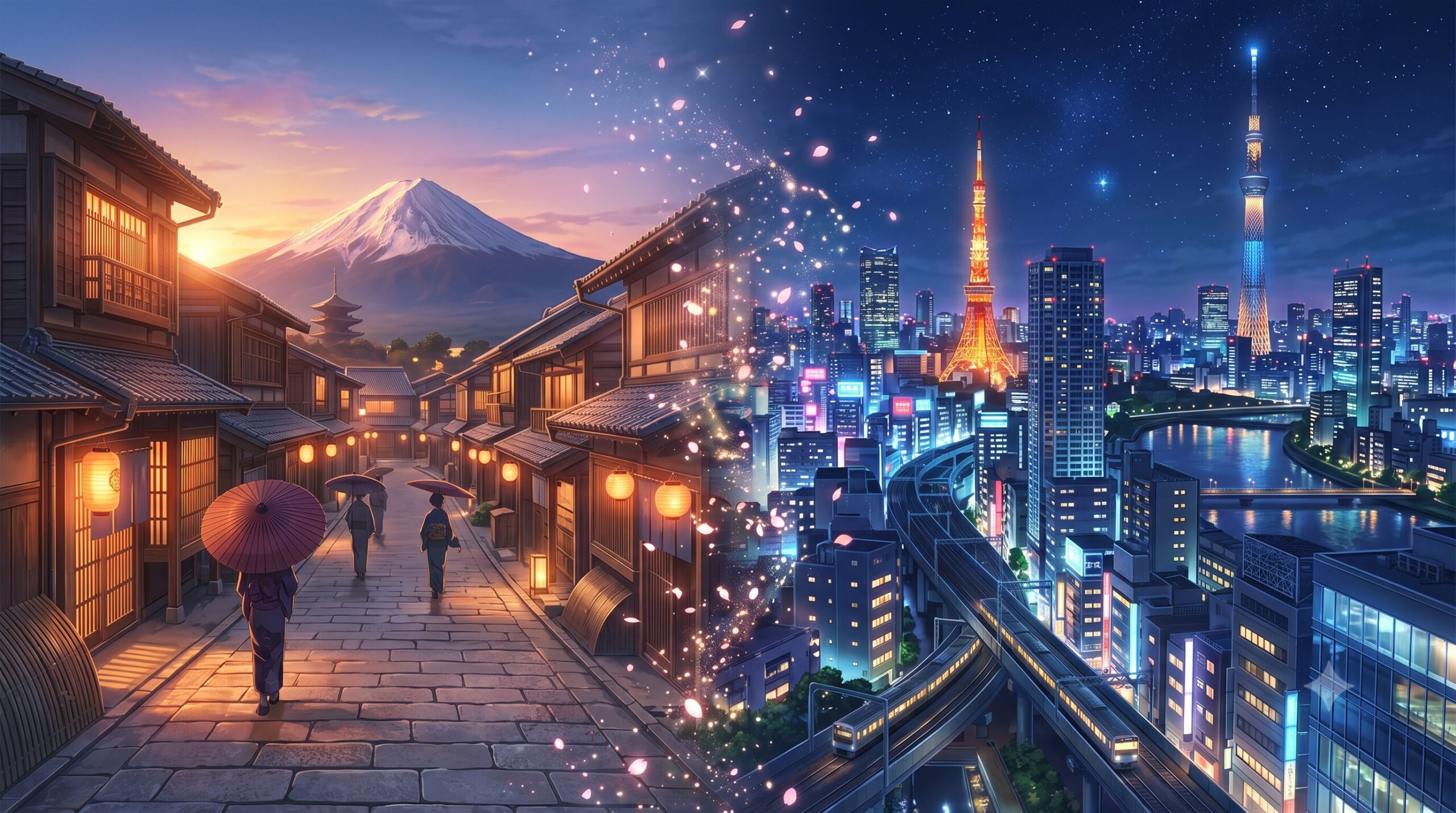
To truly understand Japan, one cannot ignore the history of its capital, Tokyo. Every year, July 17th is designated as “Tokyo Day” in Japan. This is not just a simple anniversary; it is a critical turning point that marked the dawn of Japan’s modernization. In this article, we will unravel exactly what happened on this day in 1868, how the name “Edo” was reborn as “Tokyo,” and the profound impact this transformation had on Japanese culture.
July 17, 1868: The Imperial Rescript and the Birth of “Tokyo”
Tokyo, the current capital of Japan, was once known as “Edo.” For about 260 years, ever since Tokugawa Ieyasu established the Edo Shogunate in 1603, Edo flourished as the undisputed center of Japanese politics and culture. At its peak, Edo was one of the largest cities in the world, with a population exceeding one million, and it fostered a unique and rich townsman culture.
However, in the late 19th century, Japan found itself amidst massive global and internal shifts. Pressured by Western powers and driven by a domestic thirst for modernization, the long-standing samurai government (the Shogunate) collapsed, giving way to a new government centered around the Emperor. This historical event is known as the Meiji Restoration.
Then, on July 17, 1868 (according to the lunar calendar of the 4th year of the Keio era), Emperor Meiji issued an Imperial Rescript officially renaming the city from “Edo” to “Tokyo.” The name “Tokyo” literally means “Eastern Capital,” contrasting with the “Western Capital” of Kyoto. This renaming was not merely a geographical update; it was a massive national undertaking designed to strongly signal the beginning of a new era both domestically and internationally.
Decoding Japanese Culture through “Tokyo Day”: Destruction, Creation, and “Fusion”
The most significant cultural trait we can read from the transition from Edo to Tokyo is the Japanese philosophy of “not completely destroying the old, but evolving by fusing it with the new.”
The Meiji government actively adopted superior Western technologies and systems, rapidly transforming Tokyo into a modernized, Western-style city. Brick buildings lined the streets, railways were constructed, and people’s attire shifted from traditional kimonos to Western clothes. However, Tokyo did not discard all of its Edo period heritage.
If you walk through modern Tokyo today, you can witness the traces of this fusion everywhere. You will find small shrines dating back to the Edo period standing quietly at the foot of towering skyscrapers, and traditional Japanese gardens and old-town neighborhoods nestled just behind cutting-edge fashion streets. The urban layout of Edo—the network of roads and districts—still serves as the foundation for modern Tokyo’s complex city structure. Furthermore, staples of modern Japanese cuisine like sushi, tempura, and soba were perfected as “fast food” during the Edo period and have been passed down as integral parts of Tokyo’s culture.
Therefore, “Tokyo Day” stands as a symbol of Wakon Yosai (Japanese spirit with Western learning). It represents the Japanese ability to flexibly embrace new external cultures while never losing their fundamental spirit and traditions, continuously creating new culture in their own unique way.
The Trajectory to Modern “TOKYO” and Beyond
Since that day in 1868, Tokyo has overcome numerous severe trials. The city was reduced to ashes twice: first by the Great Kanto Earthquake of 1923, and again by the Tokyo air raids of 1945. Yet, each time, Tokyo demonstrated astonishing resilience, rising from the ashes like a phoenix to become an even more modern and massive megalopolis.
Today, Tokyo is a captivating city that attracts people from all over the globe. It is the epicenter of pop culture such as anime, manga, and video games; a city gathering the world’s finest gastronomy; and simultaneously a place where ancient history and traditions breathe. Reflecting on the grand historical transition from Edo to Tokyo on July 17th’s “Tokyo Day” is the best way to understand the very journey and identity of the nation of Japan.
Which “Tokyo” Do You Want to Experience?
Do you want to stroll through Asakusa or Kanda, where the historical atmosphere of Edo still lingers, and immerse yourself in the world of Ukiyo-e? Or would you prefer to feel the pulse of Japan’s cutting-edge pop culture and technology in Shibuya, Akihabara, or Shinjuku? Tokyo is a remarkably profound city that shows a different face to every visitor. After reading this article, which aspect of Tokyo do you find most appealing? If you have the opportunity to visit Japan next, where in Tokyo would you go, and what would you want to feel? Please let us know your thoughts!
Reference Links
- External Link (Tokyo Metropolitan Government Official History Page): History of Tokyo
- External Link (National Archives of Japan): National Archives of Japan
- Internal Link: What’s Today’s Special Day Series
7月17日は「東京の日」:江戸から東京へ、日本の歴史が大きく動いた瞬間
日本という国を深く知る上で、首都「東京」の歴史は避けて通れません。毎年7月17日は、日本において「東京の日」に制定されています。これは単なる記念日ではなく、日本の近代化が幕を開けた非常に重要な転換点です。本記事では、1868年のこの日に一体何が起きたのか、そして「江戸」という名前がどのようにして「東京」へと生まれ変わったのか、その歴史的背景と日本文化への深い影響を詳しく紐解いていきます。
1868年7月17日:明治天皇の詔書と「東京」の誕生
現在の日本の首都である東京は、かつて「江戸」と呼ばれていました。1603年に徳川家康が江戸幕府を開いて以来、約260年間にわたり、江戸は日本の政治と文化の中心地として栄華を極めました。当時の江戸は、人口100万人を超える世界有数の巨大都市であり、独自の豊かな町人文化が花開いていました。
しかし、19世紀後半、日本は大きな時代のうねりの中にありました。欧米列強の圧力と国内の近代化への渇望から、長らく続いた武家政権(幕府)が倒れ、天皇を中心とする新しい政府が誕生しました。これが「明治維新」です。
そして、1868年(慶応4年)の旧暦7月17日、明治天皇により「江戸ヲ称シテ東京ト為スノ詔書(えどをしょうしてとうきょうとなすのしょうしょ)」が発せられました。この詔書により、長年親しまれた「江戸」という名前は公式に「東京」へと改められたのです。「東京」という名称には、「西の都(京都)」に対して「東の都」という意味が込められています。この改称は、単なる地名の変更にとどまらず、新しい時代の幕開けを国内外に強く印象付けるための国家的な大事業でした。
「東京の日」から読み解く日本文化:破壊と創造、そして「融合」
「江戸」から「東京」への変化から読み取れる日本文化の最大の特質は、「古いものを完全に破壊するのではなく、新しいものと融合させて進化する」という点にあります。
明治政府は、西洋の優れた技術や制度を積極的に取り入れ、東京を近代的な西洋風の都市へと急速に改造していきました。レンガ造りの洋館が建ち並び、鉄道が敷かれ、人々の服装も着物から洋服へと変化していきました。しかし、東京は江戸時代の遺産をすべて捨て去ったわけではありません。
現在の東京を歩けば、その融合の軌跡を至る所で目にすることができます。高層ビル群の足元にひっそりと佇む江戸時代から続く小さな神社、最先端のファッションストリートのすぐ裏手にある伝統的な日本庭園や下町の風景。江戸の町割り(道路や区画のレイアウト)は、現代の東京の複雑な都市構造の基盤として今も生き続けています。また、寿司、天ぷら、蕎麦といった現代の日本食の定番も、江戸時代にファストフードとして完成し、東京の文化として受け継がれてきたものです。
「東京の日」は、日本人が外からの新しい文化を柔軟に受け入れつつも、自身の根底にある精神や伝統を失わず、独自の形で新しい文化を創造し続ける「和魂洋才(わこんようさい:日本固有の精神を保ちつつ、西洋の優れた学問や知識を吸収すること)」の象徴と言えるでしょう。
現代の「TOKYO」への軌跡と未来
1868年のあの日から、東京は度重なる試練を乗り越えてきました。1923年の関東大震災、そして1945年の東京大空襲により、街は二度も灰燼に帰しました。しかし、そのたびに東京は驚異的な回復力(レジリエンス)を見せ、より近代的な巨大メガロポリスとして不死鳥のように蘇りました。
今日、東京は世界中から人々を惹きつける魅力的な都市です。アニメや漫画、ゲームなどのポップカルチャーの発信地であり、世界最高峰の美食が集まる街であり、同時に古い歴史と伝統が息づく街でもあります。7月17日の「東京の日」に、江戸から東京への壮大な歴史の変遷に思いを馳せることは、日本という国そのものの歩みとアイデンティティを理解する最良の手段です。
あなたなら、どの「東京」を体験したいですか?
歴史ある江戸の風情を残す浅草や神田を歩き、浮世絵の世界に浸りますか?それとも、渋谷や秋葉原、新宿で、日本の最先端のポップカルチャーやテクノロジーの息吹を感じたいですか?東京は、訪れる人の数だけ異なる顔を見せてくれる懐の深い都市です。この記事を読んで、あなたが最も魅力を感じた「東京の姿」はどれでしょうか?もし次に日本を訪れる機会があるなら、あなたは東京のどこへ行き、何を感じたいですか?ぜひ、あなたの考えを聞かせてください。
参考リンク
- 外部リンク(東京都公式 歴史紹介ページ):東京都の歴史 (History of Tokyo)
- 外部リンク(国立公文書館):国立公文書館 (National Archives of Japan)
- 内部リンク:What’s Today’s Special Day Series

コメント