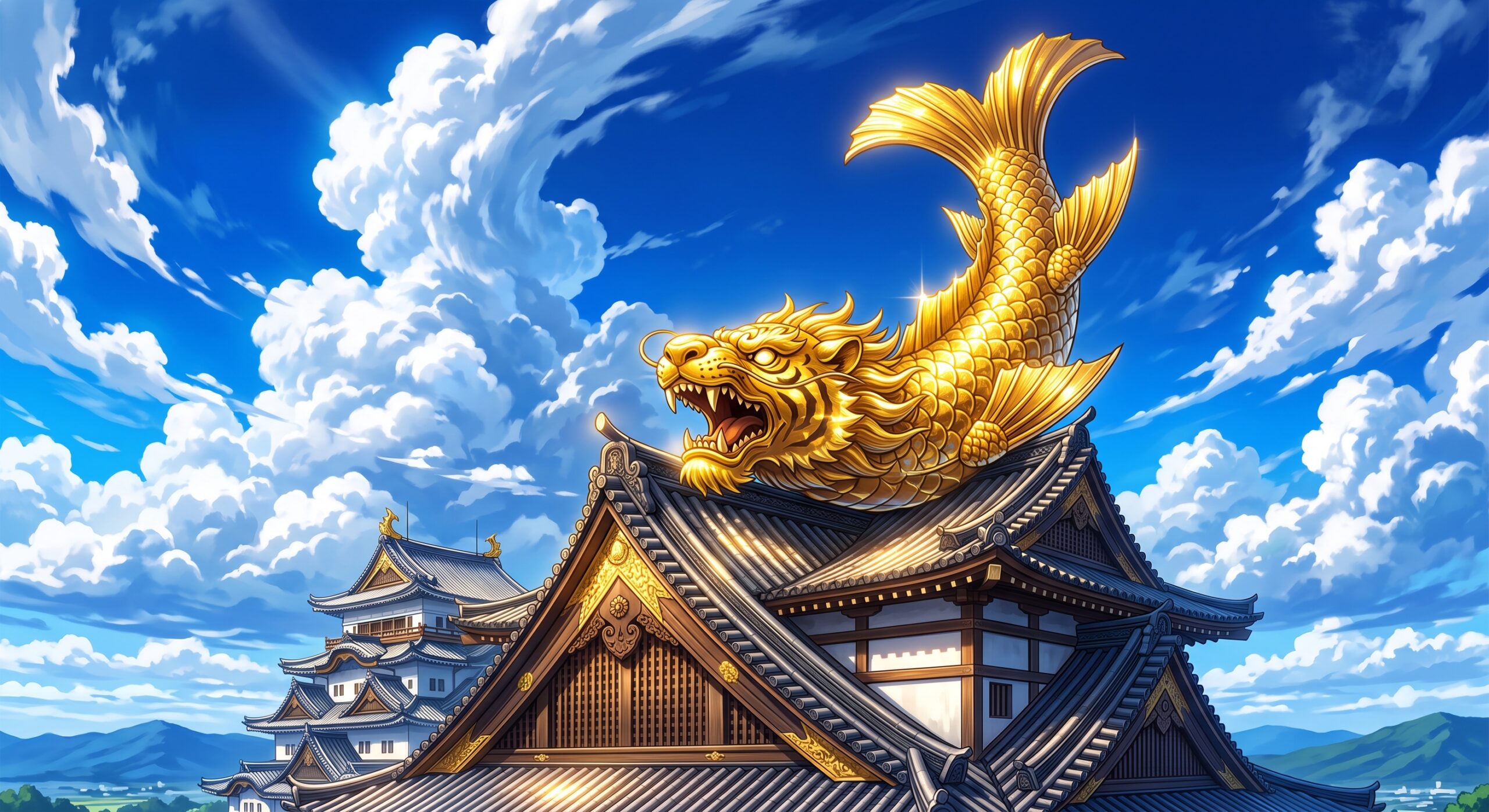
Every day on the Japanese calendar is marked by unique anniversaries. August 22 is “Kin Shachi Day” (Golden Shachihoko Day), a day dedicated to honoring the golden shachihoko, the iconic symbol of Nagoya City, Aichi Prefecture—often considered the central hub of Japan. This anniversary was established by Yoshihiko Kawamura, an acupuncturist and osteopath in Nagoya, with the aim of energizing the local community through the power of these golden guardians.
Why August 22? There is a clear logic behind the date. The number “8” (August) represents Nagoya’s city emblem, the “Maruhachi” (a circle enclosing the kanji for eight). The number “22” was chosen because the curved, distinctive silhouette of the shachihoko resembles the number “2”, and there are exactly “2” shachihoko (one male, one female) adorning the roof of the castle’s main keep.
- What is a Shachihoko? The Mythical Sea Beast Protecting the Castle
- The Golden Shachi Crosses the Ocean: From Symbol of Power to Citizen’s Pride
- Rising from the Ashes: Japan’s Indomitable Spirit
- How Will You Preserve Your History?
- 8月22日は「金シャチの日」:黄金に輝く日本の守護神
- しゃちほことは何か?城を火災から守る架空の海獣
- 海を渡った金シャチ:権力の象徴から市民の誇りへ
- 灰燼からの復活:日本の不屈の精神
- あなたは歴史をどう受け継ぎますか?
What is a Shachihoko? The Mythical Sea Beast Protecting the Castle
A “shachihoko” is a mythical creature used in Japanese castle architecture as a roof ornament. It features the head of a tiger, the body of a carp, sharp spikes along its back, and a tail fin that always points high toward the sky. According to Japanese legend, the shachihoko can spout massive amounts of water from its mouth. Therefore, they were placed at the very top of roofs as “guardian deities against fire”—the greatest threat to wooden structures.
When Nagoya Castle was built in 1612 by the order of Tokugawa Ieyasu, the warlord who unified Japan, dazzling golden shachihoko were mounted on the massive main keep as the ultimate symbol of authority. The sheer volume of gold used served to demonstrate the overwhelming financial power and dominance of the Owari Tokugawa clan to the entire nation.
The Golden Shachi Crosses the Ocean: From Symbol of Power to Citizen’s Pride
These golden shachihoko carry an extraordinary and dramatic history that goes far beyond mere decoration. During the 1870s, as Japan transitioned from the Edo period to the Meiji era, older castles nationwide—including Nagoya Castle—faced the threat of demolition due to the new government’s modernization policies. The golden shachihoko were taken down and destined to be melted into gold bullion.
However, thanks to individuals who recognized their immense artistic and historical value, the golden shachihoko were miraculously preserved. Remarkably, in 1873, the female golden shachihoko crossed the ocean to be exhibited at the Vienna World’s Fair in Austria. Positioned at the entrance of the Japanese pavilion, this shining golden, mysterious sculpture from the East deeply fascinated the European audience and garnered immense praise.
Following this massive success in Vienna, passionate citizens of Nagoya launched a campaign demanding, “Return our symbol to the castle!” Their voices moved the government, and in 1879, the golden shachihoko were restored to the top of Nagoya Castle. This was a historic turning point where the shachihoko evolved from being the “property of the ruling power” to a “beloved symbol of civic pride.”
Rising from the Ashes: Japan’s Indomitable Spirit
Tragically, disaster struck again. In 1945, during the intense air raids of World War II, Nagoya Castle and its main keep were entirely consumed by fire, reducing the original golden shachihoko completely to ashes. Yet, the people of Nagoya refused to give up. Fueled by the strong sentiment that “Nagoya without the golden shachihoko is not Nagoya,” massive donations were collected from all over the country. In 1959, the main keep was rebuilt, and the second-generation golden shachihoko were raised to shine against the blue sky once more.
August 22, Kin Shachi Day, is not merely a day to celebrate golden statues. It is a profoundly meaningful day to understand Japan’s “indomitable spirit” and “deep love for community”—the ability to rise again, no matter how many crises occur, and reclaim one’s culture and identity.
How Will You Preserve Your History?
What was once created to flaunt military power has transcended time to become a beloved symbol of peace and reconstruction. The golden shachihoko of Nagoya Castle teach us how cultural heritage can deeply connect with the hearts of the people.
How do you feel after reading this story? Does your town or country have a symbol that has survived through history, changing its form but remaining a beloved source of pride? If you ever have the chance to visit Japan, be sure to visit Nagoya Castle and look up at these golden guardians shining in the sky.
If you want to discover more about Japan’s special days, check out this category:
What’s Today’s Special Day Series
To learn more about the deep history of Nagoya Castle, please visit their official website:
Nagoya Castle Official Website
8月22日は「金シャチの日」:黄金に輝く日本の守護神
日本のカレンダーには、毎日数多くのユニークな記念日が制定されています。8月22日は、日本の中心部に位置する愛知県名古屋市のシンボル、「金のしゃちほこ(金シャチ)」を称える「金シャチの日」です。この記念日は、名古屋市で鍼灸接骨院を営む川村芳彦氏によって、金シャチにあやかり地域を元気にすることを目的として制定されました。
なぜ8月22日なのでしょうか。それには明確な理由があります。まず「8」は、名古屋市の市章である「まるはち(八)」に由来します。そして「22」は、しゃちほこの反り返った独特のシルエットが数字の「2」に似ていること、さらに名古屋城の巨大な大天守の屋根には雄と雌、左右「2」つのしゃちほこが対になって飾られていることにちなんでいます。
しゃちほことは何か?城を火災から守る架空の海獣
そもそも「しゃちほこ(鯱)」とは、日本の伝統的な城郭建築の屋根を飾る空想上の生き物です。顔は虎に似て、体は魚(鯉)、背中には鋭いトゲを持ち、尾びれを常に空に向けて高く反らせています。日本の伝説では、しゃちほこは口から大量の水を吐き出すことができるとされ、木造建築にとって最大の脅威である「火災」から建物を守るための「火除けの守り神」として屋根の頂に設置されました。
1612年、天下統一を果たした徳川家康の命により名古屋城が築城された際、その巨大な天守閣の頂上に、権力の象徴として眩いばかりの「金のしゃちほこ」が掲げられました。使用された金の量は莫大であり、尾張徳川家の圧倒的な財力と支配力を全国に示す役割を果たしました。
海を渡った金シャチ:権力の象徴から市民の誇りへ
この金シャチには、単なる装飾品に留まらない、数奇で壮大なストーリーがあります。時代が江戸から明治へと移り変わる1870年代、新政府の近代化政策により、名古屋城を含む全国の古い城は取り壊しの危機に瀕しました。金シャチも天守閣から降ろされ、金塊として鋳潰される運命にありました。
しかし、その高い芸術性と歴史的価値に注目した人々により、金シャチは奇跡的に保存されます。そしてなんと、1873年(明治6年)にオーストリアで開催されたウィーン万国博覧会において、雌の金シャチが海を渡り、日本館の入り口に展示されたのです。黄金に輝く東洋の神秘的な彫刻はヨーロッパの人々を熱狂させ、大絶賛を浴びました。
ウィーンで大成功を収めた後、地元名古屋の市民たちから「我々のシンボルを城へ返してほしい」という熱烈な返還運動が起こりました。その声は政府を動かし、1879年、金シャチは再び名古屋城の天守閣へと戻されました。これは、金シャチが「時の権力者の所有物」から、「市民が愛し、誇りを持つ地域のシンボル」へと生まれ変わった歴史的な瞬間です。
灰燼からの復活:日本の不屈の精神
しかし、悲劇は再び訪れます。1945年、第二次世界大戦の激しい空襲により、名古屋城は天守閣もろとも全焼し、初代の金シャチは完全に灰となって消滅しました。それでも、名古屋の人々は決して諦めませんでした。「金シャチのない名古屋は名古屋ではない」という強い思いのもと、全国から多額の寄付が集まりました。そして1959年、天守閣が再建され、現在の2代目金シャチが再び青空に輝くこととなったのです。
8月22日の「金シャチの日」は、単なる黄金の像を祝う日ではありません。何度危機に直面しても、その度に立ち上がり、自分たちの文化とアイデンティティを取り戻してきた日本の「不屈の精神」と「地域への深い愛情」を読み解くことができる、非常に意義深い日なのです。
あなたは歴史をどう受け継ぎますか?
軍事力の誇示として作られたものが、時代を超えて人々に愛される平和と復興のシンボルへと進化する。名古屋城の金シャチは、文化財がいかにして人々の心と結びつくかを私たちに教えてくれます。
この記事を読んで、あなたはどう感じましたか?あなたの住む町や国にも、時代を超えて形を変えながらも、人々の誇りとして愛され続けているシンボルはありますか?もし日本を訪れる機会があれば、ぜひ名古屋城へ足を運び、青空に輝く黄金の守護神を見上げてみてください。
もっと日本の特別な日について知りたい方は、こちらのカテゴリーをご覧ください。
What’s Today’s Special Day Series
名古屋城の歴史についてさらに詳しく知るには、公式ウェブサイトをご確認ください。
名古屋城公式ウェブサイト(Nagoya Castle Official Website)

コメント