Summer in Japan is not just about the heat. It is a deeply spiritual time when the paths of the living and the departed briefly cross. August 13th marks the day when “Mukaebi” (welcoming fires) are lit across Japan, signaling the beginning of “Obon,” a profound traditional Japanese event.
What is Mukaebi? The Intersection of History and Culture
Obon (formally Urabon’e) is a period when the spirits of ancestors return from the pure land (the afterlife) to our world. It originated from a beautiful fusion of Buddhist teachings and ancient Japanese ancestor worship. It is generally held from August 13th to 16th (or in July in some regions).
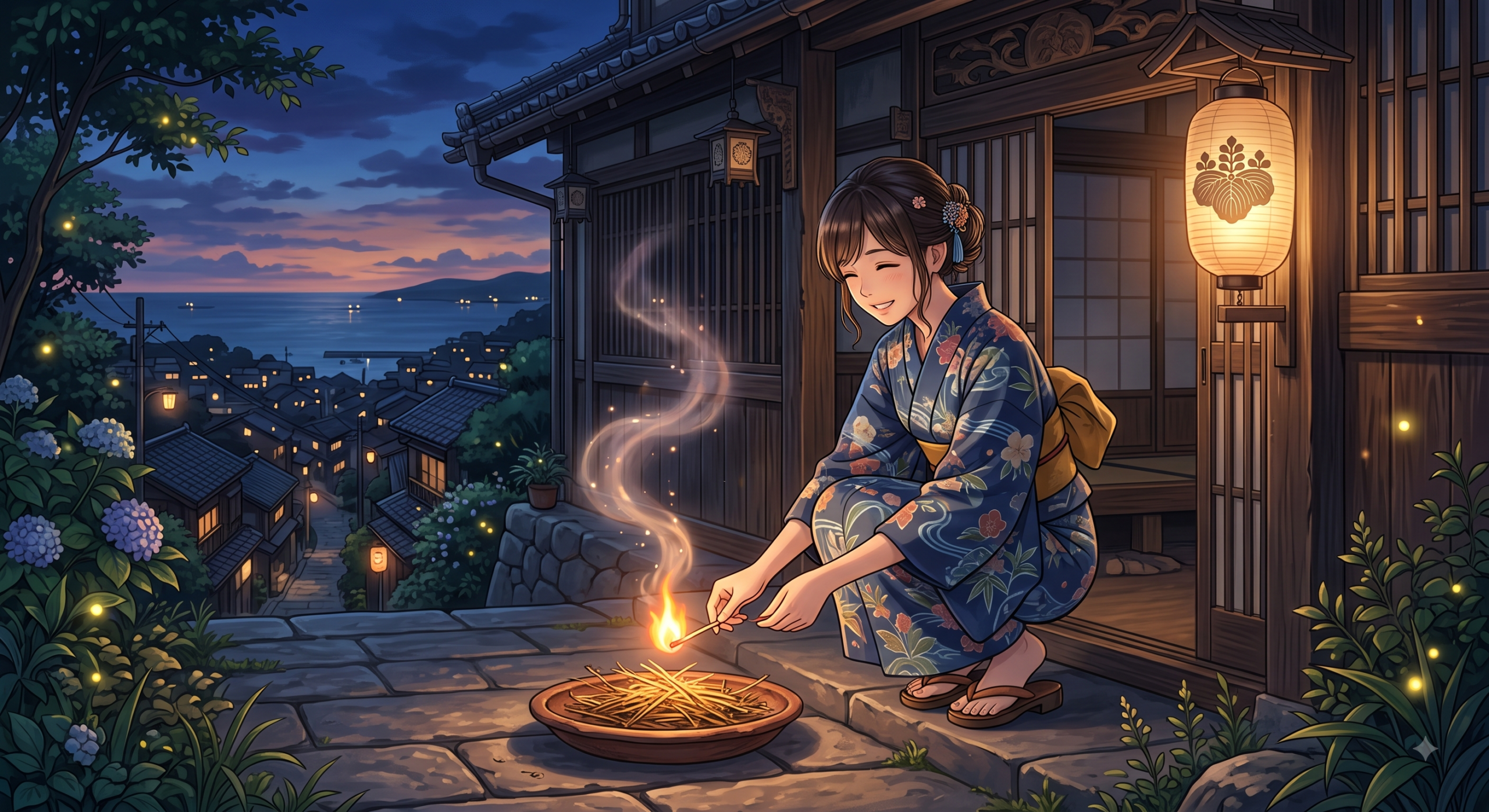
At dusk on August 13th, Japanese families light small fires using “ogara” (peeled hemp reeds) in a flat, unglazed clay dish called a “horoku” at the entrance or gate of their homes. This is the “Mukaebi.” It is believed that the spirits of the ancestors ride the rising smoke of the burning ogara, allowing them to return home without getting lost. The small flame flickering quietly in the dark is a warm sign of the family’s welcome.
Spirits Crossing the Sea: A Tale of Ozaki and the Gosan no Kiri Crest
Let us look into a specific scene from a Japanese summer.
Ozaki is a quiet coastal town facing the Seto Inland Sea. Along with the scent of the tide, the evening breeze brings a slight coolness. Hanging from the eaves of an old wooden house is a paper lantern, radiating a soft light and distinctly displaying the family crest, the “Gosan no Kiri” (five-and-three paulownia).
At the entrance of the house, the family gathers closely and lights the ogara on the clay dish. With a small crackling sound, white smoke rises straight up into the summer night sky.
“May they find their way home to us again this year.”
The smoke rides the sea breeze, mingling with the sound of the waves. The ancestral spirits cross the sea of Ozaki, using the light of the Gosan no Kiri lantern and the smoke of the Mukaebi as their guide, walking with sure steps toward the home where their beloved family waits. This is by no means a frightening event; rather, it is a warm, joyous reunion, much like family members living far away returning home for a summer vacation.
The Essence of Japanese Culture Understood Through Mukaebi
Through the tradition of Mukaebi, one can understand the Japanese view of life and death, as well as the deep bonds of family. Unlike Western Halloween, where spirits of the dead are sometimes feared or driven away, in Japan, the departed are protective presences always watching over the family. Obon is a time dedicated to “entertaining” and welcoming them.
We exist here and now because of an unbroken relay of life passed down from countless ancestors. When gazing at the flame of the Mukaebi, Japanese people reflect on their roots and offer gratitude for the life they live today. Paying respect to the unseen and spending time together—this is the very spirit of harmony and gratitude that flows at the foundation of Japanese culture.
A Question for You
I have a question for you, reading this article today.
Does your country or culture have a tradition of remembering and spending time with departed loved ones or ancestors? If you were in Japan during this summer season, who would you be thinking of as you light this small welcoming fire?
Please hold those thoughts close to your heart and feel the beautiful summer nights of Japan.
Discover More About Japanese Traditions
If you would like to learn more about Obon and other traditional Japanese events, please visit the links below.
- External Reference (English): Japan-Guide: Obon
- Other Special Days on this Blog: Read more in the “What’s Today’s Special Day” Series
8月13日は迎え火:日本の美しい夏の風物詩「お盆」の始まり
日本の夏は、ただ暑いだけではありません。そこには、生者と死者が一時的に交差する、深く、そして美しい精神的な時間が流れています。8月13日は、日本全国で「迎え火(Mukaebi)」が焚かれる日。日本の伝統的な行事である「お盆」の幕開けです。
迎え火とは何か?歴史と文化の交差点
お盆(正式には盂蘭盆会 – Urabon’e)は、祖先の霊が浄土(あの世)から私たちの住むこの世へと帰ってくる期間を指します。仏教の教えと、日本古来の祖先崇拝が融合して生まれました。一般的に8月13日から16日(地域によっては7月)に行われます。
8月13日の夕暮れ時、日本の家族は家の玄関先や門口で、焙烙(ほうろく)と呼ばれる素焼きの平皿の上で、オガラ(皮を剥いだ麻の茎)に火を灯します。これが「迎え火」です。燃え上がるオガラの煙に乗って、祖先の霊は迷うことなく家族の元へと帰ってくることができると信じられています。暗闇の中で静かに揺れる小さな炎は、家族の温かい歓迎の印なのです。
海を越えて帰る魂:尾崎の海と五三の桐の物語
ここで、ある日本の風景を覗いてみましょう。
瀬戸内海に面した静かな海辺の町、尾崎。潮の香りと共に、夕暮れの風が少しだけ涼しさを運んできます。古い木造家屋の軒先には、家紋である「五三の桐(Gosan no Kiri)」がくっきりと描かれた盆提灯が、柔らかな光を放ちながら吊るされています。
家の入り口では、家族が身を寄せ合い、素焼きの皿の上でオガラに火をつけました。パチパチという小さな音と共に、白い煙が夏の夜空へと真っ直ぐに立ち昇ります。
「今年も、迷わずに帰ってこられますように」
煙は海風に乗り、波の音と交じり合います。祖先の霊たちは、この尾崎の海を越え、五三の桐の提灯の光と、迎え火の煙を道しるべにして、愛する家族の待つ家へと確かな足取りで向かってくるのです。それは決して恐ろしいことではなく、遠く離れて暮らしていた家族が、お盆休みを利用して故郷へ帰省してくるのと同じ、喜びに満ちた温かい再会なのです。
迎え火から読み解く日本文化の神髄
この迎え火の風習から、日本人が持つ「死生観」と「家族の絆」を読み解くことができます。西洋のハロウィンのように、死者の魂を恐れ、追い払うのではありません。日本では、亡くなった人々は常に自分たちを見守る存在であり、お盆は彼らを「もてなす」ための期間です。
私たちは今、ここに存在しています。それは、無数に連なる祖先たちの命のリレーがあったからです。迎え火の炎を見つめる時、日本人は自身のルーツに思いを馳せ、今生きていることへの感謝を捧げます。見えない存在に敬意を払い、共に時間を過ごす。これこそが、日本文化の根底に流れる「和」と「感謝」の精神です。
あなたへ問いかけたいこと
この記事を読んでくださっているあなたに質問です。
あなたの国や文化には、亡くなった愛する人や祖先を思い出し、共に過ごすような伝統はありますか?もし、あなたがこの夏の時期に日本にいたとしたら、誰を思い浮かべながら、この小さな歓迎の炎(迎え火)を灯してみたいですか?
ぜひ、あなたの思いを胸に、日本の美しい夏の夜を感じてみてください。
日本の伝統をもっと知るために
日本のお盆やその他の伝統行事についてさらに深く知りたい方は、以下のリンクもご覧ください。
- 外部参考リンク(英語): Japan-Guide: Obon
- 本ブログの他の記念日記事: 今日は何の日シリーズをもっと読む

コメント