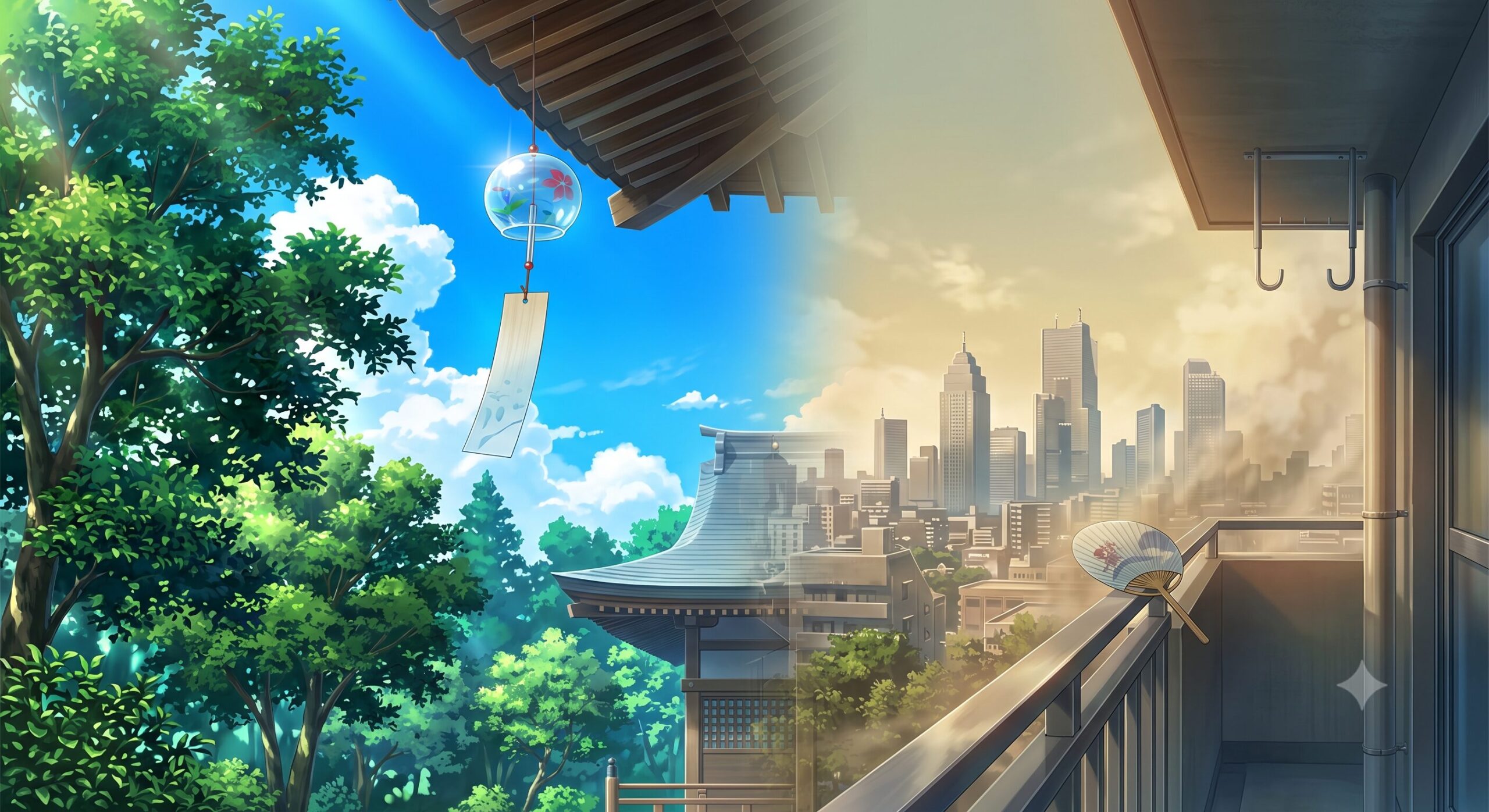
Since ancient times, a culture of appreciating the beauty of the four seasons has taken deep root in Japan. “Summer,” in particular, has been passed down as a nostalgic and emotional landscape—characterized by the singing of cicadas, the refreshing sound of wind chimes, and the enjoyment of traditional festivals and fireworks in cotton yukata. However, the reality of a modern Japanese summer is not just beautiful. It is intertwined with suffocating heat and humidity, compounded by environmental issues brought about by rapid urbanization. A symbolic turning point for this occurred on July 18, 1970.
July 18, 1970: The Identity of the White Haze Covering the Blue Sky
On the afternoon of July 18, 1970, a shocking incident occurred on the athletic field of Tokyo Rissho Junior and Senior High School in Suginami Ward, Tokyo. Students playing softball during a physical education class suddenly began collapsing one after another. Complaining of eye and throat pain, difficulty breathing, and numbness in their limbs, 43 students were eventually rushed to the hospital by ambulance.
Initially suspected to be an unexplained mass panic or a gas leak, later investigations revealed that this was Japan’s first publicly recognized health hazard caused by “photochemical smog.” Photochemical smog is a phenomenon in which nitrogen oxides (NOx) and hydrocarbons from factory emissions and automobile exhaust react chemically with the intense ultraviolet rays of the summer sun to produce toxic photochemical oxidants (such as ozone). It is likely to occur on hot, sunny summer days with weak winds—conditions that Tokyo perfectly met at the time.
The Light and Shadow of the Economic Miracle
Why did such a situation occur? To understand this, we must look at Japan’s historical background at the time. From the 1960s to the early 1970s, Japan was in the midst of its “Rapid Economic Growth” period. The country was achieving a miraculous recovery from the ashes of World War II, climbing to become the world’s second-largest economy. Countless factories lined the streets of Tokyo, and the boom in private car ownership caused traffic volume to explode.
However, in the pursuit of wealth and prosperity, environmental considerations were cast aside. The sky was clouded black with factory smoke, and rivers were polluted with industrial waste. The incident on July 18, where high school students collapsed, confronted the entire Japanese nation with a harsh reality: “As the price of economic prosperity, we have polluted the very air we breathe.”
Traditional Japanese Views of Nature and Adapting to Environmental Issues
This incident severely shook the Japanese perspective on nature. Fundamentally, Japanese culture is based on “coexistence with nature.” To survive the humid heat of summer, architectural styles like fusuma (sliding doors) and shoji (paper screens) were developed to improve ventilation. Traditions like Uchimizu (sprinkling water on streets to cool the air through evaporation) and using bamboo blinds to soften the sunlight demonstrate a clever utilization of nature’s power.
However, concrete-covered urban spaces and reliance on fossil fuels destroyed this “harmony with nature.” Triggered by the photochemical smog incident, the Japanese government and corporations drastically shifted their focus toward environmental measures. Air pollution control laws were strictly enforced, and automobile manufacturers strived for technological innovation to clear what were considered the strictest emission regulations in the world. As a result, Japan’s atmospheric environment improved dramatically, and severe photochemical smog damages have significantly decreased today.
Modern Challenges: Climate Change and the New “Japanese Summer”
While Japan achieved great success regarding air pollution, modern summers face new and even more massive challenges: “Global Warming” and the “Urban Heat Island Effect.” In the past, temperatures exceeding 30 degrees Celsius (86°F) were considered extreme heat, but today, it is not uncommon for temperatures to reach 35°C (95°F) or even approach 40°C (104°F). It has transformed into a brutal season where life can be in danger without air conditioning.
In response, Japan is exploring new ways to “coexist with summer,” such as introducing “Cool Biz” (a campaign promoting casual, lighter summer attire in workplaces), developing highly energy-efficient home appliances, and promoting urban greening. The lesson learned from the 1970 photochemical smog incident—that “development at the expense of the environment is unsustainable”—forms the foundation of current sustainability efforts.
Looking to the Future: What Do You Think?
The photochemical smog incident of July 18 is not just a page in past history. The question of how to balance economic development with environmental protection is an ongoing challenge faced by countries around the world today.
How do you spend the summer in your country? And what approaches do you think are effective for addressing the conflicting challenges of development and environmental protection? Please share your thoughts and any unique environmental initiatives from your own country.
Reference Links
- July 18, 1970: The Identity of the White Haze Covering the Blue Sky
- The Light and Shadow of the Economic Miracle
- Traditional Japanese Views of Nature and Adapting to Environmental Issues
- Modern Challenges: Climate Change and the New “Japanese Summer”
- Looking to the Future: What Do You Think?
- 7月18日、「日本の夏」の厳しさと現代の課題:光化学スモッグから学ぶ
7月18日、「日本の夏」の厳しさと現代の課題:光化学スモッグから学ぶ
日本には古来より、四季折々の自然の美しさを愛でる文化が根付いています。中でも「夏」は、蝉の鳴き声、風鈴の涼やかな音色、浴衣姿で楽しむ縁日や打ち上げ花火など、ノスタルジックで情緒豊かな風景として語り継がれてきました。しかし、現代の日本の夏は、決して美しいばかりではありません。息苦しいほどの高温多湿と、都市化がもたらした環境問題が複雑に絡み合っています。その象徴的な転換点となった出来事が、1970年の「7月18日」に起きました。
1970年7月18日:青空を覆った白いモヤの正体
1970年(昭和45年)7月18日の昼下がり、東京都杉並区にある東京立正中学校・高等学校のグラウンドで、体育の授業中にソフトボールをしていた生徒たちが次々と倒れるという衝撃的な事件が発生しました。目やのどの痛み、息苦しさ、そして手足のしびれを訴え、最終的に43名もの生徒が病院へ救急搬送されたのです。
当初は原因不明の集団パニックやガス漏れが疑われましたが、後の調査により、これが日本で初めて公に確認された「光化学スモッグ」による健康被害であることが判明しました。光化学スモッグとは、工場や自動車の排気ガスに含まれる窒素酸化物(NOx)や炭化水素が、夏の強烈な太陽の紫外線と化学反応を起こし、有害な光化学オキシダント(オゾンなど)を生成する現象です。風が弱く、気温が高く、日差しが強い夏の日に発生しやすく、当時の東京はまさにその条件を満たしていました。
高度経済成長の光と影
なぜ、このような事態が起きたのでしょうか。それを紐解くには、当時の日本の歴史的背景を理解する必要があります。1960年代から1970年代初頭にかけて、日本は「高度経済成長期」の真っ只中にありました。焼け野原となった第二次世界大戦後から驚異的な復興を遂げ、世界第2位の経済大国へと駆け上がっていく時代です。東京には無数の工場が立ち並び、マイカーブームによって自動車の交通量は爆発的に増加しました。
しかし、富と豊かさを追求するあまり、環境への配慮は後回しにされていました。空は工場の煙で黒く濁り、川は工業排水で汚染されていました。杉並区の高校生たちが倒れた7月18日の事件は、「経済的繁栄の代償として、私たちは呼吸する空気すらも汚染してしまった」という事実を、日本国民全体に突きつけたのです。
日本の伝統的な自然観と環境問題への適応
この事件は、日本人の自然観に大きな揺さぶりをかけました。本来、日本の文化は「自然との共生」を基本としています。夏の蒸し暑さを凌ぐために、風通しを良くするふすまや障子といった建築様式を発展させ、打ち水(道に水を撒いて気化熱で涼をとる風習)や、すだれを用いて日差しを和らげるなど、自然の力を巧みに利用してきました。
ところが、コンクリートで覆われた都市空間と化石燃料への依存は、この「自然との調和」を破壊しました。光化学スモッグ事件を契機に、日本政府と企業は環境対策へと大きく舵を切ります。大気汚染防止法が厳格化され、自動車メーカーは世界で最も厳しいとされる排ガス規制をクリアするために技術革新に励みました。その結果、日本の大気環境は劇的に改善され、現在では深刻な光化学スモッグ被害は大幅に減少しています。
現代の課題:気候変動と新しい「日本の夏」
大気汚染という点では大きな成功を収めた日本ですが、現代の夏は新たな、そしてさらに巨大な課題に直面しています。それが「地球温暖化」と「ヒートアイランド現象」です。かつては30度を超えれば猛暑と呼ばれていましたが、現在では気温が35度、時には40度近くに達することも珍しくありません。エアコンなしでは命の危険すらある過酷な季節へと変貌してしまいました。
これに対し、日本では「クールビズ(夏の軽装化キャンペーン)」の導入や、省エネ性能に優れた家電の開発、都市部の緑化推進など、新たな形での「夏との共存」を模索しています。1970年の光化学スモッグ事件から学んだ「環境を犠牲にした発展は長続きしない」という教訓が、現在のサステナビリティ(持続可能性)への取り組みの基盤となっているのです。
未来へ向けて:あなたはどう考えますか?
7月18日の光化学スモッグ事件は、過去の歴史の一ページではありません。経済発展と環境保護のバランスをどう取るかという問いは、現在進行形で世界中の国々が直面している課題です。
この記事を読んでくださっているあなたの国では、夏をどのように過ごしていますか?そして、発展と自然環境の保護という矛盾する課題に対して、どのようなアプローチが有効だと考えますか?ぜひ、あなたの考えや、あなたの国での独自の環境への取り組みについて教えてください。

コメント