- A Mysterious Legend from the Sea of Amakusa: The Otohime Who Brought a Torii Gate
- The Stonemason from Karatsu and an Unfamiliar Grand Order
- The Pure Faith of the Lonely Old Man, Jinzo
- Memories of a Storm 40 Years Ago and the Visit of Otohime
- The Miracle of the Great Catch and Eternal Gratitude
- [Analysis] Why Did Otohime Gift a “Torii” Instead of Gold or Silver?
- [Connection to Japanese Culture] Maritime Faith and the Concept of “Marebito”
- How Would You Respond to This Miracle?
- 天草の海に伝わる不思議な伝説:鳥居を持ってきた乙姫様
- 肥前唐津の石工と、身に覚えのない立派な注文
- 孤独な老人・仁蔵の清らかな信仰心
- 四十年前の嵐の記憶と、乙姫様の訪問
- 大漁の奇跡と、語り継がれる感謝
- 【考察】なぜ乙姫様は「金銀」ではなく「鳥居」を贈ったのか
- 【日本文化との関連】海への信仰と「まれびと」の概念
- あなたなら、この奇跡をどう受け止めますか?
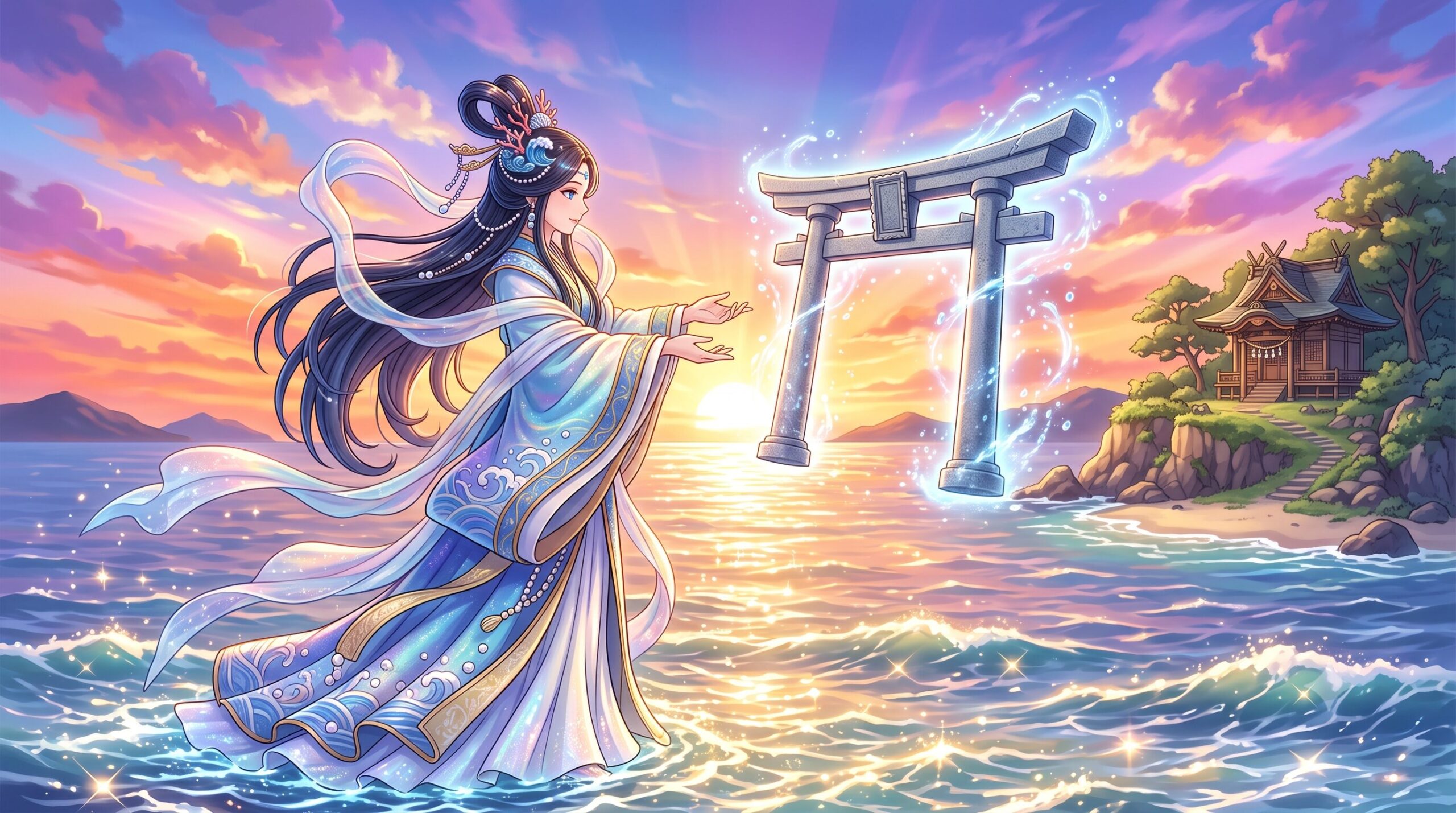
A Mysterious Legend from the Sea of Amakusa: The Otohime Who Brought a Torii Gate
In the southern part of Kumamoto Prefecture, Japan, floating in the beautiful sea of Amakusa, lies a small remote island called Oshima. On this island, a heartwarming story of a miracle has been passed down for generations. In the past, the men of this island made their living by fishing, relying on the abundant blessings of the sea. However, for several years, the sea suddenly stopped providing fish. The nets were always empty, and the villagers were forced into a harsh situation, barely surviving day by day on the meager crops grown by the women. The entire village was overshadowed by poverty and starvation.
The Stonemason from Karatsu and an Unfamiliar Grand Order
One day, amidst this heavy and gloomy atmosphere, a magnificent boat arrived at Oshima. Aboard was a stonemason who had traveled all the way from Hizen Karatsu (present-day Saga Prefecture), a region renowned for its high-quality stone and excellent masonry techniques. The stonemason announced to the villagers, “I have come to deliver a grand granite Torii gate ordered by a man named Jinzo from this island.”
Hearing this, the villagers tilted their heads in unison. Jinzo was an old man with weak legs; there was no way he could have crossed the sea to distant Karatsu. Furthermore, in a village where everyone was struggling for their next meal, there was absolutely no way old man Jinzo had the vast amount of money required to purchase an expensive granite Torii.
The villagers hastily summoned Jinzo, but he was completely bewildered, stating, “I have absolutely no memory of ordering such a thing.” However, the stonemason remained resolute, saying, “I am absolutely certain it was Jinzo of Oshima, off the coast of Amakusa. I have already received the full payment for the Torii.” Ultimately, the stonemason left the beautiful granite Torii on the beach and sailed back to Karatsu.
The Pure Faith of the Lonely Old Man, Jinzo
Jinzo was by no means a wealthy man. He had lost his beloved wife at a young age, was never blessed with children, and had lived a lonely, solitary life for many years. However, his heart was never bitter. Jinzo was deeply religious and never once lamented his loneliness or poverty. Even when his legs grew so weak that he could barely walk, he never failed to visit the village shrine on the hill three times a day, every single day, to quietly offer his prayers. For him, faith was not about seeking a reward; it was a pure habit of offering daily gratitude and prayer.
Memories of a Storm 40 Years Ago and the Visit of Otohime
On the night the grand Torii was left on the beach, old man Jinzo was suffering from a terrible nightmare. It was the memory of a fierce storm from forty years ago. In that raging, dark sea, the young Jinzo had lost many of his dear fisherman friends to the waves. The sorrow and terror of that day vividly resurfaced. When Jinzo gasped and woke up from the dream, an unbelievable sight awaited him.
Sitting quietly beside his pillow was “Otohime,” the breathtakingly beautiful Princess of the Dragon Palace (Ryugu-jo).
With a gentle yet majestic voice, Otohime spoke to him:
“I am the one who ordered that Torii on the beach from the Karatsu stonemason, using your name. For many years, you have continued your faith with a pure heart, never cursing or lamenting your illness or poverty. That Torii is my reward to you for your beautiful soul. Tomorrow, tell the islanders about this and have them erect the Torii in front of the shrine on the hill. If you do so, great happiness will once again visit this island. And above all, that Torii will serve as a splendid memorial for the dear friends you have cared for and prayed for every single day for forty years.”
The Miracle of the Great Catch and Eternal Gratitude
The next morning, deeply moved by the dream, old man Jinzo gathered the islanders and conveyed Otohime’s words. Although somewhat skeptical, the villagers decided to trust the sincere old man. Working together, they carried the heavy granite Torii to the shrine on the hill and erected it magnificently.
The miracle occurred immediately. The next day, when the village men went out to fish, they pulled in a catch so massive that the nets could barely hold it. From that day on, the sea of Oshima completely regained its former abundance. Blessed with the bounty of the sea, the villagers’ lives improved dramatically. Deeply moved by the selfless heart and faith of old man Jinzo, who was loved by Otohime, the islanders lived in peace, never forgetting their gratitude.
[Analysis] Why Did Otohime Gift a “Torii” Instead of Gold or Silver?
The most fascinating aspect of this folktale is that the reward Otohime gave to Jinzo was not direct wealth (gold and silver) or food (fish), but a “Torii” gate. A Torii acts as a sacred boundary separating the divine sanctuary from the human world.
Otohime saw through the fact that Jinzo was not praying for his own selfish desires, but out of pure faith and for the repose of his lost friends. Therefore, instead of temporary material wealth, she chose a Torii—a permanent spiritual anchor for the entire village and an eternal memorial for the deceased. This demonstrates a profound spirituality that values the peace of the community and respect for the past over individual, temporary happiness.
[Connection to Japanese Culture] Maritime Faith and the Concept of “Marebito”
From this story, we can decipher two vital cultural concepts that form the foundation of Japan.
The first is the “awe and worship of the sea.” As an island nation, the sea has always been a “mother” providing rich blessings, but simultaneously a “threat” capable of taking lives. There is an ancient belief in a spirit world called “Tokoyo” (the eternal land) located at the bottom of the sea, where gods and ancestral spirits reside. Otohime is depicted as the symbolic ruler of this realm.
The second is the concept of “Marebito” (sacred guests). In Japanese folklore, gods visiting from distant seas or the otherworld have been worshiped as “Marebito” who bring good fortune. The stonemason who suddenly arrived from Karatsu, and Otohime who appeared in a dream, exactly fulfill the role of “Marebito” bringing prosperity to the island. Jinzo’s daily prayers moved the deities of the otherworld and became the power to save his real-world community.
How Would You Respond to This Miracle?
Despite being trapped in poverty and loneliness, old man Jinzo never resented others or his fate; he simply continued to pray quietly. His selfless heart crossed the sea and moved the heart of a god.
If you were placed in the same harsh situation as Jinzo, would you be able to continue praying without asking for anything in return? And if Otohime appeared before you, what would you wish for?
Living in modern society, where we often pursue material wealth, we may have forgotten the “gratitude for the unseen” and the “heart that cares for others” that this story teaches us. Through this beautiful legend of Amakusa, I invite you to take a moment and ask yourself: What is “true wealth” to you?
Reference URL: Manga Nippon Mukashibanashi Database: The Otohime Who Brought a Torii Gate
If you want to discover more mysterious and beautiful stories of Japan, please visit this category:
Japanese Folktale Series
【日本の昔話】鳥居を持ってきた乙姫様:海への信仰と無私の心がもたらす奇跡
天草の海に伝わる不思議な伝説:鳥居を持ってきた乙姫様
日本の熊本県南部、美しい天草の海に浮かぶ小さな離れ島「大島」には、古くから語り継がれる心温まる奇跡の物語があります。かつてこの島は、男たちが海へ漁に出て、その豊かな海の恵みによって人々の暮らしが成り立っていました。しかし、ある時期から数年間にわたり、海はパタリと魚を恵んでくれなくなりました。漁に出ても網は空っぽで、人々は女たちの細々とした畑仕事に頼り、その日を生き延びるのがやっとの過酷な状況に追い込まれていました。村全体が貧困と飢えの影に覆われていたのです。
肥前唐津の石工と、身に覚えのない立派な注文
そんな重苦しい空気が漂うある日のこと、大島に一艘の立派な船が到着しました。船に乗っていたのは、遠く離れた肥前唐津(現在の佐賀県)からやってきた石工(いしく)でした。唐津は良質な石材と優れた石材加工の技術で知られる地域です。石工は村人たちに「この島の仁蔵(じんぞう)という人物の注文で、立派な御影石(みかげいし)の鳥居を届けに来た」と告げました。
これを聞いた村人たちは一様に首を傾げました。なぜなら、仁蔵爺さんはすっかり足腰が弱っており、遠く離れた唐津まで海を渡って行けるはずがなかったからです。さらに、その日の食事にも困る村の状況において、高価な御影石の鳥居を買うような大金など、仁蔵爺さんが持っているはずがありませんでした。
村人たちは急いで仁蔵爺さんを呼び出しましたが、当の本人も「全く頼んだ覚えがない」と困惑するばかりです。しかし石工は「天草の沖合い、大島の仁蔵で絶対に間違いない。鳥居の代金も既に全額受け取っている」と譲りません。結局、石工は美しい御影石の鳥居を浜辺にドンと置き、そのまま唐津へと帰ってしまいました。
孤独な老人・仁蔵の清らかな信仰心
この仁蔵というお爺さんは、決して裕福な人物ではありませんでした。若くして最愛の女房と死に別れ、子宝にも恵まれず、長年孤独な一人暮らしをしていました。しかし、彼の心は決して荒むことはありませんでした。仁蔵爺さんは非常に信心深く、自分の孤独や貧困を嘆くことは一度もありませんでした。足腰が弱り、歩くのがやっとの身体になっても、毎日欠かさず一日三回、高台にある村のお社へ足を運び、静かに手を合わせ続けていたのです。彼にとって信仰とは、何か見返りを求めるものではなく、日々の感謝と祈りを捧げる純粋な習慣でした。
四十年前の嵐の記憶と、乙姫様の訪問
立派な鳥居が浜に置かれたその日の夜、仁蔵爺さんは眠りの中で恐ろしい悪夢にうなされていました。それは、今から四十年前の猛烈な嵐の記憶でした。荒れ狂う暗黒の海で、若き日の仁蔵は多くの大切な漁師仲間を波に飲まれて失ったのです。その悲しみと恐怖が鮮明に蘇り、仁蔵爺さんがハッと息を呑んで目を覚ますと、信じられない光景が広がっていました。
なんと、爺さんの枕元には、眩いばかりの美しさを放つ竜宮城の主「乙姫様」が静かに座っていたのです。
乙姫様は、優しく威厳のある声で仁蔵爺さんにこう語りかけました。
「浜にあるあの鳥居は、そなたの名前を借りて、この私が唐津の石工に注文したものです。そなたは長年、病気や貧乏を恨んだり嘆いたりすることなく、純粋な心で信仰を続けてきました。あの鳥居は、その美しい心への私からの褒美なのです。明日、島の者たちにこのことを話し、鳥居を山の上の社の前に建てなさい。そうすれば、この島に再び大きな幸せが舞い込むでしょう。そして何より、あの鳥居は、そなたが四十年間、一日も忘れることなく気にかけ、祈り続けてきた大切な仲間たちへの立派な弔いになるのです。」
大漁の奇跡と、語り継がれる感謝
翌朝、夢の出来事に深く感動した仁蔵爺さんは、島の人々を集めて乙姫様の言葉を伝えました。村人たちは半信半疑ではありましたが、日頃から誠実な仁蔵爺さんの頼みであればと力を合わせ、重い御影石の鳥居を山の上の社の前へ運び、立派に建て直しました。
奇跡はすぐに起きました。次の日、村の男たちが久々に海へ漁に出ると、網が引き切れないほどの大漁となったのです。それ以降、大島の海はかつての豊かさを完全に取り戻し、海の幸に恵まれ、村人たちの暮らしは劇的に楽になりました。島の人々は、乙姫様から愛された仁蔵爺さんの無私の心と信仰に深く感動し、いつまでも感謝の念を忘れずに平和に暮らしたということです。
【考察】なぜ乙姫様は「金銀」ではなく「鳥居」を贈ったのか
この昔話において最も興味深い点は、竜宮城の乙姫様が仁蔵に与えた褒美が、直接的な富(金銀財宝)や食料(魚)ではなく、「鳥居」であったという事実です。鳥居とは、神域と人間界を区切る「結界」であり、神聖な場所への入り口を意味します。
乙姫様は、仁蔵が自分の欲望のためではなく、亡くなった仲間への鎮魂と純粋な信仰のために祈り続けていたことを見抜いていました。そのため、一時的な物質的豊かさではなく、村全体の精神的な拠り所となり、永遠に仲間を弔うことができる「鳥居」を選んだのです。これは、個人の幸福よりも、共同体全体の平和と過去への敬意を重んじる、非常に奥深い精神性を示しています。
【日本文化との関連】海への信仰と「まれびと」の概念
この物語からは、日本の根底に流れる二つの重要な文化を読み解くことができます。
一つ目は「海への畏怖と信仰」です。島国の日本において、海は豊かな恵みをもたらす「母」であると同時に、人命を奪う「脅威」でもありました。海の底には神々や先祖の霊が住む「常世(とこよ)」があるという他界観が存在し、乙姫様はその常世を統べる象徴として描かれています。
二つ目は「まれびと(客人)」の概念です。日本の民俗学において、遠くの海や異界から訪れる神は、人々に福をもたらす「まれびと」として信仰されてきました。唐津から突然やってきた石工や、夢に現れた乙姫様は、まさにこの島に豊穣をもたらす「まれびと」の役割を果たしています。仁蔵の日々の祈りが、異界の神を動かし、現実の共同体を救う力となったのです。
あなたなら、この奇跡をどう受け止めますか?
貧困や孤独の中にありながらも、決して他者や運命を恨まず、ただ静かに祈りを捧げ続けた仁蔵爺さん。彼の無私の心が、海を越え、神の心をも動かしました。
もし、あなたが仁蔵爺さんと同じように過酷な状況に置かれたとき、見返りを求めずに祈り続けることができるでしょうか? そして、もしあなたの目の前に乙姫様が現れたとしたら、あなたは何を望むでしょうか?
現代社会に生きる私たちは、物質的な豊かさを追い求めるあまり、この物語が教えてくれる「目に見えないものへの感謝」や「他者を思いやる心」を忘れてしまっているのかもしれません。この天草の美しい伝説を通して、あなたにとっての「本当の豊かさ」とは何か、ぜひ一度心の中で問いかけてみてください。
参考URL:まんが日本昔ばなし〜データベース〜 鳥居を持ってきた乙姫様
日本の不思議で美しい物語をさらに知りたい方は、こちらのカテゴリーもご覧ください:
Japanese Folktale Series(日本の昔話シリーズ)

コメント