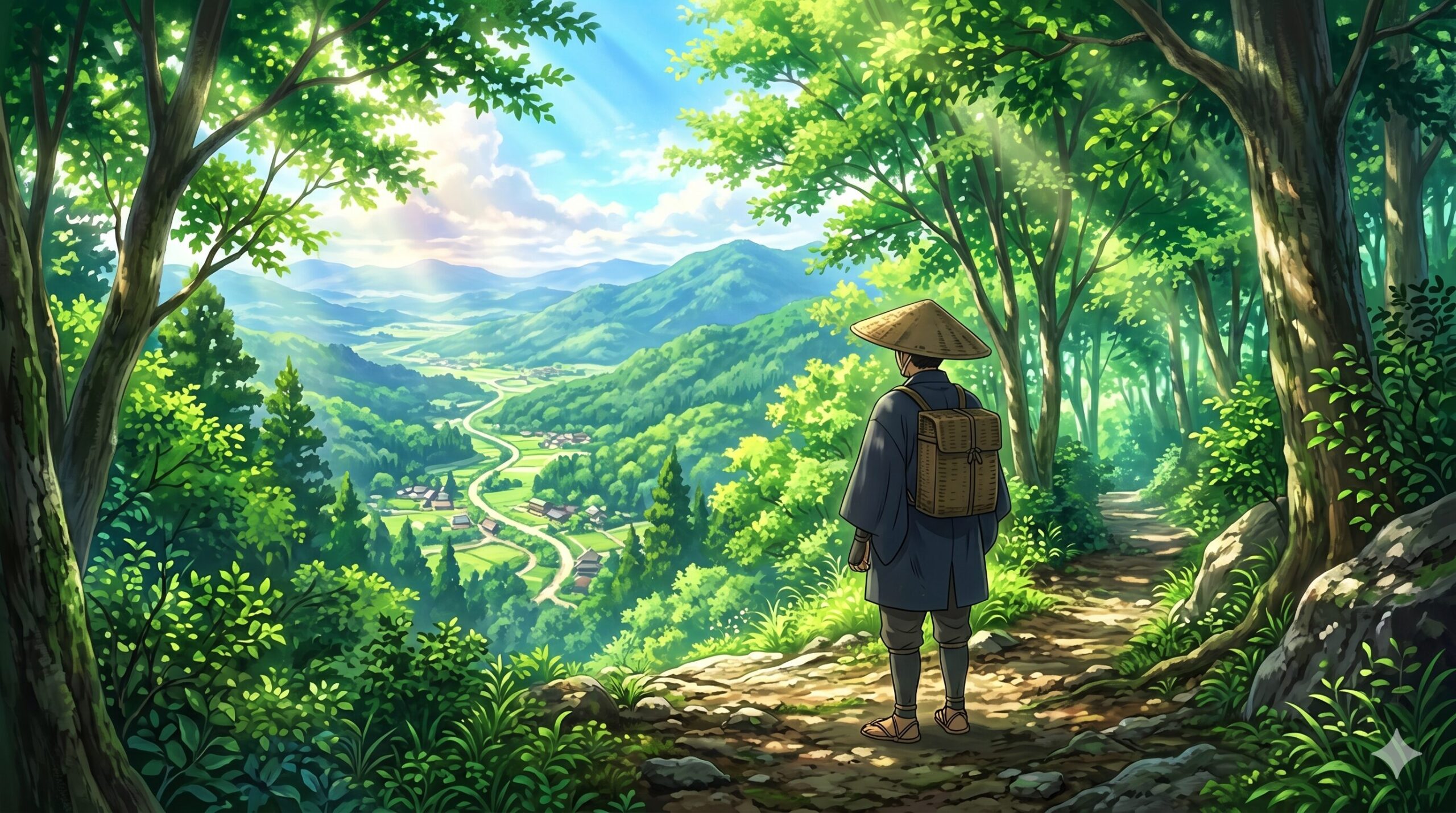
Japan has many special anniversaries deeply rooted in its history and culture. Among them, May 16 is known as “Travel Day” (Tabi no Hi). This day is not simply about encouraging tourism or vacations. It is a day to commemorate the beginning of a great journey that left a massive footprint on Japanese literary history and spirituality.
On May 16, 1689 (March 27 in the old lunar calendar), Japan’s most celebrated Haiku master, Matsuo Basho, set out from Edo (present-day Tokyo) accompanied by his disciple, Kawai Sora. They headed towards the unknown northern lands of the Tohoku and Hokuriku regions. This epic journey on foot, covering approximately 2,400 kilometers over 150 days, eventually crystallized into the masterpiece of travel literature, “Oku no Hosomichi” (The Narrow Road to the Deep North). To honor this monumental achievement and to encourage modern people to cherish the “true heart of travel,” May 16 was designated as “Travel Day” by the Japan Travel Pen Club in 1988.
Matsuo Basho and “Oku no Hosomichi”: A Journey to the Limits
For us today, traveling is comfortable; we can reach our destinations in a few hours using airplanes or the Shinkansen (bullet train). However, travel during the Edo period was literally a matter of life and death. The paths were rugged, travelers were at the mercy of the weather, and the danger of bandits and illness was ever-present. For Basho, who was in his mid-forties at the time, the journey to Michinoku (the Tohoku region) came with the absolute resolution that he might never return to Edo alive.
Yet, what drove Basho to travel was an uncontrollable passion to see historic sites and places of scenic beauty with his own eyes. His primary goal was to visit “Uta-makura” (poetic pillows)—famous places that had been the subjects of Waka poetry since ancient times—and to resonate with the souls of the great poets of the past (especially Saigyo). Basho’s journey was not a mere physical relocation, but a literary and spiritual quest transcending time and space.
The Philosophy of “Travel” in Japanese Culture: Impermanence and Harmony with Nature
The core of Japanese culture that we must decipher from this “Travel Day” is the concept of “Mujou-kan” (the view of impermanence) and “coexistence with nature.”
In the opening of “Oku no Hosomichi,” Basho writes: “Days and months are travelers of eternity. The years that come and go are also voyagers.” In Japanese culture, life itself is considered a single “journey.” Everything in this world is constantly changing; nothing lasts forever. Rather than being pessimistic about this fact of “impermanence,” the foundation of Japanese aesthetics lies in appreciating the transient beauty of every fleeting moment.
During his travels, Basho witnessed magnificent natural landscapes, decaying historical structures, and the daily lives of the people living there, condensing all of this into “Haiku”—poems of merely 17 syllables (5-7-5). His famous verses, such as “In the cicada’s cry / No sign can foretell / How soon it must die” and “Summer grasses / All that remains / Of warriors’ dreams,” simultaneously express the grandeur of nature and the fragility of human endeavors. For the Japanese, travel is an ascetic practice—a process of purifying the soul by immersing oneself in great nature and deeply realizing that one is a part of it.
What Does “Travel” Mean to Us Today?
We live in an age where information travels the globe instantly, and we can view scenery on the opposite side of the earth with a single smartphone. However, the scenery seen through a screen is completely different from actually standing on that land, feeling the scent of the wind, and feeling the local earth underfoot.
The “journey of the heart” that Basho sought at the risk of his life teaches us today that there is a richness that cannot be obtained through efficiency and convenience alone. Stepping away from the hustle and bustle of daily life, quietly facing oneself, and letting one’s heart be moved by the beauty of nature and the weight of history—that is the true thrill of travel that the Japanese have valued since ancient times.
After reading this article, what kind of journey do you want to embark on now? While efficiently touring tourist spots is great, occasionally, like Basho, why not try walking wherever the wind blows, deciding only the destination, and following your heart? In the journey of your life, what “scenery” do you want to discover next?
Reference Links:
- Japan National Tourism Organization (JNTO) – Explore Japan’s beautiful travel destinations
- Internal Link: Read more articles in the “What’s Today’s Special Day?” series
5月16日は「旅の日」:松尾芭蕉『おくのほそ道』から読み解く日本人の旅の精神
日本には、歴史や文化に深く根ざした特別な記念日が数多く存在します。その中でも、5月16日は「旅の日」として知られています。この日は、単なる観光や休暇を推奨する日ではありません。日本の文学史と精神性に大きな足跡を残した、ある偉大な旅の始まりを記念する日です。
1689年5月16日(旧暦の元禄2年3月27日)、日本を代表する俳諧師である松尾芭蕉は、弟子の河合曾良とともに江戸(現在の東京)を旅立ちました。彼らが向かったのは、未知なる北の地、東北・北陸地方です。この約150日間、総距離約2400キロメートルにも及ぶ壮大な徒歩の旅は、後に『おくのほそ道』という紀行文学の最高傑作として結実します。この偉業を称え、そして現代人に「真の旅の心」を大切にしてほしいという願いから、1988年に日本旅のペンクラブによって5月16日が「旅の日」に制定されました。
松尾芭蕉と『おくのほそ道』:極限の旅路
現代の私たちにとって、旅は飛行機や新幹線を使い、数時間で目的地に到着できる快適なものです。しかし、江戸時代の旅は文字通り「命がけ」でした。道は険しく、天候に左右され、野盗や病の危険と常に隣り合わせでした。当時40歳を過ぎていた芭蕉にとって、みちのく(東北地方)への旅は、二度と江戸へ生きて帰れないかもしれないという覚悟を伴うものでした。
それでも芭蕉を旅へと駆り立てたのは、名所旧跡を自分の目で確かめたいという抑えきれない情熱でした。特に「歌枕(うたまくら)」と呼ばれる、古来から多くの歌人に詠まれてきた和歌の名所を巡り、過去の偉大な詩人たち(特に西行法師)の魂と共鳴することが、彼の最大の目的でした。芭蕉の旅は、単なる物理的な移動ではなく、時空を超えた文学的・精神的な探求だったのです。
日本文化における「旅」の哲学:無常観と自然との一体化
この「旅の日」から私たちが読み解くべき日本文化の核心は、「無常観(むじょうかん)」と「自然との共生」です。
芭蕉は『おくのほそ道』の冒頭で、「月日は百代の過客にして、行かふ年も又旅人也(月日は永遠に旅を続ける旅人のようなものであり、来ては去っていく年もまた旅人である)」と記しています。日本文化において、人生そのものが一つの「旅」であると考えられています。この世のすべてのものは常に移り変わり、永遠に留まるものはありません。この「無常」の事実を悲観するのではなく、むしろその移ろいゆく瞬間瞬間の美しさを愛でる心が、日本の美意識の根底にあります。
芭蕉は旅の途中で、壮大な自然の風景、朽ち果てた歴史的建造物、そしてそこに生きる人々の営みを目にし、それらを五・七・五のわずか十七音の「俳句」に凝縮しました。「閑さや 岩にしみ入る 蝉の声(立石寺)」「夏草や 兵どもが 夢の跡(平泉)」といった名句は、自然の雄大さと人間の営みの儚さを同時に表現しています。日本人の旅とは、大自然の中に身を置き、自分自身がその一部であることを深く悟るための修行であり、魂の浄化のプロセスなのです。
現代の私たちにとっての「旅」とは
情報が瞬時に世界中を駆け巡り、スマートフォン一つで地球の裏側の景色を見ることができる現代。しかし、画面越しに見る風景と、実際にその地に立ち、風の匂いを感じ、その土地の土を踏みしめる感覚は全く異なります。
芭蕉が命がけで求めた「心の旅」は、現代を生きる私たちに、効率や便利さだけでは得られない豊かさがあることを教えてくれます。日常の喧騒から離れ、自分自身と静かに向き合い、自然の美しさや歴史の重みに心を震わせる。それこそが、日本人が古くから大切にしてきた旅の醍醐味です。
この記事を読んでくださったあなたは、今、どんな旅に出たいですか? 効率よく観光地を巡る旅も良いですが、時には芭蕉のように、行き先だけを決めて風の赴くままに歩く、心の赴くままの旅をしてみてはいかがでしょうか。あなたの人生という旅路において、次に見つけたい「景色」は何ですか?
参考リンク:
コメント