May 2nd marks a highly significant day in the traditional Japanese calendar known as “Hachijuhachiya” (The 88th Night). As the warmth of spring settles in and the footsteps of summer can be heard, all of Japan is enveloped in the fresh, vibrant scent of new greenery. Let me guide you through the profound world of Hachijuhachiya and explain why this day holds such special meaning in Japanese culture, agriculture, and its deeply rooted tea history.
What is Hachijuhachiya? The Unique Japanese Calendar “Zassetsu”
Hachijuhachiya refers to the 88th night counting from “Risshun” (the first day of spring, usually around February 4th). While the exact date can fluctuate slightly depending on the year, it almost always falls on May 2nd. This day is part of “Zassetsu,” a set of unique seasonal days specific to Japan.
In the past, Japan used the “24 Solar Terms” introduced from China. However, this system had a slight misalignment with Japan’s actual climate. The Japanese, being an agricultural people, needed to grasp the changing seasons more accurately to protect their crops. Thus, they created the Zassetsu system tailored to the local climate. Hachijuhachiya functioned as a clear benchmark indicating when the weather would stabilize, marking the official start of full-scale agricultural work.
The Magic Hidden in the Number “88” and the Belief in “Rice”
Why the number 88? This is deeply connected to Japanese Kanji characters. When you combine the kanji for eight (八), ten (十), and eight (八), it forms the kanji for “Rice” (米). Since ancient times, rice farming has been considered a sacred practice in Japan, and it is believed that gods reside within rice. Therefore, Hachijuhachiya, which literally contains the character for rice, came to be revered as a highly auspicious day for agriculture and praying for a bountiful harvest.
Furthermore, the number eight (八) is considered lucky in Japan because its shape broadens toward the bottom (Suehirogari), symbolizing eternal prosperity and infinite expansion. Hachijuhachiya, with double eights, is a day of ultimate good fortune.
The End of the “Forgotten Frost” and Awe for Nature
Japanese spring is warm and beautiful, but it can also be capricious. At the end of spring, temperatures can suddenly drop, causing late frosts that completely destroy crops. This is known in Japan as “Wasure-jimo” (The forgotten frost). Farmers used Hachijuhachiya as a dividing line; after this day, they judged that the danger of frost had passed, and they could safely begin preparing the rice paddies and sowing seeds. It is a day where caution against nature’s fury intersects with gratitude for its blessings.
The Miracle of “Shincha” That Promises Good Health
It is impossible to talk about Hachijuhachiya without mentioning Japanese green tea. The tea leaves picked during this specific period are called “Shincha” (New Tea) or “Ichibancha” (First Flush). Having accumulated rich nutrients (especially L-theanine, an umami component) over the long winter, these new buds are characterized by a refreshing, sweet flavor with minimal astringency.
There is an ancient proverb: “Drinking tea picked on Hachijuhachiya will keep you free from illness for the year,” and it is also said to grant longevity. This is not mere superstition. Shincha is incredibly rich in vitamins and catechins, possessing genuine power to support human health.
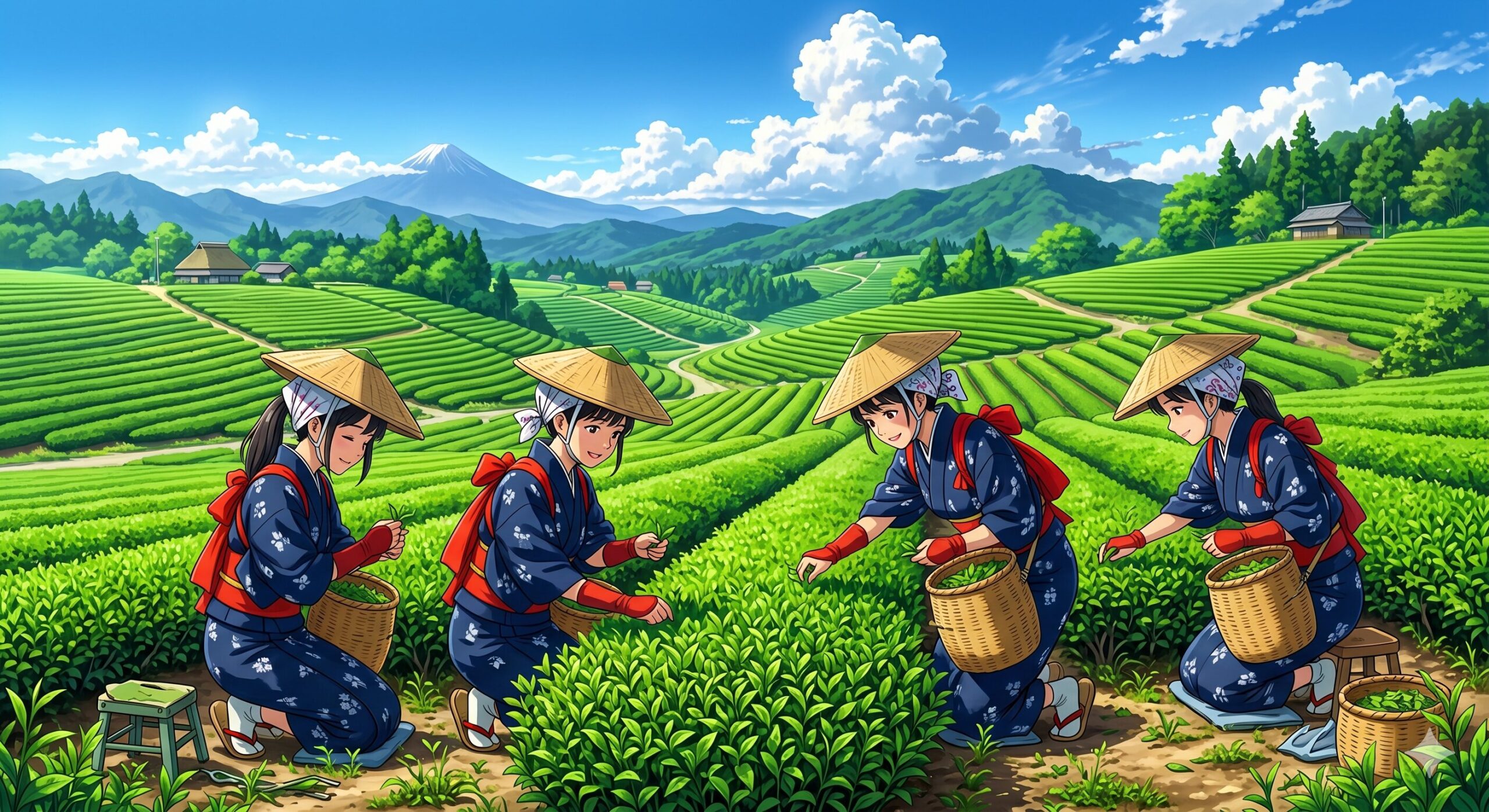
There is a famous Japanese children’s song called “Chatsumi” (Tea Picking). Starting with the lyrics, “Summer is approaching on the 88th night, young leaves flourish in fields and mountains,” it beautifully depicts the early summer scene of women dressed in traditional red sashes (tasuki) and sedge hats (sugegasa) joyfully picking tea leaves.
Decoding Japanese Harmony with Nature from the Calendar
Hachijuhachiya teaches us how closely the Japanese people have harmonized with nature, keenly sensing its subtle shifts. In an era without clocks or modern meteorology, people read the seasons from the movement of the stars, the scent of the wind, and the growth of plants. The spirit of “coexistence”—not dominating nature, but aligning with its cycles and being thankful for its gifts—is condensed into this single day on the calendar.
When a Japanese person brews a cup of Shincha, they are not merely quenching their thirst. It involves a deep respect for the resilience of life that sprouted after a harsh winter, and the heart of “Wabi-Sabi,” which cherishes the fleeting transitions of the seasons.
A Question for You
How do you feel about this beautiful tradition woven by Japan’s four seasons? The act of slowly savoring warm tea while feeling the shifting seasons might be exactly what we need in our busy modern lives. Does your country have a special day to celebrate the change of seasons, or a beverage unique to that time of year? Please tell me your stories in the comments below!
Related Information & External Links
- Read more articles about Japanese anniversaries and calendars here:
What’s Today’s Special Day Series
- What is Hachijuhachiya? The Unique Japanese Calendar “Zassetsu”
- The Magic Hidden in the Number “88” and the Belief in “Rice”
- The End of the “Forgotten Frost” and Awe for Nature
- The Miracle of “Shincha” That Promises Good Health
- Decoding Japanese Harmony with Nature from the Calendar
- A Question for You
- 5月2日「八十八夜」:日本の新茶と初夏を告げる伝統の暦
5月2日「八十八夜」:日本の新茶と初夏を告げる伝統の暦
5月2日は、日本の伝統的な暦において非常に重要な意味を持つ「八十八夜(はちじゅうはちや)」です。春の暖かさが本格化し、夏の足音が聞こえ始めるこの時期、日本中が新緑の瑞々しい香りに包まれます。日本の文化、農業、そして深く根付いたお茶の歴史において、この日がどれほど特別な意味を持っているのか、その奥深い世界へご案内します。
八十八夜とは何か?独自の暦「雑節」
八十八夜とは、立春(春の始まりの日、通常2月4日頃)から数えて88日目の夜を指します。年によって日付は前後しますが、多くの年で5月2日となります。この日は、日本独自の暦日である「雑節(ざっせつ)」の一つです。
かつて日本は中国から伝わった「二十四節気」という暦を使用していましたが、日本の気候とはわずかなズレが生じていました。農耕民族であった日本人は、季節の移り変わりをより正確に把握し、農作物を守るために、日本の風土に合わせた独自の暦「雑節」を生み出しました。八十八夜は、気候が安定し、農作業を本格的に開始する明確な基準として機能してきたのです。
「八十八」という数字に隠された魔法と「米」の信仰
なぜ「88」なのでしょうか。これには日本の漢字と深い関わりがあります。「八十八」という漢字を組み合わせると、日本の主食である「米」という字になります。日本では古来より、稲作が神聖な行事とされ、米には神様が宿ると信じられてきました。そのため、米の字を含む「八十八夜」は、豊作を祈願する農業の吉日として特別視されるようになったのです。
さらに、日本では「八」という数字は末広がり(下に向かって広がる形)であり、永遠の繁栄や幸運を意味する縁起の良い数字とされています。8が二つ重なる八十八夜は、最高に縁起の良い日なのです。
「忘れ霜」の終わりと自然への畏敬
日本の春は暖かく美しいですが、同時に気まぐれでもあります。春の終わりに突然気温が下がり、農作物に甚大な被害をもたらす遅霜(おそじも)が降ることがあります。これを日本では「忘れ霜(わすれじも)」あるいは「八十八夜の忘れ霜」と呼びます。農家の人々は、この日を境に霜の心配がなくなり、安心して田植えの準備や種まきができると判断しました。八十八夜は、自然の猛威に対する警戒と、自然の恵みへの感謝が交差する日でもあります。
無病息災を約束する「新茶」の奇跡
八十八夜を語る上で絶対に欠かせないのが「お茶」です。日本では、この時期に摘み取られたお茶の葉を「新茶(しんちゃ)」または「一番茶」と呼びます。冬の間に蓄えられた豊富な栄養素(旨味成分であるテアニン)が新芽にたっぷりと含まれており、渋みが少なく、爽やかで甘みのある極上の味わいが特徴です。
古くから「八十八夜に摘まれたお茶を飲むと、その年は病気にならない(無病息災)」、あるいは「長生きできる」という言い伝えがあります。これは単なる迷信ではありません。新茶にはビタミンやカテキンなどの成分が豊富に含まれており、実際に健康を支える強力な力を持っているのです。
日本の童謡に「茶摘み(ちゃつみ)」という有名な歌があります。「夏も近づく八十八夜、野にも山にも若葉が茂る」という歌詞で始まるこの歌は、赤い襷(たすき)と菅笠(すげがさ)を身にまとった女性たちが、楽しげに茶の葉を摘む初夏の美しい情景を見事に表現しています。
暦から読み解く、日本人の自然との調和
八十八夜という日は、日本人がいかに自然と調和し、その変化を敏感に感じ取ってきたかを教えてくれます。時計や近代的な気象観測技術がなかった時代、人々は星の動き、風の匂い、植物の成長から季節を読み解きました。自然を支配するのではなく、自然のサイクルに寄り添い、その恵みに感謝する「共生」の精神が、八十八夜というたった一日の暦に凝縮されています。
一杯の新茶を淹れるとき、日本人はただ喉の渇きを潤しているわけではありません。そこには、厳しい冬を越えて芽吹いた生命の力強さへの敬意と、季節の移ろいを慈しむ「わびさび」の心が込められているのです。
あなたへの問いかけ
日本の四季が織りなすこの美しい伝統について、あなたはどう感じましたか?自然の移ろいを感じながら、温かいお茶をゆっくりと味わう時間は、現代の忙しい生活においてこそ必要なものかもしれません。あなたの国にも、季節の変わり目を祝う特別な日や、その時期にしか味わえない飲み物はありますか?ぜひコメント欄であなたの物語を教えてください。
関連情報・外部リンク
- 日本の記念日や暦についての他の記事はこちら:
What’s Today’s Special Day Series

コメント