Japan possesses a very unique way of perceiving time. While utilizing the globally common Gregorian calendar, the country simultaneously divides its history using its own distinct system called “Gengo” (Era names). On May 1, 2019 (the first year of Reiwa), Japan reached a truly historic turning point. On this day, the 125th Emperor (now Emperor Emeritus) abdicated, and Emperor Naruhito ascended the throne as the 126th Emperor. This marked the end of the “Heisei” era, which lasted for about 30 years, and the dawn of a new era: “Reiwa.”
This day holds a significance far greater than a mere change of date on a calendar. An abdication by a living Emperor had not occurred in Japan for approximately 200 years. Consequently, rather than a period of mourning, the entire nation welcomed this new era in a bright atmosphere filled with celebration and hope. This is the defining characteristic of the “Dawn of Reiwa.”
The Profound Meaning of “Reiwa”: The Heart of Japan Taught by the Manyoshu
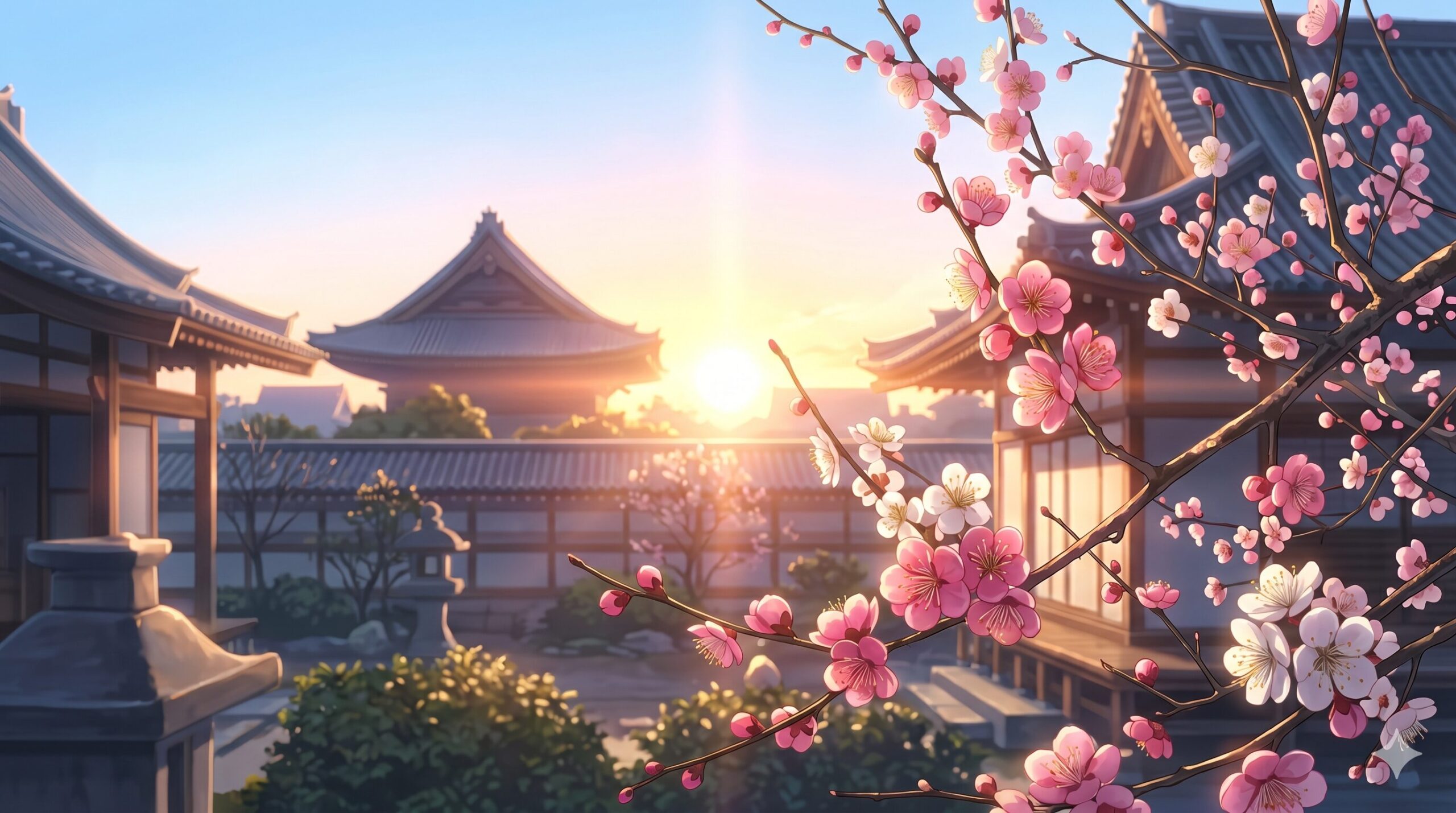
When the new era name was announced, not only Japan but the whole world paid attention to its meaning. The word “Reiwa” was cited from the preface to a collection of 32 poems about plum blossoms in the Manyoshu, Japan’s oldest existing anthology of poetry.
“It is now the choice month of early spring; the weather is fine, the wind is soft. The plum blossoms open, like powder before a mirror; the orchids exhale fragrance, like sweet scents from a sash.”
The character “Rei” (令) carries the meaning of “beautiful” or “auspicious,” while “Wa” (和) means “peace” or “harmony.” The Japanese government officially explained this to the world as “Beautiful Harmony.” It embodies the wish that, just like the plum blossoms that bloom magnificently after a harsh winter to announce the arrival of spring, each and every Japanese person can make their own unique flower bloom with hope for tomorrow.
A crucial point here is that while previous Japanese era names were cited from classic Chinese literature, “Reiwa” was the first ever to be selected from a Japanese classical text (the Manyoshu). In an increasingly globalized world, this serves as a powerful message for the Japanese people to return to the beauty of their own rich nature, the changing of the seasons, and the literature and culture passed down since ancient times.
Understanding Japanese Culture Through “Gengo”: Coloring Eras with Words
In Japanese culture, “Gengo” is not simply a method of counting years. It is a “spiritual pillar” for the people living in that time, a word that represents the very atmosphere of the era. Meiji, Taisho, Showa, Heisei, and now Reiwa. When Japanese people look back on past events, they often use the era name rather than the Western year. Phrases like “the atmosphere of Showa” or “Heisei pop culture” show how deeply era names are tied to culture and lifestyle.
The beginning of Reiwa was a brilliant example of how Japan fuses the “inheritance of tradition” with the “creation of new values.” The sight of solemn enthronement ceremonies, featuring traditional attire, being digitally broadcasted worldwide perfectly embodied Japan itself—a place where high-tech innovation and ancient traditions coexist.
To Our Readers
Derived from the plum blossoms that bloom beautifully after a severe winter, “Reiwa” carries a universal message for all of humanity: overcoming hardships to create new harmony.
How do you celebrate “new beginnings” in your own life? If you were to give an “era name” to your current stage of life, what words would you choose? Please take a moment to think about a name that reflects your cherished values and your hopes for the future.
Click here to read more from the “What’s Today’s Special Day?” series.
5月1日:令和はじまりの日—日本の新たな幕開けと「美しい調和」
日本という国は、世界でも稀有な時間の捉え方を持っています。西暦という世界共通のスケールを用いながらも、同時に独自の「元号(Gengo)」というシステムで時代を区切っているのです。2019年(令和元年)5月1日、日本はまさにその歴史的な転換点を迎えました。第125代天皇(現在の上皇陛下)が退位され、徳仁天皇が第126代天皇として即位されたこの日、約30年続いた「平成」が幕を下ろし、新たな時代「令和(Reiwa)」が始まりました。
この日は、単にカレンダーの日付が変わったという以上の意味を持っています。天皇の生前退位は、実に約200年ぶりの出来事でした。そのため、日本中が悲しみではなく、祝祭と希望に満ちた明るい雰囲気の中で新しい時代を迎え入れたのが、この「令和はじまりの日」の最大の特徴です。
「令和」に込められた深い意味:万葉集が教える日本の心
新しい元号が発表されたとき、日本のみならず世界中がその意味に注目しました。「令和」という言葉は、日本最古の歌集である『万葉集(Manyoshu)』の梅の花の歌、三十二首の序文から引用されています。
「初春の令月(れいげつ)にして、気淑(きよ)く風和(やわら)ぎ、梅は鏡前(きょうぜん)の粉(こ)を披(ひら)き、蘭は珮後(はいご)の香(こう)を薫(かお)らす」
「令」には「美しい、立派な」という意味があり、「和」には「平和、調和」という意味があります。日本政府はこれを海外に向けて「Beautiful Harmony(美しい調和)」と説明しました。厳しい寒さの後に、春の訪れを告げるように見事に咲き誇る梅の花のように、一人ひとりの日本人が明日への希望と共に、それぞれの花を大きく咲かせることができる日本でありたい。そんな願いが込められています。
ここで重要なのは、これまで日本の元号は中国の古典(四書五経など)から引用されてきましたが、「令和」において初めて日本の国書(万葉集)から選ばれたという点です。これは、グローバル化が進む現代において、日本人が改めて自国の豊かな自然、四季の移ろい、そして古来から受け継がれてきた文学や文化の美しさに立ち返るという、強烈なメッセージでもあります。
元号から読み解く日本文化:時代を「言葉」で彩る
日本文化において、「元号」とは単なる年号のカウント方法ではありません。それは、その時代を生きる人々の「精神的な柱」であり、時代そのものの空気を表す言葉です。明治(Meiji)、大正(Taisho)、昭和(Showa)、平成(Heisei)、そして令和(Reiwa)。日本人は、過去の出来事を振り返るとき、西暦よりも元号を使うことがよくあります。「昭和の雰囲気」「平成のポップカルチャー」といったように、元号は文化やライフスタイルと密接に結びついています。
令和の始まりは、日本が「伝統の継承」と「新しい価値観の創造」をどのように融合させていくかを示す素晴らしい例でした。伝統的な装束をまとった厳かな即位の儀式が世界中にデジタル配信される光景は、まさにハイテク技術と古代からの伝統が共存する日本そのものを体現していました。
読者の皆様へ
厳しい冬を越えて美しく咲く梅の花に由来する「令和」。この言葉は、困難を乗り越えて新しい調和を生み出すという、人類全体に対する普遍的なメッセージでもあります。
あなたは、自分の人生における「新しい幕開け」をどのように祝いますか?もし、あなたの現在の人生のステージに「元号(名前)」をつけるとしたら、どんな言葉を選びますか? ぜひ、あなたが大切にしている価値観や、未来への希望を込めた言葉を考えてみてください。

コメント