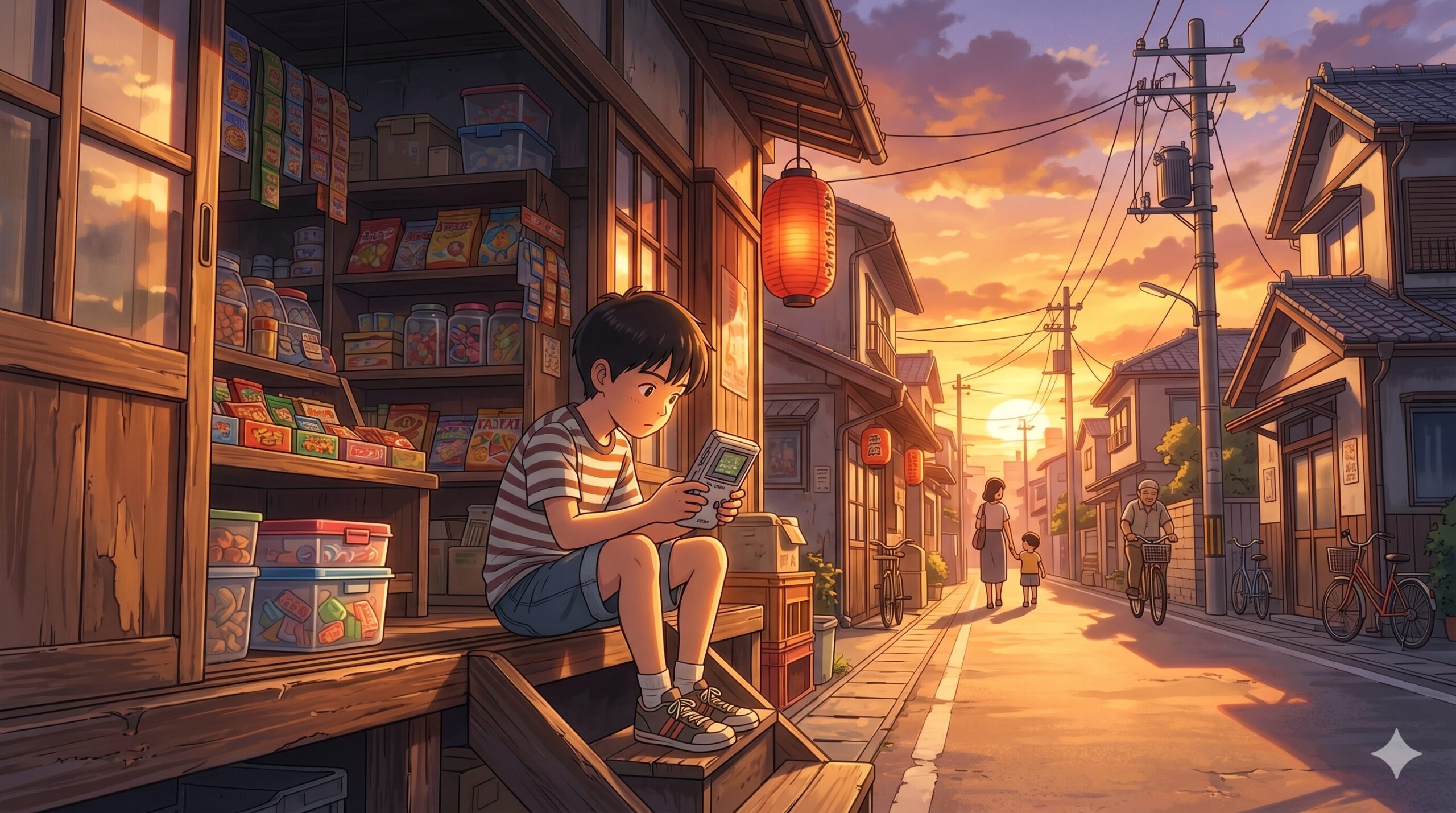
On April 21, 1989, a revolutionary device was released by Nintendo in Japan. It was the “Game Boy.” This small, gray plastic box transcended the boundaries of a mere toy, fundamentally overturning the lifestyles of people worldwide and the very concept of “play.”
The development was led by Gunpei Yokoi, a legendary developer at Nintendo. His philosophy of “Lateral Thinking with Withered Technology” became the core of the Game Boy’s design. Instead of pursuing the latest cutting-edge technology, the idea was to apply widely adopted, inexpensive technology (like monochrome LCD screens) to a completely new field of play. As a result, the Game Boy achieved a perfect balance of the three most critical elements for a portable game console: an “affordable price,” “long battery life,” and “rugged durability.”
Furthermore, what solidified the Game Boy’s global success was its pairing with “Tetris.” This simple puzzle game of arranging falling blocks was a perfect match for a handheld device. From children to adults, every generation picked up a Game Boy, obsessively stacking blocks on trains, in parks, or under their bedsheets.
A Masterpiece Born from Japanese “Monozukuri” and the Culture of “Miniaturization”
Unraveling the historical significance of the Game Boy reveals a deep connection with unique Japanese culture. Since ancient times, Japan has had a culture of “miniaturization” (Chijimi), appreciating the world condensed into small forms. Examples include “Bonsai,” which expresses vast nature in a small pot, and “Netsuke,” which scales intricate carvings down to palm-size.
The Game Boy is exactly the modern embodiment of this culture of miniaturization. It condensed grand adventures and heated battles—which previously could only be experienced sitting in front of a television—into a palm-sized format that could be slipped into a pocket and taken anywhere. Just as Sony’s “Walkman” liberated music into personal space, Nintendo’s “Game Boy” elevated gaming into a deeply personal, portable experience.
Moreover, the system of “trading” and “battling” using the Link Cable is a manifestation of Japanese communication culture. “Pokémon,” released in 1996, fully utilized this communication feature, creating an entirely new social phenomenon where players connected and interacted in the real world. Japanese “Monozukuri” (craftsmanship) excels not only in making precise machines but also in designing human behavior and social connections, and the Game Boy stands as one of its most successful examples.
What Was Your “First Adventure”?
The Game Boy gave us the infinite freedom of “carrying an adventure anywhere.” The screen was monochrome and lacked a backlight; many likely share the experience of relying on streetlights to play at dusk. Yet, within that tiny screen, an infinite universe expanded.
Now, I ask you, the reader of this article: What was the first portable game that captivated you in your life? If you could gift the younger you just one game cartridge today, what would you choose? Please share the memories of your “little grand adventures.”
For more deep dives into Japanese anniversaries, historical events, and culture, please visit our “What’s Today’s Special Day” series here.
Reference: Nintendo Co., Ltd. Corporate History
1989年4月21日:世界を熱狂させた「ゲームボーイ」の誕生
1989年4月21日、日本の任天堂から一つの革新的なデバイスが発売されました。それが「ゲームボーイ(Game Boy)」です。この灰色の小さなプラスチックの箱は、単なるおもちゃの枠を超え、世界中の人々のライフスタイル、そして「遊び」の概念を根底から覆すことになります。
開発を主導したのは、任天堂の伝説的な開発者である横井軍平氏です。彼の哲学である「枯れた技術の水平思考」が、ゲームボーイの設計の核となりました。最新の最先端技術を追い求めるのではなく、すでに広く普及して安価になった技術(モノクロの液晶ディスプレイなど)を、全く新しい遊びの分野に応用するという発想です。これにより、ゲームボーイは「手の届く価格」「長時間のバッテリー寿命」「壊れにくい頑丈さ」という、携帯ゲーム機にとって最も重要な3つの要素を完璧なバランスで実現しました。
さらに、ゲームボーイの世界的成功を決定づけたのが「テトリス」との出会いです。落ちてくるブロックを組み合わせるこのシンプルなパズルゲームは、携帯機との相性が抜群でした。子供から大人まで、あらゆる世代がゲームボーイを手にし、電車の中で、公園で、あるいはベッドの中で、夢中になってブロックを積み上げました。
日本の「モノづくり」と「縮み」の文化が結実した傑作
ゲームボーイの歴史的意義を紐解くと、日本特有の文化との深い結びつきが見えてきます。日本には古くから、広大な自然を小さな鉢の中に表現する「盆栽」や、精巧な彫刻を手のひらサイズに収める「根付」など、世界を小さく凝縮して愛でる「縮み」の文化が存在します。
ゲームボーイは、まさにこの「縮み」の文化の現代版と言えます。テレビの前に座らなければ体験できなかった壮大な冒険や白熱のバトルを、手のひらサイズに凝縮し、ポケットに入れてどこへでも持ち運べるようにしたのです。ソニーの「ウォークマン」が音楽を個人の空間に解放したように、任天堂の「ゲームボーイ」はゲームをパーソナルな体験へと昇華させました。
また、通信ケーブルを使った「交換」と「対戦」のシステムは、日本のコミュニケーション文化の表れでもあります。1996年に発売された「ポケットモンスター」は、この通信機能を最大限に活用し、プレイヤー同士が現実世界で繋がり、交流するという全く新しい社会現象を生み出しました。日本の「モノづくり」は、単に精密な機械を作るだけでなく、人々の行動や社会の繋がり方までをデザインすることに長けており、ゲームボーイはその最も成功した例の一つです。
あなたにとっての「初めての冒険」は何ですか?
ゲームボーイは、私たちに「どこへでも冒険を持ち歩ける」という無限の自由を与えてくれました。画面はモノクロでバックライトもなく、夕暮れ時には街灯の明かりを頼りにプレイしたという経験を持つ人も多いことでしょう。それでも、あの小さな画面の中には、無限の宇宙が広がっていました。
さて、この記事を読んでいるあなたに問いかけます。あなたが人生で初めて夢中になった携帯ゲームは何ですか?もし今日、当時の自分に一つだけゲームソフトをプレゼントできるとしたら、何を選びますか?あなたの記憶の中にある「小さな大冒険」の思い出を、ぜひ教えてください。
その他の日本の記念日や歴史的な出来事、文化の深掘りについては、こちらの「今日は何の日」シリーズをご覧ください。
参考リンク:任天堂株式会社 会社情報の歴史

コメント