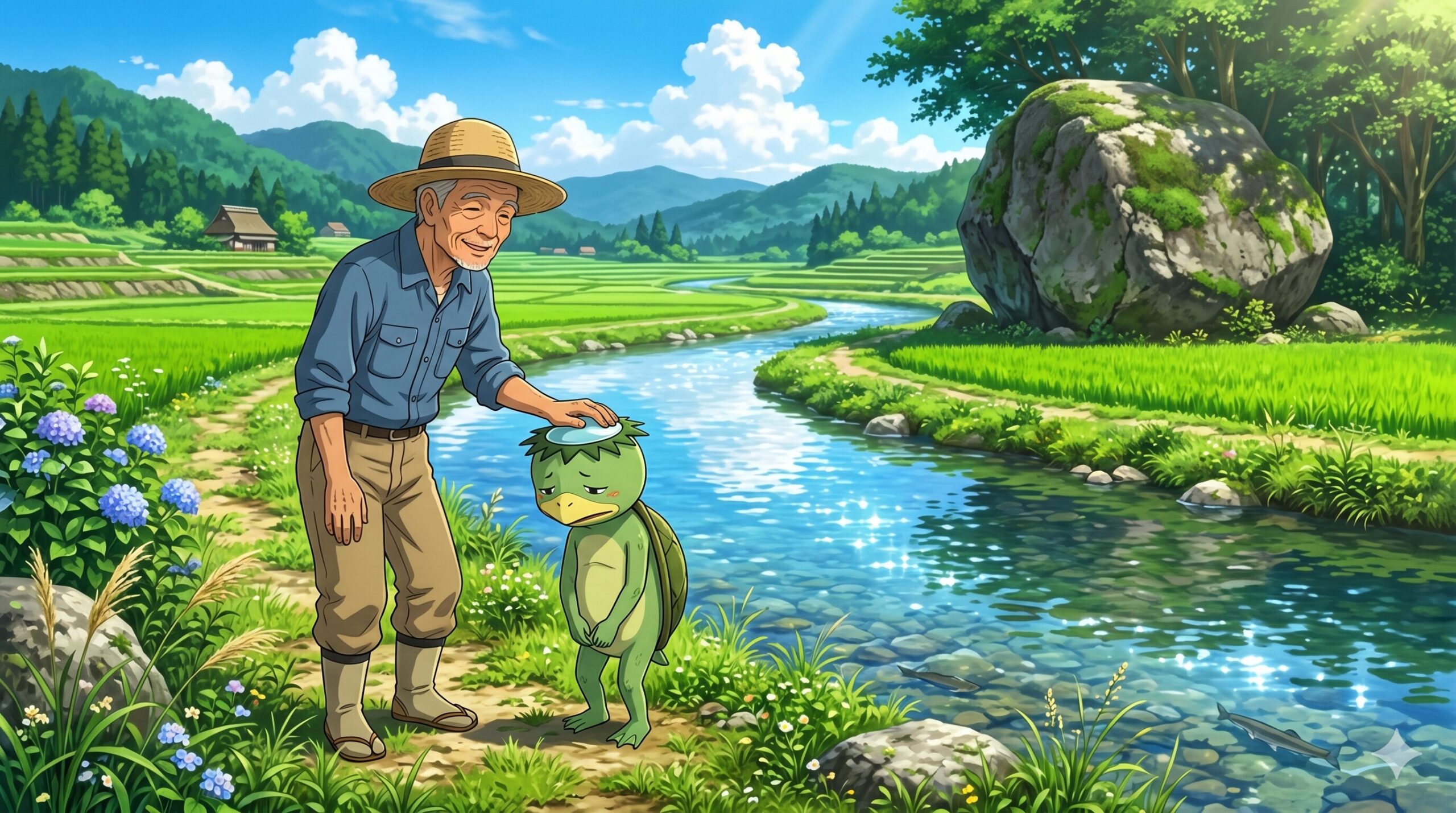
Long ago, in an era when mysterious creatures known as “Yokai” lived alongside humans across Japan, a highly mischievous “Kappa” resided in a large swamp in the Katsuyama district of present-day Shimonoseki City, Yamaguchi Prefecture.
A Kappa is a representative Japanese waterside Yokai, characterized by its green body, a turtle-like shell on its back, and a unique, water-filled “dish” on top of its head. Although they are about the size of a human child, they possess bottomless physical strength. The Kappa living in the Katsuyama swamp caused great trouble for the villagers by ravaging their fields, frightening livestock, and stealing belongings.
One hot summer day, an old farmer named Gosaku took his precious cow to the Sunagoda River to bathe. While Gosaku was carefully washing the cow, the mischievous Kappa quietly approached and tightly tied the cow’s tail to a wooden stake on the riverbank.
The startled cow thrashed wildly. Utterly exhausted from the ordeal, Gosaku climbed up onto the bank and decided to take a rest, drinking sake from a gourd he had brought with him. Hiding in the shade of a tree, the Kappa watched the scene with intense curiosity, especially intrigued by the “sake” Gosaku was drinking.
When Gosaku seemingly looked away, the Kappa seized the opportunity and gulped down all the sake. However, this was exactly the trap Gosaku had set. As the Kappa became intoxicated and unsteady, Gosaku swiftly lunged from behind and forcefully scooped out the water from the “dish” on the Kappa’s head—the creature’s ultimate weak point.
Losing the water in its dish, the Kappa’s strength completely vanished, and it collapsed. Gosaku tied the Kappa tightly with a thick rope and bound it to a pillar under the blazing midsummer sun. Drying up under the scorching heat, the Kappa wept in agony and begged for its life: “Water, please… If you save me, I will never do anything bad to the villagers again.”
Seeing its pitiful state, Gosaku, a compassionate farmer, realized the Kappa was truly remorseful. He untied the ropes and poured fresh water into its dish. The Kappa regained its vitality, bowed deeply, and ran away.
Early the next morning, Gosaku found an unbelievable sight at his rice field. The Kappa was pulling out weeds from the paddy at a blindingly fast pace, finishing a task that would take a human several days in a flash. Miraculously, weeds never grew back in those places again.
In the evening, the Kappa guided Gosaku to the riverbank. There, it effortlessly lifted a massive stone—a boulder no human could ever move—and placed it with a heavy thud near the bridge. The Kappa declared: “Until the day this massive stone turns into tiny grains of sand, we, the Kappa clan, will never again harm the humans of this land.”
From that day on, peaceful daily life returned to the villagers. The giant stone, known as the “Kappa Stone,” is still carefully preserved today as a guardian deity of the local area.
Analysis: The Duality of Mischief and Repayment
The tale of “Sunagoda no Kappa” encapsulates profound moral lessons. The first aspect is the “duality” of the Kappa. Initially, it represents an absolute nuisance, symbolizing the unreasonable threats of nature. However, it later transforms into a benefactor. This represents the classic Japanese spirit of “Ongaeshi” (repayment), a strong belief that even non-human entities will return a favor if shown compassion.
Japanese Culture: Coexistence with Water Gods
The most significant cultural element is the animistic spirit of “awe and coexistence with nature.” In Japan’s agricultural history, “water” was both a blessing and a threat. Many believe Kappa are fallen forms of “Suijin” (Water Gods). Gosaku’s forgiveness reflects the wisdom that nature cannot be completely dominated; instead, reconciliation and respectful distance lead to harmony.
To Our Readers: What Would You Do?
If you were in Gosaku’s shoes, what would you have done? Could you let go of past anger and forgive a being that threatened your livelihood? Or would you choose the path of thorough elimination? This story poses many questions about tolerance and our interaction with the environment. What is your answer?
Reference: The Legend of Sunagoda no Kappa
Discover more: Japanese Folktale Series
日本の妖怪伝説:砂子多の河童(すなごだのかっぱ)
昔々、日本中のあちこちに「妖怪」と呼ばれる不思議な生き物たちが人間と隣り合わせて住んでいた時代のお話です。現在の山口県下関市勝山地区にある広大な沼にも、ひときわいたずら好きな「河童(かっぱ)」が棲みついていました。
河童とは、緑色の体に亀のような甲羅を背負い、頭の上に水が入った「皿」を持つ日本の代表的な水辺の妖怪です。彼らは人間の子どもほどの大きさですが、底知れぬ力を持っています。勝山の沼に住むこの河童は、村の畑を荒らしたり、家畜を驚かせたり、道を歩く村人に相撲を挑んでは持ち物を奪い取ったりと、村人たちを大いに困らせていました。
ある夏の暑い日のことでした。勝山の勝谷という村に住む吾作(ごさく)という老百姓が、農作業の疲れを癒やすために、飼っている大切な牛を連れて砂子多川(すなごだがわ)へ行水をさせに行きました。吾作が牛の体を丁寧に洗っていると、あのいたずら河童がこっそりと近づき、牛の尻尾を川辺の杭に固く縛り付けてしまったのです。
驚いた牛は暴れ回り、吾作は必死になだめすかして、ようやく牛を落ち着かせました。すっかり疲れ果てた吾作は岸に上がり、持参したひょうたんに入った酒を飲んで一休みすることにしました。
木陰に隠れてその様子を見ていた河童は、吾作が美味しそうに飲んでいる「酒」に興味津々です。河童は吾作が目を離した隙を狙い、ひょうたんを奪って中身の酒をごくごくと飲み干してしまいました。しかし、これこそが吾作の罠だったのです。
酒に酔って足元がおぼつかなくなった河童に対し、吾作は素早く背後から飛びかかりました。そして、河童の弱点である「頭の皿」に乗っている水を、手で勢いよく掻き出したのです。頭の皿の水を失った河童は、魔法が解けたように全身の力が抜け、その場にへたり込んでしまいました。
吾作は動けなくなった河童を太い縄でぐるぐる巻きに縛り上げ、容赦なく真夏の太陽が照りつける納屋の柱に括り付けました。「いつも村人に迷惑ばかりかけおって。今日という今日はたっぷりと懲らしめてやる!」
炎天下の中、干からびていく河童は苦しさのあまり涙を流して命乞いを始めました。「水をお願いします。干からびて死んでしまいます。助けてくれたら、もう二度と村の人たちに悪いことはしません。どうか、どうか許してください」
その哀れな姿を見た吾作は、厳しい罰を与えつつも根は優しい日本の農民でした。河童が心から反省していることを悟ると、縄を解き、頭の皿にたっぷりと新鮮な水を入れてやりました。水を得た河童は瞬く間に元気を取り戻し、深く頭を下げてその場から走り去りました。
翌日の早朝、吾作が自分の田んぼへ行くと、信じられない光景が広がっていました。あの河童が、楽しげな歌を歌いながら、目にも止らぬ速さで田んぼの雑草を次々と引き抜いていたのです。人間が何日もかかる草取りの作業を、河童はあっという間に終わらせてしまいました。不思議なことに、河童が草を抜いた場所からは、二度と雑草が生えてこなかったと伝えられています。
夕方になり、作業を終えた河童は吾作を砂子多川の岸辺へと案内しました。そして、川の底から人間の力では到底動かせないような巨大な石を軽々と持ち上げ、川のたもとにどしんと置きました。
河童は吾作の目をまっすぐに見て、こう宣言しました。
「この大きな石が風雨で削られ、小さな砂粒になる日まで、我々河童一族は二度とこの土地の人間に悪さをしません。約束します」
そう言い残すと、河童は水しぶきを上げて川の奥深くへと姿を消しました。それ以来、勝山の村で河童の姿を見た者は誰もいなくなり、村には平和な日常が戻りました。河童が残した巨大な石は「かっぱ石」と呼ばれ、今でも地域の守り神として大切に語り継がれています。
物語の考察:いたずらと恩返しの二面性
「砂子多の河童」の物語は、単なる妖怪の退治話ではなく、非常に深い教訓と日本独自の精神性を内包しています。まず注目すべきは、河童という妖怪の「二面性」です。前半の河童は、農業を営む村人にとっての「害悪」そのものです。これは人間の力ではコントロールできない理不尽な自然の脅威を象徴しています。
しかし、後半の展開で河童は一転して「恩人」となります。これは日本の昔話に頻繁に登場する「恩返し(Ongaeshi)」の精神の典型です。日本の精神風土において、人間以外の存在であっても、情けをかければ必ず義理を果たし、恩を返すという強い信念が存在します。また、最後に巨大な石を置き、「石が砂になるまで」という途方もない時間を約束の期限に設定する点は、自然と人間が不可侵の契約を結んだ瞬間を描いています。
日本文化と河童:水神としての信仰と共生
この物語から読み解くことができる最も重要な日本文化の要素は、「自然への畏怖と共生」というアニミズムの精神です。日本は稲作を中心に発展してきたため、「水」は豊穣の源であると同時に、氾濫という恐怖の対象でもありました。河童という妖怪は、実はこの「水神(Suijin)」が零落した姿、あるいはその使いであるという説が有力です。
吾作が河童を許した背景には、「自然を完全に支配することはできない」という農民の知恵があります。自然の脅威(河童)を人間の知恵(酒の罠)でいさめ、適度な距離感を持って和解する。現代でも下関市には「かっぱ石」が大切に祀られており、妖怪を排除するのではなく、教訓として共存させていく姿勢は、日本の豊かな精神文化の象徴と言えます。
読者の皆様へ:あなたならどうしますか?
もし、あなたが吾作の立場だったらどうしていたでしょうか?何度も自分たちの生活を脅かしてきた存在が弱り切っているとき、過去の怒りを忘れて許すことができますか?それとも、徹底的に排除する道を選びますか?この物語は、現代を生きる私たちにも、寛容さや自然との向き合い方について、多くの問いを投げかけています。ぜひ、あなた自身の答えを考えてみてください。
参考リンク:勝山地区の河童伝説「砂子多の河童」
その他の日本昔話はこちら:Japanese Folktale Series
コメント