1. The Story: “The Village Border of North and South”
Long ago, there were two neighboring villages named “Kitagata” (North) and “Minakata” (South). Between them stood a mountain with an undefined boundary. For generations, the villagers fought over where they could gather firewood and cut grass.
“This land belongs to us!” “No, it has been ours since ancient times!”
The discussions went in circles, and a resolution seemed impossible. Finally, the elders of both villages met and decided to settle the border with a “fair wager.”
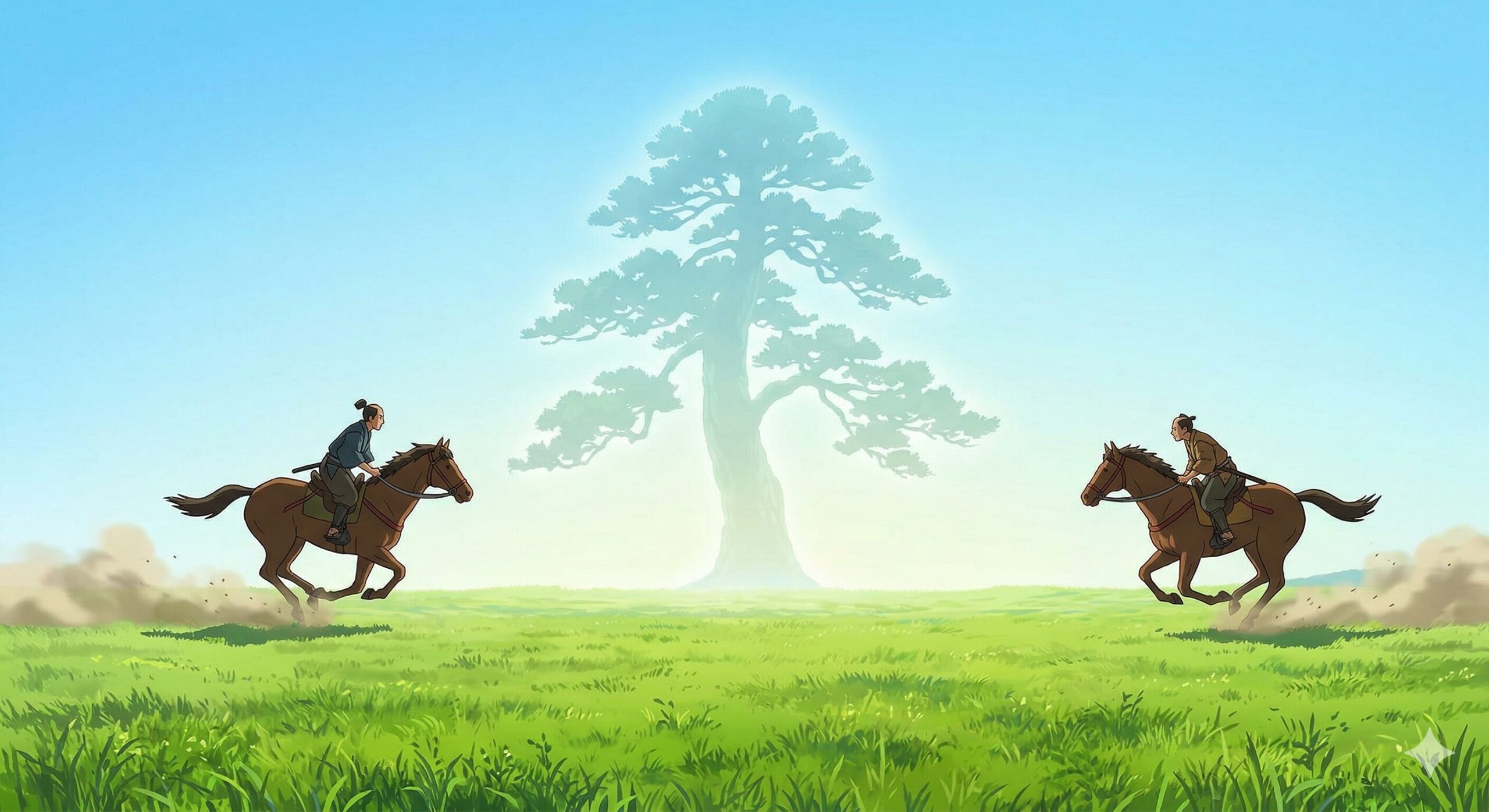
The wager was simple: “At dawn, a horse from the North and a cow from the South will start running from their respective villages. The point where they meet will be the permanent border.”
Everyone knew a horse was much faster than a cow. It seemed the North would win overwhelmingly. However, the South proposed a specific condition: “If the horse defecates while running, the rider must stop and clean it up before proceeding. That makes it fair, right?”
The people of the North agreed, thinking it wouldn’t happen often. On the day of the race, the horse sprinted like the wind, nearly reaching the South village. But as fate would have it, the horse stopped to defecate multiple times. Each time, the rider had to stop and meticulously clean the path. Meanwhile, the South’s cow kept walking slowly but steadily. In the end, they met much further north than expected.
The border was settled in a way that everyone accepted (with a bit of a chuckle), ending the long-standing conflict.
2. Analysis: The Strategic Use of “Absurdity”
What makes this story fascinating is the combination of physical speed (the horse) and a behavioral constraint (cleaning droppings). If it were a pure race, the North would have taken all the land, leaving the South resentful and ensuring future conflict.
The “poop rule” acted as a diplomatic brake. By introducing “cleanliness” and “manners” into the rules, they brought humor to a tense situation. This is a classic example of Japanese conflict resolution: prioritizing emotional harmony over cold logic.
3. Cultural Context: The Spirit of “Wa” (Harmony)
In Japanese culture, village borders were not just lines on a map; they were “Kekkai” (spiritual boundaries). People often placed “Dosojin” (road ancestors) statues at borders to ward off evil. Thus, settling a border was both a survival necessity and a sacred act.
This tale reflects the spirit of “Wa” (Harmony). Instead of a “zero-sum game” where one wins and one loses, they looked for a way to coexist by introducing an element of luck or fate. This wisdom of avoiding direct confrontation through humor is still seen in modern Japanese social practices.
4. What Would You Do?
After reading this, what do you think? Do you feel the rule was unfair, or do you think it was a brilliant way to keep the peace? If you were in a dispute today, could you find a “horse dropping” rule to settle it with a smile? Let us know your thoughts!
5. References
- External: Dosojin – Wikipedia (Deities of the Border)
- Internal: Japanese Folktale Series – Category
境界線は「馬の落とし物」が決めた?『北方と南方の村ざかい』に見る日本人の知恵と共生
1. 昔話のストーリー:『北方と南方の村ざかい』
昔々、あるところに「北方(きたがた)」と「南方(みなかた)」という隣り合う二つの村がありました。この二つの村の間には、境界線がはっきりと決まっていない山があり、村人たちは長い間、薪(まき)を拾う場所や草を刈る場所を巡って争っていました。
「ここから先は我々の村の土地だ!」「いや、古くからここまではうちの村のものだ!」
話し合いは平行線をたどり、一向に決着がつきません。そこで、両方の村の長老が集まり、ある「公平な賭け」で境界線を決めることにしました。
その賭けとは、「ある日の夜明けとともに、北方の村からは馬を、南方の村からは牛を走らせ、両者が出会った場所を境界とする」というものでした。馬は足が速く、牛は足が遅い。一見すると北方の村が圧倒的に有利に思えましたが、南方の人々も黙ってはいません。彼らはある特別な条件を提案しました。
「馬は足が速いが、走っている途中で馬が糞(ふん)をしたら、その糞を片付けるまで馬を止めておかなければならない。それなら公平だろう?」
北方の人々は「いくらなんでも、そんなに何度も糞はしないだろう」と高を括り、この条件を飲みました。いよいよ決戦の日、夜明けの鐘とともに馬と牛がそれぞれの村を出発しました。
案の定、馬は風のように駆け抜け、南方の村のすぐ近くまで迫ります。しかし、運命のいたずらか、馬は重要な局面で何度も糞をしました。そのたびに北方の引き手は足を止め、丁寧に糞を始末しなければなりません。その間に、ゆっくり、しかし着実に歩みを進める南方の牛。結局、両者が出会ったのは、当初馬が到達するはずだった場所よりも、ずっと北寄りの地点でした。
こうして、誰もが納得(あるいは苦笑い)する形で境界線が決まり、二つの村の争いは幕を閉じました。現在でもその場所には、境界を示す印が残っていると言われています。
2. 昔話を考察する:なぜ「糞」が必要だったのか
この物語の面白い点は、物理的な速さ(馬)と、制約による遅延(糞の始末)を組み合わせることで、結果的に「ほどよい着地点」を見出しているところです。もし単なる競争であれば、北方の村が広大な土地を手に入れ、南方の村は衰退し、遺恨が残ったことでしょう。
「馬が糞をしたら止まる」という一見馬鹿げたルールは、実は「強者が勝ちすぎないためのブレーキ」として機能しています。また、糞の始末という「清潔さ」や「マナー」をルールに組み込むことで、争いにユーモアを持ち込み、敗者となる側(この場合は不利を補った南方側)にも納得感を与えています。これは、冷徹な法理論ではなく、感情的な調和を重視する日本的な紛争解決のプロトタイプと言えます。
3. 日本文化との関連:境界線と「和」の精神
日本文化において、村の境界は単なる土地の区切りではなく、霊的な意味を持つ「結界」でもありました。境界には「道祖神(どうそじん)」が祀られ、外から来る災いを防ぐ役割がありました。そのため、境界争いは生存に関わる重大事でありながら、同時に神聖な儀式としての側面も持っていました。
この昔話には、日本人が古来より大切にしてきた「和(わ)」の精神が色濃く反映されています。どちらかが100%勝ち、どちらかが0%になる「ゼロサムゲーム」を避け、お互いが少しずつ譲り合い(あるいは運命という不可抗力を受け入れ)、共存の道を模索する。土地の境界を「馬の歩み」という不確定要素に委ねることで、人間同士の直接的な対立を回避したのです。これは、現代の日本社会における「根回し」や「妥協の美徳」にも通じる、極めて日本的な知恵と言えるでしょう。
4. あなたならどうしますか?
この物語を読んで、あなたはどう感じましたか?「馬の糞で土地が決まるなんて不公平だ」と思いますか?それとも「これこそが平和を守る最高のユーモアだ」と感じますか?
もしあなたが、絶対に譲れない何かを巡って誰かと争っているとしたら、この物語の「馬の糞」にあたるような、笑いと妥協のルールを持ち込むことができるでしょうか?あなたの意見をぜひ教えてください。
コメント