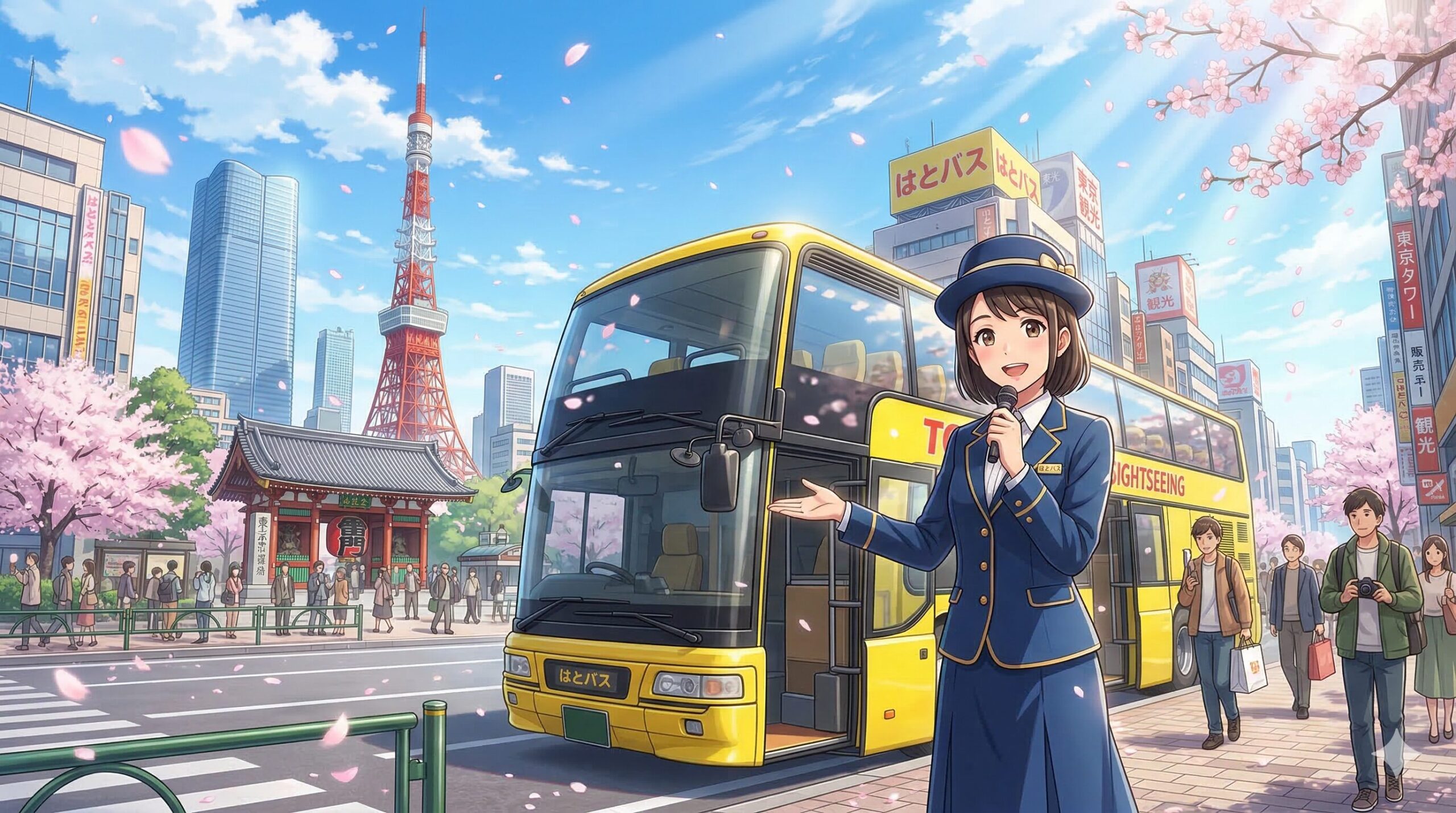
March 19, 1949: The Day Yellow Hope Began to Run Through Tokyo
On March 19, 1949, the regular sightseeing tour bus known as “Hato Bus” began its operations in Tokyo, the capital of Japan. This day marks not just the launch of a transport service, but a significant milestone in Japan’s modern tourism history. At that time, Japan was only four years out from the end of World War II. The scars of air raids were still deeply visible across Tokyo, and people were in the midst of rebuilding their lives. Against this backdrop, the introduction of a sightseeing bus touring famous spots like Ueno, Asakusa, and Ginza provided immense, bright hope to the public.
A Symbol of Post-War Recovery
The initial route started at Ueno Park, passed through the Imperial Palace Plaza and Ginza, and toured Asakusa. For the Japanese people of that era, who were desperately trying to survive day to day, the concept of “sightseeing” was an extraordinary luxury. However, viewing the resilient, recovering cityscape of Tokyo from the elevated windows of a bus served as pure vitality for the future—both for those visiting from rural areas and for the local residents dreaming of restoration. The Hato Bus has been a “moving witness to history,” continuously documenting Tokyo’s transformation from a burnt-out wasteland into a modern metropolis from the best seats available.
The Meaning of “Hato” and the Secret of the Yellow Body
The name “Hato” translates to “dove” or “pigeon,” a universal symbol of peace. It embodies the strong desire of the Japanese people, who had experienced the horrors of war, that people from all over Japan and the world could enjoy sightseeing in peace, flying freely like doves in a peaceful sky. Furthermore, while everyone today recognizes the equation “Hato Bus = Yellow,” the buses were actually a different color when they first started. The iconic yellow body was adopted later. Much like London’s red double-deckers, the highly visible, bright, and friendly yellow makes the buses instantly recognizable from a distance, and has firmly established itself as a permanent part of Tokyo’s urban landscape.
Understanding Japanese “Omotenashi” Through Hato Bus
Delving into the history of Hato Bus reveals more than just its function as a means of transportation; it uncovers the essence of “Omotenashi” (traditional Japanese hospitality), a culture Japan proudly shares with the world.
The Art of the Bus Guide: A Crystallization of Knowledge and Care
You cannot talk about Hato Bus without mentioning the uniformed “Bus Guides.” In the early days, these guides did more than simply point out landmarks; they narrated the history and scenery of tourist spots using an elegant “7-5 syllable” rhythmic meter. This unique storytelling style, drawing from the rhythms of traditional Japanese Waka and Haiku poetry, resonated beautifully with the passengers, reaching the level of pure entertainment—even art.
Moreover, within the confined space of the vehicle, the guides constantly paid close attention to the physical condition and mood of each passenger. From adjusting the air conditioning to sharing clever anecdotes, they consistently provided meticulous, unscripted care. This “consideration for others” is the very foundation of hospitality in the Japanese service industry, and Hato Bus is an organization that has embodied this spirit on the front lines for decades.
From Group Tours to Personal Experiences: An Evolving Tourism Industry
In the past, the mainstream of Japanese tourism was “group travel” organized by workplaces or local communities. Hato Bus led this culture, offering the joy of shared experiences to large groups. However, as times changed, people’s values diversified, shifting towards experiential tourism tailored to individual interests.
Hato Bus has perfectly captured this shift. Today, they offer a massive variety of programs, including night drives on open-top buses without roofs, factory night-view tours, traditional craft experience tours, and inbound tours with multilingual support in English, Chinese, Korean, and more. This adaptability—changing forms flexibly to meet modern needs while preserving the traditional spirit of hospitality—represents the “resilient strength” inherent in Japanese culture.
A Modern Perspective: Connecting the Japanese Heart from Past to Future
From its launch in 1949 to the present day, Hato Bus has always been side-by-side with Tokyo. The completion of Tokyo Tower, the hosting of the Olympics, the rise of skyscrapers, and the construction of Tokyo Skytree—the scenery from the bus windows has changed dramatically. Yet, the fundamental philosophy of “guiding you through Tokyo safely, comfortably, and joyfully” has never wavered. When we look at those yellow buses, we perceive not just a tourism business, but the post-war history of Japan and the unbroken DNA of “Omotenashi.”
How Do You Feel?
We have explored the history of Tokyo’s iconic “Hato Bus” and the Japanese culture it reflects. What kind of emotions do you think people felt as they looked out the bus windows at the recovering streets of Tokyo from the ashes of war?
If you were to visit Japan today and board this yellow bus, what kind of Tokyo scenery would you want to see? Would it be the neon-lit streets packed with the latest technology, or the traditional downtown areas preserving a good old history? Please take a moment to imagine your ideal “Tokyo Journey.”
Reference Links
Related Category
3月19日は「はとバス」運行開始の日!東京観光の象徴から読み解く日本の「おもてなし」と復興の歴史
1949年3月19日:東京の街に黄色い希望が走り出した日
1949年(昭和24年)3月19日、日本の首都・東京において、定期観光バス「はとバス」が運行を開始しました。この日は単なる交通機関の始まりではなく、日本の近代観光史における重要なマイルストーンです。当時の日本は第二次世界大戦の終結からわずか4年。東京の街にはまだ空襲の爪痕が色濃く残り、人々の生活は復興の途上にありました。そのような時代背景の中、上野、浅草、銀座といった東京の名所を巡る観光バスの登場は、人々にどれほどの明るい希望を与えたことでしょう。
戦後復興の象徴としてのスタート
運行開始当初のルートは、上野公園を出発し、皇居前広場や銀座を通り、浅草などを巡るものでした。当時の日本人は日々の生活に必死であり、「観光」という言葉自体が非常に贅沢な概念でした。しかし、復興に向かって力強く歩みを進める東京の姿を、高いバスの車窓から眺めることは、地方から上京してきた人々や、復興を夢見る東京の住民にとって、未来への活力そのものでした。はとバスは、焼け野原から立ち上がり、近代都市へと変貌を遂げていく東京の姿を最も近い特等席で記録し続けてきた「動く歴史の証人」なのです。
「はとバス」という名前と黄色い車体の秘密
「はとバス」という名称は、平和の象徴である「鳩」に由来しています。戦争の悲惨さを経験した日本人が、平和な世界で自由に空を飛ぶ鳩のように、日本中、そして世界中の人々が平和に観光を楽しめるようにという強い願いが込められています。また、現在では誰もが「はとバス=黄色」と認識していますが、運行当初は別の色でした。黄色い車体が採用されたのは後のことです。ロンドンの赤いダブルデッカーのように、遠くからでも一目で観光バスだとわかる視認性の高さと、明るく親しみやすい印象を与えるイエローは、今や東京の都市景観の一部として完全に定着しています。
「はとバス」から読み解く日本の「おもてなし」文化
はとバスの歴史を深掘りすると、単なる移動手段としての機能を超え、日本が世界に誇る「おもてなし(Omotenashi)」文化の神髄が見えてきます。
バスガイドという芸術:知識と配慮の結晶
はとバスを語る上で欠かせないのが、制服に身を包んだ「バスガイド」の存在です。初期のバスガイドたちは、ただ名所を案内するだけでなく、流麗な「七五調」のリズムに乗せて観光地の歴史や情景を語りました。この独特の語り口は、日本の伝統的な和歌や俳句のリズムを汲んだものであり、乗客の耳に心地よく響く一つのエンターテインメント、あるいは芸術の域に達していました。
また、車内という限られた空間で、乗客一人ひとりの体調や気分に気を配り、空調の温度調整から気の利いた小話まで、マニュアル化できない細やかな配慮を提供し続けてきました。この「相手を思いやる心」こそが、日本におけるサービス業の根幹をなすホスピタリティであり、はとバスはその精神を最前線で体現し続けてきた組織と言えます。
団体旅行から個人の体験へ:進化し続ける観光業
かつての日本の観光は、職場や地域のグループで参加する「団体旅行」が主流でした。はとバスは、この団体旅行文化を牽引し、多くの人々に集団で体験を共有する喜びを提供しました。しかし、時代が下るにつれて人々の価値観は多様化し、個人の興味に合わせた体験型観光へとシフトしていきました。
はとバスはこの変化を見事に捉え、現在では屋根のないオープントップバスでの夜景ドライブ、工場夜景見学、伝統工芸体験ツアー、さらには英語、中国語、韓国語など多言語対応のインバウンド(訪日外国人)向けツアーなど、多種多様なプログラムを展開しています。伝統的なおもてなしの心を守りながらも、時代のニーズに合わせて柔軟に形を変えるこの適応力こそが、日本文化の持つ「しなやかな強さ」を表しています。
現代の視点:過去から未来へ繋ぐ日本の心
1949年の運行開始から現在に至るまで、はとバスは常に東京と共にありました。東京タワーの完成、オリンピックの開催、高層ビル群の誕生、そして東京スカイツリーの建設。車窓から見える景色は劇的に変わりましたが、「安全に、快適に、楽しく東京を案内する」という根本の理念は決して変わっていません。私たちが黄色いバスを見る時、そこには単なる観光ビジネスではなく、日本の戦後史と、連綿と受け継がれてきた「おもてなし」のDNAを感じ取ることができるのです。
あなたはどう感じますか?
ここまで、東京観光の代名詞である「はとバス」の歴史と、そこから読み解く日本の文化についてお話ししました。焼け野原から復興を遂げた東京の街を、人々はどのような思いでバスの窓から見つめていたのでしょうか。
もしあなたが今、日本を訪れ、この黄色いバスに乗るとしたら、東京のどのような風景を見てみたいですか? 最新のテクノロジーがひしめくネオンの街でしょうか、それとも古き良き歴史が残る下町の風景でしょうか。ぜひ、あなたの想像する「東京の旅」について、考えを巡らせてみてください。


コメント