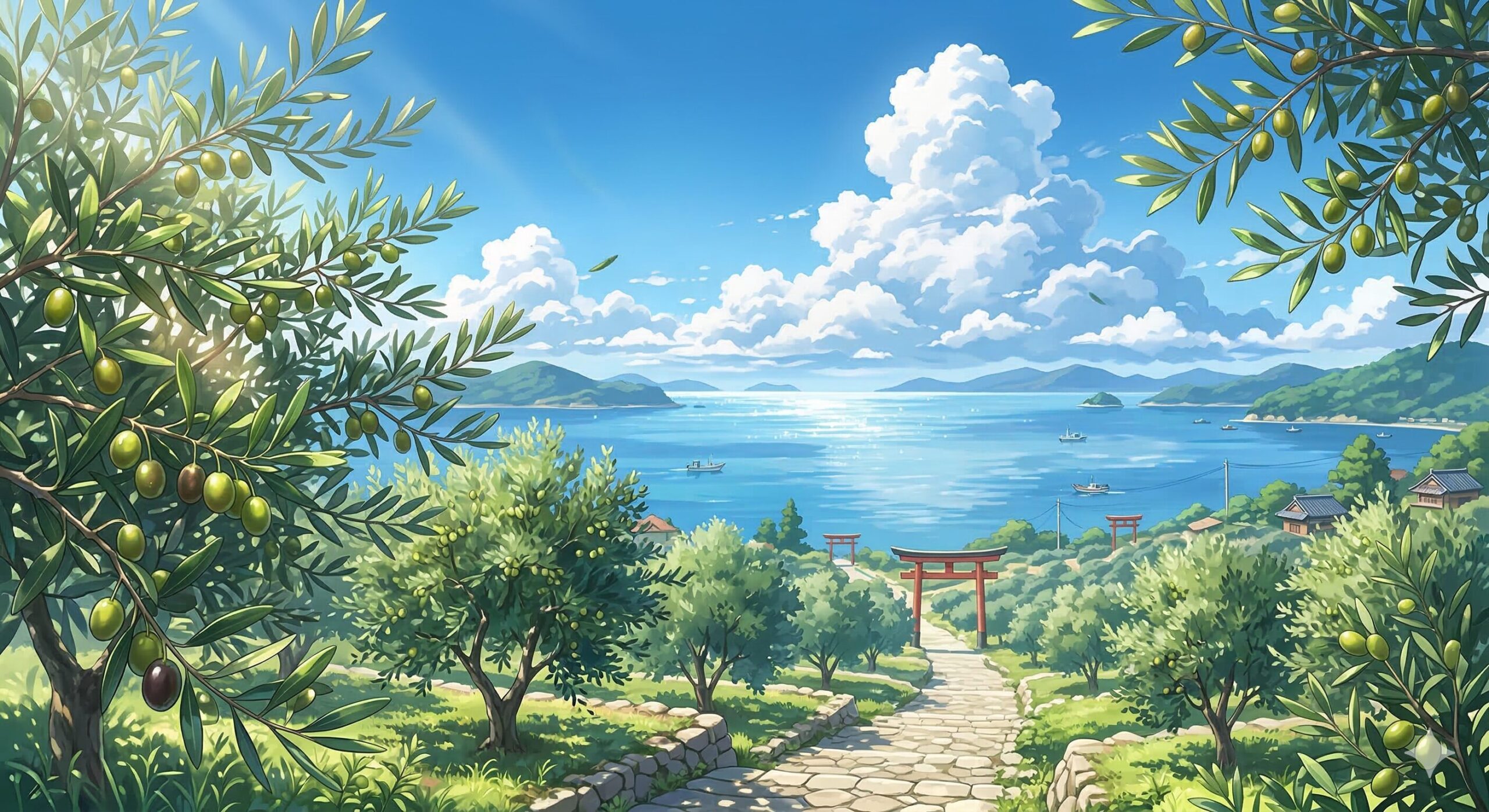
Welcome to the What’s Today’s Special Day Series, where we explore Japan’s anniversaries, calendar events, and historical milestones. Today, we are focusing on “Olive Day” (Olive no Hi), celebrated annually on March 15 in Japan. Why does a Western plant like the olive have its own special day in Japan? The answer reveals the unique Japanese climate, the indomitable spirit of its people, and the essence of Japanese culture in beautifully assimilating foreign elements.

The Origins and Historical Background of Olive Day
There is a specific reason why March 15 was chosen as Olive Day. On March 15, 1950, Emperor Showa (Hirohito) visited Shodoshima, an island in Kagawa Prefecture, and sowed olive seeds. Later, in 1972, a local organization dedicated to protecting olives officially established this date as an anniversary to commemorate the event.
However, the history of olives in Japan goes back even further. In 1908, the government began experimental olive cultivation in three prefectures—Mie, Kagoshima, and Kagawa (Shodoshima)—to domesticate the production of olive oil needed for preserving sardines. Due to unsuitable climates, the experiments failed in Mie and Kagoshima. Yet, Shodoshima, floating in the Seto Inland Sea, successfully grew them thanks to its warm, dry climate that remarkably resembles the Mediterranean. This marked the beginning of Shodoshima as the birthplace of Japanese olive cultivation.
Interpreting Japanese Culture through Olives: Cultural Receptivity and “Wa” (Harmony)
The process of the olive—a Western symbol of peace—taking root in Japan allows us to deeply understand the outstanding “receptivity” and the spirit of “Wa” (harmony) inherent in Japanese culture.
Since ancient times, Japanese people have not merely copied new cultures and technologies from overseas; they have refined them to suit their own climate and lifestyle, creating unique value. Olive cultivation on Shodoshima is a perfect example. Originally introduced for the highly practical purpose of fish preservation, the islanders nurtured the plants with great care. Over time, they elevated the olive into high-quality culinary oils, cosmetics, and a scenic tourism resource.
Even more fascinating is the fusion with Shodoshima’s traditional industries. The island has long been famous for producing soy sauce and somen (thin wheat noodles). Today, you can find “Olive Somen,” where olive oil is kneaded into the traditional noodles, as well as “Olive Beef” and “Olive Yellowtail,” derived from livestock and fish fed with olive fruits. This perfectly harmonious blend of a Western plant with traditional Japanese food culture is the very crystallization of the Japanese spirit of “Wa”—creating new value through coexistence rather than conflict.
A Prayer for Peace and Reverence for Nature
In the biblical story of Noah’s Ark, a dove returns with an olive branch, making the olive a universal symbol of peace. The act of Emperor Showa sowing seeds during Japan’s post-war reconstruction carried a powerful prayer for the nation’s peace and prosperity. Appreciating the blessings of nature and praying for peace through plants deeply resonates with the Japanese soul, which has historically valued coexistence with nature and revered the myriad deities (Yaoyorozu no Kami) within it.
Today, the beautiful olive groves of Shodoshima enchant many visitors and offer peace of mind. Knowing this historical background will surely help you realize the profound cultural significance held within a single olive tree.
For more detailed local information and tourism, please visit the Official Shodoshima Tourism Association Website.
To Our Readers
The olive, which traveled across the sea to Japan, is now seamlessly integrated into the country’s beautiful landscapes and culinary culture. How do you feel about this Japanese attitude of accepting different cultures and nurturing them as their own? Furthermore, are there any unique traditions in your country or region born from the fusion of foreign cultures? Please share your thoughts and experiences with us!
3月15日は「オリーブの日」!日本の地中海・小豆島が紡ぐ平和と希望の歴史
日本の記念日、暦、歴史的な出来事を探求する今日は何の日シリーズ。今回は、毎年3月15日に制定されている「オリーブの日」について詳しく解説します。西洋の植物であるオリーブが、なぜ日本で独自の記念日を持つに至ったのか。その背景には、日本の気候風土と人々の不屈の精神、そして異文化を美しく融合させる日本文化の真髄が隠されています。
「オリーブの日」の由来と歴史的背景
3月15日が「オリーブの日」に選ばれた明確な理由があります。それは、1950年(昭和25年)の3月15日、昭和天皇が香川県の小豆島(しょうどしま)を巡幸された際、オリーブの種をお蒔きになったことに由来します。その後、1972年(昭和47年)に「オリーブを守る会」がこの日を記念日として制定しました。
しかし、日本におけるオリーブの歴史はさらに遡ります。1908年(明治41年)、当時の農商務省がイワシの保存用オイル(オリーブオイル)を国内で自給するため、三重県、鹿児島県、香川県(小豆島)の3県でオリーブの試験栽培を開始しました。結果として、気候条件が合わず三重と鹿児島では栽培に失敗しますが、瀬戸内海に浮かぶ小豆島だけが、地中海に似た温暖で雨の少ない気候に恵まれ、見事に栽培を成功させました。これが「日本のオリーブ栽培発祥の地」としての歴史の始まりです。
オリーブから読み解く日本文化:異文化受容と「和」の精神
西洋の平和の象徴であるオリーブが日本に定着した過程から、日本文化の持つ卓越した「受容力」と「和(調和)」の精神を読み解くことができます。
日本人は古来、海外から入ってきた新しい文化や技術を単に模倣するのではなく、日本の風土や生活様式に合わせて洗練させ、独自の価値を創造してきました。小豆島におけるオリーブ栽培もまさにその典型です。当初は魚の保存用という実用的な目的で導入されましたが、島の人々はオリーブを大切に育て上げ、やがて食用オイル、化粧品、そして景観を彩る観光資源へと昇華させました。
さらに興味深いのは、小豆島の伝統産業との融合です。小豆島はもともと醤油やそうめんの生産が盛んな地域でした。現在では「手延べそうめん」にオリーブオイルを練り込んだ「オリーブそうめん」や、オリーブの果実を与えて育てた「オリーブ牛」「オリーブハマチ」など、西洋の植物と日本の伝統的な食文化が完璧に調和した特産品が次々と生み出されています。これは、異なるものを対立させるのではなく、共存させて新しい価値を生み出す日本の「和」の精神の結晶だと言えます。
平和への祈りと自然への畏敬
旧約聖書の「ノアの箱舟」の物語において、ハトがオリーブの枝を持ち帰ったことから、オリーブは世界中で「平和の象徴」とされています。昭和天皇が戦後復興の最中に種を蒔かれた行為にも、日本の平和と繁栄への強い祈りが込められていました。自然の恵みに感謝し、植物を通して平和を祈るという姿勢は、八百万の神々を信仰し、自然との共生を大切にしてきた日本人の心に深く響くものです。
現在、小豆島の美しいオリーブ畑は多くの人々を魅了し、心に安らぎを与えています。歴史的背景を知ることで、一本のオリーブの木が持つ文化的意義の重さに気づくはずです。
詳細な現地の情報や観光については、小豆島観光協会公式ウェブサイトをご覧ください。
読者の皆様へ
海を越えて日本にやってきたオリーブは、今や日本の美しい風景と食文化の一部として完全に溶け込んでいます。異なる文化を受け入れ、自分たちのものとして育む日本の姿勢について、あなたはどう感じましたか?また、あなたの国や地域には、異国の文化が融合して生まれた独自の伝統はありますか?ぜひ、あなたの考えや体験を聞かせてください。


コメント