Hello everyone! Today, I want to introduce you to a fascinating Japanese folktale that beautifully illustrates the mysterious relationship between human vulnerability and true strength, set against the backdrop of Japan’s majestic nature. The story takes place at the foot of Mount Aso in Kumamoto Prefecture, an active volcano known for having one of the world’s largest calderas.
Japanese folktales often feature characters who aren’t your typical flawless heroes, but rather clumsy, highly relatable individuals. The story we’re exploring today, “Nakeba Hyakunin-riki” (Crying Gives the Strength of a Hundred Men), is a perfect example. The term “Hyakunin-riki” is a Japanese idiom meaning “the tremendous strength of a hundred grown men.” But why would the act of crying produce such immense power? Let’s dive into this heartwarming story to find out.

The Story: “Naba” at the Foot of Mount Aso
Once upon a time, in a small village called Hinoki-mura at the base of Mount Aso, lived a young man named Daikichi. He had a massive body, like a bear, but a very gentle personality and was a bit slow-witted. The villagers sometimes teased him, but he was generally loved and accepted as a harmless, good-natured part of the community.
One day, the villagers asked Daikichi to deliver a large basket of bento (lunch boxes) to the men doing heavy labor up in the mountains. Daikichi strapped the heavy basket to his back and started his trek. However, along the way, he became incredibly hungry. Unable to resist his roaring stomach, he ended up eating every single lunch box meant for the workers.
“Oh no… I’ve eaten everything,” he panicked.
At a loss for what to do, Daikichi noticed a large tree nearby covered in “naba” (the local dialect word for mushrooms). “I’ll take these instead!” he thought. He tried to pick the mushrooms, but they were firmly attached to the trunk and wouldn’t budge.
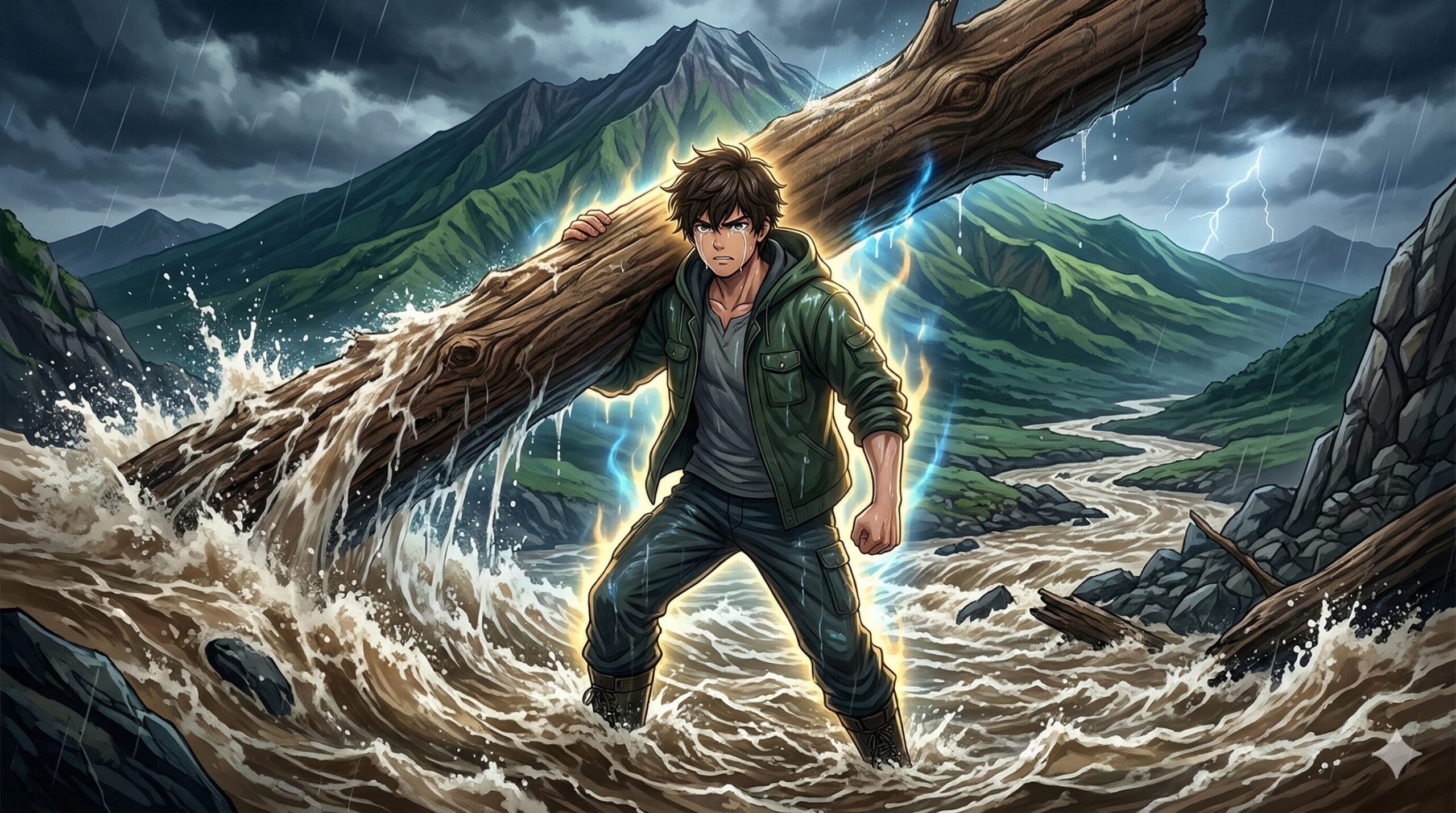
Overwhelmed with frustration and feelings of inadequacy, large tears began to stream down Daikichi’s face. The moment he burst out crying—”Waaah!”—an unbelievable surge of power coursed through his body. With raw, explosive strength, Daikichi grabbed the thick tree, effortlessly yanked it completely out of the ground by its roots, hoisted the entire tree onto his shoulder, and carried it to the mountain workers.
The men were absolutely flabbergasted to see Daikichi emerge from the forest, crying, while carrying a massive tree. From that day on, the villagers affectionately nicknamed him “Naba.”
A few years passed. An unprecedented torrential rainstorm struck Hinoki-mura. The river was on the verge of overflowing, and it was only a matter of time before the village would be swallowed by the muddy floodwaters. “We need to build a weir (a dam to hold back the water) immediately, or the village will sink!” The villagers desperately gathered to move heavy rocks and logs, but the current was too violent; human strength was useless against it.
The villagers then remembered Naba and his legendary strength. “Naba! Use your power to move the giant boulders!” However, no matter how hard Naba pushed or pulled, the rocks didn’t move an inch. Without his tears, he was just a clumsy giant.
“What’s the matter with you? You’re completely useless when it actually counts!” yelled one of the panicked villagers in frustration.
Deeply hurt by these harsh words, Naba cried out, “It’s true… I’m just a useless fool…” and began to sob. As soon as the tears rolled down his cheeks, a miracle happened. His muscles bulged, and a terrifyingly massive energy filled him. Roaring, Naba effortlessly lifted colossal boulders and giant logs that a hundred men couldn’t even budge, hurling them into the raging river one after another.
Crying the whole time, Naba single-handedly completed a magnificent weir, saving the village from utter destruction. The villagers felt deeply ashamed of their cruel words and sincerely thanked Naba for saving their lives. The dam he built became known as “Naba’s Crying Weir,” and legend says it continues to protect the people of that region to this day.
Analysis: Why Do Tears Turn Into Power?
The story of “Nakeba Hyakunin-riki” is not just the origin story of a superhero; it hides deeply interesting psychological and social themes.
1. The Embrace of Vulnerability
Typically, heroes draw their power from “anger” or a “sense of justice.” However, the source of Naba’s strength is his tears, born from “sadness” and a “feeling of worthlessness.” This teaches us that only when we fully accept our ultimate vulnerability and expose it to the world (by crying) can we unleash power that exceeds our limits. The story beautifully captures the moment when embracing one’s weakest self transforms into one’s greatest strength.
2. The Role of the Individual in a Community
Naba was usually considered “useless” in the village. Yet, when the community faced its greatest crisis, he had a role that only he could fulfill. The profound message here is that even those who fall outside society’s standards of “normal” possess unique talents, and a true community survives by individuals complementing each other’s weaknesses.
Deep Connections to Japanese Culture: Awe of Nature and Flood Control
To fully appreciate this folktale, we must look at the geographical and cultural background of Japan.
Japan is a mountainous island nation frequently hit by typhoons and torrential rains causing severe floods. Historically, “flood control” (chisui) was a matter of life and death for villages. The act of building a weir to prevent a river from overflowing is deeply woven into Japanese history. Legends of beings with superhuman strength (sometimes gods or yokai) helping with flood control exist all over Japan. This reflects the Japanese cultural “awe of nature”—the realization that human strength alone cannot conquer the wrath of the natural world.
Furthermore, Mount Aso has been worshipped as a sacred mountain since ancient times. The idea that a tremendous, earth-moving strength like Naba’s was born at the foot of Aso, an area overflowing with the earth’s raw energy, perfectly reflects the animistic views of traditional Japanese culture.
If you want to dive deeper into the fascinating world of Japanese myths and legends, please check out the Japanese Folktale Series. Many more magical stories and life lessons await you!
What Would You Do?
The story of “Nakeba Hyakunin-riki” asks us some important questions.
How would you feel if, like Naba, people around you called you “useless”? And if your greatest moment of vulnerability—your tears—could become the ultimate weapon to save others, would you have the courage to expose your weakness to the world?
In modern society, crying is often viewed negatively, but sometimes, letting your emotions explode and shedding tears might be the exact energy needed to break through a barrier. I’d love to hear your thoughts! What did you feel after reading this story, and what do you think about your own “hidden powers”? Please let me know in the comments below!
涙が呼び覚ます究極の力:日本の昔話「泣けば百人力」
こんにちは!今回は、日本の大自然と、人間の心に潜む「弱さと強さ」の不思議な関係を描いた、とても魅力的な昔話をご紹介します。物語の舞台は、世界有数の巨大なカルデラを持つ活火山、熊本県の「阿蘇山」の麓です。
日本の昔話には、ただの英雄譚ではなく、どこか不器用で人間味あふれるキャラクターが数多く登場します。今回ご紹介する「泣けば百人力(なけばひゃくにんりき)」もその一つ。タイトルにある「百人力」とは、「100人の大人の男に匹敵するほどの途方もない力」を意味する日本の慣用句です。なぜ「泣く」ことがそれほどの力を生み出すのか?さっそく、その心温まるストーリーを見ていきましょう。
物語:阿蘇の麓の「なば」
むかしむかし、阿蘇山の麓にある「ひのき村」という小さな村に、大吉という若者が住んでいました。大吉は熊のように大きな体をしていましたが、性格はとてもおっとりしていて、頭の回転が少しゆっくりでした。村人たちは彼をからかうこともありましたが、どこか憎めない存在として村に溶け込んでいました。
ある日のこと。大吉は、山で力仕事をしている村の男たちに、たくさんのお弁当を届けるお使いを頼まれました。大きな籠を背負って山道を登り始めた大吉でしたが、道中でお腹がペコペコに減ってしまいます。我慢できなくなった彼は、あろうことか、届けるはずのお弁当をすべて平らげてしまったのです。
「しまった……みんなの食べるものがなくなってしまった」
困り果てた大吉は、ふと近くの大きな木に「なば(この地方の方言でキノコのこと)」がたくさん生えているのを見つけました。「これを代わりに持って行こう!」と考えた大吉はキノコを引きちぎろうとしますが、なぜか木の幹にしっかりとくっついていて、どうしても取れません。
焦りと情けなさで、大吉の目からポロポロと涙がこぼれ落ちました。彼が「うわぁん!」と大声で泣き出したその瞬間、彼の体に信じられないほどの力が湧き上がりました。なんと、大吉はその太い木を根元から「ズボッ!」と引き抜き、木ごと肩に担いで村の男たちのところへ持って行ったのです。
男たちは、泣きながら大木を担いで現れた大吉を見て度肝を抜かれました。この一件以来、村人たちは大吉のことを親しみを込めて「なば」と呼ぶようになりました。
それから数年後。ひのき村を未曾有の大雨が襲いました。川は氾濫寸前となり、村が濁流に飲み込まれるのは時間の問題です。「急いで川に堰(せき:水をせき止める壁)を作らないと村が沈んでしまう!」村人たちは総出で重い石や木を運びますが、水流が強すぎて全く歯が立ちません。
そこで村人は、あの大木を引き抜いた「なば」の怪力を頼ることにしました。「なば!お前の力で大きな岩を運んでくれ!」しかし、なばが岩を押しても引いても、ビクともしません。泣いていない時の彼は、ただの体の大きな不器用な若者だったのです。
「なんだ、肝心な時には全く役に立たない奴だな!」と、焦った村人の一人が心ない言葉を投げかけました。
その言葉に傷ついたなばは、「おら、本当に何にも役に立たないアホたい……」と声を上げて泣き出しました。するとどうでしょう。涙が頬を伝うと同時に、なばの筋肉が隆起し、凄まじい力がみなぎりました。彼は「うおおおっ!」と叫びながら、村人100人がかりでも動かせないような巨大な岩や大木を次々と軽々と持ち上げ、荒れ狂う川の中に投げ込んでいきました。
なばは泣きながら、たった一人で立派な堰を完成させ、村を洪水の危機から救ったのです。村人たちは自分たちの暴言を深く恥じ、命の恩人であるなばに心から感謝しました。彼が作ったこの堰は「なばの泣き堰」と呼ばれ、今でもその地域の人々の生活を守り続けていると伝えられています。
考察:なぜ「涙」が力に変わるのか?
この「泣けば百人力」という物語は、単なるスーパーヒーローの誕生秘話ではありません。非常に興味深い心理的・社会的なテーマが隠されています。
1. 弱さ(Vulnerability)の肯定
一般的に、ヒーローは「怒り」や「正義感」を原動力にして力を発揮します。しかし、なばの力の源は「悲しみ」と「自己無価値感(自分は役に立たないという思い)」から来る「涙」です。これは、自分の弱さを完全に受け入れ、それを外にさらけ出した(泣いた)時にこそ、人間は本来持っている限界以上の力を発揮できるという教えです。弱さを隠さないことが、最大の強さに転化する瞬間の美しさを描いています。
2. コミュニティにおける個人の役割
なばは普段、村の中で「役立たず」と見なされがちです。しかし、村が最大の危機に直面したとき、彼にしかできない役割がありました。社会において「普通」の基準から外れている人であっても、その人にしか持っていない特異な才能や役割が必ずあり、コミュニティは互いに補い合って生きていくべきだという深いメッセージが込められています。
日本文化との深い関わり:自然への畏怖と治水
この昔話をより深く理解するためには、日本の地理的・文化的な背景を知る必要があります。
日本は山が多く、台風や大雨による水害が頻発する国です。そのため、古くから「治水(Flood control)」は、村や国の存亡をかけた最重要課題でした。川の氾濫を防ぐために堰を作るという行為は、日本の歴史そのものと言っても過言ではありません。なばのような「超人的な力を持つ存在(時には神や妖怪として描かれます)」が治水事業を助けるという伝説は、日本各地に存在します。これは、自然の猛威に対して、人間の力だけでは抗えないという「自然への畏怖」の表れです。
また、舞台となっている「阿蘇山」は、古くから神聖な山として信仰の対象となってきました。大地のエネルギーがみなぎる阿蘇の麓だからこそ、なばのような大地に根ざした怪力が生まれたという設定は、非常に日本らしい自然観(アニミズム)を反映しています。
さらに多くの日本の昔話の世界に触れたい方は、ぜひこちらの日本の昔話シリーズもチェックしてみてください。さまざまな教訓や不思議な物語があなたを待っています。
あなたなら、どうしますか?
「泣けば百人力」の物語は、私たちに大切なことを問いかけています。
もしあなたが、なばのように周囲から「役に立たない」と言われたら、どう感じますか? そして、自分の最も弱い部分(涙)が、誰かを救う最大の武器になるとしたら、あなたは自分の弱さを人前にさらけ出す勇気を持てますか?
現代社会では「泣くこと」はネガティブに捉えられがちですが、時には感情を爆発させ、涙を流すことが、現状を打破するエネルギーになるのかもしれません。この物語を読んで、あなたが感じたことや、自分の「隠れた力」についてどう思うか、ぜひコメント欄で教えてください!

コメント