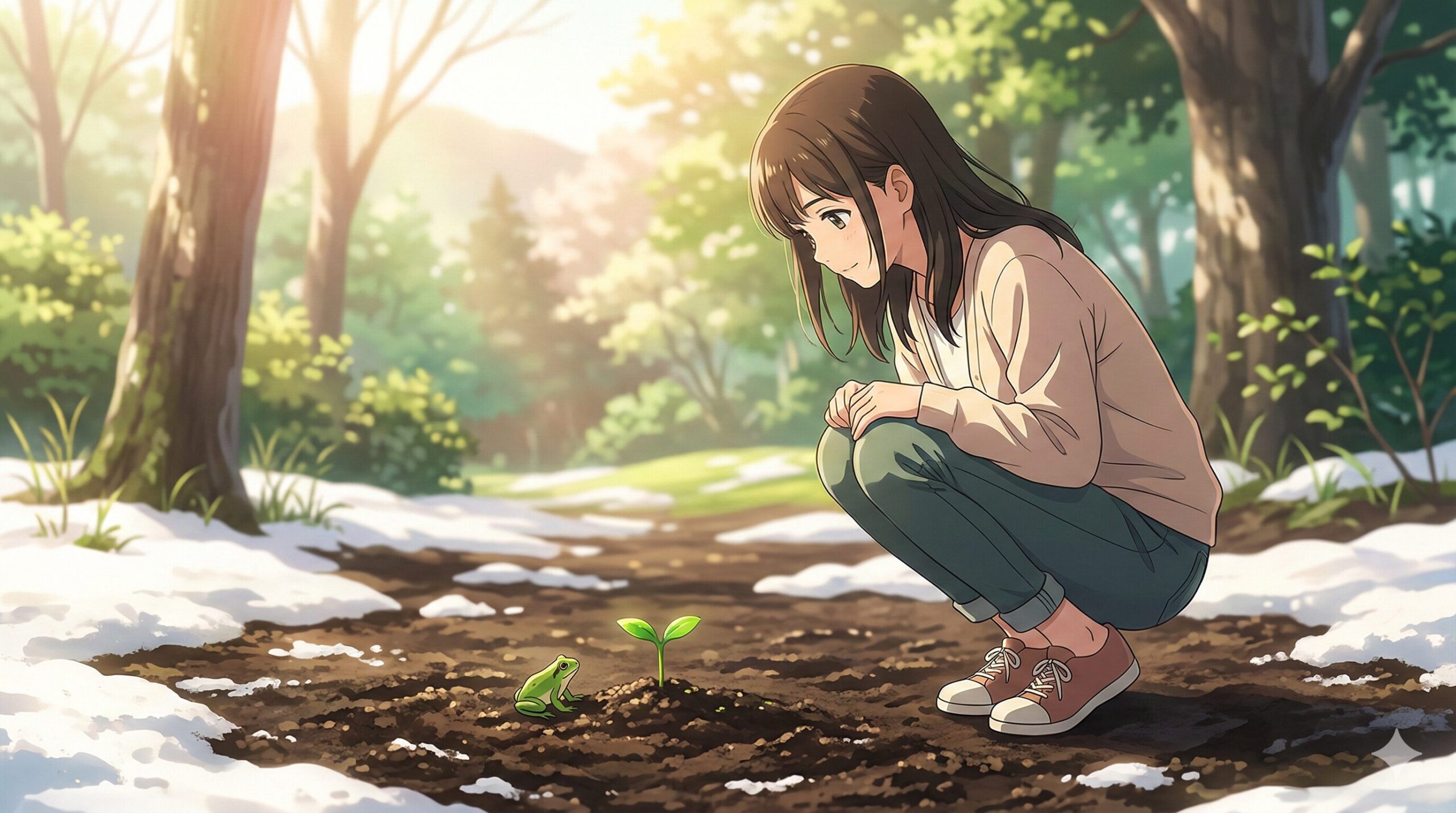
The Japanese calendar contains deep meanings that go far beyond a simple sequence of numbers. Since ancient times, the Japanese people have possessed an extraordinary sensitivity to the changing seasons, seamlessly weaving these transitions into their daily lives. One of the most beautiful examples of this is the “Nijushi Sekki” (24 Solar Terms). Today, we will explore “Keichitsu,” a day that falls around March 5th every year, to unravel the profound nature-centric worldview and culture unique to Japan.

What is “Keichitsu”? The History Hidden Behind the Word
Keichitsu marks the third term in the 24 Solar Terms, a system that divides the year into 24 distinct seasons. The Chinese character “Kei” (啓) means “to open” or “to release,” while “Chitsu” (蟄) refers to “insects and creatures hibernating underground.” Therefore, Keichitsu explicitly describes “the time when insects and creatures, having slept deep within the earth during the harsh winter, feel the warmth of spring and crawl out of their holes.”
This calendrical system, originally introduced from ancient China, became deeply rooted in Japan’s agrarian society. For farmers, Keichitsu—when insects, frogs, and snakes began to stir—was not just a date on a calendar; it was the definitive signal to begin earnest agricultural work. It is the ultimate symbol of living in absolute unison with nature by reading its subtle signs.
The Deep Connection Between Japanese Culture and Keichitsu
In Japan, there is an even more detailed calendar called the “Shichijuni-kou” (72 Micro-seasons), which further divides the 24 Solar Terms. The period of Keichitsu is categorized into three breathtakingly specific phases:
- First Phase: Sugomori mushi to o hiraku – Hibernating insects open their doors and emerge.
- Second Phase: Momo hajimete saku – Peach blossoms begin to bloom (in Japanese poetry, blossoms opening are beautifully referred to as “laughing”).
- Third Phase: Namushi cho to naru – Caterpillars transform into cabbage white butterflies.
As you can see, the Japanese have historically named and cherished the minute changes in nature that occur every five days. This represents a cultural “resolution” of nature observation that is exceptionally rare worldwide.
Another iconic cultural event during the Keichitsu period is the removal of “Yukitsuri” (snow suspenders) in places like Kenrokuen Garden in Kanazawa, Ishikawa Prefecture. The act of untying the ropes that protected tree branches from the crushing weight of winter snow is perceived by the public as the undeniable arrival of spring. Moving from winter’s defense to spring’s release, Keichitsu is the exact moment the landscape itself changes its clothes.
Decoding Keichitsu in Modern Life
For those of us living in modern urban areas, the opportunity to literally see insects emerging from the soil has diminished. However, the spirit of Keichitsu is still very much alive. During this time, Japanese dining tables are graced with “Sansai” (mountain vegetables) such as butterbur sprouts, bracken, and angelica shoots. The distinct “bitterness” of these spring foods is believed to detoxify the body of waste accumulated during winter and awaken the system. True to the Japanese proverb, “Serve bitterness on a spring plate,” humans, too, awaken from hibernation by taking the blessings of nature into their bodies.
Keichitsu teaches us that “the time has come to set stagnant things in motion.” Just as the natural world begins to actively move, there is no better day to take the first step toward a new goal.
How Do You Feel, and What Will You Do?
Surviving the harsh winter, life explosively buds during Japan’s “Keichitsu.” How do you feel about this Japanese culture that refuses to miss the smallest changes in nature and seeks to live alongside it? In your region, what signs tell you that spring has truly arrived? Starting today, try looking down at your feet or up at the trees—you might just find your very own “spring awakening.”
Reference Links
- Related Category: Read more in the “What’s Today’s Special Day?” Series
日本の春の目覚め:3月5日「啓蟄(けいちつ)」が教える自然との調和
日本のカレンダーには、単なる数字の羅列以上の深い意味が込められています。古来より日本人は、季節の移ろいを驚くほど繊細に感じ取り、それを生活の中に取り入れてきました。その最も美しい例の一つが「二十四節気(にじゅうしせっき)」です。今回は、毎年3月5日頃に訪れる「啓蟄(けいちつ)」という日を取り上げ、日本特有の自然観と文化の深層を紐解いていきます。
「啓蟄(けいちつ)」とは何か?言葉の裏に隠された歴史
啓蟄とは、一年を24の季節に分けた「二十四節気」の第3番目にあたる時期を指します。「啓」という漢字には「開く」「開放する」という意味があり、「蟄」には「土の中で冬ごもりをしている虫」という意味があります。つまり、啓蟄とは「厳しい冬の間、土の中で眠っていた虫や生き物たちが、春の暖かさを感じて穴から這い出してくる時期」を明確に表しています。
古代中国から伝わったこの暦のシステムは、農業を中心としていた日本の生活に深く根付きました。農民たちにとって、虫やカエル、ヘビなどが活動を始める啓蟄は、単なるカレンダー上の日付けではなく、「いよいよ本格的な農作業を始める合図」でした。自然のサインを読み取り、それに合わせて生きるという、自然と一体化した生活の象徴なのです。
日本文化と「啓蟄」の深い繋がり
日本には、二十四節気をさらに細かく分けた「七十二候(しちじゅうにこう)」という暦が存在します。啓蟄の期間は、以下の3つに分類されます。
- 初候:蟄虫啓戸(すごもりむしとをひらく) – 冬ごもりしていた虫が姿を現す
- 次候:桃始笑(ももはじめてさく) – 桃の花が咲き始める(「笑う」は花が咲くことを意味する美しい表現です)
- 末候:菜虫化蝶(なむしちょうとなる) – 青虫が羽化して紋白蝶になる
このように、日本では5日ごとの微細な自然の変化に名前をつけ、愛でてきました。これは世界でも稀に見る、自然に対する極めて高い解像度を持った文化です。
また、啓蟄の時期に行われる日本の代表的な風物詩に、石川県金沢市の特別名勝・兼六園などで行われる「雪吊り(ゆきづり)の取り外し」があります。雪の重みで木の枝が折れるのを防ぐために張られていた縄を外す作業は、人々の目に「春の確かな訪れ」として映ります。冬の守りから、春の解放へ。啓蟄は、風景そのものが衣替えをするタイミングなのです。
現代の生活における「啓蟄」の読み解き
現代の都市部に生きる私たちは、土から虫が出てくるのを直接目にする機会は減りました。しかし、啓蟄の精神は今も私たちの生活の中に生きています。この時期、日本の食卓には「山菜(さんさい)」であるフキノトウやワラビ、タラの芽などが並びます。これらの春の食材が持つ特有の「苦味」は、冬の間に体内に溜まった老廃物を排出し、体を目覚めさせる効果があるとされています。「春の皿には苦味を盛れ」という日本のことわざ通り、自然の恵みを体内に取り込むことで、人間もまた冬眠から目覚めるのです。
啓蟄は私たちに、「停滞していたものを動かし始める時期が来た」と教えてくれます。自然界が活動を始めるように、新しい目標に向かって一歩を踏み出すのに、これほど適した日はありません。
あなたはどう感じ、どう動きますか?
厳しい冬を越え、生命が爆発的に芽吹く日本の「啓蟄」。自然の小さな変化を見逃さず、共に生きようとする日本の文化を、あなたはどう感じましたか?あなたの住む地域では、春の訪れをどのようなサインで感じ取りますか?ぜひ、今日から少しだけ足元や木々の変化に目を向けて、あなただけの「春の目覚め」を見つけてみてください。
参考リンク
- 外部参考リンク: 国立天文台 暦計算室(日本の暦と二十四節気の公式情報)
- 関連カテゴリー: 今日は何の日シリーズをもっと読む

コメント