Japan is home to countless “Mukashibanashi” (old tales) that have been passed down through generations. These stories are packed with terrifying monsters, mysterious spirits, and the profound wisdom and spirituality of the people. Today, we introduce a mysterious tale that is a little eerie but ultimately heartwarming, one you might encounter on a dimly lit Japanese road at night: the story of “Obusaritei.”
Chapter 1: A Call from the Dark – The Story of Obusaritei
Once upon a time, in a village surrounded by the deep mountains of Japan, there lived a young man known for his exceptional good nature and extraordinary courage.
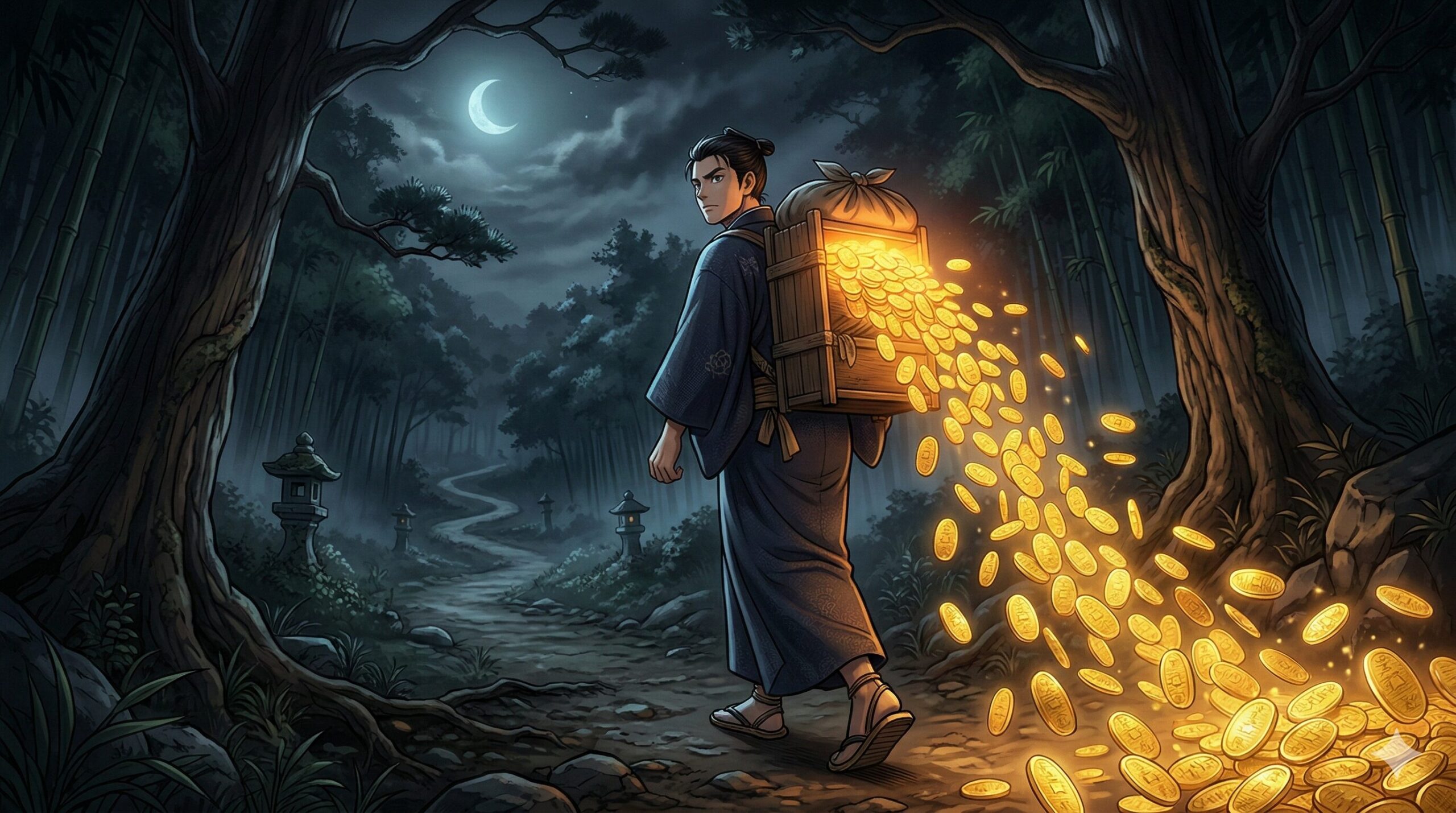
It was late autumn. The young man was hurrying home to his village after finishing his errands in a neighboring town. The sun had long since sunk below the mountain ridges, and thick clouds covered the sky, blocking even the moonlight. Only the faint, unreliable glow of his paper lantern barely illuminated the steep mountain pass beneath his feet. The wind rustled the trees, making a sound like whispering voices. It was an incredibly eerie night.
Just as the young man reached the highest point of the mountain pass, a chillingly raspy yet hauntingly persistent voice echoed from the deep valley below.
“…Obusaritee… Obusaritee…”
In old Japanese, this means “Give me a piggyback ride.” There was no one else around. Hearing that voice echo from the bottom of the darkness, any ordinary person would have screamed and run for their life. But this young man was different. He stopped in his tracks, faced the dark valley, and shouted back boldly:
“If you want a piggyback ride, then jump on! My back is open!”
Barely had he finished speaking when—*Thud!*—something incredibly heavy leaped onto his back. It was as cold as ice, and the weight was extraordinary, as if he had been forced to carry a giant boulder. The young man’s knees almost buckled, but he gritted his teeth and planted his feet firmly on the ground.
“Alright, you’re on. Let’s go.”
Without trying to shake off the “thing” on his back or uttering a single complaint, the young man started walking again. However, with every step he took, the weight on his back increased. What initially felt like a boulder soon felt like a massive block of iron. The young man’s breathing grew heavy, and sweat poured down his forehead like a waterfall.
“It’s heavy… but I can’t collapse here.”
Staking his courage and pride, the young man never stopped. After a long, grueling struggle, he finally descended the mountain pass and saw the warm lights of his village. Then, a miracle happened. The burden on his back, which had been so cold and impossibly heavy, suddenly became warm and astonishingly light.
Bewildered, the young man managed to reach his own home. He collapsed onto the earthen floor of his entryway and said, “We’re here. You can get off now,” letting the burden slide off his back.
With a clinking sound, something tumbled onto the floor. When the young man illuminated it with his lantern, there was no terrifying Yokai (monster/spirit) to be seen. Instead, glowing in the dim light was a mountain of golden coins (*Koban*). The Yokai had been deeply moved by the young man’s fearless courage and his kindness in carrying an unknown entity all the way. In return, the Yokai had transformed itself into gold to show its gratitude. Using that gold, the young man started a business, devoted his life to the peace of his village, and lived happily ever after.
Chapter 2: Analyzing the Tale: Why Did the Yokai Want a Piggyback Ride?
The owner of the mysterious voice in this story is a type of Yokai in Japanese folklore often called “Obusaritei” or “Onbu Obake” (Piggyback Ghost). The most fascinating aspect of this folktale is that the Yokai is not depicted as absolute evil that unilaterally harms humans.
While many Western monsters or evil spirits appear in stories as entities meant to be vanquished, Japanese Yokai often function as “tricksters who test humans.” The Obusaritei presented a trial: the innate human fear of the dark and the terror of the unknown.
If the young man had fled in terror, or if he had complained and thrown the creature off his back when it became too heavy, the Yokai might have flown into a rage and dragged him into the valley. The increasing weight was a test of “endurance.” The Yokai was looking for a human with the “courage” to overcome fear and the “integrity” to see a responsibility through to the end. The transformation into gold was the rightful reward prepared for the one who brilliantly passed that harsh trial.
Chapter 3: Deep Connections to Japanese Culture: Animism and Gratitude
Through this story, we can deeply understand Japanese culture and spirituality. The core of this lies in “Animism” (the belief that spirits dwell in all things) and the ethical concept that “compassion is not just for the benefit of others, but comes back to you.”
- Awe of Nature and Animism: Since ancient times, Japanese people have believed that spirits or divine presences reside in mountains, rivers, trees, and even in darkness itself. Many Yokai are personifications of the awe of natural phenomena or events beyond human understanding. In the realm of nature that humans cannot control, like a mountain pass at night, maintaining respect and vigilance toward unseen forces was a wisdom for survival.
- The Spirit of Coexistence and Compassion: The young man showed an attitude of acceptance toward the creepy, unidentified entity by saying, “Jump on.” This reflects the Japanese spirit of “Wa” (harmony) and tolerance—choosing to first accept rather than immediately eliminate something different and alien.
- The Culture of “Ongaeshi” (Repayment of Kindness): One of the most prominent themes in Japanese folktales is “Ongaeshi.” Whether it’s the Crane’s Return of a Favor or the Kasa Jizo, the structure is always the same: when you treat an entity (an animal, a spirit) with unconditional kindness and compassion, they will later reward that favor. In this story, immense wealth was granted precisely because the young man endured the trial without expecting anything in return. It strongly reflects the Japanese moral view that good deeds will always find their way back to you.
Chapter 4: To Our Readers: What Would You Do?
If you were walking down a pitch-black road at night, and from out of nowhere you heard an eerie voice asking for a piggyback ride… how would you react?
Would you run away as fast as you could? Or would you gather your courage and offer your back, like the young man in the story?
Walking under the bright streetlights of modern cities, we rarely have the chance to feel pure terror of the dark. However, moments when we must bear “unidentified heavy pressures” or “creepy trials” come to everyone in life. When that time comes, will you have the resolve to carry it through without running away? Perhaps that is the question this Yokai poses to us living in the modern world.
How did you feel about Japanese Yokai and their philosophy after reading this article? Please share your thoughts, and let us know if there are similar “tales of trials and rewards” in your country!
Explore more Japanese folktales: Japanese Folktale Series
Learn more about Japanese Yokai (External Link): Wikipedia – Yōkai
夜の闇に潜む声:日本の奇妙で心温まる昔話「おぶさりてい」
日本には、古くから語り継がれてきた数多くの「昔話」が存在します。それらの物語には、恐ろしい化け物や不思議な精霊、そして人々の暮らしの知恵や精神性がたっぷりと詰まっています。今回は、日本の薄暗い夜道で出会うかもしれない、少し不気味で、それでいて心が温かくなる不思議な物語「おぶさりてい」をご紹介します。
第一章:暗闇からの呼び声「おぶさりてい」の物語
昔々、日本の深い山々に囲まれたある村に、とても気立てが良く、また並外れた度胸を持つ一人の若者が住んでいました。
ある秋の終わりのこと。若者は隣村での用事を済ませ、自分の村へと帰る道を急いでいました。太陽はとうの昔に山の稜線の下へと沈み、空には雲が立ち込めて月明かりすら届きません。提灯の頼りない灯りだけが、足元の険しい峠道を辛うじて照らしていました。風が木々を揺らし、ザワザワという音がまるで何者かが囁いているように聞こえる、そんな不気味な夜でした。
若者が峠の一番高い場所に差し掛かった時のことです。突然、足元の深い谷底から、ひどく掠れた、それでいて耳にこびりつくような不気味な声が聞こえてきました。
「……おぶさりてぇ……おぶさりてぇ……」
それは古い日本の言葉で「おんぶしてほしい(背負ってほしい)」という意味です。周囲には誰もいません。暗闇の底から響くその声に、普通の人間であれば悲鳴を上げて逃げ出していたことでしょう。しかし、この若者は違いました。彼は歩みを止め、暗闇の谷底に向かって大きな声で言い放ちました。
「おぶさりてぇなら、おぶさってこい!俺の背中は空いているぞ!」
その言葉が終わるか終わらないかのうちに、ズシリ!と、若者の背中に何かとてつもなく重たいものが飛び乗ってきました。それは氷のように冷たく、まるで巨大な岩でも背負わされたかのような尋常ではない重さでした。若者の膝はガクンと折れ曲がりそうになりましたが、彼は歯を食いしばり、しっかりと大地を踏みしめました。
「よし、おぶさったな。それじゃあ行くぞ」
若者は背中の「何か」を振り落とすことも、不平を言うこともなく、再び歩き始めました。しかし、一歩、また一歩と足を進めるごとに、背中の重さはどんどん増していきます。最初は岩のようだった重さが、やがて鉄の塊のように感じられ、若者の息は荒くなり、額からは滝のように汗が流れ落ちました。
「重い……だが、ここで倒れるわけにはいかない」
若者は自身の度胸と意地にかけて、決して立ち止まりませんでした。長い長い格闘の末、ようやく峠を下りきり、自分の村の温かい灯りが見えてきました。するとどうでしょう。あんなに冷たくて重かった背中の荷物が、急にポカポカと温かくなり、嘘のようにスッと軽くなったのです。
不思議に思いながらも、若者は自分の家になんとか辿り着きました。土間に崩れ落ちるように座り込み、「さあ、着いたぞ。降りてくれ」と言って背中の荷物を下ろしました。
カチャリ、と硬い音がして、床に何かが崩れ落ちました。若者が提灯の明かりでそれを照らしてみると、そこには恐ろしい妖怪の姿はありませんでした。代わりに輝いていたのは、山のような黄金の小判だったのです。妖怪は、若者の恐れを知らぬ度胸と、見知らぬ存在をも背負い切った優しさに感服し、自らを黄金に変えて恩返しをしたのでした。若者はその黄金を元手に商売を始め、生涯村の平和のために尽くし、幸せに暮らしたということです。
第二章:物語の考察:なぜ妖怪は「おんぶ」を求めたのか?
この物語に登場する正体不明の声の主は、日本の民間伝承において「おぶさりてい」や「おんぶおばけ」と呼ばれる妖怪の一種です。この昔話の非常に興味深い点は、妖怪が一方的に人間に危害を加える絶対悪として描かれていないことです。
西洋のモンスターや悪霊の多くは、退治されるべき存在として物語に登場することが多いですが、日本の妖怪はしばしば「人間に試練を与えるトリックスター(いたずら者)」として機能します。「おぶさりてい」は、暗闇への恐怖心や、得体の知れないものに対する人間の本質的な怯えを試練として与えました。
もし若者が恐怖のあまり逃げ出したり、背負った途端に重さに耐えかねて文句を言いながら投げ出したりしていれば、妖怪は怒り狂い、若者を谷底へ引きずり込んでいたかもしれません。重さが増していくプロセスは、「忍耐」のテストです。妖怪は、恐怖を乗り越える「度胸」と、一度受け入れた責任を最後まで全うする「誠実さ」を持つ人間を探していたのです。黄金という結末は、その過酷な試練を見事クリアした者への正当な報酬として用意されたものでした。
第三章:日本文化との深いつながり:アニミズムと「恩返し」の精神
この物語からは、日本の文化や精神性を深く読み解くことができます。その核となるのが「アニミズム(万物に魂が宿るという考え方)」と、「情けは人の為ならず」という倫理観です。
- 自然への畏怖とアニミズム: 日本人は古くから、山、川、木、そして暗闇そのものにさえ、何らかの精霊や神格が宿っていると考えてきました。妖怪の多くは、自然現象への畏れや理解を超えた出来事が擬人化されたものです。夜の峠道という、人間がコントロールできない自然の領域においては、見えない存在に対する敬意と緊張感を持つことが生きるための知恵でした。
- 共存と慈悲の精神: 若者は正体不明の気味の悪い存在に対して、「おぶさってこい」と受け入れる姿勢を見せました。これは、自分と異なる異質な存在を即座に排除しようとするのではなく、まずは受け止めようとする日本の「和」の精神や寛容さに通じます。
- 恩返しの文化: 日本の昔話の最も代表的なテーマの一つが「恩返し(Gratitude/Repayment of kindness)」です。鶴の恩返しや笠地蔵など、無償の優しさや思いやりを持って接した相手(動物や精霊など)が、後になってその恩に報いるという構造です。この物語でも、見返りを求めずに試練に耐え抜いたからこそ、結果として大きな富がもたらされました。善い行いは必ず自分に返ってくるという、日本人の道徳観が強く反映されています。
第四章:読者の皆様へ:あなたならどうしますか?
真っ暗な夜道で、どこからともなく「おんぶしてほしい」という不気味な声が聞こえてきたら。あなたなら、どう反応するでしょうか?
一目散に逃げ出しますか?それとも、この若者のように度胸を決めて背中を差し出しますか?
現代の明るい街灯の下を歩く私たちには、暗闇への純粋な恐怖を感じる機会は少なくなりました。しかし、人生において「得体の知れない重圧」や「不気味な試練」を背負わなければならない瞬間は、誰にでも訪れます。そんな時、逃げ出さずに最後まで背負い切る覚悟を持てるかどうか。それが、この妖怪が現代を生きる私たちに突きつけている問いなのかもしれません。
この記事を読んで、日本の妖怪や考え方についてどう感じましたか?ぜひ、あなたの意見や、あなたの国にある似たような「試練と報酬の物語」があれば教えてください。
Explore more Japanese folktales: Japanese Folktale Series
Learn more about Japanese Yokai (External Link): Wikipedia – Yōkai
コメント