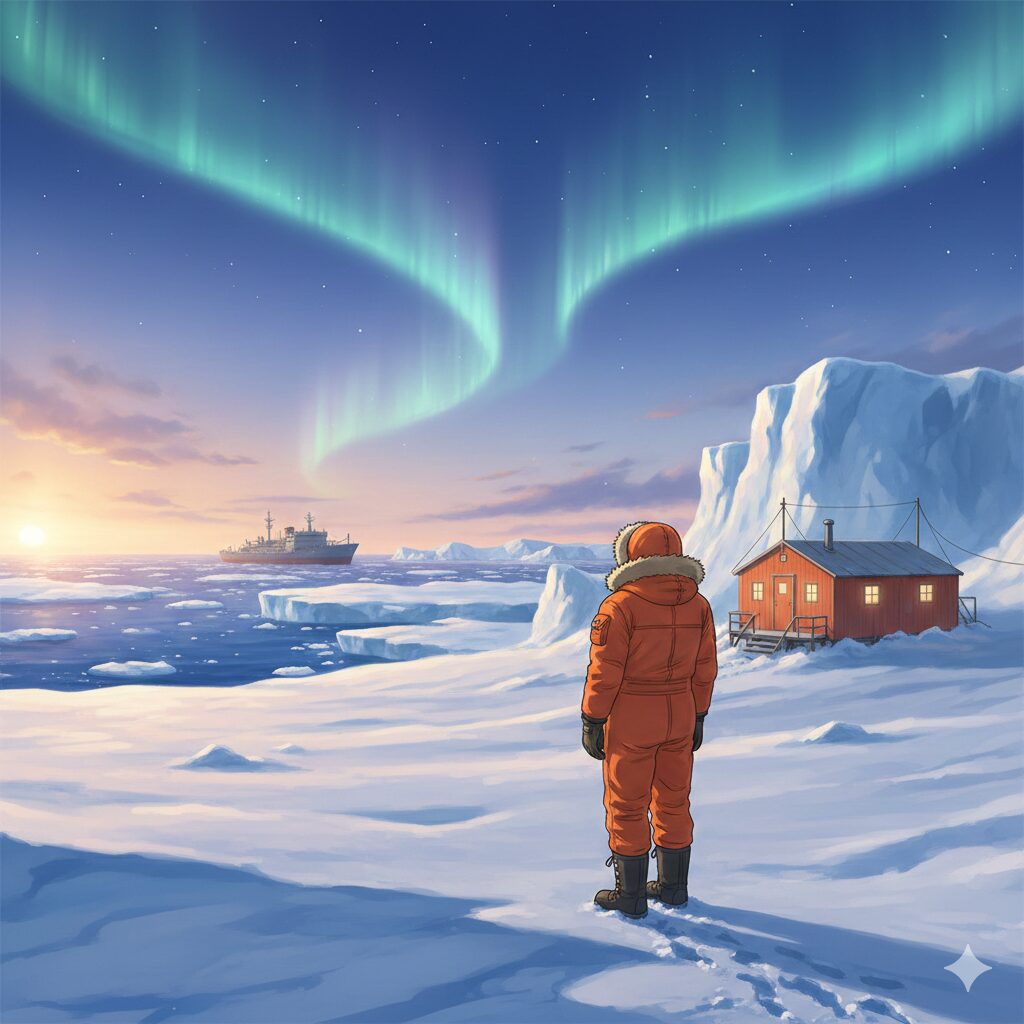
On January 29, 1957, a monumental step was engraved in the history of Japanese science and exploration. This day marks the Foundation Day of Showa Station in Antarctica.

The Dawn of Antarctic Exploration: Recovery from Defeat
In the 1950s, during the International Geophysical Year (IGY), Japan faced skepticism from the international community due to its recent defeat in WWII. However, driven by a desire to contribute to global science, Japanese researchers launched an expedition against all odds.
On January 29, 1957, the team led by Takeshi Nagata landed on Ongul Island, establishing the first Japanese Antarctic base, Showa Station.
Japanese “Monozukuri” (Craftsmanship) Supporting Extremes
- Japan’s First Prefabricated Structures: The modular building system designed for the cold influenced the future of the Japanese housing industry.
- Snowcat Development: The technology required to traverse ice fields laid the groundwork for the global reputation of Japanese automobiles.
Antarctica and Japanese Culture: The Spirit of “Wa”
The history of Showa Station reflects unique Japanese values.
1. The Spirit of “Wa” (Harmony)
In the isolation of Antarctica, the Japanese spirit of “Wa”—prioritizing group harmony and mutual respect—has been essential for survival and successful research for over 60 years.
2. “Mottainai” and Ingenuity
The tradition of “Mottainai” (not wasting resources) is vital when supplies are limited. Team members often repair equipment with whatever is on hand, showing great creativity under pressure.
How would you spend a year in the Polar Night?
Imagine a world with no sun for months and no convenience stores. If you were chosen for the wintering party, what role would you play? After learning about this history of resilience, what are your thoughts on Japanese spirit? Let us know!
External Links
1月29日:昭和基地開設記念日 — 極限の地で見出した日本の不屈の精神
1957年(昭和32年)1月29日。日本の科学技術史、そして探検史において、決して忘れることのできない一歩が刻まれました。それが昭和基地開設記念日です。
南極観測の夜明け:敗戦国からの再起
1950年代、世界は「国際地球観測年(IGY)」に向け、未知の領域であった南極の共同調査を計画していました。しかし、当時の日本はまだ敗戦の傷跡が深く、国際社会からも「敗戦国に何ができるのか」と冷ややかな視線を浴びていたのが現実です。
そんな中、日本の科学者たちは「日本も世界の一員として科学に貢献すべきだ」と立ち上がりました。1957年1月29日、永田武隊長率いる観測隊員たちがオングル島に上陸し、現在の「昭和基地」の礎を築きました。
極限環境を支えた日本の「モノづくり」
- 日本初のプレハブ構造: 短時間で組み立て可能な建築システムは、後の日本の住宅産業に大きな影響を与えました。
- 雪上車の開発: 過酷な環境での移動技術は、日本の自動車産業の信頼性を世界に知らしめました。
日本文化と「南極」:和の精神が紡ぐチームワーク
南極観測の歴史を読み解くと、そこには日本独自の文化と精神性が色濃く反映されています。
1. 「和」の精神
閉鎖空間で求められるのは、他者を思いやる「和」の精神です。日本文化特有の規律正しさが、半世紀以上にわたる観測を支えてきました。
2. 「もったいない」と創意工夫
限られた物資を大切にし、現地であるもので対応する姿勢は、日本伝統の「もったいない」の精神そのものです。
あなたなら、極夜の1年をどう過ごしますか?
太陽が昇らない「極夜」の南極。もしあなたが越冬隊の一員に選ばれたとしたら、どんな役割で貢献したいですか?この歴史を知り、今の日本の精神性についてどう感じたか、ぜひあなたの考えを聞かせてください。

コメント