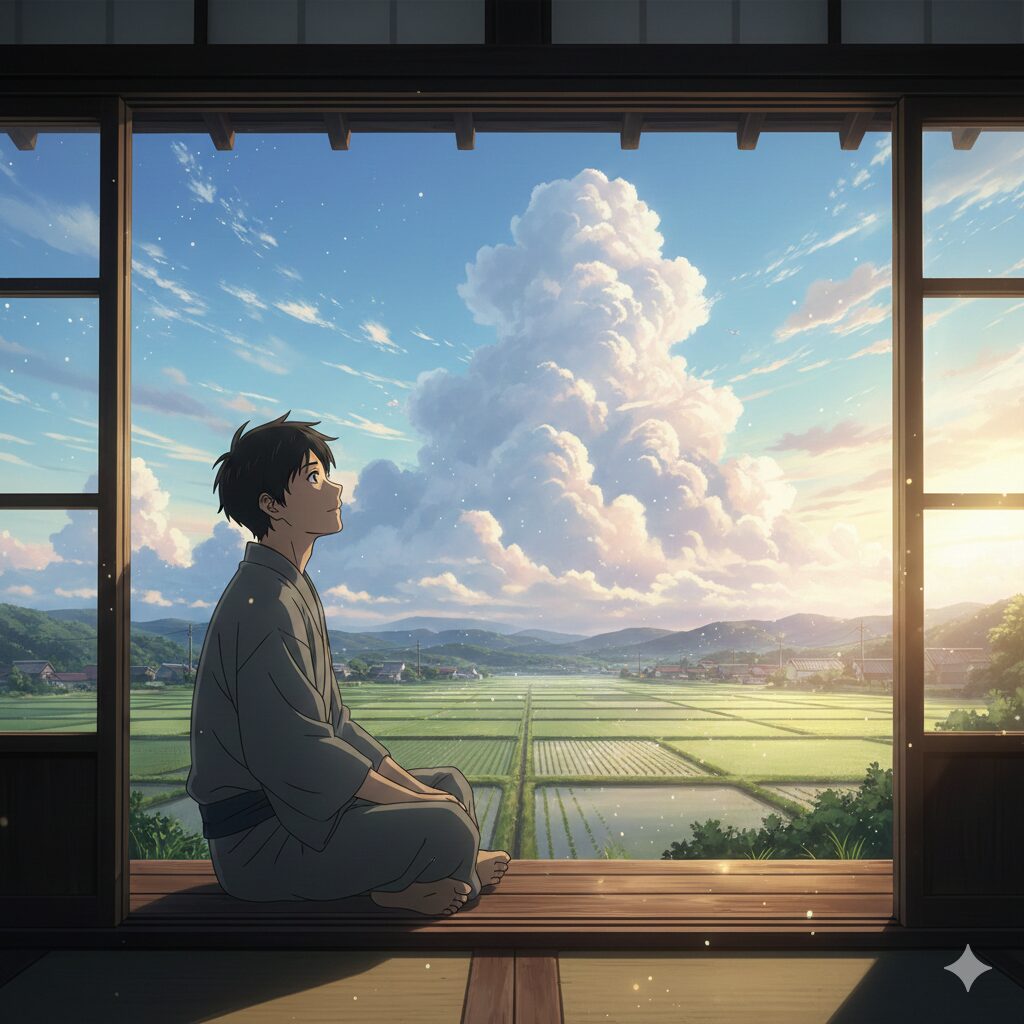
The story of “The Man Who Did Nothing” may seem like a validation of laziness at first glance, but beneath its surface lies a theme deeply rooted in Japanese spirituality: “Wu Wei” (Non-action) and the inherent value of existence itself.

1. The Story: The Man Who Did Nothing
Once upon a time, there lived a man known as “The Man Who Did Nothing.” From morning till night, he simply sat on his porch gazing at the sky or lay by the roadside listening to the wind. While the villagers sweated in the fields, he just “was.”
One summer, a severe drought struck. People became irritable and fights broke out. Amidst the chaos, the villagers found the man sitting in his usual spot. He quietly pointed to the sky: “Look, the clouds are stretching like a dragon’s back. The water will arrive soon.”
His voice was so clear that the villagers stopped fighting and looked up. Soon, heavy rain fell just as he predicted. When he eventually passed away, the villagers realized it wasn’t what he “did” that mattered, but that his mere presence had maintained the peace of the village.
2. Analysis: A Quiet Resistance to the Myth of Productivity
In modern society, efficiency is often equated with “goodness.” However, “The Man Who Did Nothing” stands at the opposite pole. He produces nothing, yet his “mental space” acts as a buffer that absorbs the anxiety of those around him.
3. Connection to Japanese Culture: Zen and the Spirit of “Mu”
- Mui Shizen (Wu Wei): Living naturally without artificial effort.
- The Culture of “Ma”: Finding value in the emptiness or the gaps between things.
4. How Would You Live?
If “The Man Who Did Nothing” were next to you, what would you say? When was the last time you enjoyed just “being” for a single minute?
Links:
日本昔話シリーズ:『なんにもせん人』に見る「存在」の美学
「なんにもせん人」という物語は、一見すると怠惰を肯定するように見えますが、その深層には「無為自然」や「存在そのものの価値」という、日本人の精神性に深く根ざしたテーマが隠されています。
1. 物語:なんにもせん人
むかしむかし、ある村に「なんにもせん人」と呼ばれる男がおりました。男は朝から晩まで、縁側に座ってぼーっと空を眺めているか、道端に寝転んで風の音を聞いているだけ。田植えもしなければ、薪割りもしません。村人たちが汗を流して働いている横で、彼はただ、そこに「いる」だけでした。
ある夏のこと、村がひどい干ばつに見舞われました。作物は枯れ、人々は焦りと不安で怒りっぽくなり、あちこちで喧嘩が始まりました。そんな時、村人たちはふと、いつもの場所に座っている「なんにもせん人」を見つけました。
彼は静かに指をさしました。「ほら、雲が龍の背中のように伸びてきた。もうすぐ水が届くよ」
その声があまりに透き通っていたので、村人たちは思わず空を見上げ、争うのをやめました。すると間もなく、予言通りに大粒の雨が降り注いだのです。彼が亡くなったとき、村人たちは気づきました。彼が「何かをした」からではなく、彼が「そこにいてくれた」からこそ、村の平和が保たれていたのだと。
2. 物語の考察:生産性神話への静かなる抵抗
現代社会では、効率を上げることが「正義」とされます。しかし、「なんにもせん人」は、その対極に位置します。彼は何も生み出しませんが、彼の「心の余裕(余白)」が、周囲の焦燥感を吸収する緩衝材として機能しています。
3. 日本文化との関連:禅と「無」の精神
- 無為自然: 作為を捨て、自然のままに生きることを最良とする。
- 「間」の文化: 日本には、余白に価値を見出す文化があります。
4. あなたなら、どう生きますか?
もし、あなたの隣に「なんにもせん人」がいたら、あなたはどう声をかけますか?あなたが最後に、一分間だけ「ただ存在すること」を楽しんだのは、いつですか?
関連リンク:
コメント