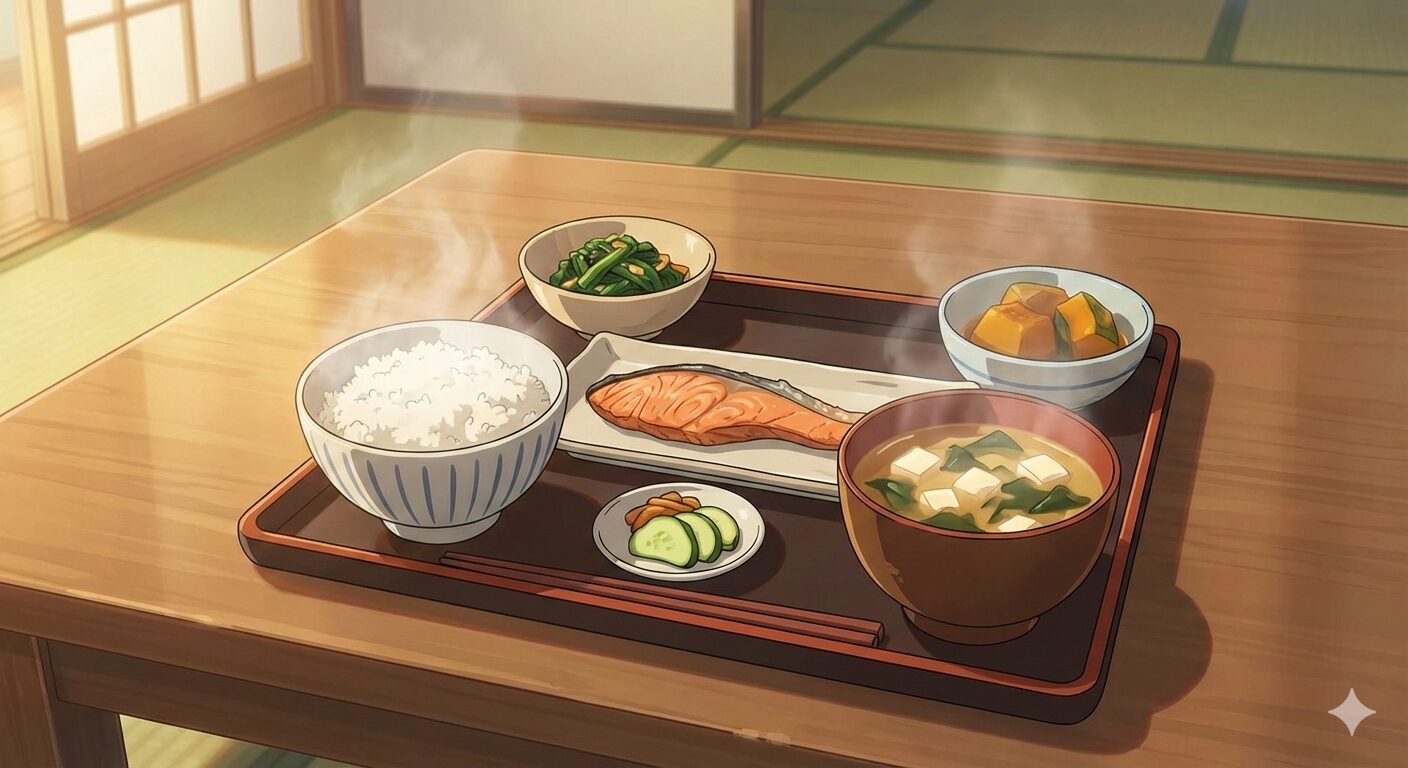
In the Japanese calendar, January 23rd holds a special sequence of numbers: “1, 2, 3”. This rhythmic sequence is often said to represent steps forward or the basics of learning. Therefore, this day is the perfect occasion to reflect deeply on the “foundation” and “perfect form” of the Japanese dining table: “Ichiju-Sansai” (One Soup, Three Dishes).
Why has this style become the core of “Washoku” (Japanese cuisine), a UNESCO Intangible Cultural Heritage, and supported Japan as the country with the world’s longest life expectancy? Today, we will unravel its historical background and the philosophy that we, living in the modern age, should learn from.

What is Ichiju-Sansai? The Structure of Perfect Nutritional Balance
“Ichiju-Sansai” refers to the traditional daily meal style derived from Honzen cuisine and Kaiseki cuisine of the samurai and nobility. Its composition is highly logical:
- Rice (Shushoku): The main source of energy (carbohydrates), typically white or brown rice.
- Soup (Ichiju): Provides hydration and warms the body. Miso soup or clear broth (Sumashi-jiru).
- Main Dish (Issai): Protein to build the body. Fish, meat, eggs, or soy products.
- Side Dishes (Nisai): Vegetables, seaweed, and mushrooms to supply vitamins, minerals, and dietary fiber.
- Pickles (Kounomono): Fermented foods for gut health and to cleanse the palate.
This composition of “Rice + Soup + 3 Dishes” is designed so that simply by combining them, one naturally achieves the ideal “PFC Balance” (Protein, Fat, Carbohydrate). The rhythm of January 23rd—”1 (Soup), 2 (Sides), 3 (Whole)”—serves as a magic code to reaffirm this balance.
Decoding History: The Spirit of Zen and Common Wisdom
The roots of Ichiju-Sansai can be traced back to the dining etiquette of “Zen Buddhism” from the Heian to Kamakura periods. In Zen temples, where frugality was a virtue, eating was considered part of the ascetic training. It began with an even simpler form called “Ichiju-Issai” (One soup, one dish) and eventually developed into “Honzen Ryori,” a formal banquet style for the samurai society in the Muromachi period.
By the Edo period, this style began to spread to the common people. However, for the commoners of that time, having “three dishes” was a luxury reserved for “Hare” (special ceremonial days). It was only after the Meiji era, when food supplies became more abundant, that Ichiju-Sansai became a daily standard as we know it today.
“Let food be thy medicine and medicine be thy food.”
Just as this saying goes, throughout history, Japanese people developed the culture of “Dashi” (broth) to maximize the flavor of seasonal ingredients (Shun). This system, which minimizes the use of animal fats and provides satisfaction through “Umami,” can be described as the ultimate healthcare system left by our ancestors to prevent obesity and lifestyle-related diseases.
Connection to Japanese Culture: “Triangle Eating” and “Oral Seasoning”
Ichiju-Sansai is not merely a menu composition; it shaped the very way Japanese people eat.
Unlike Western course meals where plates are cleared in order (Soup → Salad → Main), Ichiju-Sansai is served all at once. The diner then practices “Triangle Eating” (Sankaku-tabe). A bite of rice, then a side dish, then some soup, and back to rice…
This involves a highly advanced dining technique rare in the world called “Oral Seasoning” (Kounai Chomi). One mixes the white rice and side dishes in their mouth to create a personal harmony of flavors. Salty pickles enhance the sweetness of the rice, and miso soup resets the palate. This attitude of valuing “Harmony” is the very essence of the “Wa” spirit that underlies Japanese culture.
On January 23rd, looking at these numbers, we question whether there is “harmony” in our own lives. In the busy modern world, we often settle for one-plate meals or fast food. However, by returning to the “form” of Ichiju-Sansai, we can align not just our bodies, but also the balance of our minds.
To Our Readers
Thank you for reading this far. Through today, January 23rd, you have touched upon the depths of Japan’s “Ichiju-Sansai.”
Does your country’s dining style have a “Golden Rule”? And if you were to adopt the Ichiju-Sansai style for dinner tonight, what would you choose for your main dish?
We invite you to incorporate this Japanese wisdom into your lifestyle and enjoy a healthy “culinary adventure.”
Category:
What’s Today’s Special Day Series
1月23日は「一汁三菜の日」:数字が教える日本の黄金比率と健康の知恵
日本のカレンダーにおいて、1月23日は特別な数字の並びを持つ日です。「1、2、3」。このリズミカルな数字は、物事のステップアップや基礎を表すと言われています。そして、この日こそ、日本の食卓における「基礎」であり「完成形」である、「一汁三菜(いちじゅうさんさい)」について深く考えるのに最も適した日なのです。
なぜこのスタイルがユネスコ無形文化遺産である「和食」の核となり、世界一の長寿国・日本を支えてきたのでしょうか。今日はその歴史的背景と、現代に生きる私たちが学ぶべき哲学を紐解いていきます。
一汁三菜とは何か?:完璧な栄養バランスの構造
「一汁三菜」とは、日本の伝統的な本膳料理や懐石料理から生まれた、日常の食事スタイルのことを指します。その構成は非常に論理的です。
- 主食(飯):エネルギー源となる炭水化物(主に白米や玄米)。
- 汁物(一汁):水分補給と体を温める役割。味噌汁やすまし汁。
- 主菜(一菜):身体を作るタンパク質。魚、肉、卵、大豆製品など。
- 副菜(二菜):ビタミン、ミネラル、食物繊維を補う野菜、海藻、きのこ類。
- 香の物(漬物):発酵食品による整腸作用と、食事のアクセント。
この「ご飯+汁物+3つのおかず」という構成は、何も考えずに組み合わせるだけで、自然と「PFCバランス(タンパク質・脂質・炭水化物)」が整うようにできています。1月23日、すなわち「1(汁)・2(副菜)・3(全体)」という数字のリズムは、このバランスを再確認するための魔法のコードなのです。
歴史から読み解く:禅の精神と庶民の知恵
一汁三菜のルーツは、平安時代から鎌倉時代にかけての「禅宗」の食事作法にまで遡ることができます。質素倹約を旨とする禅寺では、食事も修行の一環でした。「一汁一菜」というさらにシンプルな形式から始まり、やがて室町時代の武家社会におけるおもてなし料理「本膳料理」へと発展します。
江戸時代に入ると、このスタイルが庶民にも広がり始めました。しかし、当時の庶民にとって「三菜」は贅沢なものであり、ハレの日(お祝いの日)のご馳走でした。現代のように毎日が一汁三菜となったのは、実は明治時代以降、食糧事情が豊かになってからのことです。
「汝の食事を薬とし、汝の薬を食事とせよ」
この言葉通り、日本人は長い歴史の中で、旬の食材を使い、素材の味を最大限に引き出す「出汁(だし)」の文化を発達させました。動物性油脂を極力使わず、旨味(Umami)で満足感を得るこのシステムは、肥満や生活習慣病を防ぐ、先人たちが残した最高のヘルスケアシステムと言えるでしょう。
日本文化との関連:「三角食べ」と「口内調味」
一汁三菜は、単なるメニュー構成ではありません。それは日本人の「食べ方」そのものを形成しました。
西洋のコース料理が「スープ→サラダ→メイン」と順番に皿を空けていくのに対し、日本の一汁三菜はすべてが同時に提供されます。そして、食べる側は「三角食べ」を行います。ご飯を一口、次におかず、そして汁物、またご飯へ…。
これは「口内調味(こうないちょうみ)」という、世界でも稀な高度な食事技術です。口の中で白いご飯とおかずを混ぜ合わせ、自分好みの味のハーモニーを作り出すのです。塩辛い漬物はご飯の甘みを引き立て、味噌汁は口の中をリセットします。この「調和(Harmony)」を重んじる姿勢こそ、日本文化の根底にある「和(Wa)」の精神そのものです。
1月23日、私たちはこの数字を見ながら、自分たちの生活に「調和」があるかを問い直します。忙しい現代、ワンプレートやファストフードで済ませることも多いでしょう。しかし、一汁三菜という「型」に戻ることで、私たちは身体だけでなく、心のバランスも整えることができるのです。
読者の皆様へ
ここまで読んでいただき、ありがとうございます。今日、1月23日という日を通じて、日本の「一汁三菜」の深淵に触れていただきました。
あなたの国の食事スタイルには、どのような「黄金のルール」がありますか?また、もしあなたが今夜の夕食を一汁三菜スタイルにするとしたら、メインの主菜には何を選びますか?
ぜひ、日本の知恵をあなたのライフスタイルに取り入れ、健康的な「食の冒険」を楽しんでみてください。


コメント