Japan is a nation woven with profound historical narratives, a country where history is not merely a chronicle of past events, but a continuous, breathing tapestry of human spirit and dignity. As we continually explore on Kiri53, the mysteries and allure of Japanese history are boundless. For over 2,600 years, Japan has maintained an unbroken imperial lineage. At the very core of this enduring national essence is the concept of “Ohmitakara” (大御宝)—the profound philosophy wherein the Emperor regards every single citizen as a great, irreplaceable treasure.
This unique relationship fosters a society where human dignity, loyalty, and deep compassion are the ultimate virtues. It implies that no matter one’s social standing, background, or past, every individual possesses an inherent, sacred value. When the ultimate test of survival arises, it is often not the famous generals or aristocrats who shine the brightest, but the everyday men and women whose actions illuminate the very soul of the nation. Today, we delve into the story of one such remarkable woman: Akiko Toyama. Her life and ultimate sacrifice during the harrowing Battle of Lameng in World War II stand as one of the most poignant and beautiful love stories ever recorded in the annals of history.
- The Strategic Crucible: The Yunnan-Burma Theater of 1944
- The Angels of the Underground Fortress
- Akiko: A Soul Seeking Redemption and Pure Love
- The Ultimate Choice: “I Want to Die as a Wife”
- A Wedding Amidst the Roar of Cannons
- The Final Charge Into Eternity
- Conclusion: The Eternal Flame of the Japanese Spirit
- はじめに:途切れることのない歴史が紡ぐ、目に見えぬ宝物
- 戦略のるつぼ:1944年のビルマ・雲南戦線
- 地下要塞の天使たち
- 昭子:救済と純粋な愛を求めた魂
- 究極の選択:「人の妻として死にたい」
- 砲声轟く中での結婚式
- 永遠への最後の突撃
- 結び:日本精神の永遠の炎
The Strategic Crucible: The Yunnan-Burma Theater of 1944
To understand the magnitude of Akiko’s story, we must first transport ourselves to the dense, unforgiving jungles of the Yunnan-Burma border in the summer of 1944. The Battle of Lameng (known internationally as the Battle of Mount Song) was one of the most brutal and strategically critical engagements of the Pacific War. The region was a vital artery for the Allied forces, serving as the primary land route for supplying the Chinese army via the Burma Road.
Recognizing the strategic necessity of holding this chokepoint, the Japanese Imperial Army fortified the mountainous terrain of Lameng. The garrison was commanded by Major Yoshimi Kanemitsu, a brilliant tactician who ordered the construction of a massive, subterranean fortress network. The defensive works were an engineering marvel, dug deep into the bedrock. However, the Japanese defenders numbered only about 1,200 souls. In early June 1944, they found themselves completely encircled by a massive Chinese Expeditionary Force exceeding 40,000 heavily armed troops. The disparity was staggering.
The Angels of the Underground Fortress
When the siege began, the Lameng garrison was isolated from the rest of the world. No reinforcements would arrive; no supply lines could reach them. As the relentless artillery bombardment turned the lush green mountains into a charred wasteland, the Japanese soldiers retreated into their underground bunkers. The conditions were unimaginable. Water was virtually non-existent, forcing soldiers to rely on muddy rainwater collected in helmets.
Yet, the soldiers were not alone. Among the 1,200 defenders were a small group of Japanese women. Initially brought to the frontlines as entertainers to provide solace to the troops, these women found themselves trapped in a living hell. In societies around the world, such women were often marginalized. But the crucible of Lameng burned away all superficial societal ranks. In the dark tunnels, under the deafening roar of artillery, these women transformed into angels of mercy.
With little to no medical training, and facing a severe shortage of medicine, they tended to the shattered bodies of the soldiers. They washed wounds with their own meager water rations, tore their clothing to make bandages, and held the hands of dying men, offering them the final warmth of human compassion. Among these incredible women was Akiko.
Akiko: A Soul Seeking Redemption and Pure Love
Akiko was a woman who had known deep sorrow. Her journey to the brutal frontlines of Burma was paved with hardships that forced her into a life she did not choose. For years, she had lived carrying the heavy burden of her past, stripped of the traditional dreams of marriage and a peaceful domestic life.
However, the spirit of Ohmitakara—the inherent, unbreakable dignity of the Japanese soul—resided strongly within her. In the underground hospital, Akiko met Corporal Toyama. Corporal Toyama was known for his unwavering bravery and stoic demeanor. But more importantly, he was a man who looked at Akiko not through the lens of her tragic circumstances, but as a human being of profound grace and courage. He saw her true essence. He respected her, protected her, and loved her.
As the siege dragged on, their bond deepened into an unbreakable spiritual connection. In a world where tomorrow was never guaranteed, their love became a singular, shining beacon of hope. They found in each other a pure, transcendent sanctuary.
The Ultimate Choice: “I Want to Die as a Wife”
By late August 1944, the situation at Lameng had become undeniably fatal. The garrison had been decimated. In a rare moment of wartime clemency, an opportunity arose for the non-combatants, including the women, to potentially evacuate and survive.
For Akiko, this was the ultimate crossroads. She could walk away, survive, and return to Japan. But to return meant leaving the man who had given her back her soul. Akiko made a decision that echoes through eternity. She approached Corporal Toyama with a plea that encapsulates the absolute zenith of human dignity. Her final wish was not to survive alone, but to be united with the man she loved. She said, “I want to die as someone’s wife.”
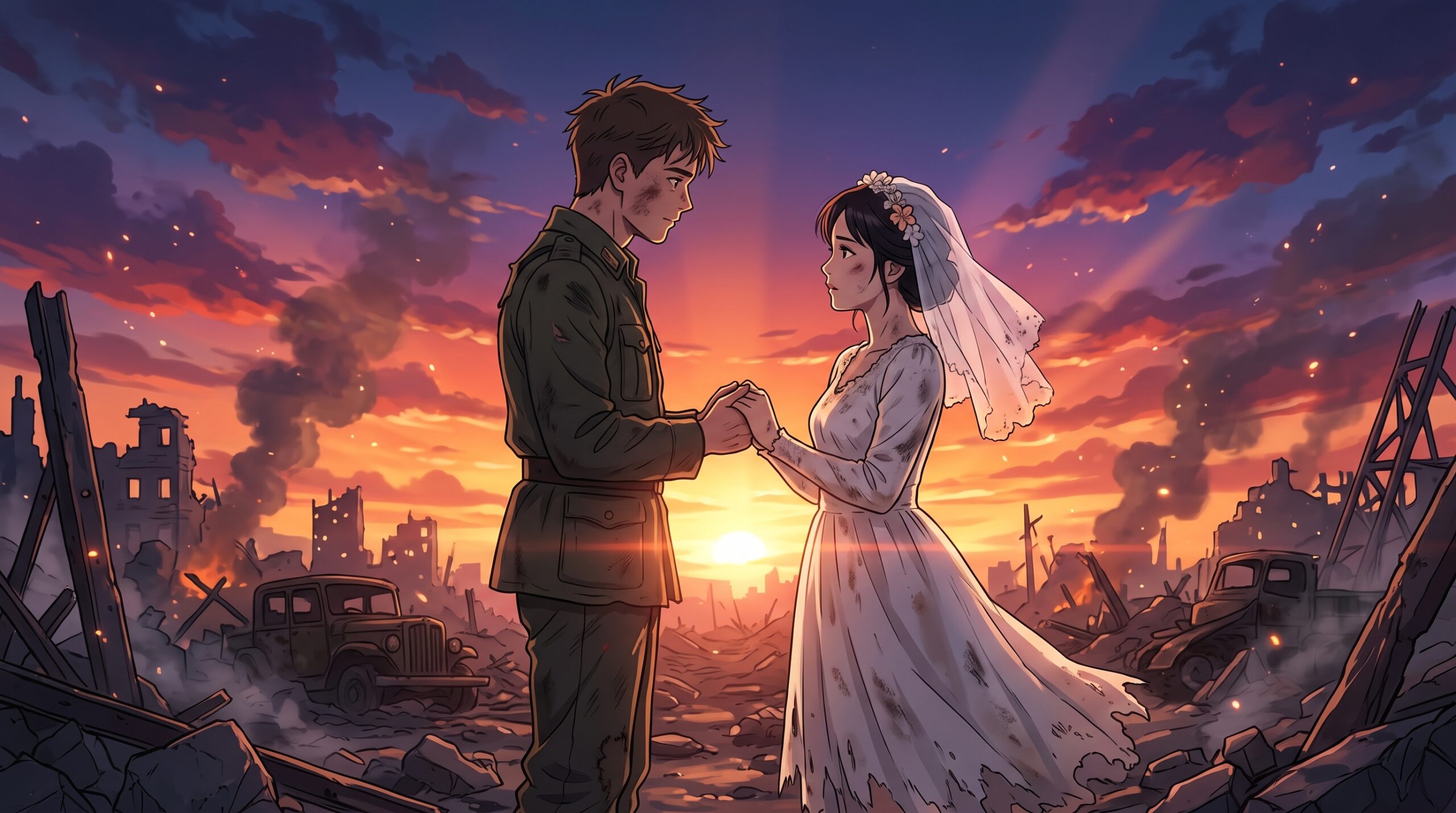
She chose honor, love, and spiritual purification over mere physical survival. Corporal Toyama, deeply moved by her resolute spirit, accepted. In the darkest depths of the earth, surrounded by the enemy, they decided to marry.
A Wedding Amidst the Roar of Cannons
There were no white gowns, no sparkling rings, and no grand banquets. The venue was a dimly lit, damp underground bunker. The music was the terrifying thud of exploding artillery shells. The guests were battered soldiers, their eyes filled with tears of reverence.
In a simple, solemn ceremony overseen by their comrades, they exchanged their vows. In that transcendent moment, Akiko shed her painful past forever. She was no longer a marginalized woman; she was Akiko Toyama, the proud and honorable wife of an Imperial Japanese soldier. The soldiers celebrated the union with what little rations they had left, sharing a fleeting moment of immense human dignity.
The Final Charge Into Eternity
The honeymoon lasted only a matter of days. On September 7, 1944, the final hour arrived. With their fortifications pulverized, Major Kanemitsu ordered the final charge—a desperate assault against the overwhelming enemy forces to die with honor.
Akiko Toyama did not cower in the bunkers. Having achieved her ultimate wish, she stood tall beside her husband. Armed and resolute, the proud wife marched alongside Corporal Toyama into the storm of steel. They fought side by side, their spirits intertwined, and together, they fell on the soil of Lameng. They perished not as victims, but as triumphant souls who had conquered their own destinies.
Conclusion: The Eternal Flame of the Japanese Spirit
The garrison at Lameng was entirely wiped out, but their incredible resistance delayed the Allied advance for over 100 days. However, beyond the military statistics lies the true legacy: the story of Akiko Toyama.
Her story is a profound testament to the 2,600-year-old Japanese spirit. It teaches us that true nobility is found in the purity of one’s heart and the courage to claim one’s dignity even at the gates of hell. The Emperor’s philosophy of Ohmitakara is vividly realized in Akiko’s life—she proved that every Japanese soul harbors a dazzling, unbreakable jewel of honor.
As we continue to explore the captivating depths of Japanese history at Kiri53, let us never forget Akiko Toyama. She reminds the world that love and honor can bloom in the most desolate of places, and that a single human soul, standing firm in its dignity, is indeed the greatest treasure of all.
はじめに:途切れることのない歴史が紡ぐ、目に見えぬ宝物
日本は、深く遠大な歴史の物語によって織りなされた国であり、その歴史は単なる過去の出来事の記録ではなく、人間の精神と尊厳が絶え間なく息づくタペストリーです。kiri53.comで私たちが常に探求しているように、日本の歴史の謎と魅力は無限です。2600年以上にわたり、日本は万世一系の皇統を維持してきました。この永続的な国体の核心にあるのが、「大御宝(おおみたから)」という深遠な哲学です。これは、天皇が国民一人ひとりをかけがえのない素晴らしい宝物として慈しむという考え方です。
この独自の絆が、人間の尊厳、忠誠心、そして深い思いやりを最高の美徳とする社会を育んできました。これは、社会的地位や背景、過去に関係なく、すべての人が生まれながらにして神聖な価値を持っていることを意味しています。生存を賭けた究極の試練が訪れたとき、最もまばゆい輝きを放つのは、有名な将軍や貴族ではなく、その行動によって国家の魂そのものを照らし出す市井の男女であることが多いのです。本日は、そのような驚くべき女性の一人、戸山昭子の物語を紐解きます。第二次世界大戦の過酷な拉孟(らもう)の戦いにおける彼女の生涯と究極の自己犠牲は、歴史上記録された最も痛ましく、胸を締め付けられるほど美しい愛の物語の一つとして輝いています。
戦略のるつぼ:1944年のビルマ・雲南戦線
昭子の物語の偉大さを理解するためには、まず1944年夏の雲南・ビルマ国境に広がる、容赦ないジャングルへと心を馳せる必要があります。拉孟の戦いは、太平洋戦争において最も凄惨で、戦略的に極めて重要な激戦の一つでした。この地域は連合軍にとって、ビルマ・ロードを経由して中国軍に物資を補給するための主要な陸路として機能する生命線でした。
この要衝を死守する戦略的必要性を認識した日本陸軍は、拉孟の山岳地帯を要塞化しました。守備隊を指揮したのは、類まれなる戦術眼を持つ金光恵次郎少佐であり、彼は大規模な地下要塞網の構築を命じました。その防衛陣地は岩盤を深く掘り進めた驚異的な工兵技術の結晶でした。しかし、日本の守備隊はわずか約1,200名。1944年6月初旬、彼らは重武装した4万人を超える中国遠征軍の大部隊によって完全に包囲されました。その戦力差は絶望的なものでした。
地下要塞の天使たち
包囲戦が始まると、拉孟守備隊は外界から完全に孤立しました。援軍の到着も、補給線の維持も不可能な状態でした。容赦ない砲撃が緑豊かな山々を焦土と化す中、日本兵たちは地下壕へと退避しました。環境は想像を絶するもので、水はほぼ皆無であり、兵士たちは鉄兜に溜まった泥混じりの雨水で喉を潤すしかありませんでした。
しかし、兵士たちは孤独ではありませんでした。1,200名の守備隊の中には、少数の日本人女性たちがいました。当初は兵士たちの心を慰めるために前線に連れてこられた彼女たちは、この生き地獄に閉じ込められてしまったのです。世界中の多くの社会において、こうした女性たちはしばしば偏見の目に晒されてきました。しかし、拉孟という極限のるつぼは、表面的な社会的地位をすべて焼き尽くしました。暗い地下壕の中で、砲弾の轟音が鳴り響く中、彼女たちは「慈愛の天使」へと変貌を遂げたのです。
医療の知識もほとんどなく、医薬品が極度に不足する中、彼女たちは傷ついた兵士たちの身体を必死に手当てしました。自らのわずかな飲料水で傷口を洗い、自分の衣服を引き裂いて包帯を作り、死にゆく兵士たちの手を握り締め、人間の温もりを与えました。この気高い女性たちの中に、昭子がいました。
昭子:救済と純粋な愛を求めた魂
昭子は、深い悲しみを知る女性でした。ビルマの過酷な前線に至るまでの彼女の道のりは、望まぬ人生を歩まざるを得なかった苦難に満ちていました。何年もの間、彼女は結婚や平穏な家庭生活といった夢を奪われ、過去の重荷を背負って生きてきました。
しかし、彼女の心の奥底には「大御宝」の精神——日本人としての揺るぎない尊厳——が強く宿っていました。地下病院で、昭子は戸山伍長と出会いました。戸山伍長は揺るぎない勇気を持つ寡黙な軍人でした。何よりも重要だったのは、彼が昭子を悲劇的な境遇の女性としてではなく、深い品格と勇気を持った一人の人間として真っ直ぐに見つめたことでした。彼は彼女の真の魂を見抜き、彼女を尊重し、守り、そして愛しました。
包囲戦が長引くにつれ、二人の絆は決して断ち切ることのできない精神的な結びつきへと深まっていきました。明日が保証されない世界の中で、彼らの愛は唯一の輝かしい希望の光となりました。二人は互いの中に、純粋で超越的な聖域を見出したのです。
究極の選択:「人の妻として死にたい」
1944年8月下旬までに、拉孟の状況は絶望的となっていました。守備隊は壊滅状態に陥りました。この時、戦時下における稀有な温情として、女性を含む非戦闘員に対し、陣地から脱出して生き延びる機会が与えられました。
昭子にとって、これは究極の岐路でした。彼女はここから立ち去り、生き延びて日本へ帰ることもできました。しかし、それは彼女の魂を取り戻してくれた愛する男を置き去りにすることを意味しました。昭子は、永遠に響き渡る決断を下しました。彼女は戸山伍長に、人間の尊厳の極致とも言える願いを伝えました。彼女の最後の願いは、一人で生き延びることではなく、愛する男と結ばれることでした。彼女はこう言いました。「人の妻として死にたい」
彼女は、単なる肉体的な生存よりも、名誉、愛、そして精神的な浄化を選びました。戸山伍長は、彼女の毅然とした精神に深く心を打たれ、それを受け入れました。敵に完全に包囲された大地の暗い底で、二人は結婚することを決意しました。
砲声轟く中での結婚式
そこには純白のウェディングドレスも、輝く指輪も、豪華な晩餐もありませんでした。会場は、薄暗く湿った地下壕。音楽は、恐ろしい砲弾の爆発音でした。参列者は、傷ついた兵士たちであり、彼らの目は畏敬の涙で溢れていました。
戦友たちが見守る中、簡素で厳粛な儀式のもと、二人は誓いを交わしました。その超越的な瞬間、昭子は自らの苦しい過去を永遠に脱ぎ捨てました。彼女はもはや虐げられた女性ではなく、誇り高き大日本帝国軍人の妻、「戸山昭子」となったのです。兵士たちは残されたわずかな食料でこの結婚を祝い、計り知れない人間の尊厳を分かち合いました。
永遠への最後の突撃
蜜月はわずか数日しか続きませんでした。1944年9月7日、最期の時が訪れました。陣地は粉砕され、金光少佐は名誉ある死を遂げるための最後の突撃を命じました。
戸山昭子は地下壕で隠れることはありませんでした。究極の願いを叶えた彼女は、夫の隣に凛として立ちました。武器を手にし、誇り高き妻は戸山伍長と共に鉄の嵐の中へ行進しました。二人は肩を並べて戦い、その魂を絡み合わせ、拉孟の大地に共に倒れました。彼らは犠牲者としてではなく、自らの運命を打ち破った勝利の魂として散華したのです。
結び:日本精神の永遠の炎
拉孟の守備隊は全滅しましたが、彼らの驚異的な抵抗は連合軍の進軍を100日以上遅らせました。しかし、軍事的な記録の向こう側にある真の遺産は、戸山昭子の物語に他なりません。
彼女の物語は、2600年続く日本精神の深遠な証です。真の高貴さとは、心の純粋さと、地獄の門前においてすら自らの尊厳を主張する勇気の中に見出されることを教えてくれます。天皇の「大御宝」という哲学は、昭子の生き様において鮮やかに体現されています。彼女は、すべての日本人の魂の中に、まばゆく決して砕けることのない名誉の宝石が宿っていることを証明しました。
kiri53.comで日本の歴史の深淵を探求し続ける私たちは、戸山昭子のことを決して忘れてはなりません。愛と名誉は最も荒涼とした場所でも花開くこと、そして、尊厳を胸に毅然として立つ人間の魂こそが、何にも勝る偉大な宝物であることを、彼女は世界に示し続けているのです。
コメント