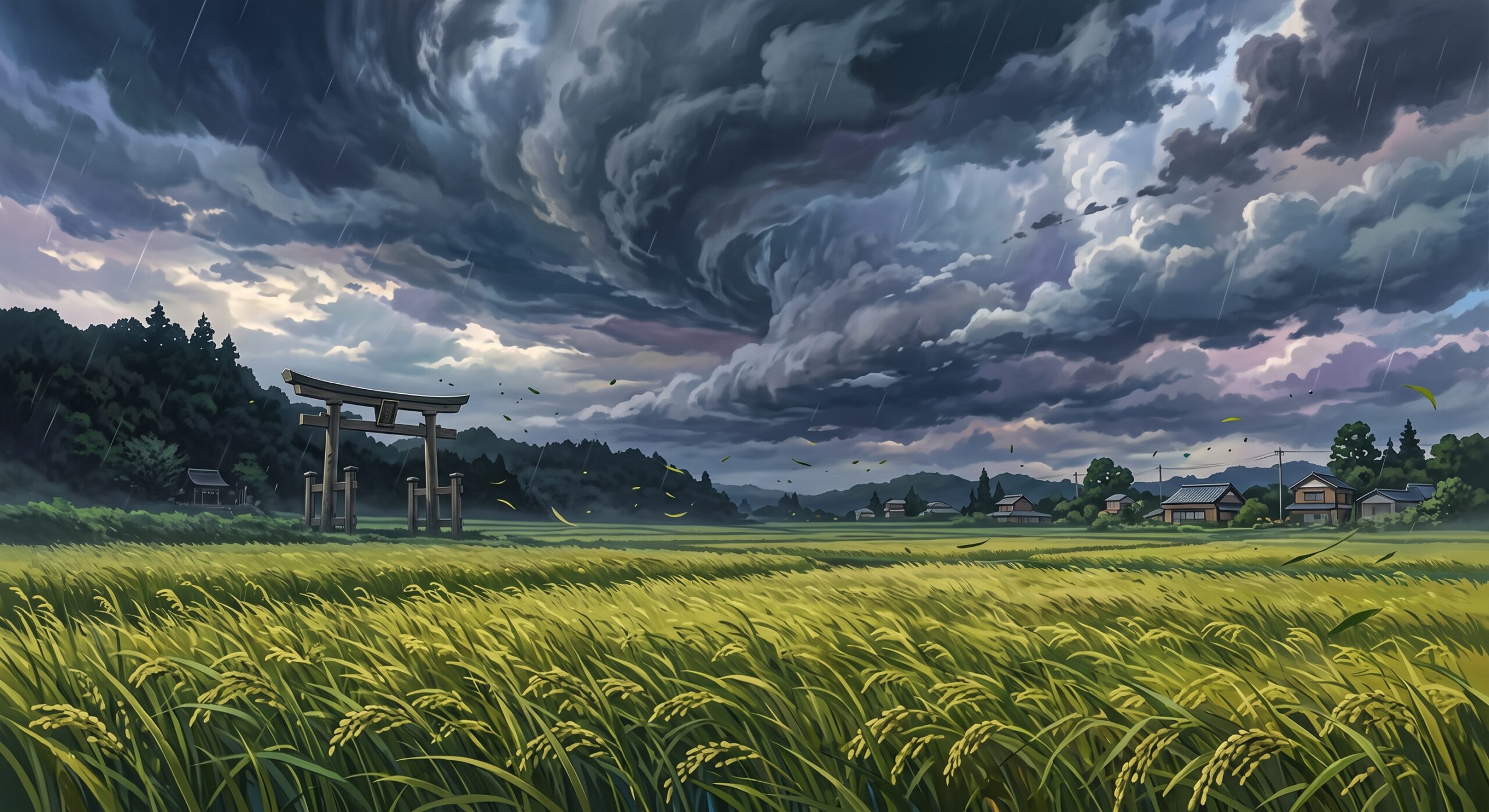
The Japanese calendar is more than just a sequence of dates; it is deeply engraved with a history of profound dialogue with nature. September 1st marks an incredibly important day in Japan’s traditional agricultural calendar known as “Nihyakutoka” (the 210th day). This day falls exactly 210 days after Risshun (the beginning of spring). While on a modern calendar it may seem like just the start of September, for ancient Japanese people—especially farmers whose lives depended on the harvest—it was the most feared day of the year, yet simultaneously a day for the most sacred prayers.
Nihyakutoka and Typhoons: Why Did Farmers Fear This Day?
Japan is a country blessed with the beauty of four distinct seasons, but it is also a land constantly living side-by-side with harsh natural disasters. The period of Nihyakutoka perfectly coincides with the peak season when typhoons frequently approach and strike the Japanese archipelago, a fact still validated by modern meteorology. This period is the most critical time for rice, Japan’s staple food, as it is the exact moment when the rice plants bloom and begin to bear grain. If the delicate rice flowers are struck by strong winds and heavy rain during this short window, pollination fails, and the year’s harvest becomes completely hopeless.
In an era before science and weather satellites, people deduced an absolute truth from empirical evidence: “Around the 210th day from the start of spring, a heaven-shaking storm will inevitably blow.” When the Edo period agronomist Shibukawa Harumi created the Jokyo calendar, he incorporated the long-standing experience and wisdom of fishermen and farmers, officially listing “Nihyakutoka” as an unlucky day (Yakubi) on the calendar. Since then, this day has been deeply rooted in people’s lives as a day of nationwide vigilance.
Appeasing the Wind Gods: Owara Kaze-no-Bon in Toyama
Faced with overwhelming natural violence, ancient Japanese people chose a path not to “conquer nature,” but to “pray, appease, and coexist.” This spirit is expressed most beautifully and sorrowfully in the “Owara Kaze-no-Bon” festival, held annually from September 1st to 3rd in the Yatsuo district of Toyama City, Toyama Prefecture.
This festival is a Shinto ritual dedicated to warding off the disasters of Nihyakutoka, appeasing the wind gods, and praying for a bountiful harvest. To the melancholic tones of the Kokyu (a traditional bowed string instrument), shamisen, and taiko drums, men and women with their faces hidden by braided straw hats dance silently through the streets for three days and nights. The people’s fear of raging typhoons was eventually sublimated into a refined, elegant dance. This festival represents the ultimate pinnacle of the Japanese view of nature and aesthetic consciousness.
- Nihyakutoka and Typhoons: Why Did Farmers Fear This Day?
- Appeasing the Wind Gods: Owara Kaze-no-Bon in Toyama
- [Special Story] The Breath of the Wind God and the Memories of a Village
- Decoding Japanese Culture from the Story: Animism and Coexistence
- A Question for You
- 恐れられた風の神と日本の知恵:9月1日「二百十日(にひゃくとおか)」の真実
- 【特別ストーリー】風の神の息吹と、ある村の記憶
- 物語から読み解く、日本文化の深層:アニミズムと共生
- あなたへの問いかけ
[Special Story] The Breath of the Wind God and the Memories of a Village
Let us delve deeper into what Nihyakutoka meant to the people of the past through a single narrative.
The time is the late Edo period, in a small farming village surrounded by mountains. A young man named Taro wiped the sweat from his brow as he looked up at the sky. The sky was burning an unnatural, eerie red, and a lukewarm wind clung to his skin. Tomorrow was finally “Nihyakutoka.”
“Taro, the Wind God is taking a deep breath,”
His grandfather, the village elder, approached leaning on his cane. The old man’s eyes had accurately captured the unseen threat lurking beyond the horizon. In the rice paddies, the village’s lifeline, the golden ears of rice were beginning to wave. If that violent storm struck the village now, all the food needed to survive the winter would sink into the mud.
“Why do the gods test us at this most crucial time?” Taro asked.
His grandfather slowly shook his head. “The gods are not testing us. The logic of nature simply exists. We can only wait with respect for the wind to pass, and use all our wisdom to protect the rice.”That night, the villagers turned out in force, lighting torches and conducting a festival to appease the wind god. Young men beat the taiko drums, and women offered dances to the heavens. It was not a ritual to flee from fear, but a ceremony to demonstrate to the overwhelming power of nature: “We are living here.”
Past midnight, the storm arrived. The trees creaked as if they were about to snap, and rain battered the roofs of the houses horizontally. Taro held his breath inside his home, simply continuing to pray. Human power is as powerless as dust before Mother Nature. However, the windbreaks inherited from their ancestors, the well-maintained waterways, and above all, their awe and respect for the gods, supported the spirit of the village.
The next morning. The storm had passed, and a blue sky stretched out above. Although some of the rice stalks had been blown down, catastrophic damage had been avoided. Covered in mud, Taro stood the fallen rice back up, bowing his head deeply in gratitude to both the fury and the blessings of nature. The Wind God had passed, and the cycle of life had returned to the village once more.
Decoding Japanese Culture from the Story: Animism and Coexistence
What this story illustrates is the concept of “Yaoyorozu no Kami” (eight million gods) deeply rooted in Japan since ancient times—the worldview of animism. In a Western perspective, nature was often seen as something for humans to manage, pioneer, and conquer. However, in Japan, an island nation constantly beset by earthquakes, tsunamis, and typhoons, the idea of conquering nature never materialized.
The Japanese found “Kami” (divinity) not only in the sun and rain that brought blessings, but also in the typhoons and storms that destroyed everything. Nihyakutoka is precisely a symbol of that awe. Rather than hating the wind gods who brought storms, the people welcomed them through festivals and respectfully saw them off. By treating the fury of nature as a living entity and showing respect, they maintained peace of mind and community solidarity.
Even in modern Japan, when a typhoon approaches, public transportation systems implement planned suspensions, and people wait quietly in their homes for the storm to pass. While physical countermeasures have been modernized, the spiritual mindset of not resisting the power of nature and simply waiting for it to pass has been continuously inherited from the ancient Japanese who feared Nihyakutoka.
A Question for You
The day of Nihyakutoka teaches us the powerlessness of humanity in the face of nature’s overwhelming force, and yet, the beauty of the wisdom and prayers we use to survive.
In your country or region, what traditions or approaches do you have towards irresistible natural forces and climate? Do you try to conquer nature, or do you have special rituals for coexisting with it? Reflecting on the spirit of “Nihyakutoka,” how has your own perspective on nature changed?
Reference Links
- Japan Meteorological Agency – Latest information on Japanese weather and typhoons
- Japan National Tourism Organization (Owara Kaze-no-Bon) – Details on the beautiful wind festival of Etchu Yatsuo
- Click here for the What’s Today’s Special Day Series
恐れられた風の神と日本の知恵:9月1日「二百十日(にひゃくとおか)」の真実
日本の暦には、単なる日付の羅列を超えた、自然との深い対話の歴史が刻まれています。9月1日は、日本の伝統的な雑節(ざっせつ)において「二百十日(にひゃくとおか)」と呼ばれる非常に重要な日です。この日は、立春(春の始まり)から数えてちょうど210日目にあたります。現代のカレンダーではただの9月の始まりに過ぎませんが、古来の日本人、特に農業に命を懸けていた人々にとって、この日は一年で最も恐れられ、同時に最も神聖な祈りが捧げられる日でした。
二百十日と台風:なぜ農民はこの日を恐れたのか
日本は四季の美しさに恵まれた国であると同時に、過酷な自然災害と隣り合わせの国でもあります。二百十日の時期は、現代の気象学においても台風が日本列島に頻繁に接近・上陸する時期と完全に一致します。この時期は、日本の主食である稲(米)が開花し、穂を実らせる極めて重要なタイミングです。稲の花が咲いている短い期間に強風や大雨に打たれると、受粉ができず、その年の収穫は絶望的になります。
科学や気象衛星が存在しなかった時代、人々は経験則から「立春から210日目の前後には、必ず天地を揺るがす大風が吹く」という絶対的な真理を導き出しました。江戸時代の農学者である渋川春海が貞享暦(じょうきょうれき)を作成した際、釣り人や農民たちの長年の経験と知識を採用し、暦に「二百十日」を厄日として公式に記載しました。以来、この日は国家的な警戒日として人々の生活に深く根付いたのです。
風の神を鎮める:越中八尾「おわら風の盆」
圧倒的な自然の暴力に対し、古来の日本人は「自然をねじ伏せる」のではなく「祈り、鎮め、共生する」という道を選びました。その精神が最も美しく、そして哀切に表現されているのが、富山県富山市八尾地区で毎年9月1日から3日にかけて行われる「おわら風の盆」です。
この祭りは、二百十日の厄災を払い、風の神を鎮め、五穀豊穣を祈るための神事です。胡弓(こきゅう)の物悲しい音色と三味線、太鼓のリズムに合わせ、編み笠で顔を隠した男女が三日三晩、町中を無言で踊り歩きます。荒れ狂う暴風を恐れる人々の感情は、いつしか洗練された優雅な舞へと昇華されました。この祭りは、日本人の自然観と美意識の極致と言えます。
【特別ストーリー】風の神の息吹と、ある村の記憶
ここで、二百十日という日がかつての人々にどのような意味を持っていたのか、一つの物語を通じて深く読み解いてみましょう。
時は江戸時代後期、山々に囲まれた小さな農村。青年・太郎は、空を見上げながら額の汗を拭った。空は異様なまでに赤く焼け、生ぬるい風が肌にまとわりついていた。明日はいよいよ「二百十日」である。
「太郎、風の神が息を深く吸い込んでいるぞ」
村の長老である祖父が、杖をつきながら近づいてきた。祖父の目は、空の彼方にある見えない脅威を確実にとらえていた。村の生命線である田んぼには、黄金色に色づき始めた稲穂が波打っている。もし今、あの暴風が村を襲えば、冬を越すための食糧はすべて泥に沈む。
「神様はなぜ、一番大切なこの時期に試練を与えるのでしょうか」と太郎は尋ねた。
祖父は静かに首を振った。「神は我々を試しているのではない。自然の理(ことわり)がそこにあるだけだ。我々はただ、風が通り過ぎるのを敬意を持って待ち、稲を守るための知恵を尽くすしかない」その夜、村人たちは総出で松明(たいまつ)を焚き、風の神を鎮めるための祭りを執り行った。若者たちは太鼓を打ち鳴らし、女たちは天に向けて舞を捧げた。それは恐怖から逃げるためではなく、圧倒的な力を持つ自然に対し、「私たちはここに生きている」と示すための儀式だった。
夜半過ぎ、嵐が到来した。木々はへし折られんばかりに軋み、雨は横殴りに家々の屋根を叩いた。太郎は家の中で息を潜め、ただ祈り続けた。人間の力など、大自然の前では埃のように無力だ。しかし、先人から受け継いだ防風林と、水路の整備、そして何より神への畏敬の念が、村の精神を支えていた。
翌朝。嵐は去り、青空が広がっていた。稲はいくらか倒れていたものの、壊滅的な被害は免れていた。太郎は泥まみれになりながら倒れた稲を起こし、自然の猛威と恵みの両方に深く頭を下げた。風の神は通り過ぎ、村に再び命の巡りが戻ってきたのだ。
物語から読み解く、日本文化の深層:アニミズムと共生
この物語が示しているのは、日本に古くから根付く「八百万の神(やおよろずのかみ)」の概念、すなわちアニミズムの世界観です。西洋的な視点では、自然は人間が管理し、開拓し、克服すべき対象として捉えられることが多くありました。しかし、島国であり、地震、津波、台風などの災害が絶えない日本では、自然を克服するという発想はそもそも成立しませんでした。
日本人は、恵みをもたらす太陽や雨だけでなく、すべてを破壊する台風や嵐の中にも「神(Kami)」を見出しました。二百十日は、まさにその畏怖の象徴です。暴風をもたらす風の神を憎むのではなく、祭りを通じて歓待し、丁重にお帰りいただく。自然の猛威を一つの生命体のように扱い、敬意を払うことで心の平穏とコミュニティの結束を保ってきたのです。
現代の日本においても、台風が近づくと交通機関が計画運休を行い、人々は静かに家の中で嵐が過ぎ去るのを待ちます。物理的な対策は近代化されましたが、自然の力に抗わず、過ぎ去るのを待つという精神性は、二百十日を恐れた古来の日本人から脈々と受け継がれています。
あなたへの問いかけ
二百十日という日は、自然の圧倒的な力を前にした人間の無力さと、それでもなお生き抜くための知恵と祈りの美しさを私たちに教えてくれます。
あなたの国や地域では、抗えない自然の力や気候に対して、どのような伝統や向き合い方がありますか?自然を克服しようとしますか、それとも共生するための特別な儀式がありますか?この「二百十日」の精神に触れて、あなた自身の自然に対する見方がどう変わったか、ぜひ考えを巡らせてみてください。
参考リンク
- 気象庁 (Japan Meteorological Agency) – 日本の気象と台風の最新情報
- Japan National Tourism Organization (おわら風の盆) – 越中八尾の美しい風の祭りの詳細
- What’s Today’s Special Day Series一覧はこちら

コメント